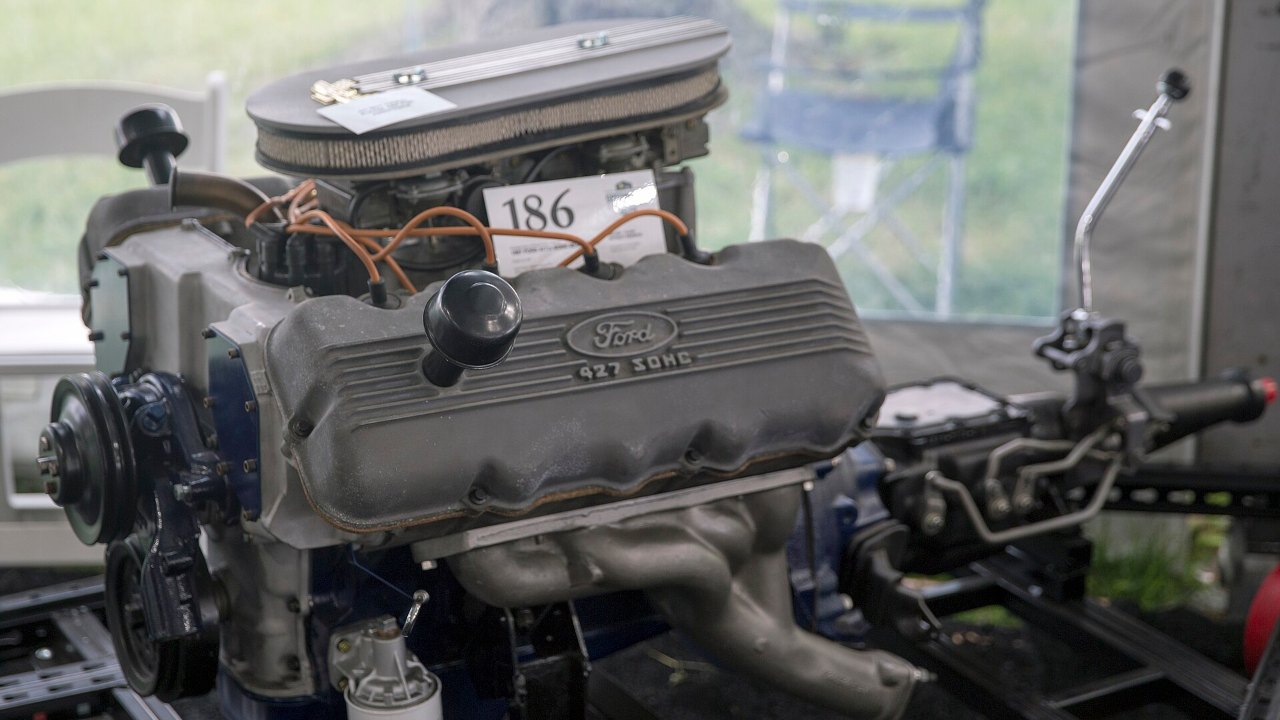
Ford built the 427 single-overhead-cam V8 for one job: beating Chrysler’s 426 Hemi on NASCAR’s ovals. Yet the engine fans call the Cammer never started a NASCAR race. The Cammer NASCAR ban came first, and then a 1966 offer so restrictive that Ford walked away from it. So the engine found its fame on drag strips instead.
The story is worth telling carefully, because the sources don’t agree on every date. They do agree on the main points, however. NASCAR outlawed the engine, then offered to let it run with a heavy handicap, and Ford said no.
Here is what the record shows, in order, along with the places where accounts differ.
Ford’s answer to the Hemi
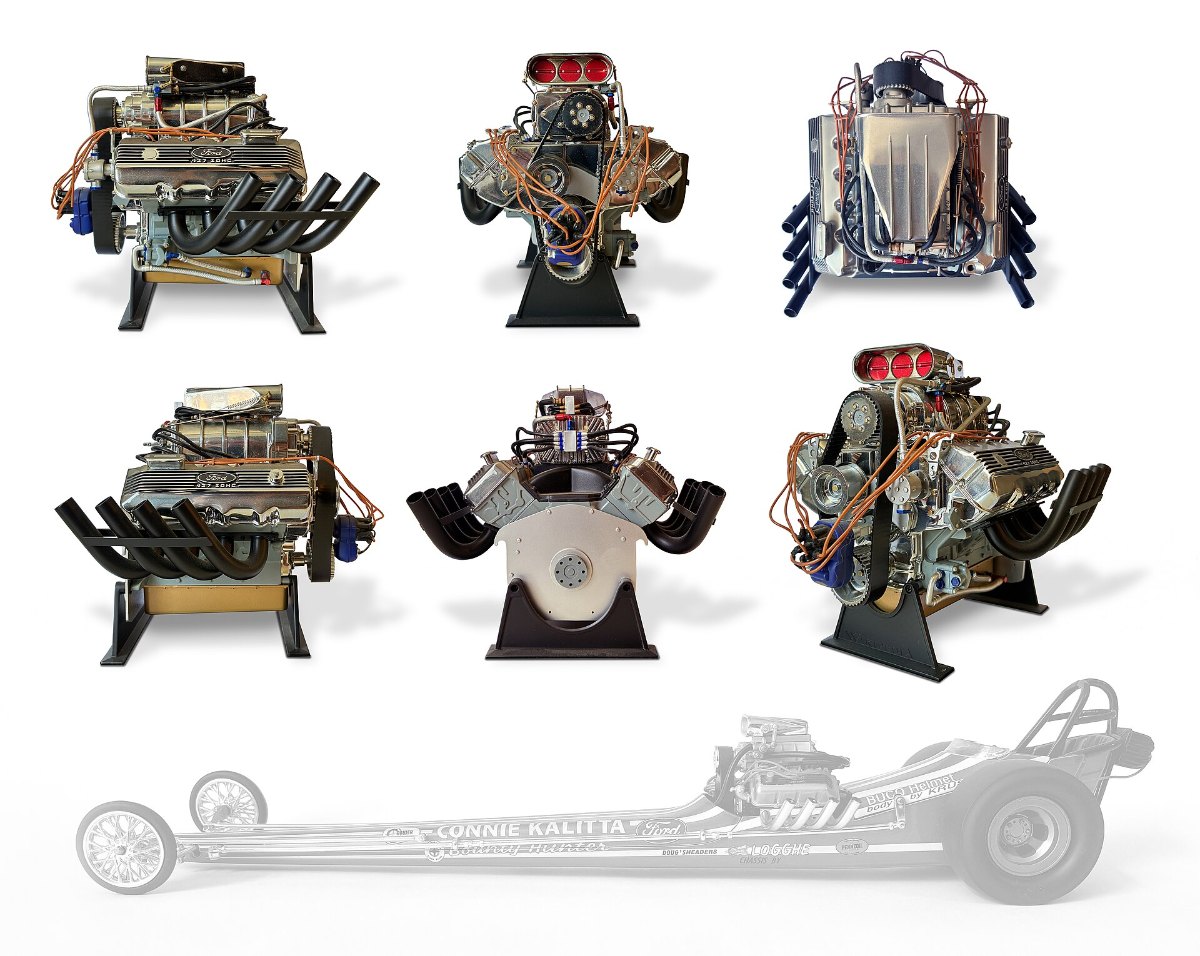
The Cammer started as a response to Chrysler. Hagerty’s engine-building feature describes the SOHC 427 as “born as a rival to the venerable Chrysler 426 Hemi, which was dominating NASCAR ovals.” In the Hagerty piece, race-engine builder Steve Morris also points to drag racers adopting it later.
Ford moved fast. SlashGear says Ford designed the engine in less than three months. Similarly, Mac’s Motor City Garage reports that insiders called it the “90 day wonder” and a “low-investment parallel project.” Each bank of cylinders got its own overhead camshaft. A very long timing chain drove both cams, although the sources give different lengths for it.
Power figures vary by source, too. Mac’s says the engine was “said to be good for 600 hp” on gasoline. By comparison, SlashGear puts factory output at “roughly 616 horsepower at 7,000 RPM.” Jalopnik’s history gives a range of 616 to 657 horsepower, depending on the carburetor setup.
How the Cammer NASCAR ban unfolded
The fullest timeline comes from Mac’s Motor City Garage. It says the first public mention of the engine appeared in the Daytona Beach Morning Journal on February 23, 1964. That same month, NASCAR boss Bill France turned down Ford’s request to approve it. Then, in May 1964, Ford displayed a 1964 Galaxie hardtop with a Cammer at Indianapolis Motor Speedway.
Next, on October 19, 1964, NASCAR moved to ban all “special racing engines,” according to Mac’s. That rule knocked out the Cammer and the 426 Hemi together. Hagerty describes the same move as 1965 rules against special racing engines. As a result, Chrysler sat out the season in protest, while Ford raced its 427 wedge engine instead.
Not every account dates the first ban the same way. SlashGear, for example, places it before the 1964 season. Mac’s and Hagerty both tie it to the 1965 season, so we follow those two.
Several writers also explain why NASCAR objected. Goodwood and Jalopnik both say officials saw the overhead-cam design as “too European” for the series. Meanwhile, a separate Hagerty history of the Boss 429 says the SOHC 427 “wasn’t properly homologated.” That fits the “special racing engine” label NASCAR gave it.
The 1966 offer Ford refused
The door closed again before 1966. Both Mac’s and SlashGear report that NASCAR reinstated the ban in December 1965. Then, in April 1966, NASCAR changed course and offered to let the Cammer race with strict limits.
Those limits made the engine pointless. According to Mac’s, a Cammer car could use only one small four-barrel carburetor. It also had to weigh nearly 4,400 pounds, or 430 pounds more than the Dodge and Plymouth Hemi cars. SlashGear adds that NASCAR limited the engine to the full-size Galaxie. Goodwood describes the same handicap as a 195-kilogram ballast penalty.
Ford declined. As Mac’s puts it, Ford “dedicated the Cammer to drag racing. The engine never turned a lap in NASCAR competition.” Jalopnik reaches the same conclusion, saying Ford abandoned the NASCAR plan rather than race the heavy Galaxie.
Where the Cammer raced instead
Drag racers had no such rules to stop them. According to Mac’s, the engine first ran in factory-backed 1965 Mustangs and 1965 Mercury Comets in NHRA’s Factory Experimental classes. Later, it powered the 1966–67 Comet flip-top funny cars and Mickey Thompson’s 1969 Mustang team. Goodwood also lists supercharged Top Fuel dragsters among its uses.
Mac’s names Tom Hoover, Pete Robinson and Connie Kalitta among the racers who ran it. SlashGear credits Kalitta as the first driver to pass 200 mph at an AHRA national event, in 1965. Meanwhile, engine builder Ed Pink told SlashGear the bottom end could handle about 750 horsepower. Even so, drag teams eventually pulled more than 2,500 horsepower from the design, according to the same report.
Ford never sold the Cammer in a production car. SlashGear says it “never entered mass production because it was never engineered for consumer use.” According to Hagerty’s Boss 429 history, Ford learned from that loss. For the Boss 429, Ford met the production numbers before it went racing.
Surplus engines did reach the public, though. Mac’s reports that Gratiot Auto Supply once sold complete Cammers, new in the crate, for $2,300.
More from Fast Lane Only
- Unboxing the WWII Jeep in a Crate
- 15 rare Chevys collectors are quietly buying
- 10 underrated V8s still worth hunting down
- Police notice this before you even roll window down
This article was created with the help of AI and was reviewed and edited by Fast Lane Only editors before publication.