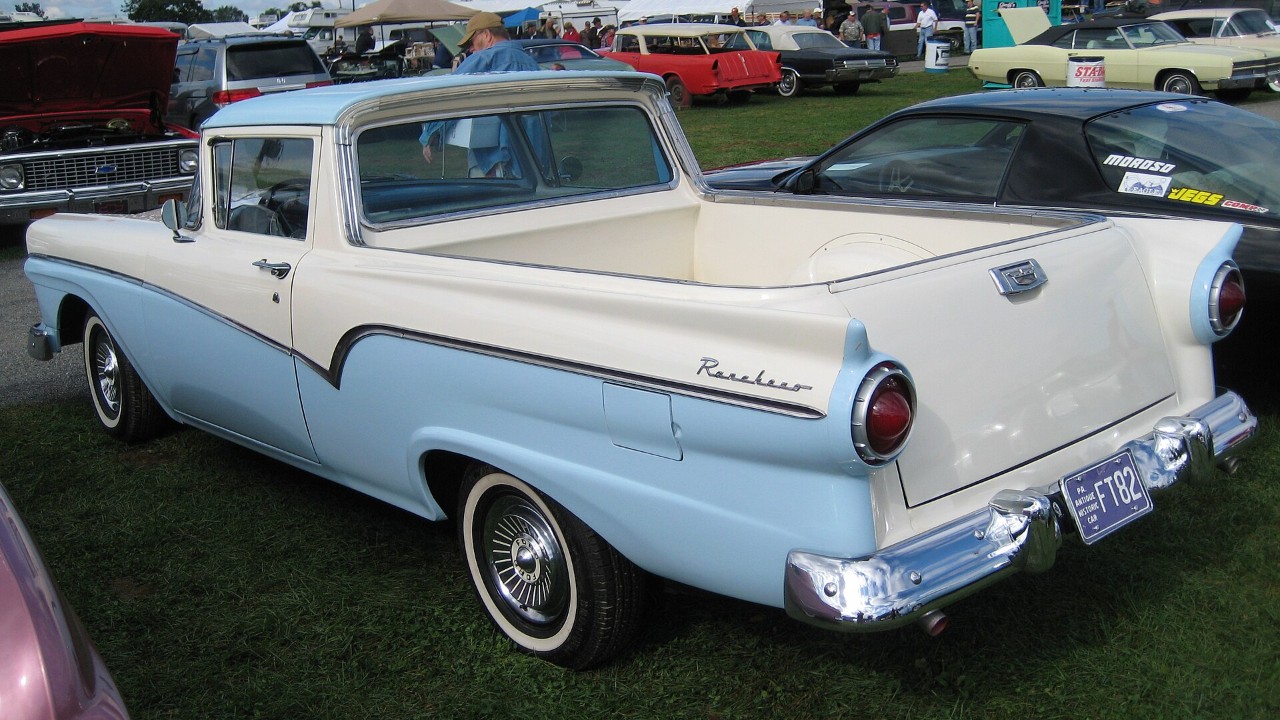
A coupe utility is a passenger car with a pickup bed where the trunk should be. It rides like a car, parks like a car and hauls a load of feed or lumber on the weekend. Ford of Australia put one into production in 1934, and carmakers in America and Britain built their own takes on the idea.
Most of these trucks lived hard lives, and many wore out in daily work. Because of that, survivors are scarce. That also makes the survivors stand out at a car show, because nobody expects a sedan nose attached to a cargo box.
These are our picks: ten car-based pickups that, in our view, turn heads everywhere they go. Some are American icons, while others are rare imports. Each item names the exact truck in our photo, the facts behind it and our take on why it earns a second look.
1. 1957 Ford Ranchero
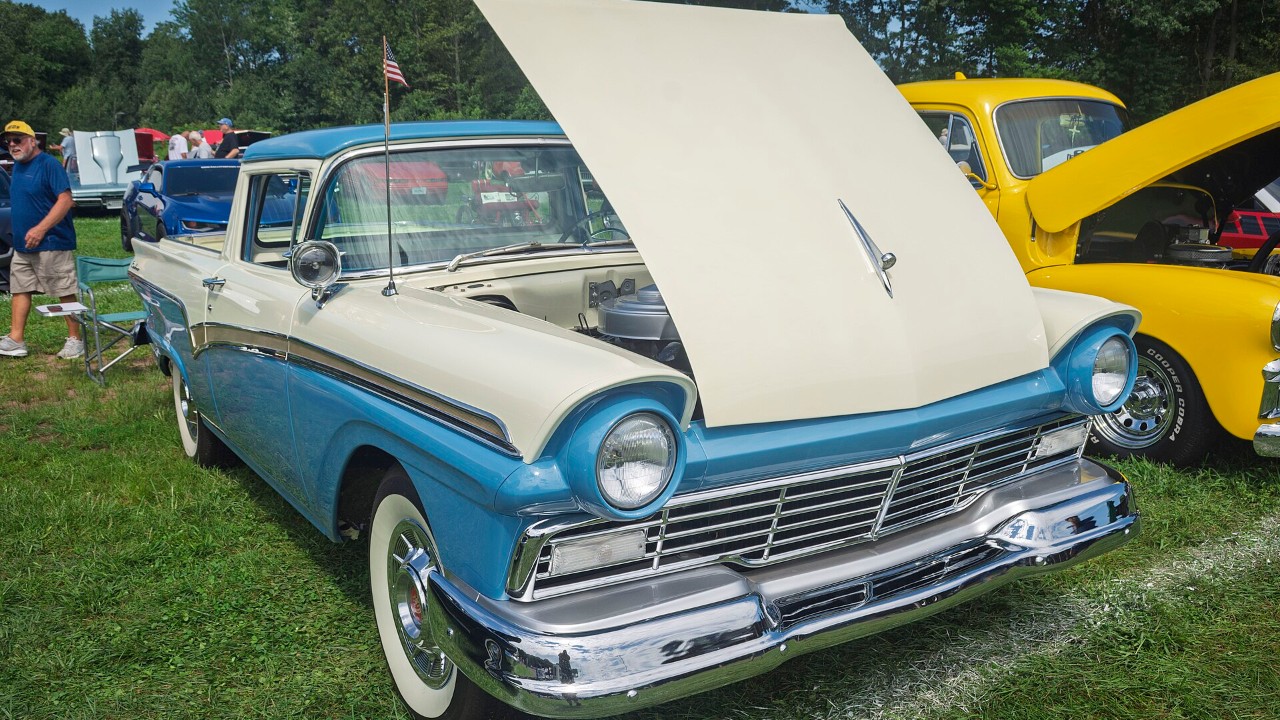
The Ranchero brought the coupe utility idea to postwar America in a big way. First, Ford introduced it in December 1956 on the new-for-1957 full-size platform. In effect, it was a Courier sedan delivery with an open, reinforced bed behind the cab.
That meant a buyer got car comfort with truck usefulness. In fact, the first Ranchero even had slightly more cargo room than a half-ton F-Series. Under the hood, buyers could pick from the regular Ford car engines, so a Ranchero could be as mild or as quick as the owner liked.
As a result, the formula worked. Across its life, Ford built 508,355 Rancheros before production ended in 1979. Chevrolet later answered with its own El Camino, which we covered in our look at forgotten El Caminos. Our take: the 1957 Ranchero is the cleanest expression of the idea, a full-size Ford sedan that happens to carry a load. Its long, low roofline stops people in any parking lot. The 1957 truck in our photo shows the original look before Ford shrank the Ranchero for 1960.
2. 1937 Studebaker Dictator Coupe Express
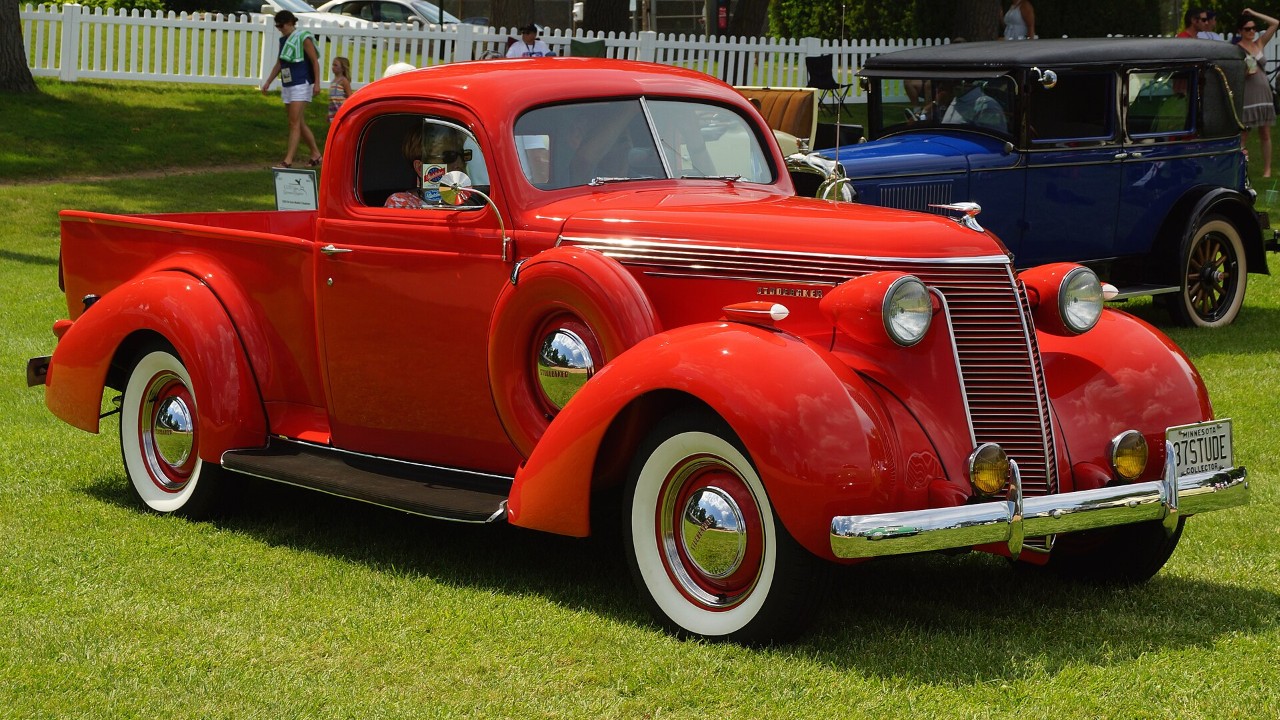
Long before the Ranchero, Studebaker sold a coupe utility with real style. The Coupe Express used the Dictator passenger car’s frame, running gear and front sheet metal. It even kept the car’s flared rear fenders, so from the front it looked like any Studebaker sedan.
Power came from the larger of Studebaker’s L-head six-cylinder engines with a three-speed manual. In addition, buyers could order an overdrive. Buyers could order a factory metal pickup bed or take a cab and chassis and fit their own body. The truck’s design came from Raymond Loewy’s studio, which explains the graceful lines.
However, production was small and fell each year. Studebaker built about 3,000 in 1937, roughly 1,200 for 1938 and about 1,000 for 1939, after which the model ended. As a result, the Coupe Express is a rare sight today. Our take: this is a handsome truck that nobody walks past without a second glance. The 1937 truck in our photo is from the first and best-selling year.
3. 1978 Subaru Brumby
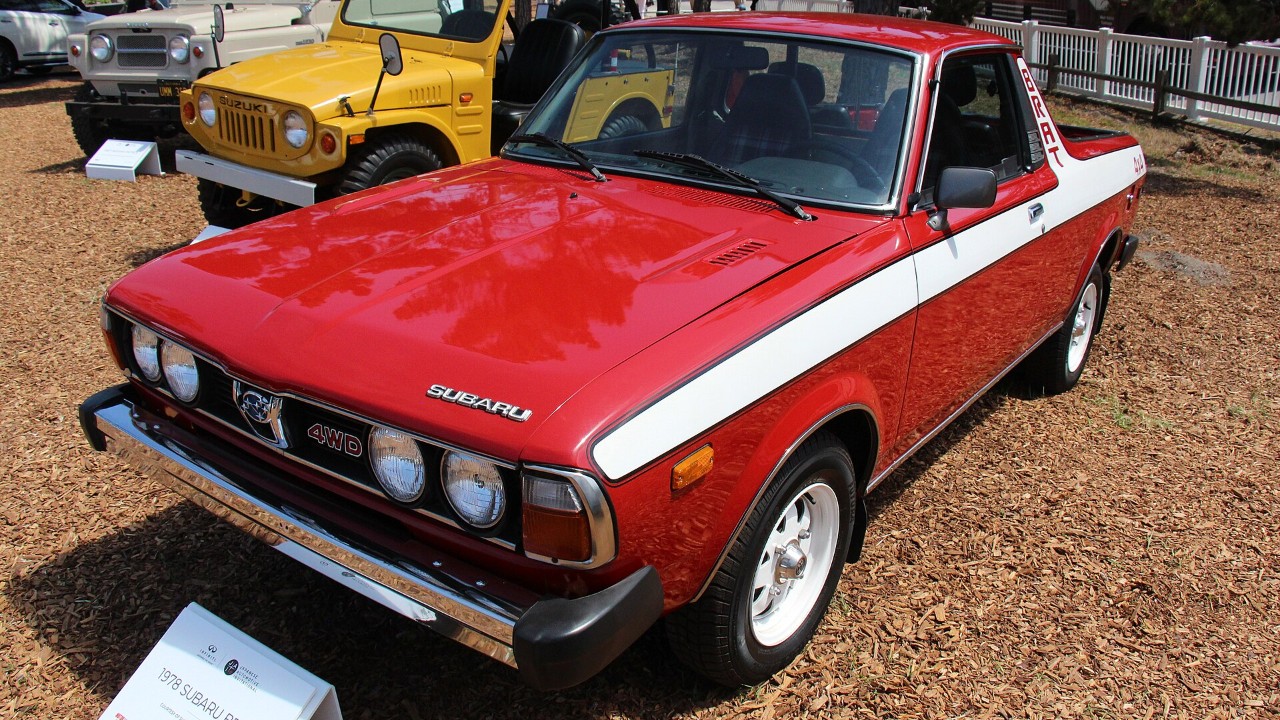
Australians and New Zealanders called it the Brumby. Meanwhile, Americans knew the same truck as the BRAT. Subaru built it from 1978 to 1994, based on the Leone station wagon.
Unlike most small trucks of its day, every BRAT came with four-wheel drive. Early models used a 1.6-liter EA-71 flat-four, and a 1.8-liter engine arrived in 1981. For 1983 and 1984, Subaru even offered an optional 94-hp turbocharged engine. Later, in North America, Subaru bolted rear-facing plastic jump seats into the bed. Those seats helped the BRAT count as a passenger car, which carried a 2.5% import tariff instead of the 25% truck tariff known as the Chicken Tax.
Down under, the Brumby kept the same go-anywhere layout as its American twin. Our take: the Brumby is a car-based pickup with real off-road ability, which is a rare mix. Its boxy, wedge-shaped body looks charming next to modern trucks. The 1978 Brumby in our photo is from the very first model year, a find that will draw a crowd at any meet.
4. 1983 Plymouth Scamp
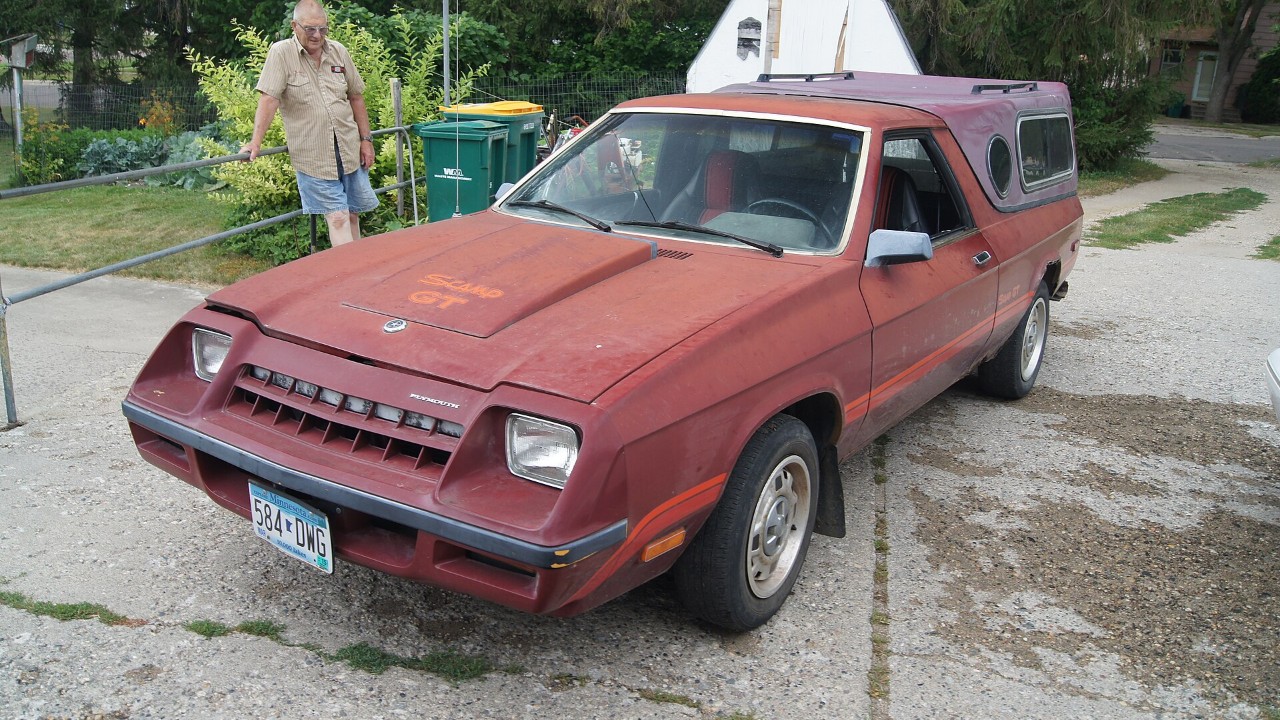
Chrysler’s front-drive pickups of the 1980s are among the oddest trucks ever sold in America. The Plymouth Scamp was a rebadged Dodge Rampage, and Plymouth sold it for the 1983 model year only.
Because of that short run, it is a genuine rarity. Total Scamp sales came to 2,184 base trucks and 1,380 GTs, or 3,564 in all. Meanwhile, the Rampage that it shared its body with used a carbureted 2.2-liter four-cylinder engine. The Rampage also listed a load capacity of 1,145 lb, which is a lot for a small front-drive car.
Our take: the Scamp is the definition of a conversation starter. Most people at a show have never heard of a Plymouth pickup from the 1980s, and fewer have seen one. The front-drive layout, low bed and sporty styling make it look like a hatchback that grew a cargo box. So if you find one for sale, we’d jump on a clean, rust-free example, because we’d expect Scamp-specific trim parts to be hard to source. The 1983 truck in our photo shows the original styling well.
5. 1946 Hudson Super Six Big Boy pickup
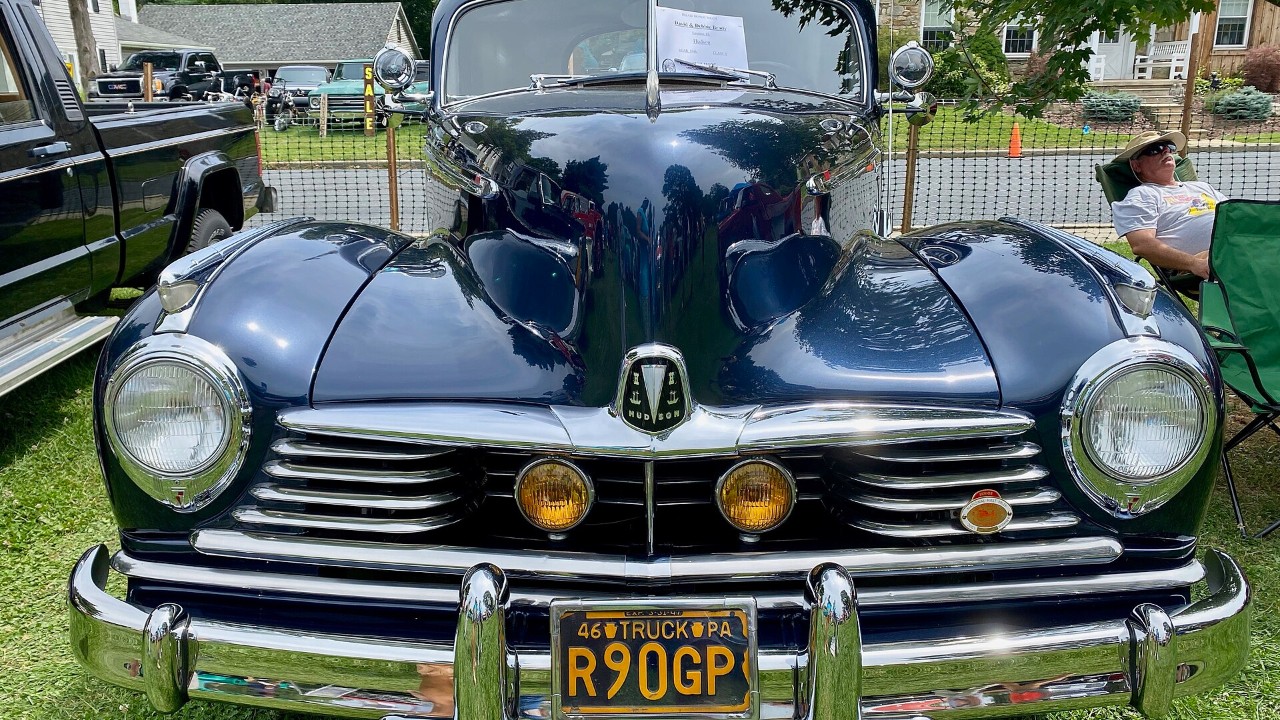
Hudson built car-based trucks from 1929 until 1947, and the last ones are the most striking. Curbside Classic’s history traces the three-quarter-ton “Big Boy” back to the 1937 Terraplane line. By 1946 and 1947, Hudson sold its pickup only in that heavier configuration, though it no longer used the Big Boy name on the postwar trucks.
Power came from Hudson’s 102-hp long-stroke, side-valve “Super Six,” with a three-speed manual and optional overdrive. Curbside Classic describes the 1946 truck as half car, half truck, with a Hudson sedan’s face on a working pickup. At one point, though, Hudson offered as many as 19 truck models. Then the range shrank to just two in 1942, before the final postwar trucks.
Our take: the Hudson pickup is one of the most elegant trucks of its era. That big chrome grille and long hood look far too fancy for hauling hay, which is exactly why it draws a crowd. In fact, we’d consider it one of the best-looking car-based pickups ever built. The 1946 truck in our photo appeared at the 2021 Macungie show in Pennsylvania.
6. Holden 50-2106 coupe utility
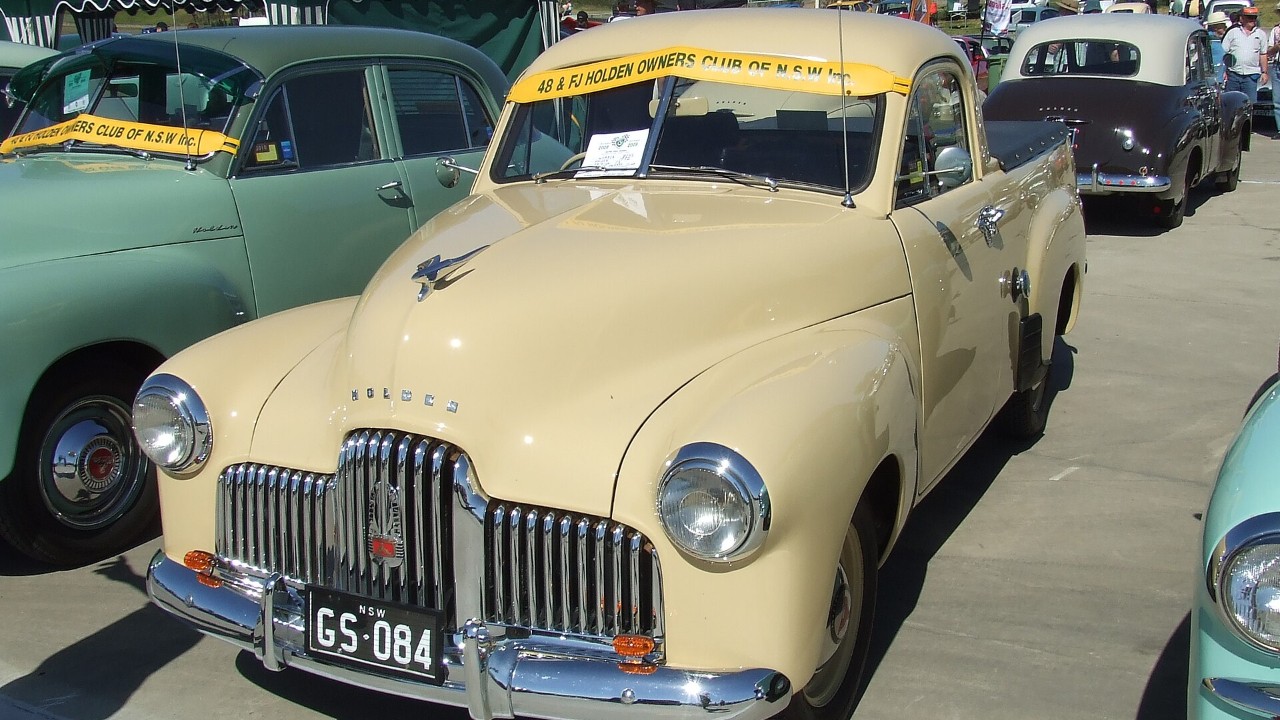
The Australian “ute” is the heart of this whole story. According to Ford’s own history, a farmer’s wife in Victoria wrote to Ford of Australia asking for a vehicle with passenger-car comfort and the usefulness of a truck. A 23-year-old designer named Lew Bandt drew the answer, and Ford’s coupe utility entered production in 1934.
Later, Holden joined in with its own coupe utility in January 1951. The 50-2106 grew out of the 48-215 sedan. It used the 132.5-cubic-inch “Grey” straight-six, rated at 60 hp, with a three-speed manual. The ute could carry 7 hundredweight, or about 780 lb.
Our take: in our view, few trucks say “Australian ute” more clearly than this one. Its rounded body and simple six give it a friendly, postwar look that draws people in. In America, you will almost never see one at a show, which makes it a true head-turner. The truck in our photo is a 50-2106 ute, shown in the clean, plain form most of them wore when new.
7. 1972 Ford Falcon XA GS utility
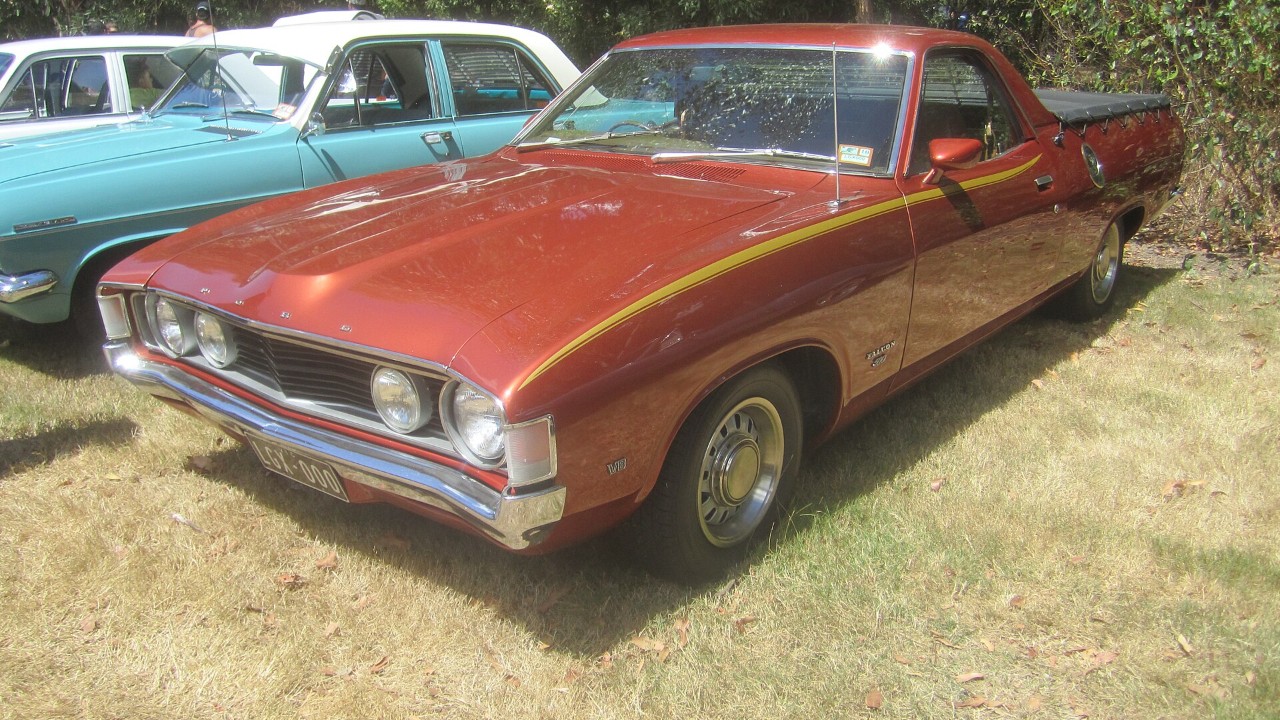
The XA Falcon marked a turning point for Ford of Australia, because it broke with the American-designed Falcons before it. Built from March 1972 to September 1973, it was the first Falcon designed and built in Australia. Ford also gave the coupe utility a longer wheelbase than the sedan.
The Grand Sport pack added flair. It brought rally stripes, GT-style steel wheels, a wood-rimmed steering wheel and full GT gauges, and Ford offered it on utes and panel vans as well as sedans. Meanwhile, engine choices ran from sixes to the 302 and 351 Cleveland V8s. In total, Ford built 129,473 XAs of all body styles.
After that, the Falcon ute kept going for decades. In fact, it outlived the XA by more than 40 years. Ford’s history says the first Falcon ute arrived with the XK in 1961, and Ford sold more than 455,000 Falcon utes by 2014. Our take: a GS-pack XA ute is a muscle-era Aussie truck that looks the part. The stripes and GT dials make it feel special, while the bed keeps it useful. The 1972 GS in our photo shows those stripes clearly.
8. 1960 Ford Falcon Ranchero
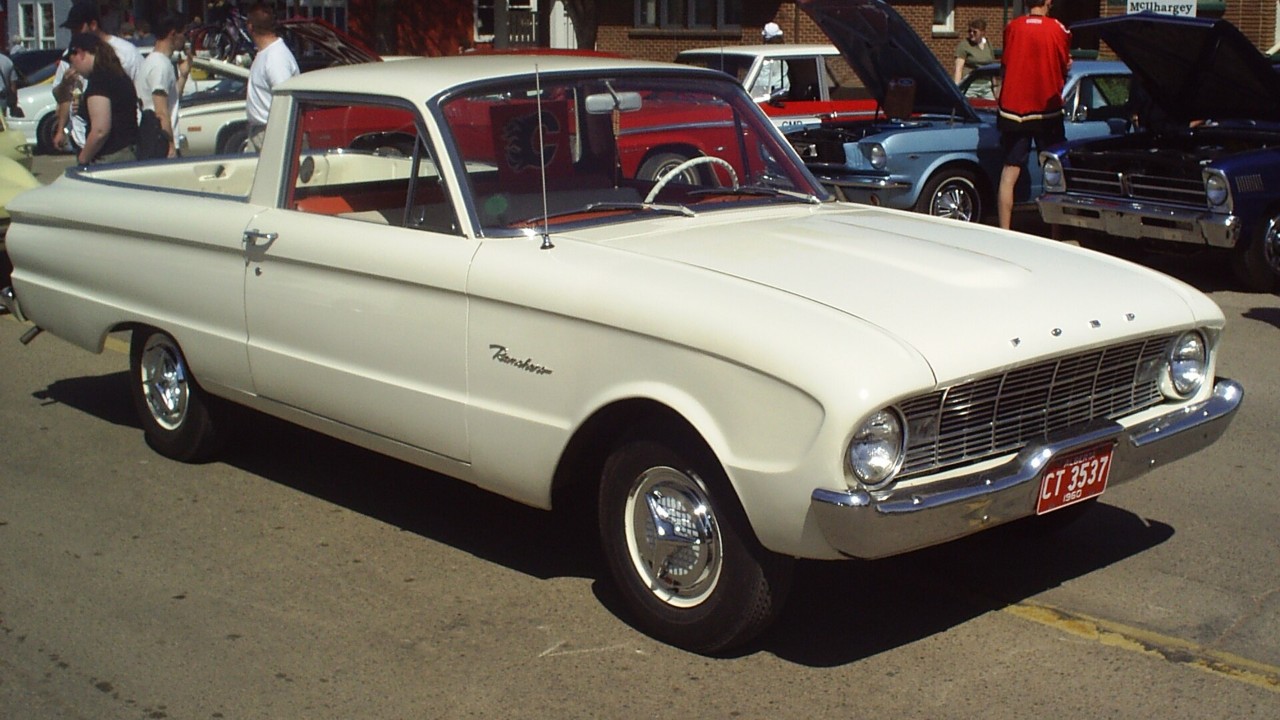
For 1960, Ford shrank the Ranchero to fit the new compact Falcon. The truck now rode on the Falcon two-door sedan delivery, and its standard engine was a 144-cubic-inch inline-six. That made it a thrifty hauler rather than a big cruiser.
Then Ford added power over time. A 170-cubic-inch six arrived in 1961, and a 260-cubic-inch V8 followed in 1963. In 1965 a 289 V8 replaced the 260. Buyers could pick a two-speed Ford-O-Matic, a three-speed Cruise-O-Matic or a three-speed manual. Load capacity was 800 lb, which is plenty for a light truck built on a compact car.
The car-based pickup idea kept evolving at GM too, as we showed in our El Camino feature. Our take: the Falcon Ranchero is the most approachable classic on this list. It is small, simple and affordable to run, and the clean, slab-sided shape suits it. The 1960 truck in our photo is from the first compact year, the one that started this generation.
9. 1958 Austin A55 pickup
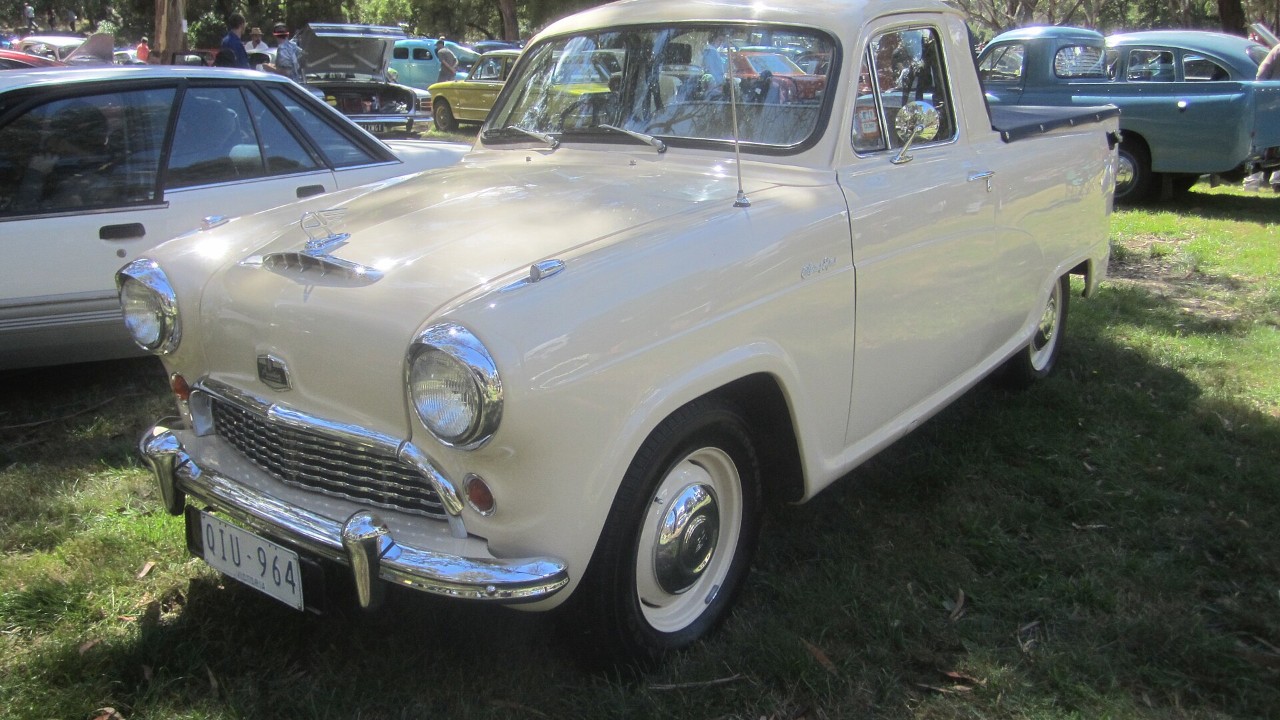
Britain had car-based pickups too, and this is one of the best-looking. The Austin A55 pickup came from the Cambridge sedan, which debuted at the 1954 London Motor Show. According to Zwischengas, the half-ton pickup ran from 1957 to 1971, first as an Austin and later as a Morris.
The magazine notes that the truck used 1.2- and 1.5-liter engines and wore a modern, American-influenced body. In total, over 120,000 left the factory, counting the Half-Ton van. However, few survive, because most were worn out in hard commercial use. The interior was modern too, with no pre-war styling, which in our view was a big step for a British workhorse.
Our take: the A55 pickup looks like a scaled-down American truck with a British accent. The tidy grille and rounded cab give it charm that most commercial vehicles never had. Because so few survive, seeing one at an American show is a real event. If you want one, we’d look for a solid body first, since we’d expect shared Cambridge mechanical parts to be easier to find. The 1958 truck in our photo wears the original Austin badging, so it predates the later Morris-badged trucks.
10. 1959 Morris Minor pickup
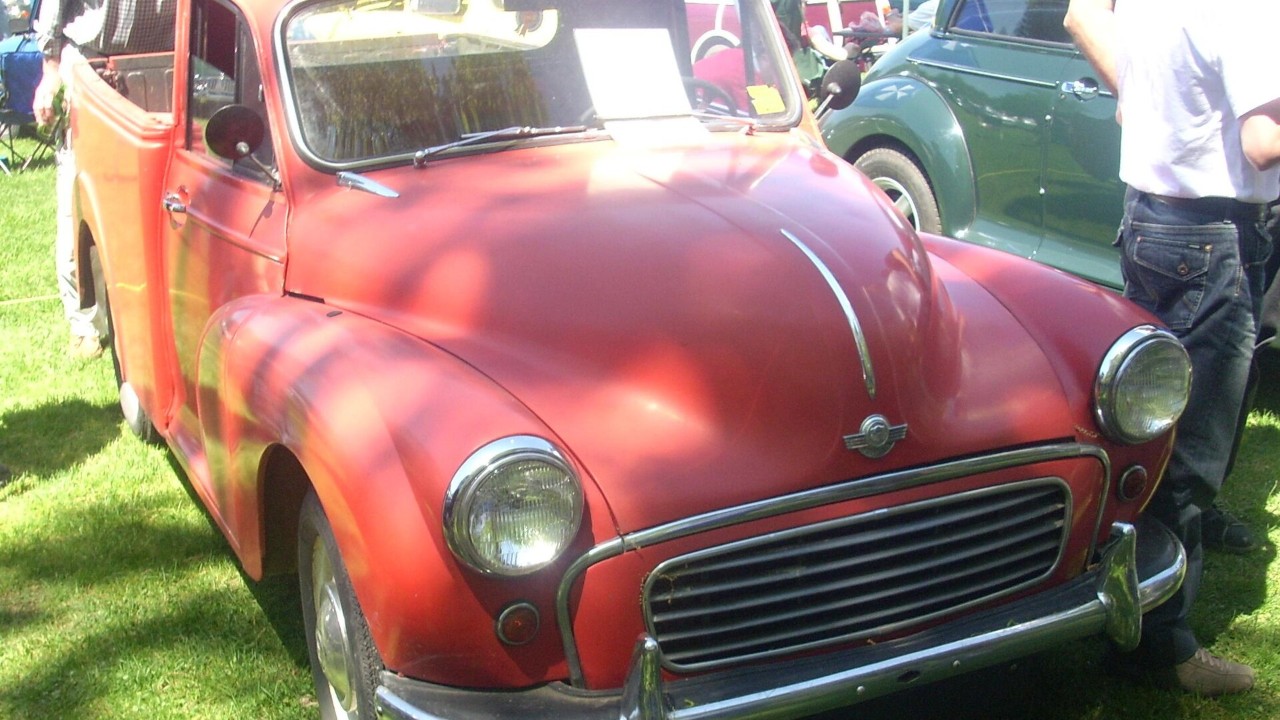
The Morris Minor is one of Britain’s most-loved small cars, and its pickup is the cutest truck on this list. Morris added van and pickup versions in May 1953, sold as the Quarter Ton. Unlike the sedan and Traveller, which used a unit body, the commercial versions sat on a separate chassis.
As a result, that chassis came with stiffer rear springs, telescopic rear dampers and a lower-ratio differential for heavier loads. Later, Morris renamed it the 6 cwt after the 1,098cc engine arrived in 1962. Then an 8 cwt version followed in 1968 with stronger rear springs.
The Minor itself, designed by a team led by Alec Issigonis, sold about 1.6 million units. Our take: the Minor pickup charms everyone, from kids to old mechanics, because it never takes itself too seriously. Its round fenders and tiny bed make it look like a toy, yet Morris built it for real work. Also, the 1959 truck in our photo is a clean example, so you can see how simple the design was. Morris built the last commercial Minors in April 1971.
More from Fast Lane Only