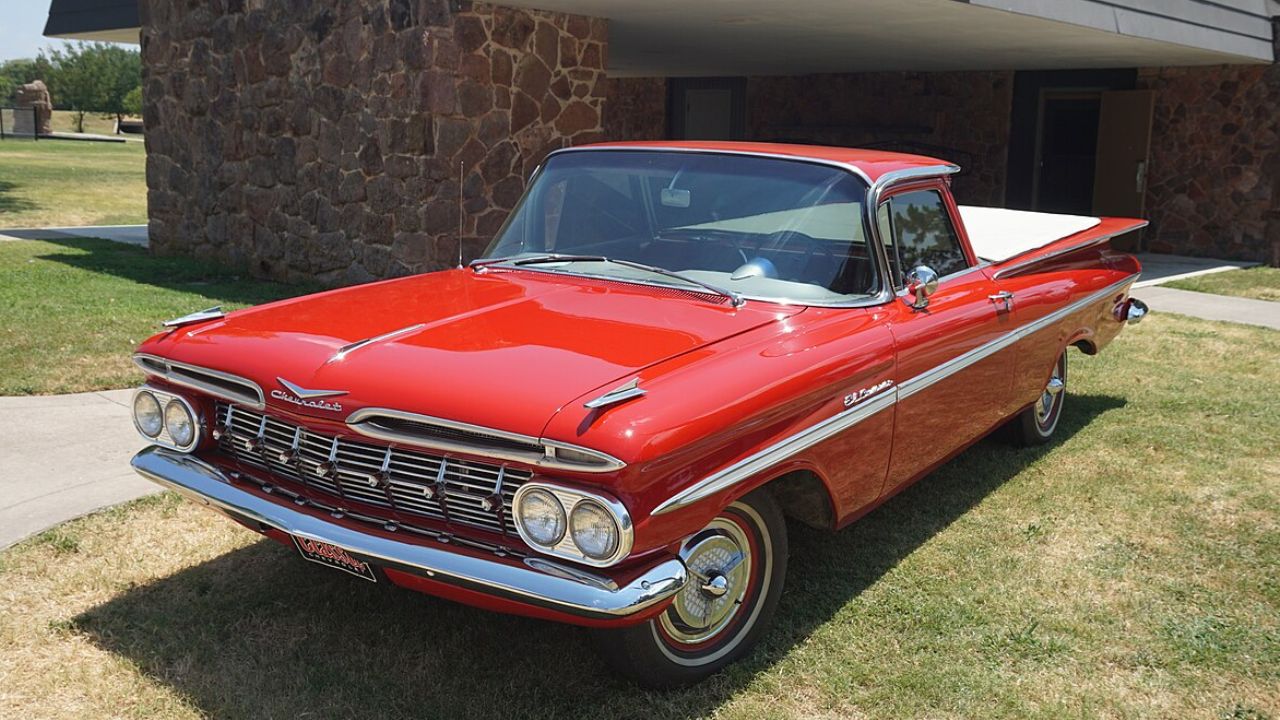
Chevrolet sold 22,246 copies of the first Chevrolet El Camino in 1959. It was a car-based pickup with a full-size Chevy’s nose and a cargo bed where the back seat should be. Nothing else in a Chevy showroom looked quite like it.
Over the next three decades, the El Camino kept changing shape. It shrank to a midsize and grew big-block muscle. Later it swelled into the heaviest version of all, then ended up on a smaller chassis of its own. Each time, Chevy tried to show buyers what a utility vehicle could look like if it were also a car.
These 11 are our picks for the El Caminos that looked furthest ahead when they were new. The verdicts are our opinion. Our years, engines and production figures come from published model histories, auction records and Hagerty’s own look at the model.
1. 1959 Chevrolet El Camino

The first El Camino used the new 1959 Brookwood two-door wagon as its base, and that wagon came from the full-size Chevrolet. Chevy dressed the outside in Bel Air trim and the inside in Biscayne trim. Under the hood, buyers could choose a 283 V8 or a 348 V8 rated as high as 335 bhp. There was also a fuel-injected Ramjet 283 rated at 250 or 290 bhp.
That last option tells you how forward-looking this truck was, because it put fuel injection in front of a cargo bed. Hot Rod also tested a 315-bhp, triple-carburetor 348 with a four-speed, and it ran from 0 to 60 mph in about seven seconds. The magazine also estimated its top speed at 130 mph, a figure that sounds wild for a vehicle with a bed.
In our view, the 1959 car is the purest version of the idea. It took the full-size 1959 Chevrolet and turned it into a working vehicle without losing the style. Ford’s Ranchero beat it to market for 1957, but the two only met head to head in 1959. Ford had sold 21,706 Rancheros in that 1957 debut year, and Chevy’s first-year total topped that.
2. 1960 Chevrolet El Camino
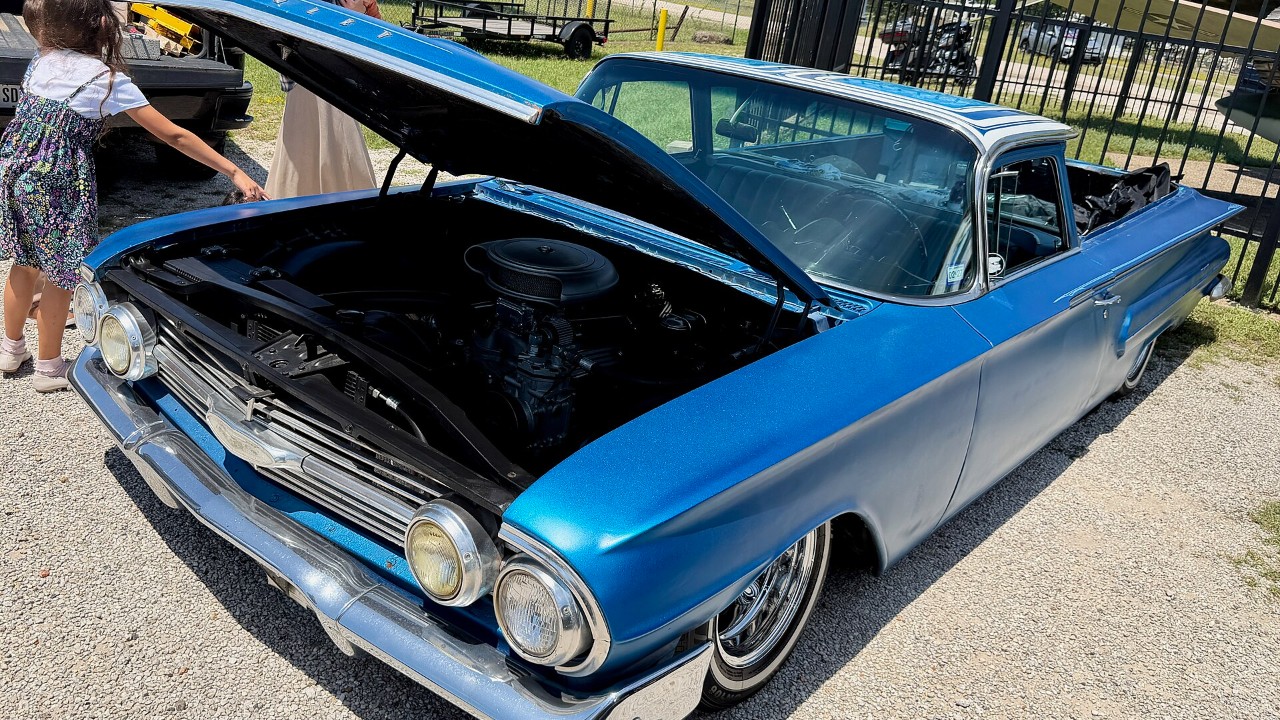
For its second year, the El Camino lost some of its edge. Chevy detuned the base 283 to 170 bhp and dropped fuel injection from the list. A six-cylinder model started at $2,366, and the V8 added just $107 to that price.
Sales fell by about a third, to 14,163, while Ford moved 21,027 Rancheros on the new compact Falcon. Limited seating for three, a modest cargo area and plain commercial marketing all worked against the Chevy. As a result, Chevrolet dropped the model after 1960, and we dug into why the El Camino disappeared in an earlier story.
So why does it belong here? Because the 1960 car showed the same bold idea in its final full-size form. In our take, it looked like the future on a showroom floor that was not ready for it. It is also the scarcer of the two full-size years by a wide margin. The idea was right and the timing was wrong, and Chevy needed only four years to bring it back. If you want one now, expect a six or a 283 rather than the fuel-injected setups of 1959.
3. 1964 Chevrolet El Camino

After a four-year break, the El Camino returned for 1964 as part of the new Chevelle line. That move put it on a midsize platform, and the badges read both “Chevelle” and “El Camino.” Engines ran from 194 and 230 sixes at 120 and 155 hp to a 283 V8 at 195 hp. A 220-hp four-barrel version sat at the top.
Then Chevrolet raised the stakes during the model year. It added 327 V8s rated at 250 and 300 hp, which gave the little pickup real speed. By 1965, the L79 version of the 327 carried a 350-hp rating, and 327 cars that year ran the quarter-mile in the low 15s. Chevy built 32,548 El Caminos for 1964, more than twice the 1960 total.
We think the 1964 car looked ahead in a different way from the first one. Instead of chasing size, it showed that a car-based pickup could work best at a family-car scale. That formula carried the nameplate for the rest of its life, from the Chevelle years to the final G-body cars. If you shop for one, the midyear 327 trucks are the ones we would hunt first.
4. 1967 Chevrolet El Camino 396
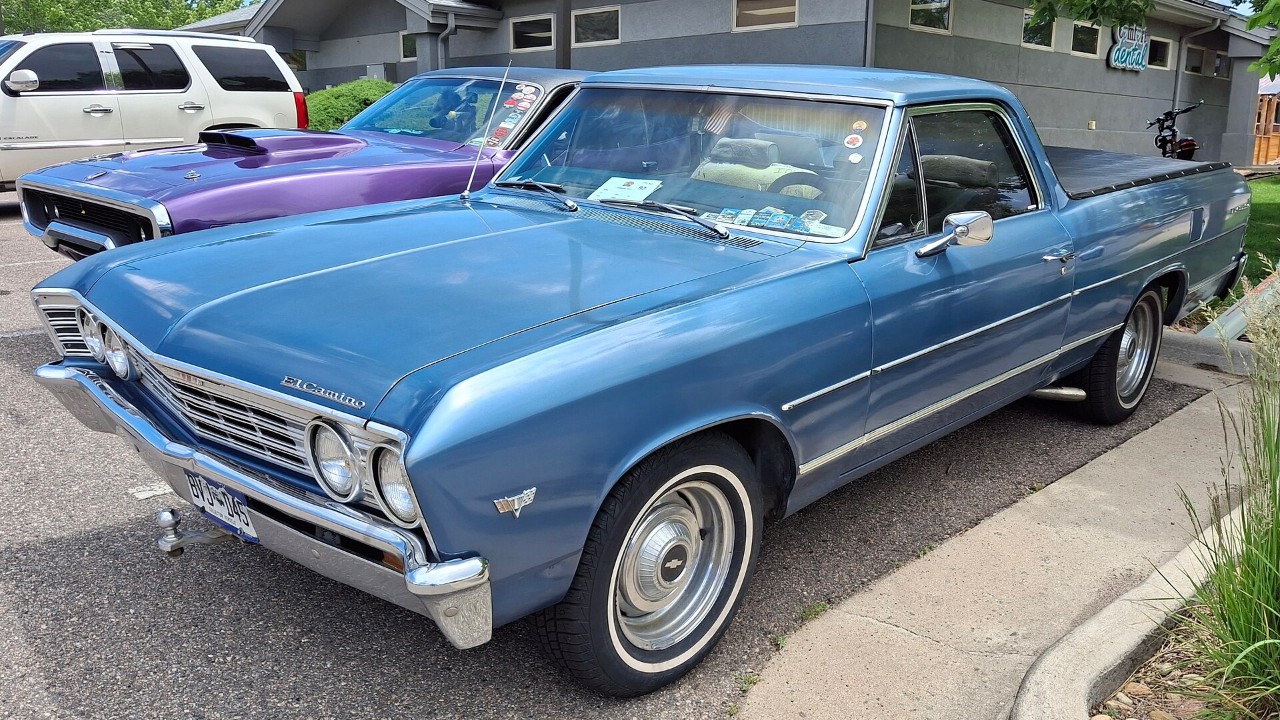
Big-block power first reached the El Camino for 1966, when Chevy added a 396 V8 rated from 325 to 375 hp. The 1967 model brought it back for a second year. Chevrolet sold 2,565 of the 325-hp L35 engines in the El Camino series, and the 375-hp L78 also appeared on the options list.
Those were serious numbers for something with a cargo bed. In fact, 1966 to 1969 El Caminos ran the quarter-mile in the mid-to-upper 14-second range. Chevy built 34,830 of the 1967 cars in all, so the 396 trucks made up only a small slice. The 350-hp L34 was available too, but Chevy offered it in both El Camino and SS396 bodies, so nobody knows its El Camino count.
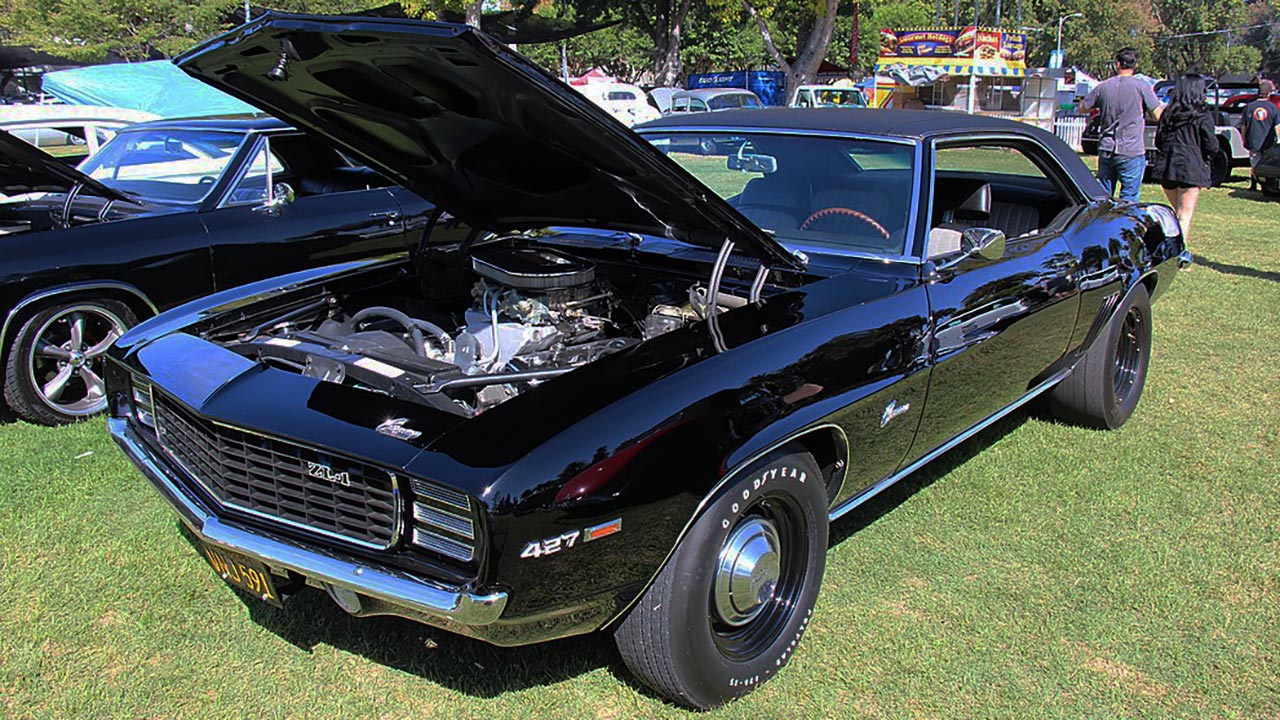
Our take: the 1967 396 looked like the future because it erased the line between work vehicle and muscle car. It did that before the SS badge made it official. It also wore that year’s Chevelle sheetmetal, which suits the body well. If you find one with its original big-block, you have one of the first big-block El Caminos.
5. 1968 Chevrolet El Camino SS 396
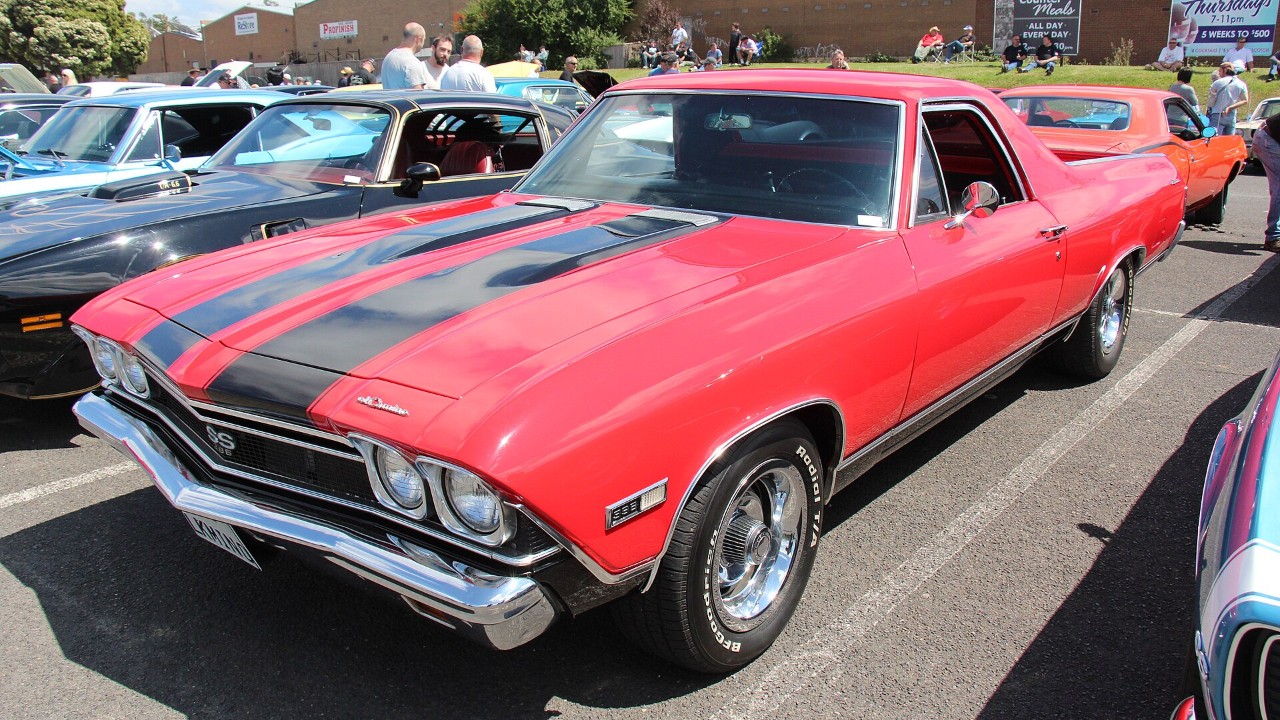
For 1968, the El Camino moved to a 116-inch wheelbase and stretched to 208 inches overall. More important, the SS396 became its own model. It was the only year the El Camino body style got its own SS396 series designation, number 13880. Chevrolet built 5,190 of them.
The Turbo-Jet 396 came at 325 or 350 hp, and the 375-hp L78 returned to the options list. According to an RM Sotheby’s lot description, 1968 was also the year the El Camino first received Super Sport equipment. Total El Camino production climbed to 41,791 that year. By comparison, Chevrolet built 60,499 SS 396 sport coupes and 2,286 convertibles for 1968.
In our view, the longer 1968 body is where the El Camino started to look like a proper personal car with a bed. The proportions got lower and longer, and the SS hardware made it look fast while parked. That is a big part of why we picked it for this list. If you find one, the 375-hp L78 truck is the one to chase.
6. 1970 Chevrolet El Camino SS 454 LS6

Chevrolet offered the 454 for 1970 only with the Z15 SS equipment option. Only three models could take it, and the El Camino was one of them. In LS6 form, the engine carried a rating of 450 hp and 500 lb-ft of torque. Even the SS396 that year actually displaced 402 cubic inches. Model histories count 4,475 LS6 Chevelles for 1970 without breaking out the El Caminos, so the exact number of LS6 trucks is unclear.
The milder 454 had plenty of appeal too. That same RM Sotheby’s listing covers a 1970 El Camino SS with the 360-hp LS5 454, a cowl induction hood, hood pins and factory air. It sold for $35,200 at Auburn in fall 2013. Chevy built 47,707 El Caminos for 1970, and we have looked at why the 1970 El Camino was so hard to copy.
Our take: the LS6 car is the peak of the idea that a pickup could be the fastest thing on the street. In our eyes, the cowl hood and stripes looked like nothing a pickup had worn before.
7. 1972 Chevrolet El Camino SS
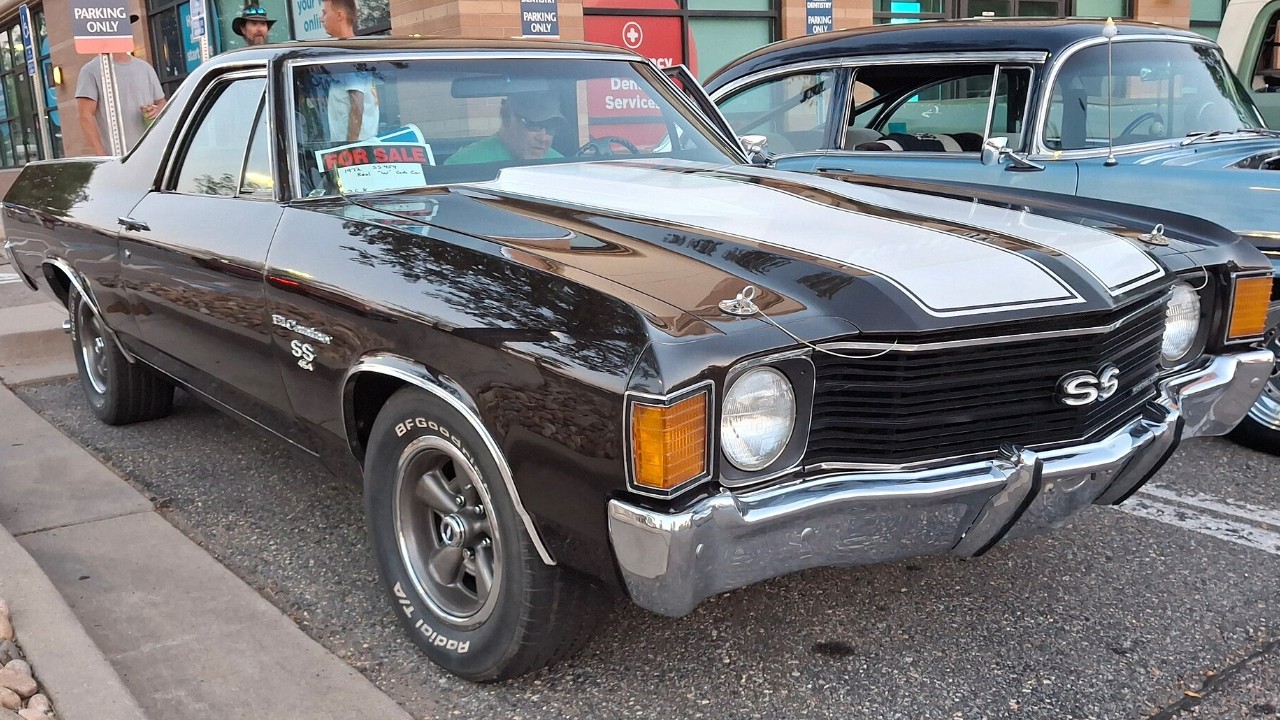
By 1972, the numbers had changed. Chevy switched to net horsepower ratings that year, so the 454 now read 270 hp and the 402 read 240 hp. The year before, lower compression for unleaded fuel and a smog pump had already cut output, and the LS6 had left the list. For 1971, the LS5 454 carried a 365-hp gross rating.
However, Chevrolet also opened up the SS package. For 1972 buyers could order SS trim with any V8, while the 454 came only with SS trim. The El Camino sold better than ever too, with 57,147 built. Its badge-engineered twin, the GMC Sprint, had arrived for 1971.
We picked the 1972 car because it shows the El Camino surviving the end of the muscle era with its looks intact. It kept the 1970-style body and the SS stripes, yet it worked with the lower-octane fuel the 1970s demanded. That balance of style and practicality is the template later El Caminos followed. If you want one, the SS 454 trucks keep the most of the old muscle-car feel.
8. 1976 Chevrolet El Camino Classic
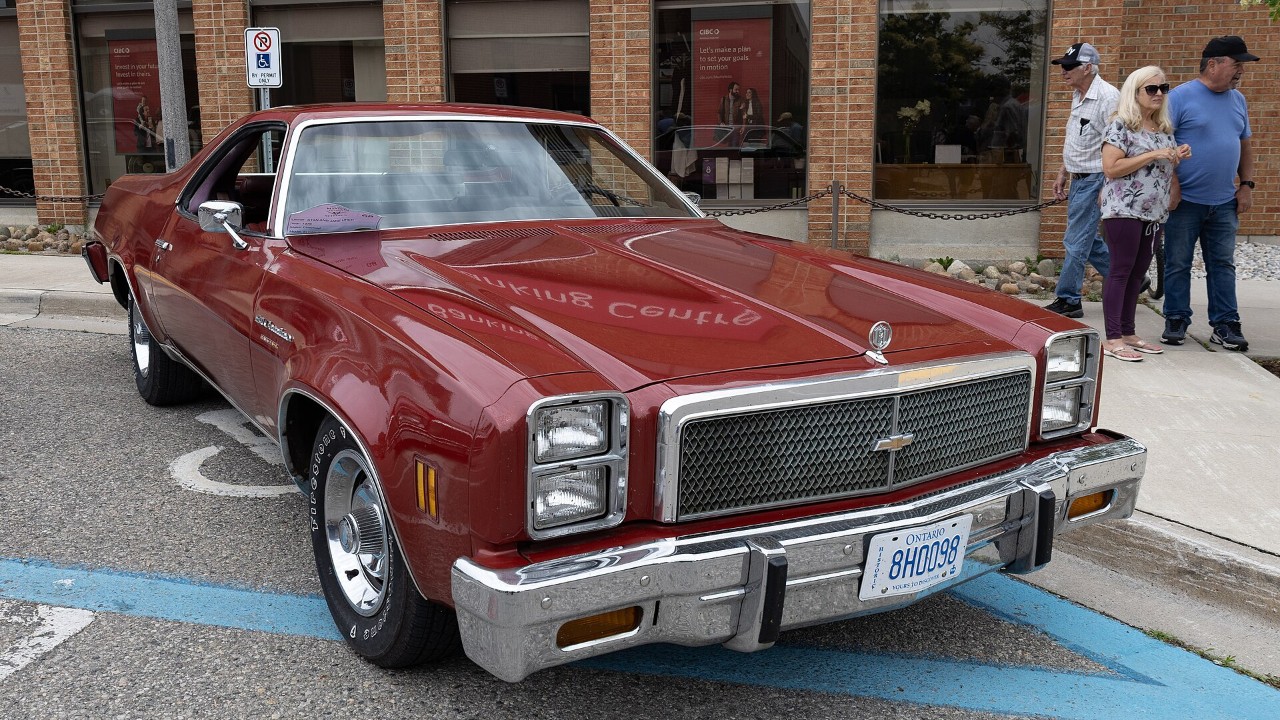
The Colonnade generation of 1973 to 1977 rode a 116-inch wheelbase. Hagerty’s look at the El Camino as a collector vehicle calls it the largest and heaviest El Camino at nearly 4,000 pounds. Front disc brakes became standard for 1973, and the Classic trim arrived for 1974 with bright trim shared with the Chevelle Malibu Classic. Buyers in this era could also pick Conquista two-tone paint, the SS package or the Estate option with woodgrain sides.
The 1976 Classic stands out for its face. That year, stacked quad rectangular headlights replaced the big round lamps. Under the hood, the 305 V8 made 140 hp. Chevy built 44,890 El Caminos for the year, and 5,163 of them were SS models. We once wrote about the heaviest El Camino in more detail.
In our opinion, those square headlights made the Classic look like the late 1970s had arrived early. It is the El Camino as a personal-luxury car, with chrome and comfort instead of stripes. That is exactly why we think it deserves a second glance.
9. 1978 Chevrolet El Camino Black Knight
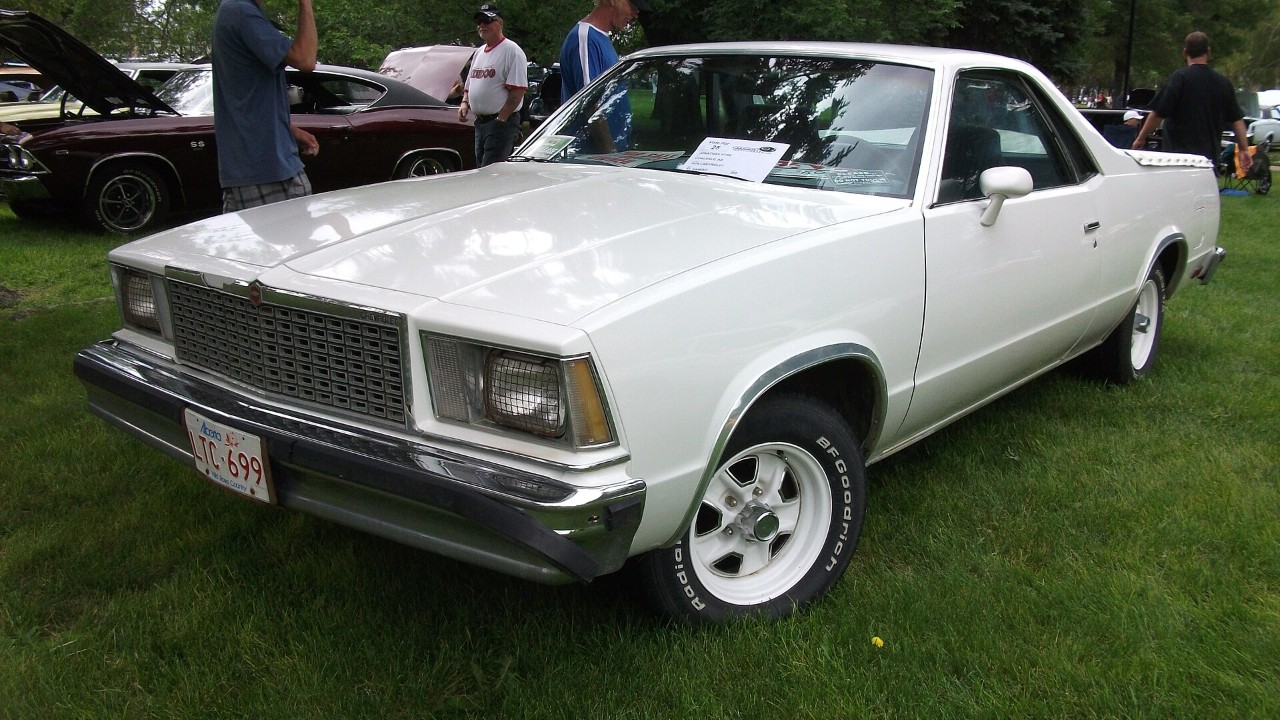
The 1978 El Camino moved to a new, smaller chassis with a 117.1-inch wheelbase that it did not share with any other Chevrolet. A 200 V6 rated at 95 hp was standard, with 305 and 350 V8s optional. Chevy built 54,286 El Caminos that year, and 12,027 of them were SS models. Trim levels ran from the base truck to the Conquista, with its special paint treatment, and the Super Sport.
The Black Knight was the most dramatic of them. It wore a hood emblem showing two dragons and a knight. Production ended after about 1,200 units, because of legal trouble with the owners of the name.
Our take: the Black Knight looked like the custom-van and T-top culture of the late 1970s rolled into a factory pickup. In our view, its medieval hood art had no real rival in a showroom. With roughly 1,200 built, finding a genuine one today takes more patience than money. Insist on documentation, because a hood emblem is the easy part to copy.
10. 1983 Chevrolet El Camino Royal Knight
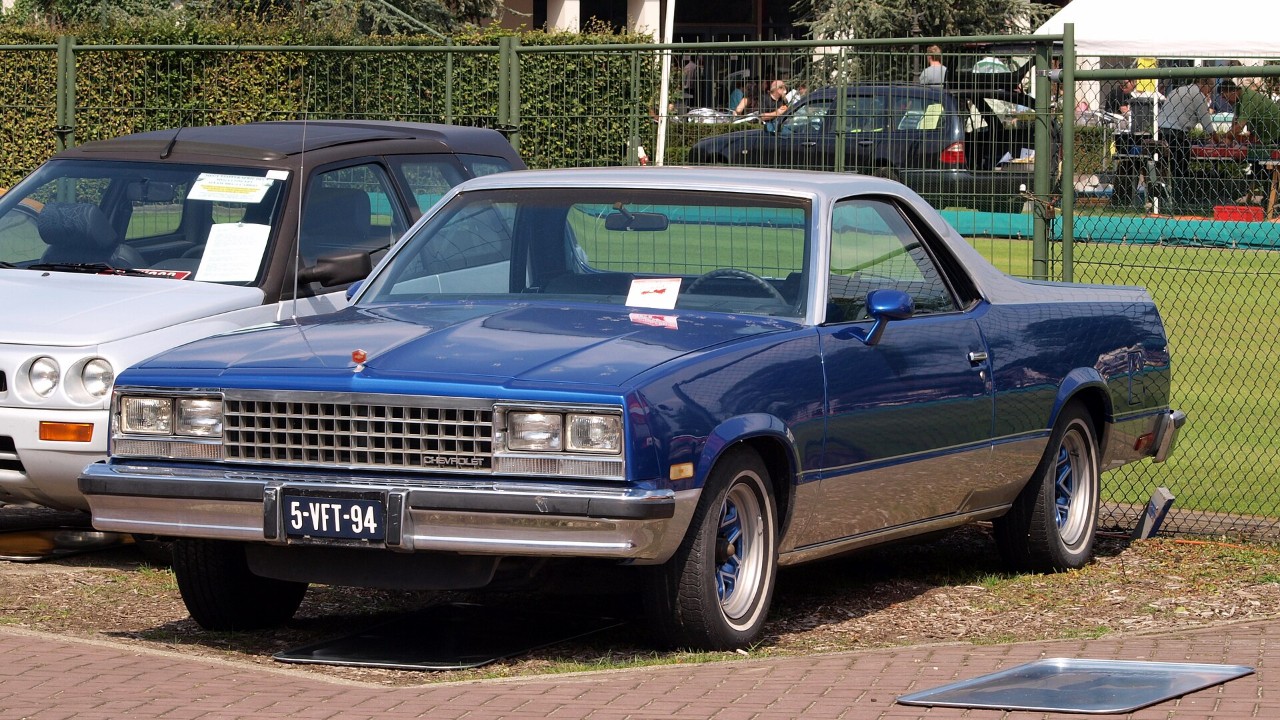
Chevy brought the idea back for 1979 as the Royal Knight option for the SS. It kept the knight theme on the G-body El Camino until 1983, its final year. By then the El Camino line had also gained a 267 V8 for 1979. A 5.7-liter diesel V8 rated at 105 hp followed from 1982.
Production had fallen by 1983, though. Chevrolet built 24,010 El Caminos that year, and only 2,914 of them were SS models. That makes a last-year Royal Knight a small piece of an already small SS run. For comparison, Chevy had built 11,371 SS models for 1979, the first Royal Knight year.
In our view, the Royal Knight showed where the El Camino could go once horsepower stopped selling cars. Bold graphics did the job that big-block engines had done a decade earlier. It looked like the future of 1980s truck styling, when paint and decals did a lot of the talking. If you shop for one, look for SS paperwork, since the Royal Knight was an option on the SS.
11. 1984 Chevrolet El Camino SS Choo Choo
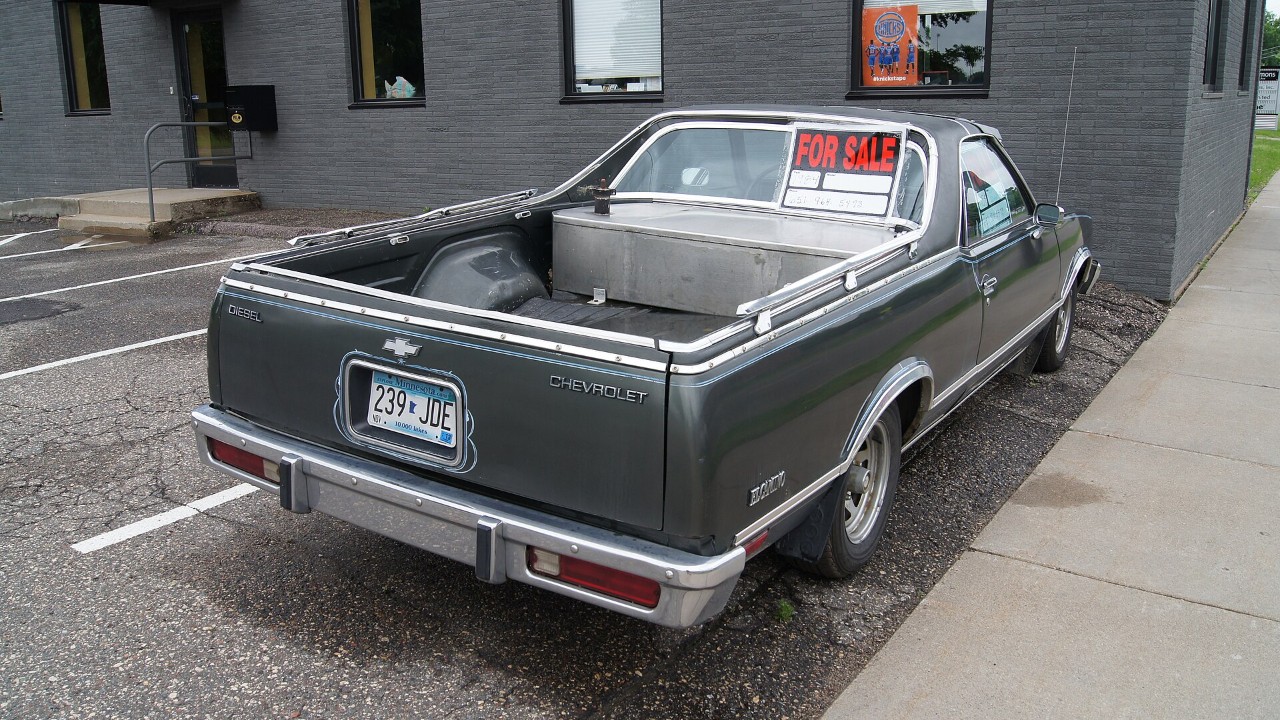
From 1983 to 1987, Chevy dealers could order a cosmetic conversion from Choo-Choo Customs Inc. of Chattanooga, Tennessee. It added an aerodynamic nose, side exhaust skirts, aluminum wheels and SS decals. A factory-built SS, by contrast, required the Z15 “SS Sport Decor” option.
Chevrolet built 22,997 El Caminos for 1984, and only 1,309 carried SS badging. Then production moved to Mexico in 1985. It ended in late 1987, and GM has confirmed that no 1988 El Caminos or Caballeros were built. The last full year, 1987, produced 13,743 El Caminos and just 861 SS models. By then the 4.3 V6 had replaced the old base engine.
Our take: the Choo Choo nose was the El Camino’s last attempt to look new. It gave the old pickup a sleeker, wind-cheating face for the mid-1980s. Finding an original conversion with its body parts intact is the hard part today. That is why we would ask for the dealer paperwork, since the nose, skirts and wheels are what made it a Choo Choo.
More from Fast Lane Only