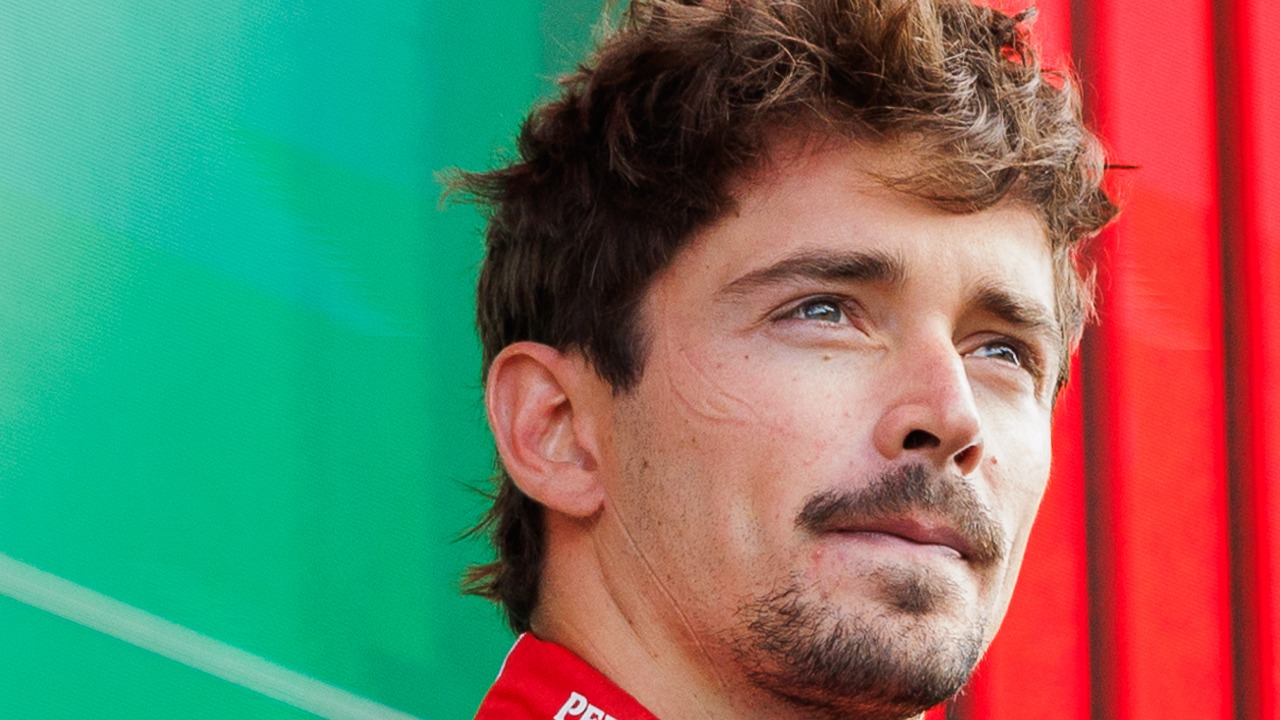
Charles Leclerc has traded the starting grid for the snow-dusted streets of St Moritz, and his choice of transport is as headline grabbing as any pole lap. The Ferrari star has been spotted gliding through the Swiss resort in Ferrari’s ultra-rare performance SUV, a Purosangue that carries a sticker price around $400,000 and a presence that turns the whole town into a paddock.
His winter escape is more than a casual holiday drive. It is a rolling showcase of how Ferrari’s first SUV has become both a status symbol for elite clients and a natural extension of Leclerc’s identity as the face of the Scuderia, blending everyday usability with the kind of performance he usually reserves for a Grand Prix weekend.
Leclerc’s St Moritz sighting and the lifestyle flex
Leclerc’s appearance in St Moritz in a Ferrari SUV underlines how seamlessly his racing persona now overlaps with a high altitude, high luxury lifestyle. The images of him navigating the resort in a Purosangue priced at $400,000 capture a driver who is as comfortable threading a V12 through narrow alpine streets as he is attacking a qualifying lap, and they reinforce his status as one of the most visible ambassadors for Ferrari away from the circuit. The St Moritz backdrop, with its mix of old money hotels and modern chalets, turns the car into a moving billboard for the brand’s push into ultra premium daily drivers, rather than just weekend toys, and his presence there makes that pitch feel lived in rather than staged.
For Ferrari, having Charles Leclerc associated with a flagship SUV in a place like St Moritz is a marketing coup that money alone cannot buy. The resort is a magnet for wealthy enthusiasts who could plausibly add a Purosangue to their garages, and seeing a current Formula 1 star using one as his winter runabout gives the model a credibility that no static showroom display can match. The sighting also dovetails with the broader narrative of Leclerc’s off track life, where curated glimpses of his travels and cars, from St Moritz to Monte Carlo, help frame him as a modern athlete whose brand extends well beyond Sunday afternoons.
The Purosangue: Ferrari’s performance SUV with a twist
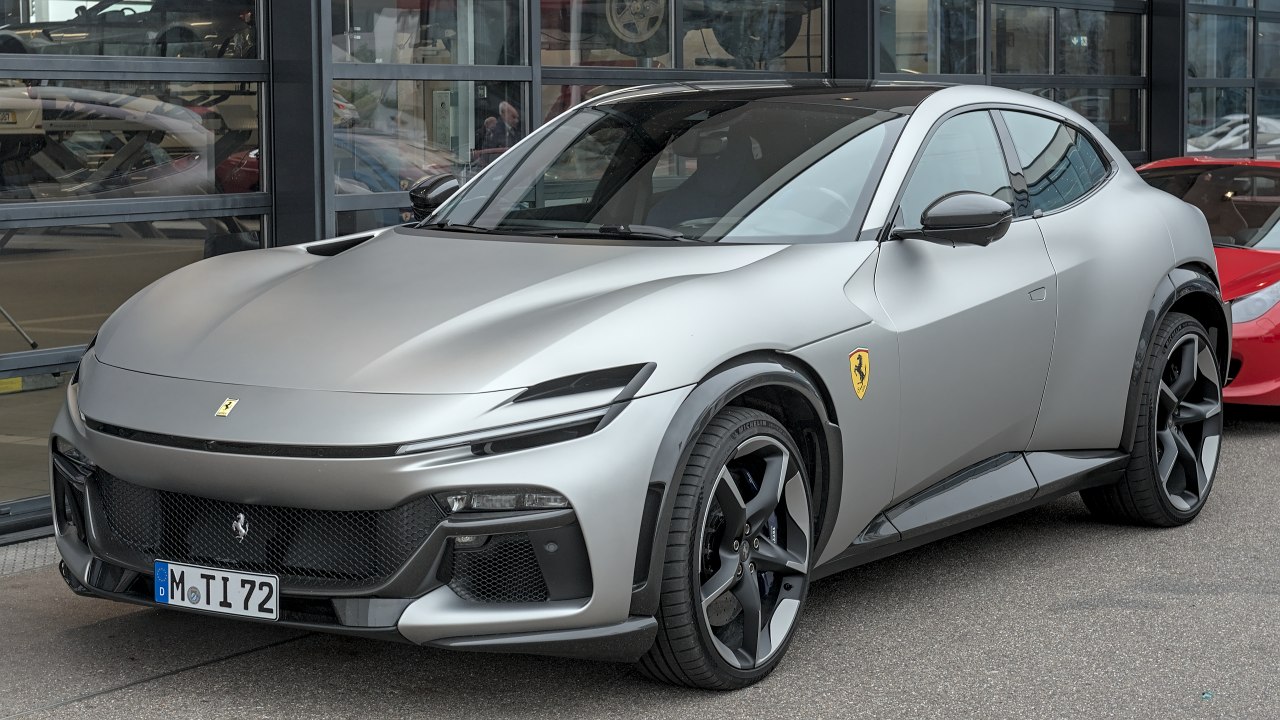
At the center of this story is The Purosangue, the SUV that Ferrari insists is not a conventional family hauler but a performance machine that happens to have four doors and real ground clearance. The model is described as reflecting Ferrari’s deep rooted heritage in performance and luxury, with a focus on delivering the immediacy and feedback of a sports car in a more practical package. Finished examples like Leclerc’s highlight how the brand has translated its design language into a taller silhouette, with sculpted bodywork and a cabin that mixes handcrafted materials with the latest driver focused tech, so the car feels like a natural extension of the company’s mid engine and front engine coupes rather than a departure from them.
Underneath the styling, the Purosangue’s engineering is aimed squarely at drivers who care about lap times as much as luggage space. Reporting on the model’s specifications notes that it delivers supercar level acceleration and a top speed of 193 mph, figures that place it at the sharp end of the performance SUV segment and justify Ferrari’s insistence that it has not followed the traditional SUV playbook. That combination of speed and practicality is precisely what makes it such a compelling choice for someone like Leclerc, who needs space for winter gear and passengers in St Moritz but is unlikely to tolerate anything that feels numb or detached from the road.
How rare is Ferrari’s first SUV really?
Part of the Purosangue’s appeal in a place like St Moritz is not just how fast it is, but how few people can actually get one. Early on, Ferrari signaled that it would keep production tightly controlled, and the model was quickly reported as sold out for at least two years, with the company even pausing new requests for a while to avoid diluting its exclusivity. One analysis of Ferrari Purosangue production notes that the manufacturer has not published an exact running total, but that it has promised to cap the SUV at a small slice of overall output, reinforcing the idea that this is a rare sight even in wealthy enclaves.
That strategy fits with Ferrari’s broader approach to scarcity, where the brand uses limited availability to maintain both residual values and a sense of mystique. A detailed review of The Ferrari Purosangue describes it as not a numbered limited edition, yet still rare within its class because of the company’s self imposed production ceiling and the strength of demand. Another history of the model points out that Ferrari ensures limited production so the Purosangue remains a highly sought after choice among collectors and enthusiasts, which means that when someone like Leclerc is seen driving one in public, it reinforces the perception that this is a car reserved for a very select group of owners.
Inside Leclerc’s relationship with the Purosangue
Leclerc’s connection to the Purosangue did not begin in St Moritz. Earlier in his ownership journey, he was documented picking up a new 2024 Ferrari Purosangue SUV In Monte Carlo, an event that highlighted how personally invested he is in the model. That delivery, covered in detail by Jordan Aquistapace, showcased a highly personalized specification, including a carefully chosen exterior finish and interior details such as Giallo contrast stitching that tied the car back to Ferrari’s racing colors. For a driver whose professional life is defined by fine margins and tailored machinery, the way he configured his Purosangue underscored that this was not just a company car, but a piece of his own collection.
That collection has grown into a kind of rolling biography of his time with Ferrari. A recent look at his garage, framed through a short video of Charles Leclerc and Alexandria in a Ferrari SP3, describes how his cars reflect both his role as Ferrari’s star driver and his passion for automotive heritage and timeless design. In that context, the Purosangue sits alongside more overtly exotic models as the practical pillar of his fleet, the car that can handle daily duties and winter trips while still aligning with the performance and brand values that define his career. Seeing it in St Moritz is therefore less a surprise than a confirmation that he uses his cars the way enthusiasts hope their heroes do.
What Leclerc’s SUV choice signals for Ferrari’s future
Leclerc’s embrace of the Purosangue in high profile settings like St Moritz offers a glimpse of where Ferrari is steering its road car strategy. By putting a current Formula 1 frontrunner in the driver’s seat of its first SUV, the company is signaling that it sees no contradiction between utility and purity, and that its future growth will include vehicles that can serve as primary transport for clients who expect both comfort and track capable performance. The fact that the Purosangue has been described as rare despite not being a numbered special edition shows how carefully Ferrari is managing this expansion, using scarcity and careful positioning to ensure that the SUV enhances rather than dilutes the brand.
From my perspective, the St Moritz sighting crystallizes how the Purosangue has moved from controversial idea to accepted part of Ferrari’s identity, helped along by owners like Leclerc who embody the crossover between racing and luxury lifestyle. When a driver who could choose any car in the world opts to cruise a winter resort in a Ferrari SUV, it validates the company’s bet that there is room in its lineup for a four door, high riding model that still feels like a thoroughbred. As more Purosangue deliveries reach clients and the car becomes a familiar presence in places like Monte Carlo and St Moritz, the image of Charles Leclerc carving through the snow lined streets will stand as an early snapshot of Ferrari’s next chapter.
More from Fast Lane Only: