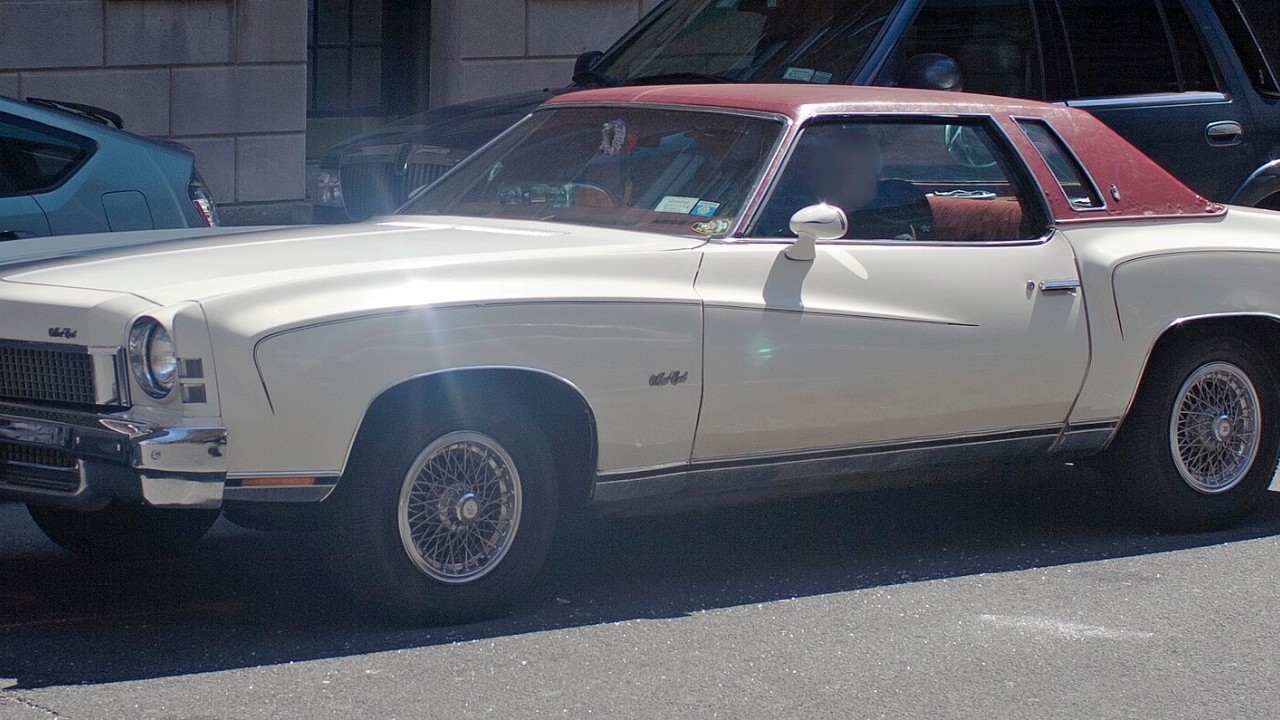
The Chevrolet Monte Carlo name covered rear-drive coupes from 1970 to 1988, then came back for 1995 on a front-drive chassis. As a result, a single show field can hold Monte Carlos that share almost nothing except the badge.
These five come from the later chapters of that story. Each one has a detail worth looking for when you walk the rows, from swivel seats to a signature on the C-pillar.
1. 1973 Chevrolet Monte Carlo Colonnade coupe
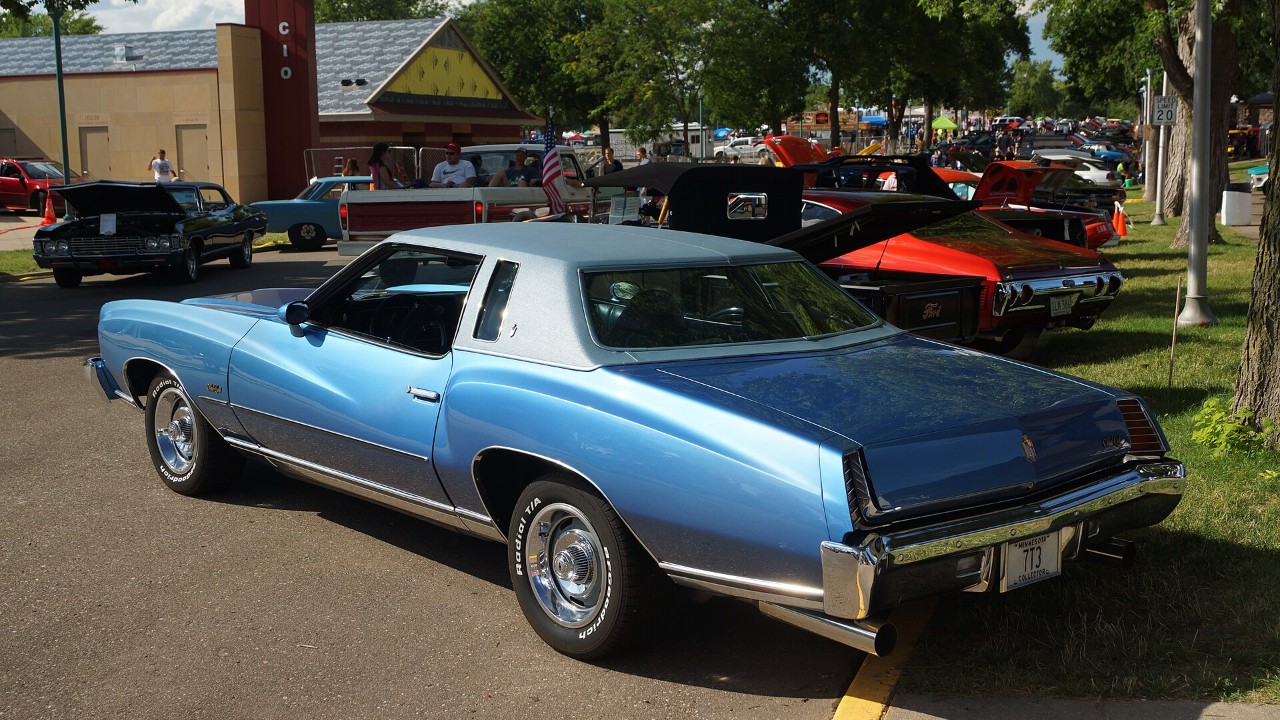
For 1973, the Monte Carlo moved onto GM’s new Colonnade body, and buyers noticed. Model-year output jumped from 163,000 cars in 1972 to 290,000 in 1973, then topped 300,000 the next year. A styling team under David R. Holls gave it thick C-pillars, small fixed quarter windows and a double-wall roof.
Motor Trend’s editors also named it their 1973 Car of the Year, and they praised ride and handling tuning done under John DeLorean, according to Mac’s Motor City Garage. A 350 two-barrel V8 rated at 145 hp came standard. Meanwhile, the top option was the LS4 454, with 8.5:1 compression and 245 SAE net horsepower. On a show car, check for the extra-cost Swing-Out Strato bucket seats, coded AN7.
2. 1995 Chevrolet Monte Carlo Z34
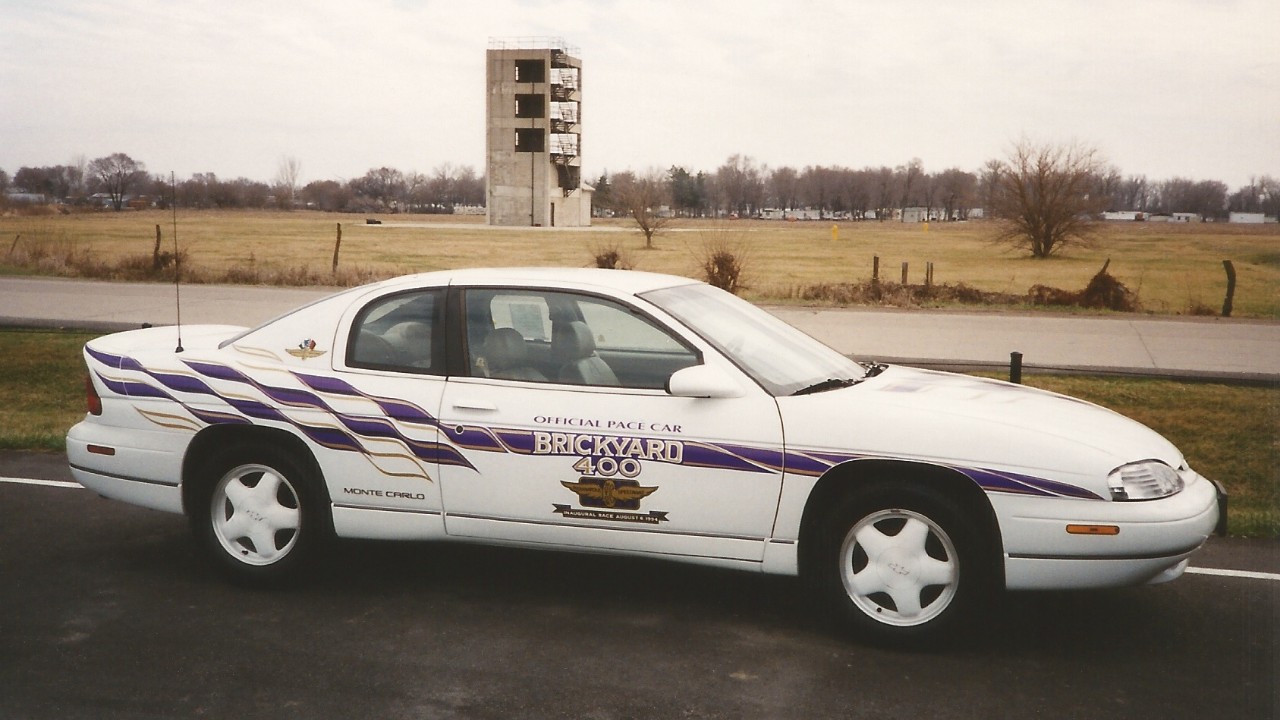
Chevrolet renamed its two-door Lumina for 1995, and the Monte Carlo badge returned after six years away. This version rode on GM’s front-drive W-body and came out of the plant in Oshawa, Ontario. The Z34 was the sporty trim, with 16-inch five-spoke alloys, a lower front air dam and blacked-out trim instead of chrome.
Power came from a 3.4-liter twin-cam V6 driving a four-speed automatic, according to the Martin Auto Museum. The museum’s own car is a Brickyard 400 Pace Car Coupe, which it calls one of only 400 made. Its odometer shows fewer than 6,000 miles. On the show field, a Z34 also gives itself away with red-colored badging.
3. 2002 Chevrolet Monte Carlo SS Intimidator
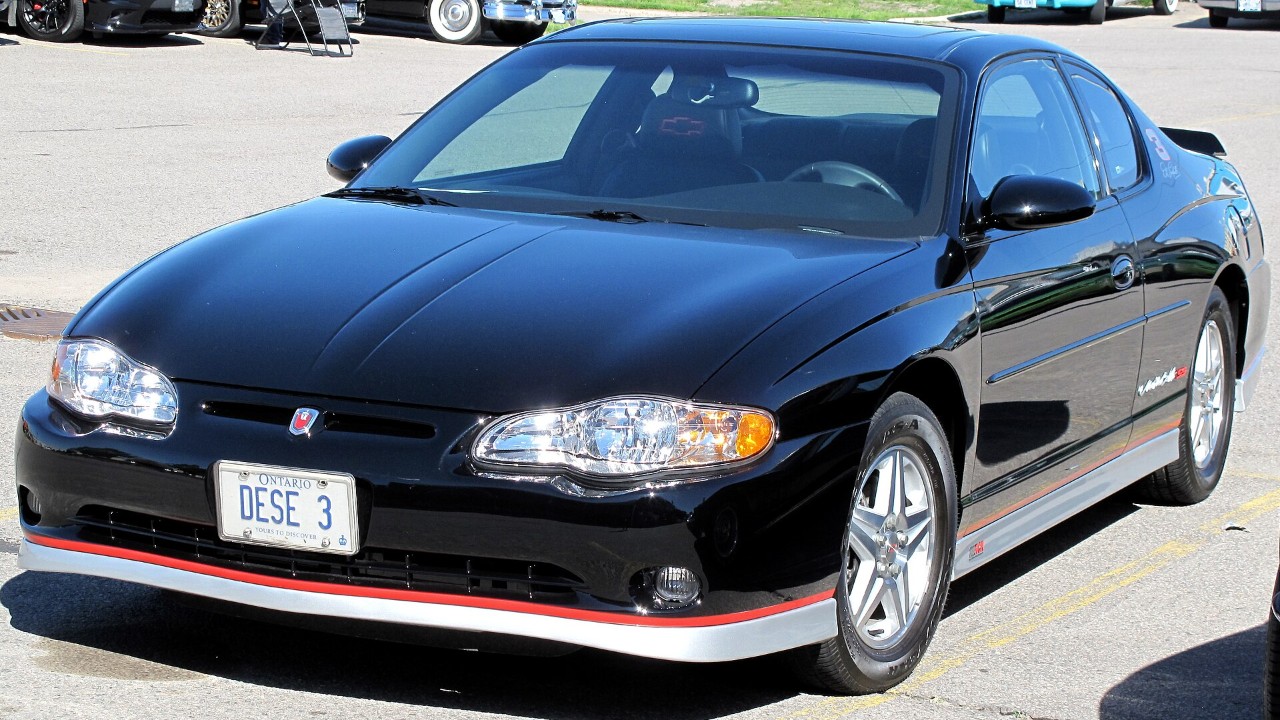
The Super Sport package came back to the Monte Carlo in 2000 after a 12-year gap. Two years later, Childress Racing, the Earnhardt family and Chevrolet teamed up on a tribute to Dale Earnhardt. They called it the Intimidator SS, and production stopped at 3,333 cars.
Instead of the standard 3.4-liter V6, the Intimidator used a 3.8-liter V6 rated at 200 horsepower, as Hagerty notes in a look at a 10-mile example. Black and silver paint, a number 3, Earnhardt’s signature on the C-pillar and “Intimidator” on the deck lid make it easy to spot. By Hagerty’s numbers, a clean standard SS of that era brings $8,000 to $12,000, while an Intimidator can bring close to double.
4. 2004 Chevrolet Monte Carlo Supercharged SS
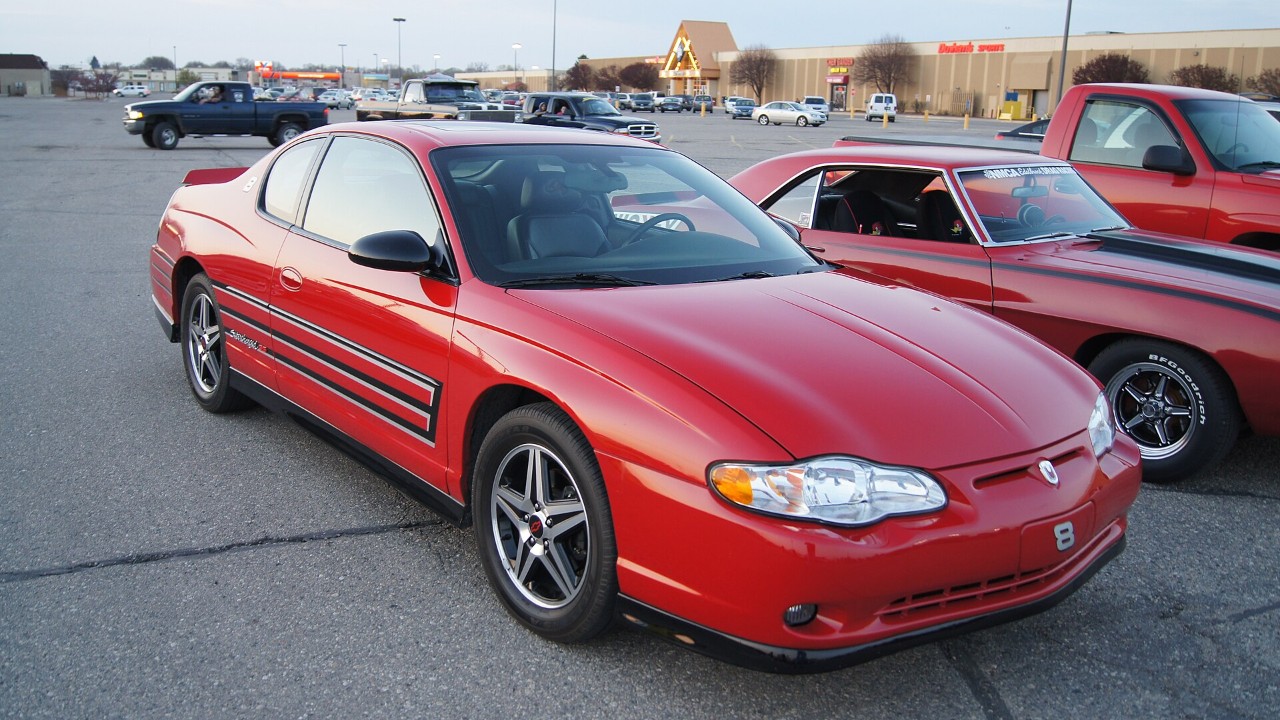
Pontiac’s Grand Prix shared this platform, and it already offered a supercharged 3.8-liter V6. However, Hagerty points out that the blower didn’t reach the Monte Carlo SS until 2004. Once it did, the coupe finally matched its Pontiac cousin on paper.
In a road test by Rob Rothwell for Auto123, the supercharged 3.8 carried ratings of 240 hp and 280 lb-ft. By comparison, the unblown SS made 200 hp and 225 lb-ft. Both drove the front wheels through a four-speed automatic, with disc brakes and ABS at each corner. So did Chevy rekindle the SS flame? Rothwell’s answer: “I, for one, vote yes.”
5. 2006 Chevrolet Monte Carlo SS 5.3
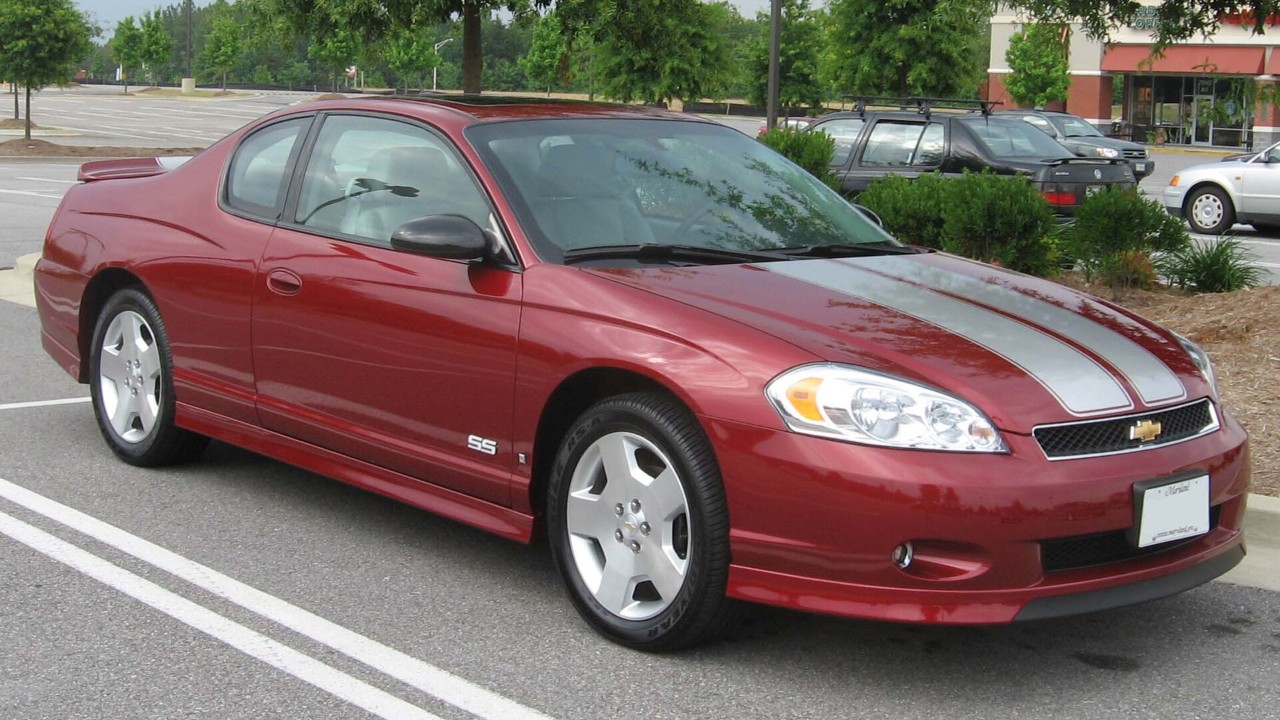
For 2006, the SS traded its V6 for a 5.3-liter pushrod V8 shared with the Impala SS. In fact, MotorWeek called it the Monte’s first V8 in over 15 years. Chevrolet also widened the front track, fitted a stiffer aluminum engine cradle and added a Nextel Cup-style spoiler.
According to MotorWeek, the V8 made 303 hp and 323 lb-ft, which was 63 hp more than the supercharged V6 it replaced. Its test car then ran 0-60 mph in 6.0 seconds and the quarter-mile in 14.5 seconds at 101 mph. Active Fuel Management could shut down four cylinders on the highway, so the rating reached 28 mpg there. The base price was $26,990.
More from Fast Lane Only