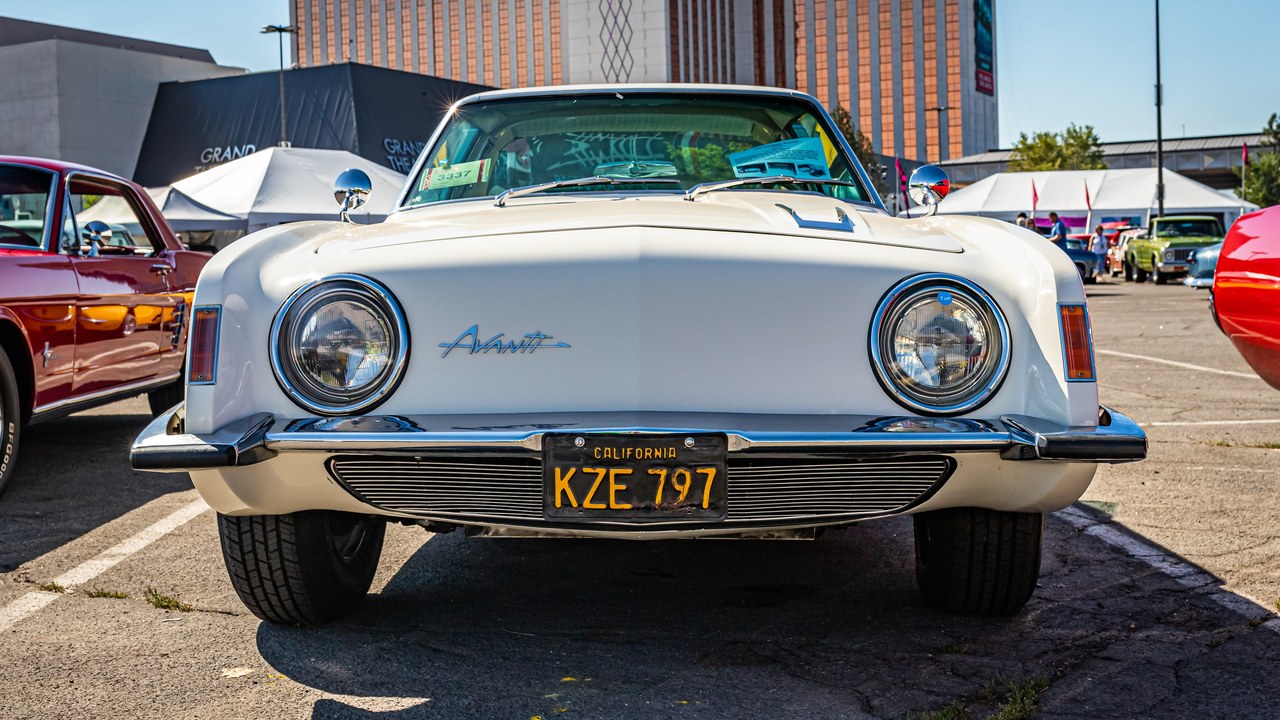
Studebaker closed its South Bend, Indiana, plant in December 1963, just as its Studebaker Avanti and its hottest V8s were finding their stride. The engines didn’t cause the closure. Still, the timing left a handful of cars that look, in hindsight, like more than the company could afford to keep making.
Here are five of them, from a supercharged 1957 Hawk to the race-bred engines of 1964. Each one comes with its rating and its build count where the record gives one.
1. 1957 Studebaker Golden Hawk
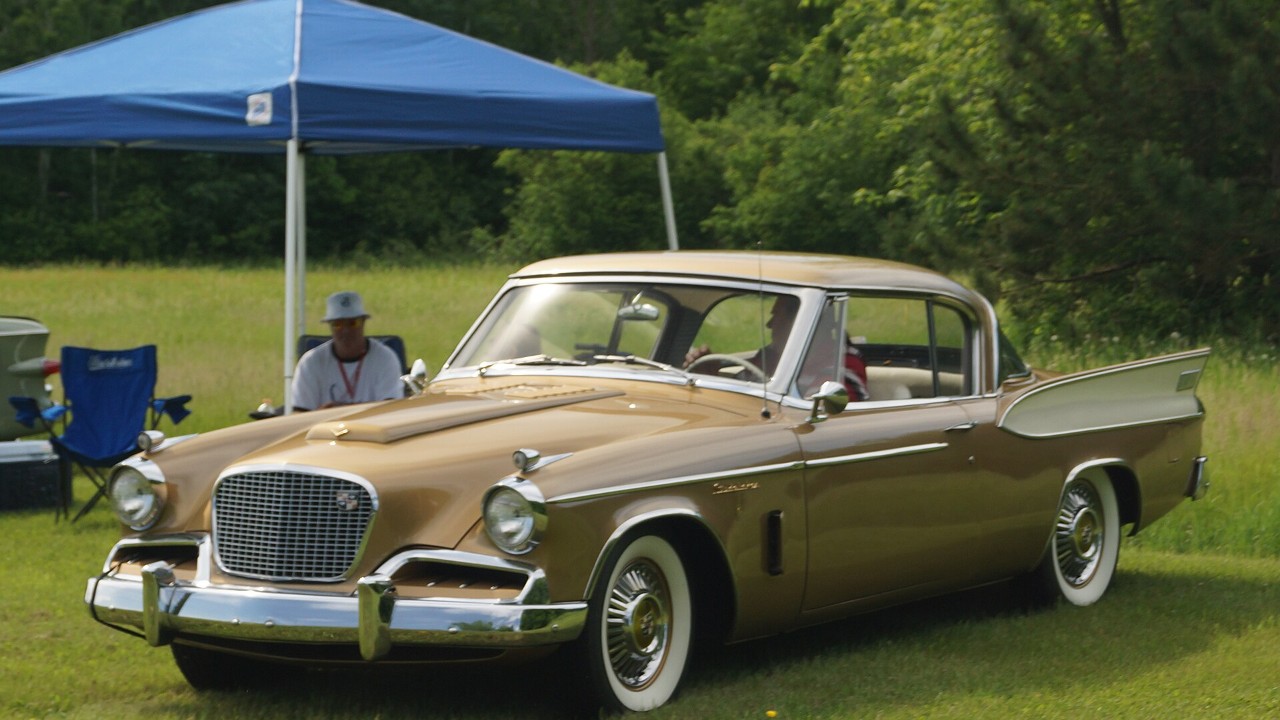
For 1956, the Golden Hawk used a 352-cubic-inch Packard V8. Then, for 1957, Studebaker swapped in its own 289 and bolted a McCulloch supercharger to it. As a result, it made 275 hp at 4,800 rpm. At the same time, the car weighed 3,400 pounds and cost $3,182, which made it one of the pricier cars of its model year.
Studebaker sold it as a family sports car, with seats for four or five. According to the Savoy Automobile Museum’s Golden Hawk record, Studebaker built 4,356 of the 1957 cars, and the museum lists a top speed of 117 mph. Meanwhile, Curbside Classic’s Studebaker V8 history notes that boost peaked around 5 psi, with compression cut to 7.8:1. The supercharged Hawk ran only through 1958.
2. 1963 Studebaker Avanti R2
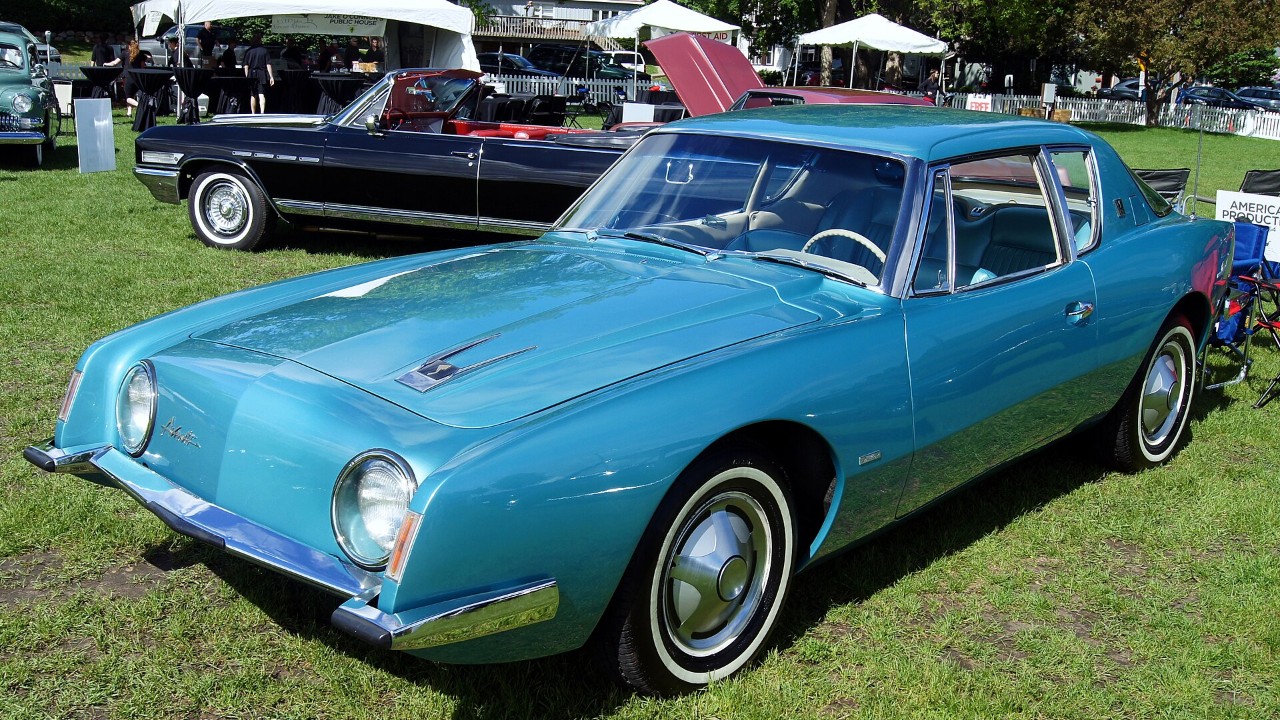
The Avanti debuted on April 26, 1962, with a fiberglass body styled by Raymond Loewy. It was also the first American production model with front disc brakes as standard. The R2 version added a Paxton SN-60 centrifugal supercharger to the 289, and output rose to 290 bhp.
Studebaker built 1,833 supercharged Avantis across the 1963 and 1964 model years, according to Silodrome’s Avanti R2 history. That is out of 4,643 Avantis in all. In a Cars magazine test quoted by Curbside Classic, an R2 Avanti ran 0-60 mph in 6.1 seconds. Then South Bend closed, and the Studebaker Avanti went with it.
3. 1964 Studebaker Avanti R3
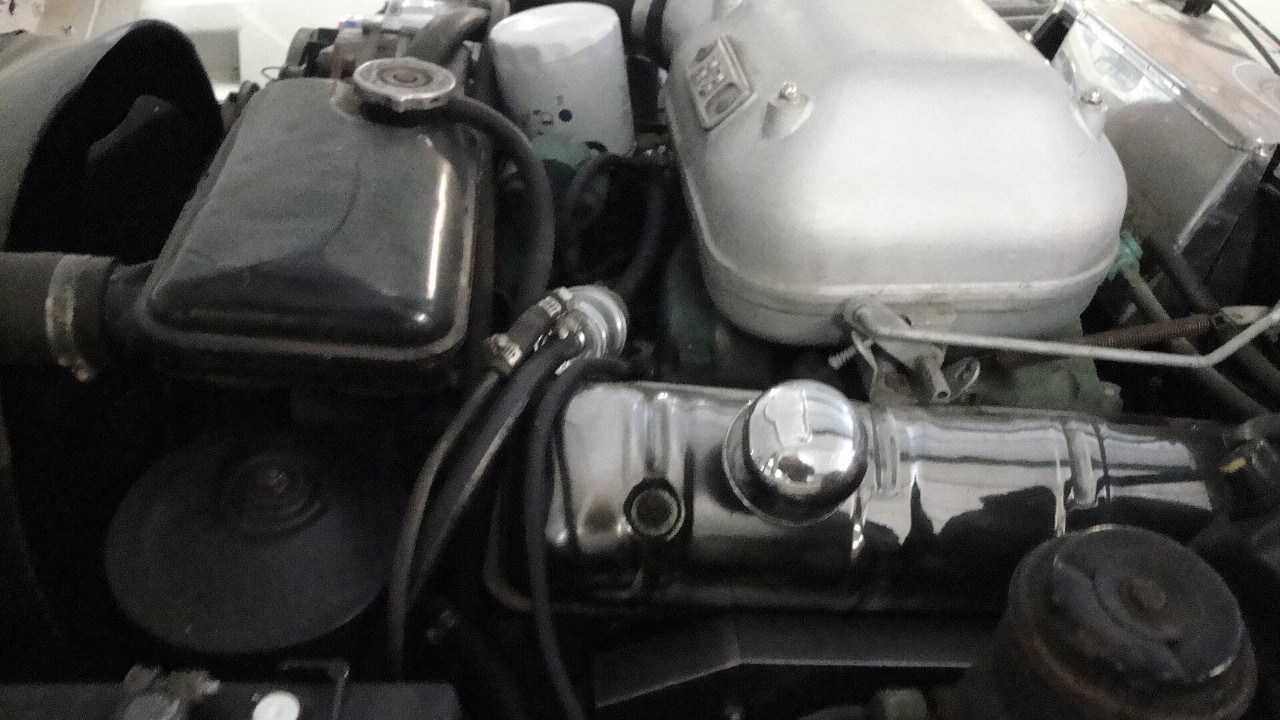
For the R3, Andy Granatelli opened the 289 out to 304.5 cubic inches and kept the Paxton supercharger. Even so, the finished engines went into just nine 1964 Avantis, built in December 1963 as the last cars off the line. Buyers paid $1,031 for the option.
Before that, in September 1963, the Granatellis took an R3 to Bonneville. There it averaged 170.75 mph over a two-way flying mile, according to TheAvanti.com’s R3 history. As for value, Hagerty’s Avanti history calls the 1964 R3 the most coveted Avanti of all.
4. 1964 Studebaker Daytona R4
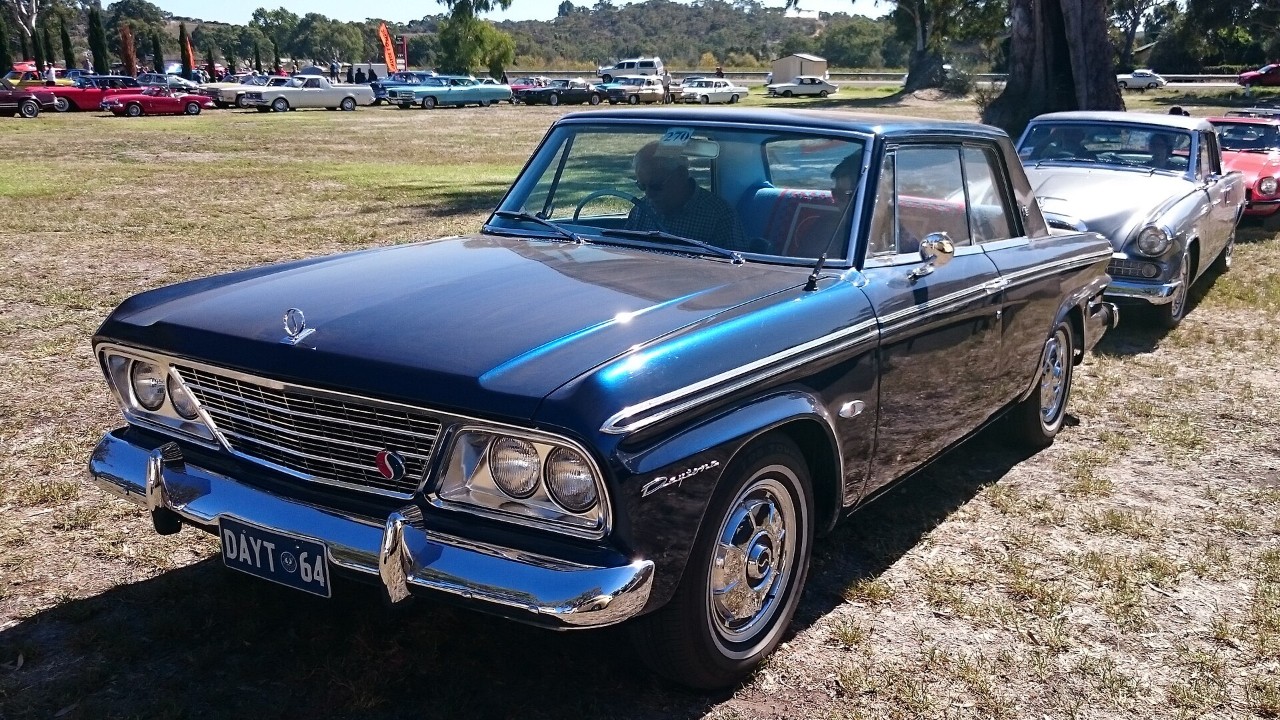
The R4 took a different route to power. Instead of a supercharger, it used 12.0:1 compression and two Carter AFB four-barrel carburetors. Studebaker then rated it at 280 hp at 5,500 rpm, and offered it in the 1964 Daytona.
Few buyers ever got one. In fact, Curbside Classic’s engine history counts roughly eight or fewer R4 cars sold new, plus about 10 more genuine R4 engines that went into other cars. A Car Life test of an R4 Daytona coupe priced at $4,550 ran 0-60 mph in 7.8 seconds. By then, the end was close, because Studebaker V8 production stopped in 1964.
5. 1964 Studebaker Gran Turismo Hawk R2
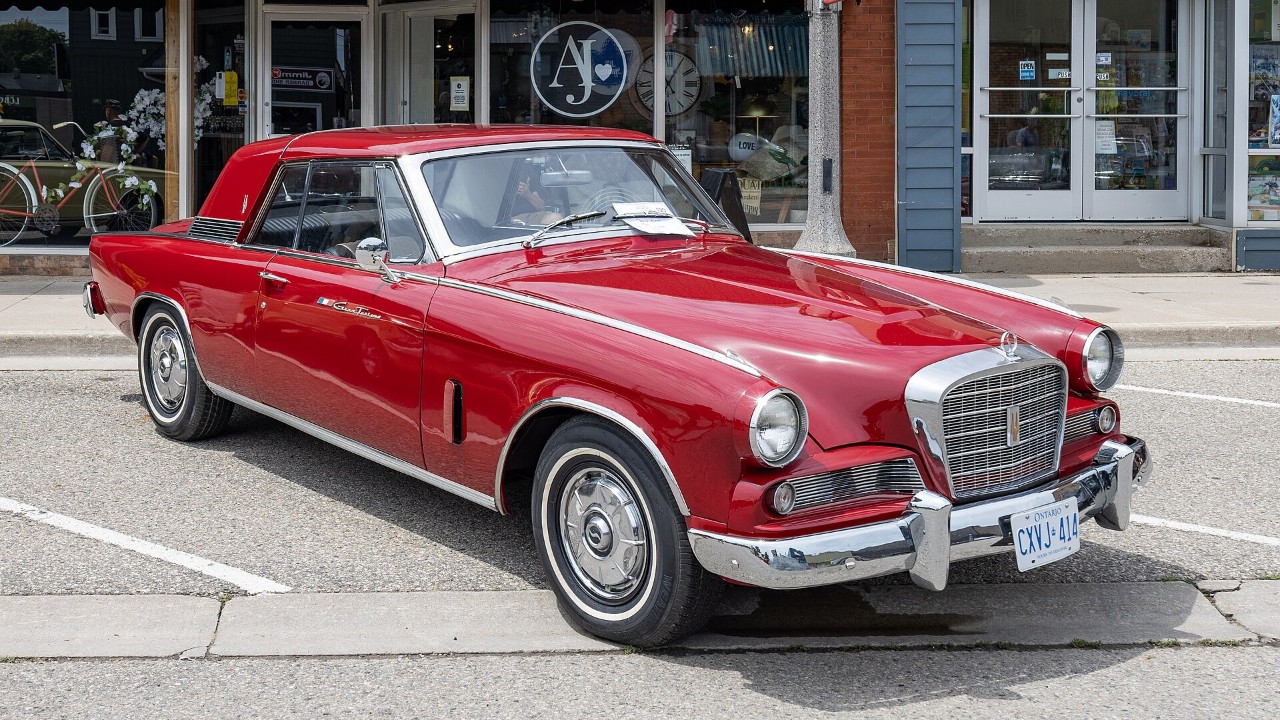
By 1964, the Gran Turismo Hawk could carry the same supercharged R2 as the Avanti. Its published rating was 290 hp at 5,200 rpm, with 9.0:1 compression. By comparison, a 1962 GT Hawk with the base R1 and a four-speed needed 11.4 seconds to reach 60 mph in Car Life’s test.
With the R2 and an automatic, a GT Hawk cut that to 7.4 seconds, according to Curbside Classic’s engine history. Even so, the car outlived its factory by only a short time. After South Bend closed, Studebaker kept building cars in Hamilton, Ontario. The last Studebaker of all left that plant on March 17, 1966, according to the Studebaker National Museum’s timeline.
More from Fast Lane Only