General Motors has spent years importing Chinese-built vehicles into Latin America, but few examples are as striking as the mid-size pickups that arrive from Asia wearing Chevrolet badges. In markets such as Mexico, thousands of these trucks have quietly become fixtures of work sites and city streets, even as buyers assume they are purchasing traditional North American Chevys. I want to examine how that strategy took shape, what it reveals about GM’s global supply chain, and why it matters for drivers who still associate the bowtie logo with Detroit steel.
The Chinese pickup hiding behind a Chevy badge
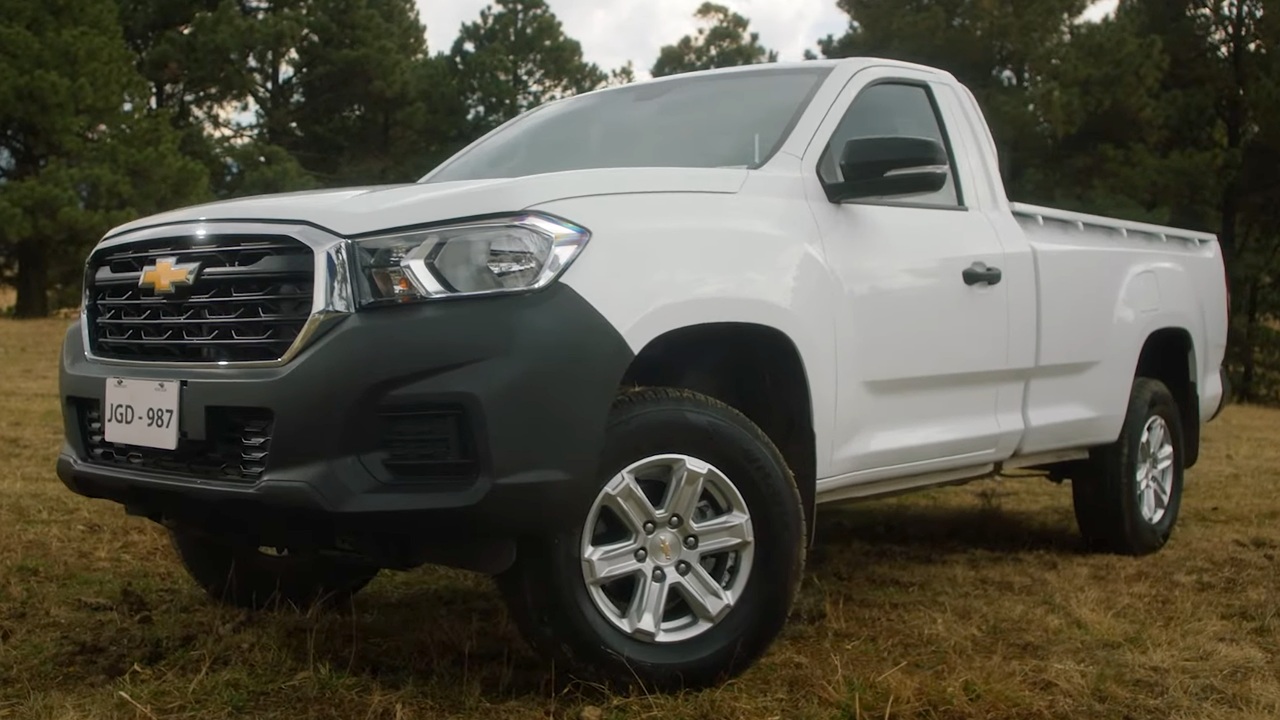
The most direct expression of this strategy is the Chevrolet S10 Max, a mid-size pickup that looks like a straightforward addition to the brand’s long-running S-10 lineage but is, in reality, a Chinese truck in disguise. Under its squared-off bodywork, the S10 Max links to the Maxus T70, which SAIC Motor develops and produces in China as a mid-size pickup, and that shared DNA runs far deeper than a few common parts. What customers in Mexico see as a fresh Chevrolet workhorse is, in engineering terms, a product of SAIC, not a clean-sheet design from General Motors.
GM made that relationship official when it launched the imported Chevrolet S10 Max pickup in Mexico, presenting it as an all-new entry for buyers who needed a relatively affordable truck with modern styling and basic capability. The company described the model as imported, but the marketing emphasis fell on the familiar Chevrolet name and the S10 badge that evokes earlier compact pickups, rather than on the fact that the vehicle’s origins trace back to a Chinese platform. The result is a truck that fits neatly into Chevy showrooms while masking how much of the development and production work sits with a partner on the other side of the Pacific.
How GM turned Mexico into a hub for Chinese-built Chevys
The S10 Max is not an isolated experiment, it is part of a broader pattern in which GM has leaned on Chinese factories to supply low-cost vehicles for Mexico. The company has already shown how powerful that formula can be with passenger cars, particularly the latest generation of the Aveo, which is built in China and shipped in as a budget-friendly option. Priced at about $17,000, the made-in-China Aveo has won over buyers who might otherwise turn to used vehicles, and that success has encouraged GM to expand the same logic to pickups.
In practice, this means that about 65 percent of GM’s sales in Mexico now come from imported models, including vehicles sourced from China, Brazil, India and Japan, a mix that reflects a deliberate shift away from relying solely on local assembly. When an Uber driver such as Patricia Gatica chooses a $17,000 China Aveo because it offers new-car peace of mind at a used-car price, she is responding to the same value equation that makes the S10 Max attractive to small businesses. By quietly inserting Chinese-built Chevys into key price bands, GM has turned Mexico into a showcase for how global sourcing can stretch a brand’s reach without dramatically changing its public image.
A broader Chinese footprint behind the bowtie
Once I started tracing the S10 Max back to the Maxus T70 and SAIC Motor, it became clear that GM’s reliance on Chinese partners extends well beyond one pickup. The Chevrolet Groove, for example, is a subcompact crossover SUV produced by SAIC-GM-Wuling under the Chevrolet brand, and it is aimed squarely at buyers in the Middle East and the Latin American markets who want SUV styling at a modest price. The Chevrolet Tracker, another subcompact crossover SUV manufactured by General Motors since 2019, is positioned as a successor to earlier small Chevys and illustrates how the company now treats global platforms as interchangeable building blocks rather than region-specific projects.
These models show that the S10 Max is part of a family of vehicles in which Chinese engineering and manufacturing are central, even if the showroom story focuses on Chevrolet heritage. The Chevrolet Groove exists because SAIC and Wuling can deliver a compact SUV package that fits GM’s cost targets, while The Chevrolet Tracker demonstrates how a single SUV architecture can be adapted for multiple regions with minimal rework. In each case, the bowtie badge serves as the public face of a supply chain that runs through joint ventures and partner plants in China, a reality that is largely invisible to the average buyer comparing monthly payments.
Why GM embraced Chinese partners for trucks and crossovers
From GM’s perspective, the logic behind these partnerships is straightforward: Chinese factories can build vehicles that meet basic global standards at prices that are difficult to match elsewhere. Several GM divisions underwent consolidation in the past, and that restructuring ultimately impacted the development of smaller pickups and entry-level models that once had dedicated engineering teams. By turning to SAIC and related ventures, GM effectively outsourced part of that lost capacity, allowing it to reintroduce a truck wearing the S10 nameplate and to populate showrooms with compact SUVs without rebuilding entire product lines from scratch.
Enthusiasts have noticed this shift, sometimes with skepticism. In online discussions about Chinese Chevrolets, some owners argue that GM secretly began partnering with Chinese companies in search of more affordable and profitable vehicles that would appeal to cost-conscious markets, while others worry about long-term durability and parts support. Comments comparing the S10 Max to rivals from Toyota and other brands often frame reliability as the last thing GM and SAIC wanted to prioritize, a perception that may or may not match the actual engineering but that underscores how sensitive buyers can be to the idea of a rebadged import. For GM, the bet is that competitive pricing and the reassurance of a Chevrolet badge will outweigh those concerns for most customers.
What this quiet rebadging means for buyers and the brand
For consumers in Mexico and across Latin America, the rise of Chinese-built Chevys presents a trade-off between affordability and transparency. On one hand, models like the S10 Max and the $17,000 Aveo give buyers access to new vehicles with modern safety and connectivity features at prices that would be difficult to achieve with purely local production. On the other hand, the marketing rarely foregrounds the role of SAIC, Maxus or Chinese plants, which means that many customers may not fully understand that their “Chevy” shares its core with a truck or SUV sold under a different badge in China.
From where I sit, the more interesting question is what this strategy does to the Chevrolet brand over time. If The Chevrolet Groove, The Chevrolet Tracker and the S10 Max continue to sell well, GM will have strong incentives to deepen its Chinese partnerships and to expand the range of rebadged imports, especially in markets where price sensitivity is acute. Yet the company also risks eroding the emotional connection that some buyers still feel to the idea of a Chevy as a product of General Motors engineering, rather than a label applied to a global commodity vehicle. That tension, between cost-driven pragmatism and brand authenticity, is likely to shape how quietly rebadged Chinese pickups and crossovers fit into Chevrolet’s future far beyond Mexico.
More from Fast Lane Only: