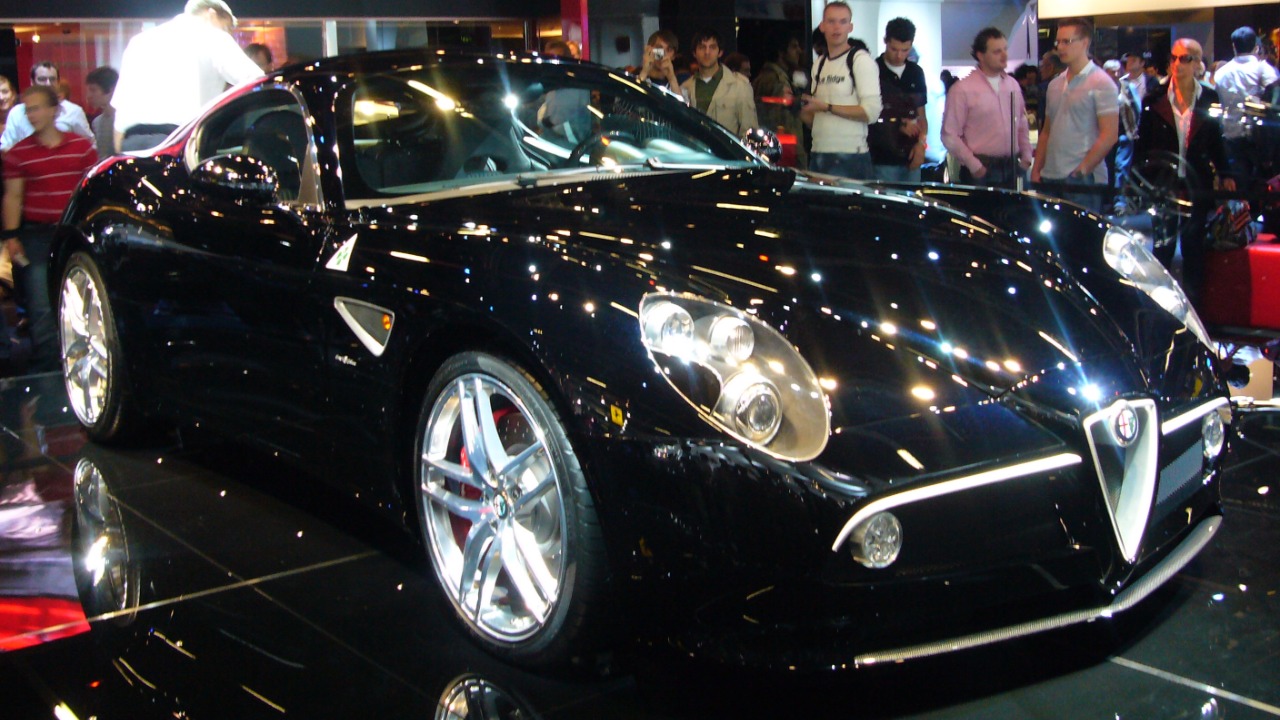
The 2007 Alfa Romeo 8C did something very few modern cars manage: it felt like legend the moment the covers came off. With proportions that seemed lifted from a coachbuilt fantasy and a layout rooted in classic racing practice, it arrived not as a tentative comeback but as a fully formed icon. I want to unpack why this coupe, built in tiny numbers and on borrowed mechanicals, instantly slipped into mythology rather than waiting decades for its reputation to ripen.
The name, the bloodline, and a concept that refused to fade
Myth starts with story, and the 8C’s story begins with its badge. The “8C” script deliberately revived the eight‑cylinder competition cars that carried Alfa Romeo to glory in the prewar era, a lineage that modern enthusiasts still associate with grand prix victories and long‑distance endurance wins. That heritage was not accidental marketing, it was baked into the project from the moment the Alfa Romeo 8c Competizione name was chosen to echo those historic eight‑cylinder racers.
That sense of continuity was reinforced when the 8C first appeared as a show car at the Frankfurt Motor Show, a concept so complete that the production version would later follow it almost line for line. Official heritage material describes how the Competizione was shaped as a modern homage to the 33 Stradale, one of the most revered sports cars ever to wear the Alfa badge, and how it sat on a classic transaxle layout that placed the gearbox at the rear. When a company with this much racing history deliberately reaches back to a car like the 33 Stradale and to the old 8C racers, it is not just building a product, it is reviving a bloodline that enthusiasts already treat as legend.
Design that looked like rolling sculpture, not a product cycle
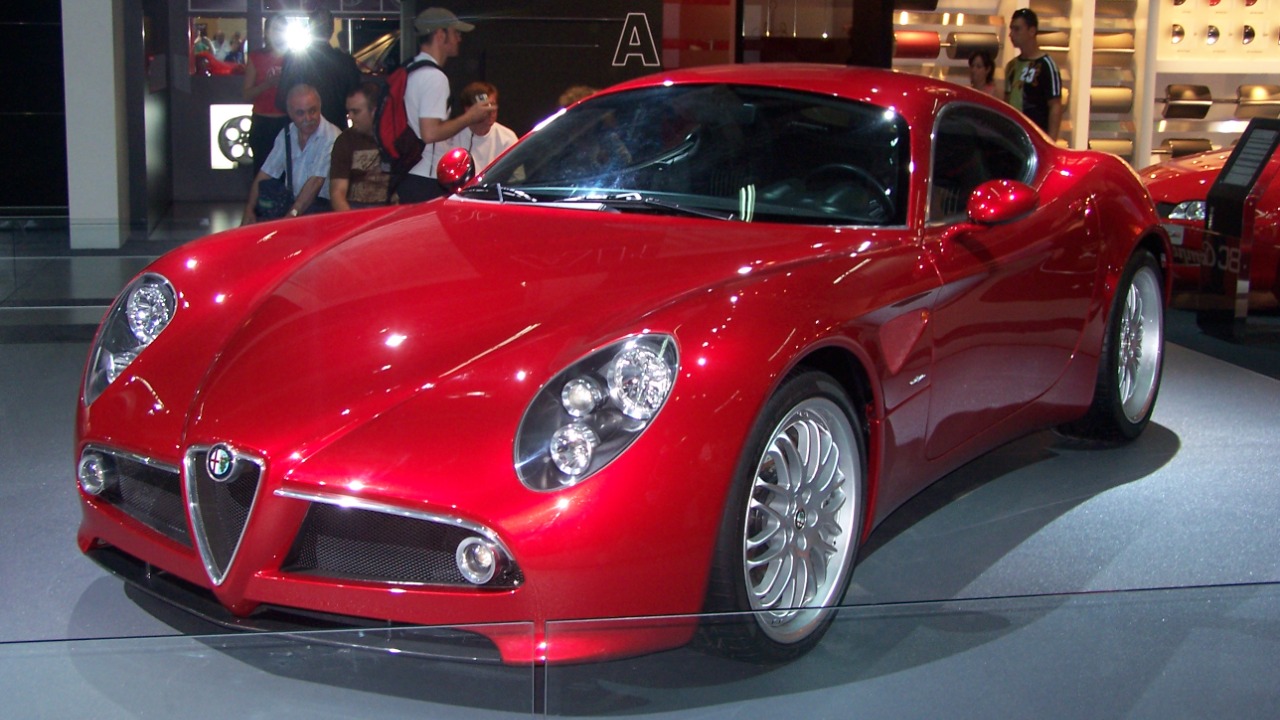
Even among supercars, the 8C’s styling felt different, and that is where its myth really took hold. The long bonnet, tightly pinched waist and muscular rear haunches gave it the stance of a 1960s GT, yet the surfacing was clean enough to feel timeless rather than retro. Contemporary observers noted that the production car followed the concept almost exactly, with Much of the original show‑car drama preserved instead of watered down for the showroom, which is rare in an era when regulations and cost cutting usually blunt the edges.
Inside, the drama continued, and I think that is part of why the car felt like an instant classic rather than a fashion item. Reports from early drives linger on the woven leather seats and the way the carbon bodywork seems to flow into the cabin, details that made the cockpit feel more like a bespoke Italian suit than a mass‑produced interior. One account describes how the 8C blended just the right amount of Ferrari and Maserati influence into its materials and driving position, underlining that this was a car built to be admired slowly as much as it was to be driven quickly.
A powertrain with character, not just numbers
Mythical cars are rarely remembered for spec sheets alone, but the 8C’s mechanicals gave its looks real substance. Under that endless bonnet sat a 4.7-liter V8, a cross‑brand collaboration that delivered a soundtrack as important as its performance. Official retrospectives note that Power came from a 4.7-liter engine that helped the coupe weigh in at 3,494 lbs (1,585 kg), a figure that kept it lithe enough to feel alive without chasing the extreme downforce arms race that defined other supercars of its era.
From behind the wheel, that engine’s personality mattered more than its raw output, but the numbers were still serious. One detailed enthusiast review of the car’s dynamics highlights how the V8 produced 444 horsepower, enough to make the rear‑drive chassis feel playful and, in the wet, a little wild. Another period test emphasised that the 8C was not about exploring the outer limits of technology but about delivering a visceral, analog experience, a point echoed by a later analysis that described how the car was never meant to chase lap times so much as to test the market and stir emotions, which helps explain why demand outstripped supply almost immediately.
Exclusivity, delivery‑day theatre, and the collector mindset
Scarcity is a powerful ingredient in any legend, and Alfa leaned into that with the 8C. The production run was capped so tightly that one dealer later described the model as a car aimed squarely at buyers who wanted power and craftsmanship in something they would likely tuck away as an investment. A modern sales overview spells it out clearly, noting that The Rare Nature of the Alfa Romeo 8C lay in the fact that Competizione Only 500 units were ever made, a figure that instantly placed it in the realm of blue‑chip collectibles.
The way those cars reached customers only deepened the aura. First‑hand accounts from early deliveries describe a kind of private theatre, with collectors arriving one by one for personal introductions to their new coupes, each car treated almost like a commissioned artwork rather than a commodity. One such story recalls how, Before the day was over, multiple Alfa buyers had cycled through for their own handovers, reinforcing the sense that this was a moment in the brand’s history rather than just another model launch.
Return to roots and a reset of Alfa’s modern identity
For Alfa Romeo itself, the 8C was more than a halo car, it was a statement of intent. Corporate histories describe how the company had built its reputation on agile, soulful machines like the Alfasud, Cars that brought sports car handling to everyday buyers, but that magic had faded as the lineup drifted toward anonymity. The 8C was conceived as a way to reconnect with that DNA, and internal storytelling later framed it as a dual‑purpose supercar that paid homage to tradition while pointing toward a more ambitious future for the brand.
That duality is captured neatly in a retrospective that describes how the Competizione marked both a return to Alfa Romeo and a laboratory for what might come next. Another analysis of the company’s motorsport and road‑car strategy goes further, arguing that the 8C was the moment How Alfa Romeo Got Its Mojo Back became more than a slogan, because the car showed that the company still knew how to build something emotional enough to stand alongside its racing past.
Racing echoes, cultural references, and the 8C attitude
Part of the 8C’s mythology comes from how deliberately it threaded itself through Alfa’s competition history. Heritage pieces on the car point out that its styling and naming drew a straight line back to the 8C 35 grand prix machines, and that the company saw the new coupe as a way to carry that spirit into the present. One evocative profile of the older racer even notes that The 8C was never just a car, it was an attitude, and that this attitude is still being carried forward today in different forms, a sentiment that fits the 2007 coupe perfectly.
The cultural afterlife of the modern 8C has only reinforced that sense of continuity. Coachbuilders used its chassis and drivetrain as the basis for new interpretations like the Alfa Romeo Disco Volante, a limited‑run “flying saucer” that wrapped the 8C’s mechanical heart in hand‑formed aluminum panels and carbon fiber. When independent artisans choose a platform like this as the foundation for their own dreams, it signals that the base car has already crossed from product into cultural reference point, which is exactly how myths behave.
Driving experience: flawed, vivid, unforgettable
What fascinates me most is that even the 8C’s imperfections have become part of its legend. Owners and testers have been candid about the car’s quirks, from its sometimes abrupt gearbox to a chassis that can feel more dramatic than precise on a bumpy road. Yet long‑form driving impressions consistently come back to the same conclusion, that the 8C is an experience worth the flaws, a car whose noise, steering feel and sense of occasion overwhelm any rational critique. One such account describes how the Alfa Romeo 8C Competizione delivers a driving experience that lingers long after you step out, precisely because it is not perfect.
That theme repeats in enthusiast media, where presenters talk about the car with a mix of affection and exasperation that you usually only hear reserved for old racing machinery. In one detailed video review, Harry walks around an Alpha 8C Competition and admits he had been itching to spend time with it, not because it is the fastest thing on paper but because it feels like a rare chance to sample a modern car built with old‑school priorities. That tension between objective flaws and subjective magic is exactly what keeps people talking about the 8C in almost reverential tones.
Market impact and the halo effect on the brand
Beyond its own legend, the 8C also shifted how people saw Alfa in key markets. When the coupe arrived, it effectively spearheaded the brand’s renewed push into territories it had previously abandoned, giving dealers a dramatic talking point and a rolling billboard for Italian design. One contemporary report put it plainly, noting that, Although by no means a mainstream car, the 8C had a big role to play as it spearheaded Alfa Romeo’s return to markets the brand had withdrawn from over a decade earlier.
That halo effect extended into the showroom, where the 8C’s presence helped frame more attainable models as part of a rejuvenated performance narrative. Dealer‑focused material from the period describes how The Alfa Romeo 8C was pitched at buyers who wanted both power and pristine craftsmanship, the kind of customers whose presence in a showroom can lift the perceived value of the entire range. In that sense, the car’s mythology was not just a by‑product of its design and rarity, it was a deliberate tool to reset how the world thought about Alfa.
From auction catalogs to heritage films: how the myth is maintained
Nearly two decades on, the way institutions talk about the 8C shows how firmly it has settled into the pantheon. Auction houses describe it in reverent tones, highlighting how the Competizione (Alfa Romeo 8C Competizione) marked Alfa Romeo’s return to the US and a renewed commitment to exclusive sports cars, while also incorporating several classic styling cues. Heritage departments within the company itself have produced lovingly shot films and essays that frame the car as a turning point, not just a pretty diversion.
Those official narratives sit alongside more romantic takes that emphasise the brand’s long‑standing focus on performance and symbolism. One retrospective on the marque’s sporting roots notes that Sportiness has always been central to Alfa Romeo DNA, with the snake of Casato dei Visconti on the badge and a history that runs through events like the Mille Miglia. When you place the 8C against that backdrop, it feels less like a one‑off experiment and more like the moment the company remembered what its mythology was supposed to look and sound like.
More from Fast Lane Only: