China’s carmakers are no longer content to ship finished vehicles across the Pacific and hope tariffs do not crush their margins. The next phase of their strategy is to put factories, suppliers, and engineering teams directly on U.S. soil, turning America from a protected market into a production base. That shift is colliding with a fraught political climate, a slowing global electric vehicle boom, and a White House that is simultaneously raising trade barriers and inviting tightly controlled investment.
From export surge to “build where you sell”
For much of the past decade, Chinese brands treated the United States as the one big market they could not crack, focusing instead on Europe, Southeast Asia, and Australia. That calculus is changing as their export model runs into political resistance and a brutal price war at home. In the first half of the most recent year, Hangzhou-based Geely reported that its electric car exports had quadrupled, a sign of how aggressively Chinese manufacturers have leaned on overseas demand to offset domestic competition. Analysts now describe 2026 as a survival test for China’s EV industry, with companies under pressure to find higher margin markets and more stable footholds abroad.
At the same time, global demand for new energy vehicles is losing some of its earlier momentum. Research on the auto outlook notes that All the key factors, from reduced subsidies to consumer fatigue, point to slower EV sales growth from 2026, with the global rate expected to drop from 12% to 8%. Given that backdrop, Chinese automakers have strong incentives to move beyond simple exporting. Building cars inside the United States, rather than shipping them in, offers a way to blunt tariffs, reassure local politicians about jobs, and stay close to customers in what remains the world’s most profitable car market.
Tariffs are a wall, but also a map
Washington’s tariff strategy is designed to keep Chinese-made EVs at bay, but it is also sketching out the path Chinese firms now want to follow. A recent analysis of U.S. trade policy notes that the country is tightening market access for foreign EVs, with the Biden administration earlier raising duties on Chinese electric cars to punitive levels to protect domestic producers. One study of these measures, titled White Paper “Navigating the Impacts of US Tariffs on Chinese Electric Vehicles and the US Automotive Industry,” argues that the levies are reshaping supply chains rather than simply blocking trade. By making imported Chinese EVs more expensive, the policy creates an opening for local manufacturing and joint ventures, even as it complicates the economics of any direct export strategy.
The tariff net does not only catch finished cars. As one consumer-focused breakdown put it, But Components Get Tariffed, Too, which means Chinese-made batteries, motors, and electronics are also facing higher costs. Another analysis warns that Battery Costs Could Rise as tariffs ripple through the supply chain, pushing automakers to develop and use domestic sources. For Chinese companies, the message is clear: if they want to keep selling into the U.S. market at scale, they will need to bring more of their production, or at least their higher value components, inside North America’s tariff walls.
Geely’s U.S. playbook is a template
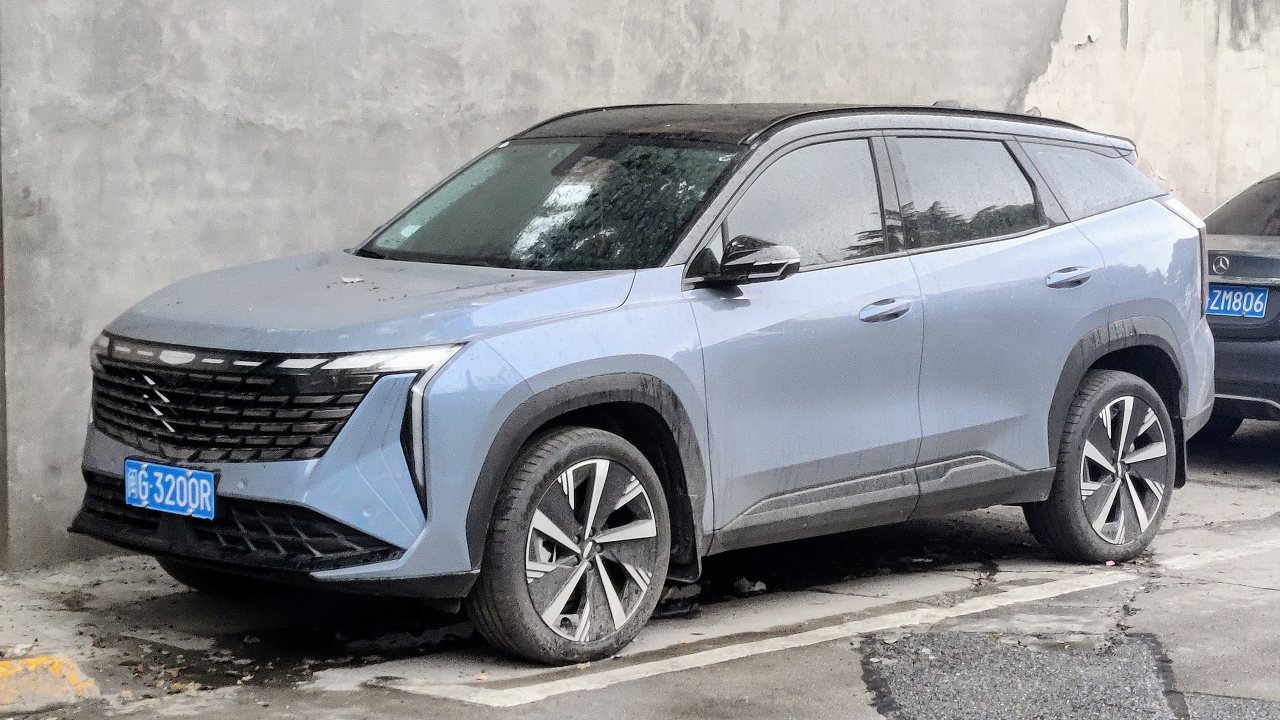
Among Chinese automakers, Geely is emerging as a test case for how to turn that message into a concrete strategy. At CES in Las Vegas, the company signaled that it plans to enter the U.S. EV market within the next two to three years, using its premium brand ZEEKR as the spearhead. Reporting from the show described how Geely brought a range of vehicles to CES, with executives outlining a phased approach that starts with imports and quickly pivots to local assembly once volumes justify it. The company’s experience in other markets, where it has used flexible platforms and shared components to adapt to local rules, gives it a playbook for navigating U.S. regulations and consumer expectations.
Geely’s ambitions are not happening in a vacuum. A discussion among EV enthusiasts about why Chinese brands have struggled to sell cars in the United States highlighted how tariffs and political risk have kept sticker prices close to rivals like Tesla, even though Expect the price to be similar to Tesla in markets without such barriers. In China it is similar to Tesla, and in Australia, where there are no comparable tariffs, In Australia Chinese EVs can undercut established brands more easily. That gap between what Chinese manufacturers can charge abroad and what they must charge in the U.S. is precisely what a local factory could narrow. If Geely can show that building ZEEKR models in America delivers competitive prices without sacrificing margins, other Chinese brands are likely to follow.
Factories, politics, and the Trump test
Even if the economics line up, Chinese automakers still need political permission to put down roots in the United States. The Trump administration has already signaled a tougher line on Chinese industrial presence, with one report noting that The Trump administration has indicated it could expand existing bans on certain Chinese investments, even as individual states court foreign plants for the jobs and tax base they bring. That tension is already visible in the split between governors eager to land a new assembly line and national security officials wary of deeper Chinese control over critical technologies.
President Trump himself has tried to square that circle by welcoming some forms of Chinese manufacturing, but only on his terms. Over the summer he said of Chinese automakers, They are “building some of the largest auto plants anywhere in the world,” and he vowed, “We’re going to bring it back. We want those plants built here, in the United States.” Trump added that he is open to Chinese EV factories in the U.S., but with conditions that would likely include American ownership stakes, strict data controls, and guarantees on local hiring. For Chinese companies, that means any plan to build cars in America will be as much a diplomatic negotiation as a business decision.
Supply chains are already crossing the Pacific
Even before a wave of Chinese-branded cars rolls off U.S. assembly lines, Chinese suppliers are quietly embedding themselves in North American production. A recent deal illustrates the scale: China based Xusheng secured $1.1 billion in auto part orders from a North American carmaker, according to reporting from BEIJING by Reuters. The contract shows that even as Washington raises tariffs on finished Chinese EVs, U.S. manufacturers still rely on Chinese-made components to keep their own production lines running. For Chinese firms, these supplier relationships can be a bridgehead, building trust and technical integration that later support deeper manufacturing partnerships.
At the same time, Chinese EV makers are under pressure at home to find exactly these kinds of overseas lifelines. Industry coverage from China based SMM describes 2026 as less of a boom and more of a survival test, as domestic competition and slowing demand squeeze margins. In that environment, securing long term contracts with North American partners, whether for parts or full vehicle assembly, can be the difference between scaling up and falling behind. The fact that a supplier like Xusheng can land a $1.1 billion order suggests that, piece by piece, Chinese automotive technology is already being woven into the fabric of U.S. manufacturing, even if the badges on showroom cars do not yet reflect it.
America’s EV future will be built with China, not apart from it
For U.S. policymakers, the uncomfortable reality is that keeping Chinese EVs out of showrooms will not be enough to insulate the domestic industry from Chinese competition or influence. A detailed assessment of U.S. electrification progress warns that the country is facing stagnation in EV adoption, with high prices and limited charging infrastructure slowing growth. Jan based analysis of trade policy notes that Taking Chinese EVs as an example, the Biden administration’s tariffs may protect incumbents in the short term, but they also risk slowing the broader transition to cleaner vehicles by limiting access to lower cost models. As tariffs bite, the most likely outcome is not a clean break, but a reconfigured relationship in which Chinese capital and technology flow into American plants under stricter rules.
On the consumer side, the debate over Chinese cars is already shifting from “if” to “how.” Enthusiasts on EV forums who once asked why Chinese brands could not sell in the U.S. are now dissecting announcements from CES, where Jan reports highlighted how Geely used the Autoline Network stage to signal its intent to Enter US Market with new models. The discussion has moved from whether Chinese cars will arrive to what conditions they will face, how they will be priced relative to Tesla, and how quickly they will localize production. As I see it, the headline story is no longer about ships full of Chinese EVs docking at American ports. It is about where the next generation of factories, battery plants, and supplier parks will rise, and how both Washington and Beijing decide to share control over the future of the car.
More from Fast Lane Only: