The return of a supercharged V-8 to the Dodge Charger Hellcat in 2027 is not nostalgia for its own sake, it is a calculated decision to keep raw performance and character at the center of the brand. After a period when electric and downsized engines seemed destined to define the next Charger, the confirmation that a Hemi-based Hellcat is coming back signals that Dodge still sees noise, drama, and excess as core product values.
That choice matters far beyond one model year. It shows how a legacy muscle nameplate can adapt to new regulations and expectations without abandoning the traits that made it desirable in the first place, and it sets up the 2027 Dodge Charger Hellcat as a test case for how long the age of supercharged American V-8s can realistically continue.
The Hemi V-8 comeback and what it signals
The central story with the 2027 Dodge Charger Hellcat is simple: the Hemi V-8 is back on the menu after a period when it looked finished. Reporting on the upcoming car makes clear that Dodge is preparing a new Hellcat version of the Charger that again uses a supercharged Hemi V-8, positioning it as a direct spiritual successor to the outgoing gasoline muscle sedan rather than a clean-sheet electric replacement. That decision cuts against the industry trend toward smaller turbocharged engines and full battery-electric performance cars, and it tells me Dodge believes there is still meaningful demand for a traditional, high-displacement, supercharged layout in a modern chassis.
The way the car is being framed, as a Return to Form Worth Waiting For and a Return to Muscle Car Form Worth Waiting For, underlines that this is not a side project but a core statement about what the Charger should be. The emphasis on the Hemi being “still around” in the context of the Hellcat reinforces that Dodge is not ready to let its most recognizable powerplant fade quietly into history. Instead, the 2027 Charger Hellcat is being positioned as proof that the brand can meet new realities while still delivering the kind of engine that made its reputation.
Power, performance, and the benchmark problem
Bringing back a Hemi V-8 is one thing, matching or beating the old Hellcat’s outrageous numbers is another. Enthusiast discussion around the 2027 Dodge Charger Hellcat has already zeroed in on whether the new car can equal the standard 717 bhp Hellcat engines that defined the previous generation. Some observers argue that unless Dodge installs Demon-like engines as the default, the new car will be slower than the previous gen, especially if weight or gearing changes blunt the impact of whatever final output figure the company settles on. That tension between heritage and hard numbers is at the heart of how the 2027 model will be judged.
There is also a broader context for what counts as competitive power in this era. The latest Ram TRX, for example, has shown how far the basic Hellcat architecture can be pushed, with engineering changes that squeeze an extra 75 hp out of the supercharged V-8 to reach 777 hp and 680 lb-ft of torque. Those figures prove that the underlying hardware still has headroom, and they set expectations that a new Charger Hellcat should not feel like a step backward. If a heavy off-road truck can reach that level, a purpose-built muscle sedan will be expected to land in the same neighborhood, or at least to justify any shortfall with gains in responsiveness, efficiency, or durability.
Design, character, and the muscle-car identity
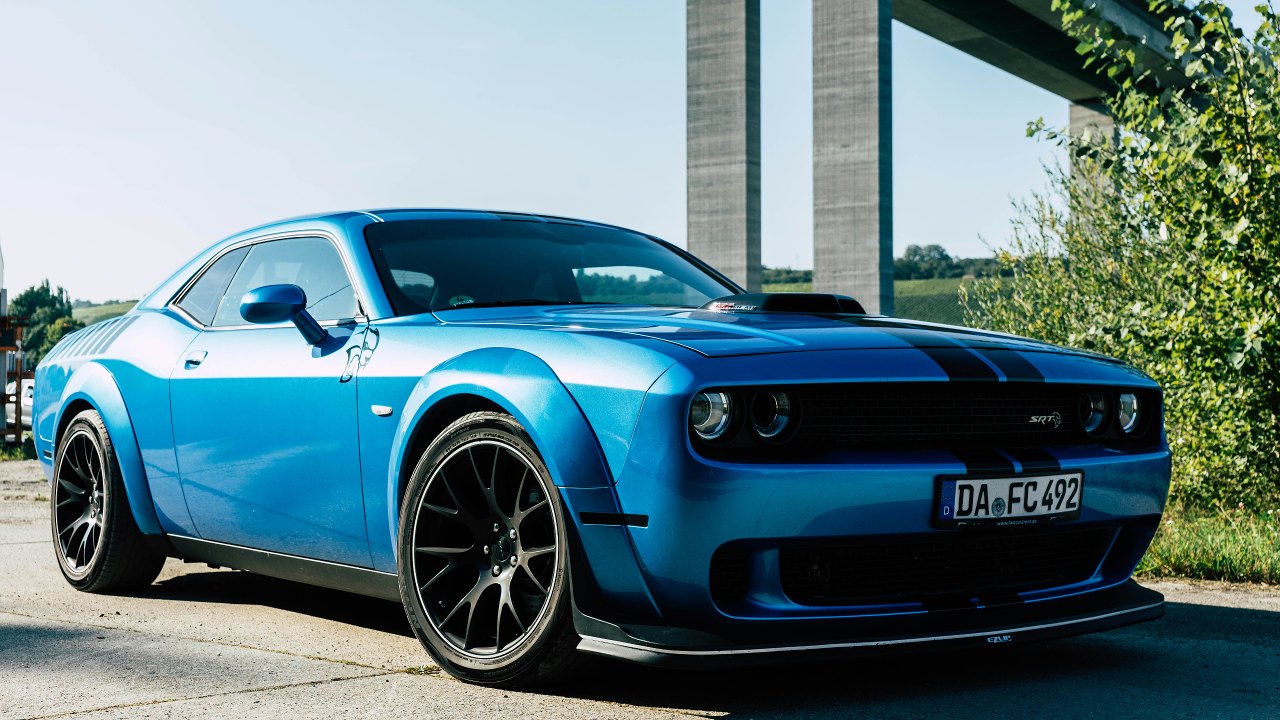
Power alone does not make a Hellcat, and the 2027 Charger’s identity will depend just as much on how it looks and feels. Early descriptions of the upcoming Dodge Charger Hellcat emphasize that it is meant as a Return to Muscle Car Form Worth Waiting For, which implies a design brief centered on aggression, stance, and presence rather than anonymous aero efficiency. The Hellcat badge carries expectations of a wide, planted body, visual cues that communicate the supercharged hardware underneath, and an interior that feels more like a cockpit than a commuter car.
That focus on character is consistent with how Dodge has treated the Charger nameplate in the past. Even in utilitarian variants like the Dodge Charger Pursuit, which is detailed in official fact sheets for law-enforcement use, the car has always been sold on a mix of performance capability and visual authority. Translating that into a new generation means the 2027 Hellcat will need to balance modern requirements for safety and technology with the kind of bold surfaces and proportions that read instantly as a muscle car. If the exterior and cabin deliver that sense of occasion every time the driver walks up to the car, the mechanical package will have a much easier time living up to the badge.
Balancing nostalgia with future-proof engineering
Reintroducing a supercharged Hemi in 2027 is not just a romantic gesture, it is an engineering and regulatory challenge. The fact that the Hemi is still around in a new Charger Hellcat suggests that Dodge has found ways to update the architecture enough to satisfy emissions and durability targets while preserving the core layout. Lessons from the TRX program, where engineers extracted 75 additional horsepower to reach 777 hp and 680 lb-ft without abandoning the basic Hellcat formula, show how incremental improvements in cooling, fueling, and calibration can extend the life of a familiar engine family.
At the same time, the conversation among enthusiasts about the 2027 Dodge Charger Hellcat being potentially slower than the previous gen unless Demon-like engines are standard hints at the tradeoffs Dodge may be making. If the new car arrives with output closer to the standard 717 bhp Hellcat engines rather than the most extreme limited-run variants, it could reflect a strategy that prioritizes repeatable performance, warranty coverage, and compliance over headline-grabbing quarter-mile times. In that scenario, the engineering success would not be measured only in peak numbers, but in how seamlessly the car integrates modern electronics, safety systems, and possibly hybrid assistance with the visceral feel of a supercharged V-8.
Why the 2027 Hellcat matters beyond Dodge loyalists
The significance of the 2027 Dodge Charger Hellcat extends beyond brand faithful who have been waiting for a new Hemi sedan. In a market where many performance cars are shifting to electric power or smaller turbocharged engines, the decision to keep a supercharged V-8 alive in a mainstream, high-volume nameplate is a statement about diversity of choice. It shows that there is still room for a car that prioritizes sound, mechanical drama, and a traditional driving experience alongside quieter, more efficient alternatives. For enthusiasts who grew up with the idea of a big-engine American sedan as the default performance car, that matters.
There is also a cultural dimension. The Charger name has long been tied to law enforcement, popular media, and everyday street presence, from fleet-spec Dodge Charger Pursuit models to heavily modified personal builds. By ensuring that the Hellcat variant returns with a Hemi at its core, Dodge is preserving a link between that broader cultural footprint and the highest-performance version of the car. The 2027 Hellcat becomes a kind of halo for the entire lineup, signaling that even as regulations tighten and technology evolves, there is still a place in the showroom for a car that treats noise, excess, and personality as non-negotiable features rather than optional extras.
More from Fast Lane Only: