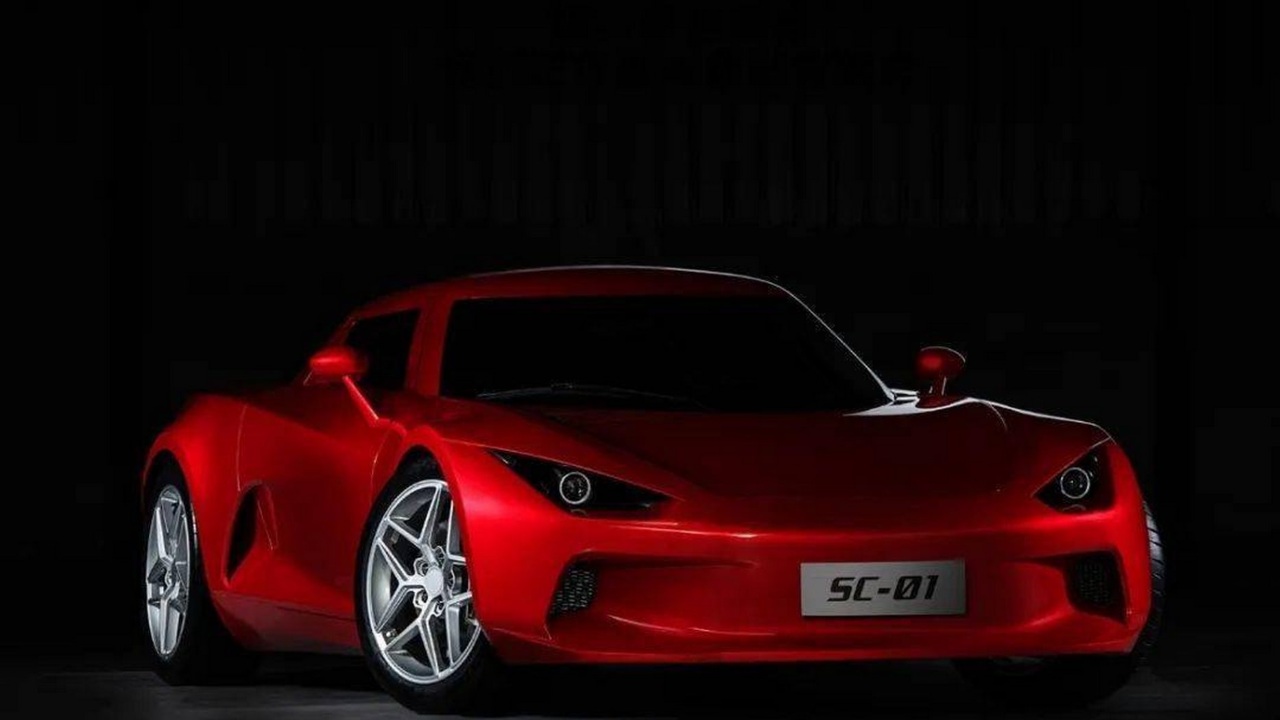
China’s latest electric sports car is preparing to test Europe’s appetite for a lightweight, high powered two seater that puts driving feel ahead of digital gimmicks. The Stratos branded SC-01, backed by This Xiaomi, combines a 429 hp dual motor setup with compact dimensions and a relatively low kerb weight to challenge established performance names on their home turf. With local assembly planned in Italy and a strictly limited first batch, it is being positioned as a focused alternative to heavier, more expensive electric performance cars.
Rather than chasing luxury grand tourers, the Chinese SC-01 targets the niche once occupied by compact mid engine coupes, only now with a battery pack and electric motors in place of a flat six. Its arrival in Europe, with 1,000 units earmarked for the region, signals how quickly Chinese performance brands are moving from domestic experiments to serious contenders in the Electric Sports Car Marke.
Compact proportions, serious performance
The core of the SC-01 story is its power to weight balance. The car uses two electric motors that together deliver 320 kW, a figure that translates to 429 hp, and sends that output to the road through a compact, rear biased layout. Reports describe the Stratos Electric Car as a true sports car, with power provided by two motors and tuned for rapid responses rather than silent cruising, which places it closer in spirit to classic lightweight coupes than to mainstream crossovers. With a quoted mass of about 1,365 kg, the package undercuts many current electric performance models that often exceed two tonnes.
That 429 hp punch is intended to give the SC-01 the straight line pace to trouble far more expensive machinery, while its modest footprint should help it feel agile on tight European roads. Chinese sources frame the project within a broader push to Understand China EV Market dynamics, where domestic buyers have already embraced compact, high output EVs that do not sacrifice fun at the altar of range. Bringing that formula to Europe, where drivers are familiar with cars like the axed ICE Porsche 718 Cayman, suggests the Stratos team believes there is room for a purist oriented electric option that does not rely on extreme battery capacity to make its case.
From China to Italy, then across Europe
Although the SC-01 is a Chinese creation, its path into European showrooms runs through Italy. Reporting on the Chinese SC indicates that local assembly is planned in Italy, with finished cars then distributed across Europe. This strategy is designed to ease regulatory hurdles, align the car with European build expectations, and shorten logistics chains, all of which matter for a low volume sports model. It also gives the brand a foothold in a country with deep sports car heritage, a symbolic advantage when trying to win over skeptical enthusiasts.
Production for the region is capped at 1,000 units, a figure repeated across multiple briefings that describe 1,000 cars or 1,000 units being allocated to Europe. That limited run should help the Stratos Electric Car stand out in a crowded EV field, while also managing risk for a newcomer that is still Preparing to Enter the European Market. By combining Chinese engineering with Italian assembly, the company is effectively blending cost efficient development with localised finishing, a pattern that has already appeared in other sectors but is now moving into the performance car space.
Designing a “driver’s” EV, not a rolling gadget
Where many new electric models lean heavily on screens and semi autonomous features, the SC-01 is being pitched as a car built first and foremost for the person behind the wheel. The SC arrives in Europe as a compact electric sports car that is simply designed to provide an enjoyable driving experience, with emphasis on low weight, direct controls, and a cockpit that serves the driver rather than a suite of apps. That philosophy aligns with the decision to keep the car relatively small and to focus on chassis tuning instead of headline grabbing range numbers.
Descriptions of the interior and hardware suggest a minimalist approach, with the Stratos Electric Car presented as a New Player that wants to revive the idea that a true sports car should be about feedback and precision. This Xiaomi backing gives the project access to advanced electronics and connectivity, yet the messaging around the SC-01 consistently highlights its role as a sports machine first. In a market where many EVs are sold on their ability to act as mobile offices or entertainment hubs, this focus on driving purity could become a key differentiator.
Positioning against Tesla and European sports icons
The SC-01 is arriving at a moment when some high profile electric performance projects are still struggling to reach customers. The Tesla Roadster, for example, is described as having a tough time wrapping up tooling, design and production, which leaves space for other brands to occupy the electric roadster niche. By contrast, the Chinese SC is already confirmed for Europe with local assembly and a clear allocation of 1,000 units, giving it a tangible timeline and a defined footprint in the market.
On the European side, the decision by established manufacturers to wind down models like the ICE Porsche 718 Cayman has created a gap for compact, relatively affordable sports cars. The SC-01, with its 429 hp output and lightweight construction, is being framed as a modern answer to that void, albeit with battery power instead of a combustion engine. Chinese reporting on the electric roadster highlights how the car is intended to compete directly in Europe, not just as a curiosity but as a credible alternative to local brands that have either shifted upmarket or pivoted toward SUVs and crossovers.
What the SC-01 signals about China’s EV ambitions
Beyond its individual specifications, the SC-01 illustrates how far Chinese manufacturers have moved from building budget runabouts to developing specialised performance products for export. References to Understand China EV Market trends show that domestic competition has already pushed brands to innovate quickly in areas like powertrain efficiency, packaging, and software. Bringing a focused sports car like the Stratos to Europe suggests confidence that this expertise can translate into segments traditionally dominated by European and Japanese marques.
China’s Stratos project also underscores how Chinese, Europe facing EVs are no longer limited to volume oriented sedans and crossovers. With the SC-01, a Chinese company backed by This Xiaomi is targeting enthusiasts who care about steering feel, weight distribution, and track capability, not just charging speed. If the initial 1,000 units find buyers and the car delivers on its promise of a pure, enjoyable driving experience, it could encourage more Chinese brands to experiment with niche performance models, further intensifying competition in a market that once seemed the exclusive domain of long established sports car builders.
More from Fast Lane Only