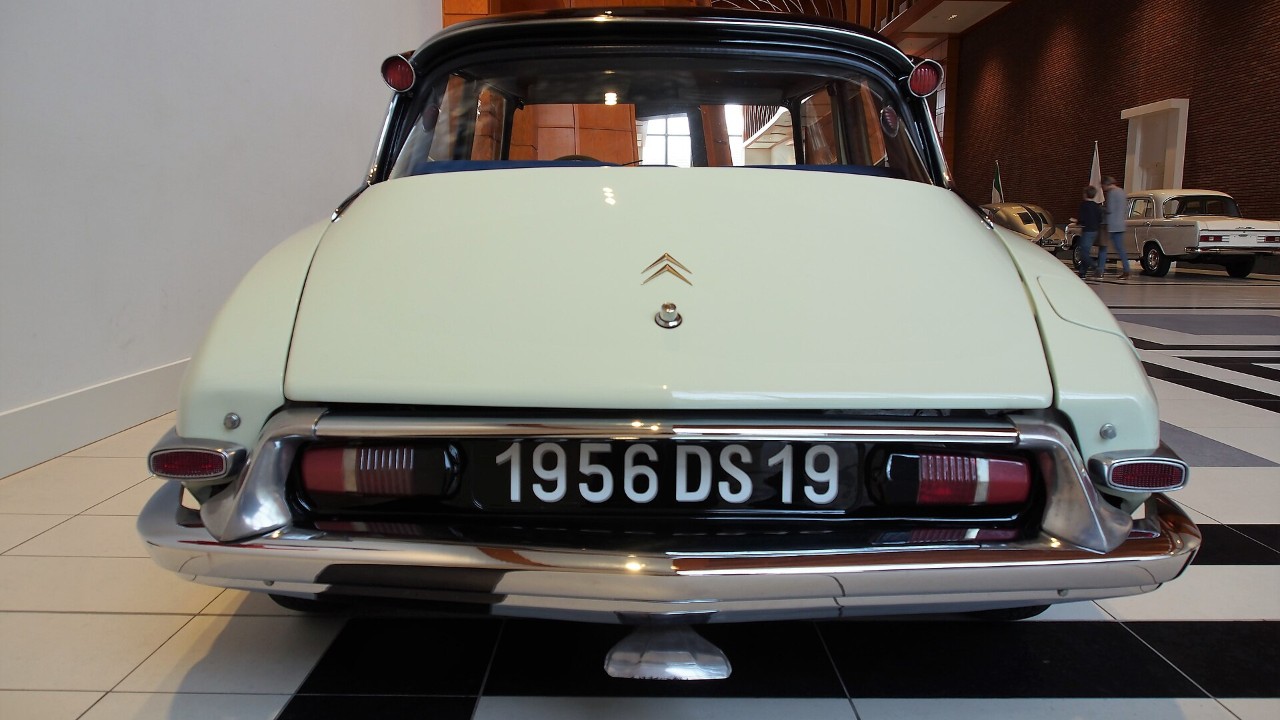
The Citroën DS 19 launch at the 1955 Paris Motor Show is still the gold standard for a car debut. By the end of the first day, the usual telling goes, Citroën had taken 12,000 orders for the new DS 19.
That figure gets repeated so often that it reads like a sales report. In truth, it is closer to a well-loved legend, and even the brand’s own heritage material tells it that way. Meanwhile, the smaller numbers around it shift a little with each retelling.
What nobody disputes is the crowd. So here is what happened on that October day in Paris, what people were lining up to order, and how the story grew.
The day of the DS 19 launch
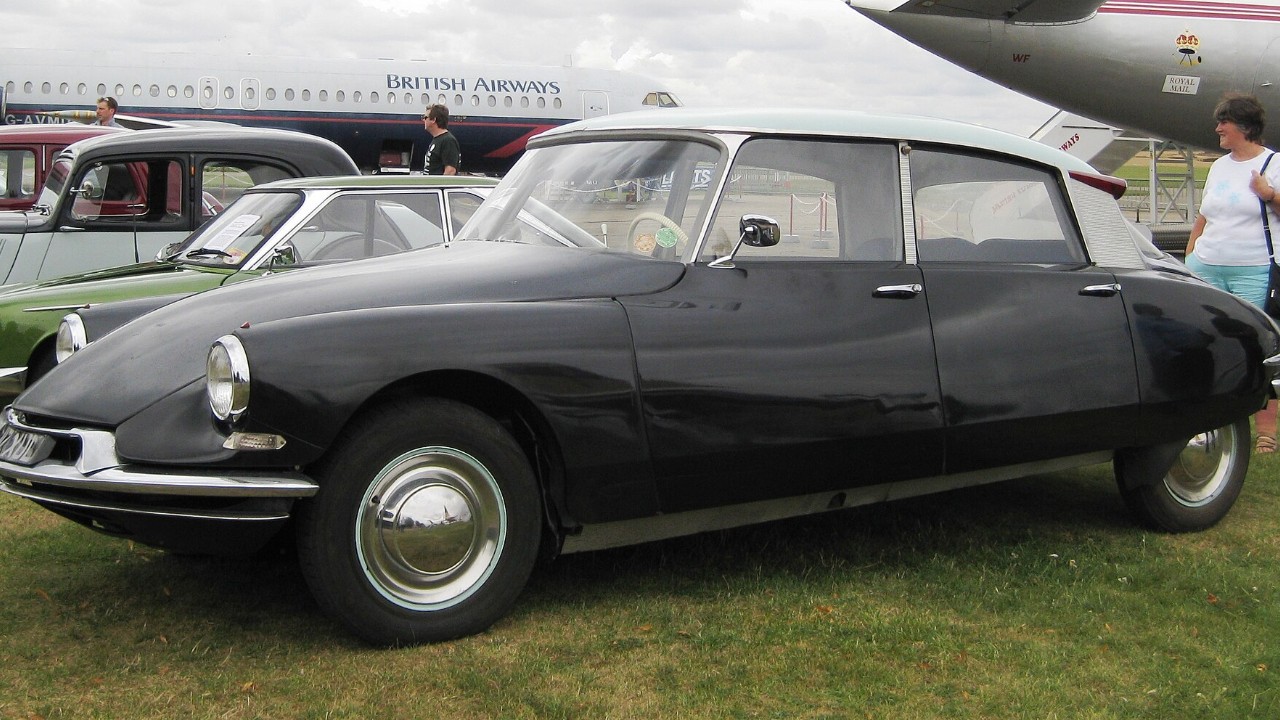
First, the date is firm. A Stellantis heritage history, republished by Automotive World, says the DS 19 made its debut at the Paris Motor Show on Thursday, October 6, 1955. Production began the next day, October 7, at the factory on the Quai de Javel in Paris, the same history says.
The show itself filled the Grand Palais. Writing on the car’s 65th birthday, the French magazine L’argus described “a riot” around the Citroën stand under the building’s glass dome. It also says the new car drew a permanent crowd.
Rival makers had a rough week as a result. Patrick le Quément, the former head of Renault design, wrote in a 2025 history for Driven to Write that the show was “a dreadful event” for most other manufacturers. Instead, he says, the public converged on the Citroën stand to see the DS 19.
How the order count is told
Nearly every account lands on 12,000. However, the early numbers vary. Le Quément gives 749 orders in the first 45 minutes and 12,000 on the first day. L’argus, by comparison, puts it at 750 cars sold in barely 45 minutes, then 12,000 by the end of the day.
Other versions compress the clock. Gulf News, for example, frames it as legend that Citroën took more than 700 orders in the first 15 minutes. It then arrives at the same 12,000 by the close of day one.
Some sources skip the exact count altogether. Gooding & Company’s auction catalog for a 1957 car says only that buyers ordered thousands on the first day, as people flocked to the streamlined body.
Stellantis chooses its words with care. “Legend has it that 12,000 DS 19s would be sold by the end of the day,” its history says. Then it adds that “some 80,000 orders” had come in when the show closed its doors 10 days later.
Le Quément’s figure for the whole show is similar. He says orders reached 80,000 eleven days after the opening, when the doors closed. L’argus, meanwhile, says “nearly 80,000” over a show that ran ten days.
So the honest reading goes like this. The 12,000 first-day figure and the roughly 80,000 total are the numbers that the brand’s own heritage material repeats. Still, the minute-by-minute details depend on who is telling the story.
What buyers were ordering
Its name came from the engine size. According to Stellantis, the DS 19 was named for its 1,911cc engine. Gooding’s catalog describes that unit as an overhead-valve inline four rated at 75 bhp at 4,500 rpm.
That engine was never the draw, though. L’argus says frankly that it was never the strong point of this “great Gothic cathedral.” Instead, the magazine points to the bold, aerodynamic lines drawn by Flaminio Bertoni and to hydraulic power steering.
Beyond that, the technology list ran long. Stellantis highlights the hydropneumatic suspension and a hydraulically assisted braking system with front disc brakes. Gulf News also counts a hydraulic clutch and gearbox, along with directional headlights.
Two very different talents shaped it. According to Supercars.net, André Lefèvre was an engineer, while Bertoni was a draftsman and sculptor. Gooding, for its part, credits the engineering to the same man, spelled Lefèbvre. None of it came cheap, either, because L’argus says the DS 19 was priced quite high for its day.
After the show closed
Demand like that after the DS 19 launch had a cost for buyers. Day after day, delivery times kept growing, L’argus says. A year later, Citroën widened the range, and Stellantis says the ID 19 arrived in October 1956.
From there, the car settled in for a long career. Its millionth example, a DS 21 Pallas with electronic fuel injection, left the Javel factory on October 7, 1969, according to the same history. That was 14 years to the day after production began.
Its final day came in 1975. According to Stellantis, the 1,456,115th and last DS left the Quai de Javel factory at 3 p.m. on April 24, 1975. Supercars.net and L’argus give the same 1,456,115 total for the whole run.
More from Fast Lane Only