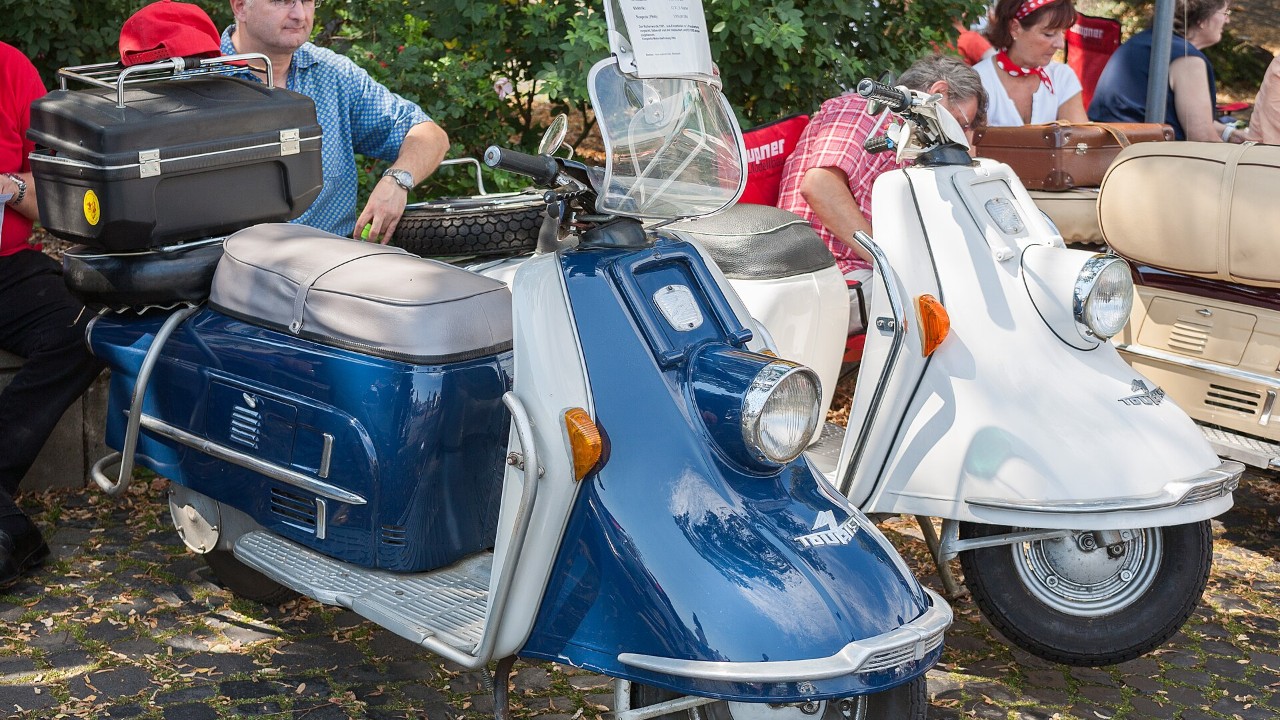
Harley-Davidson once sold a scooter with a pull starter like a lawnmower, and a German aircraft builder made one as plush as a sedan. The Heinkel Tourist and its odd cousins came out of the same postwar rush, when factories in Milwaukee, Nebraska, Germany and Japan all bet that people wanted cheap, tidy wheels.
Vespa and Lambretta won that race in the history books. However, a long line of rivals sold well in their day and then faded from memory. Some came from companies you would never connect with scooters. Others started whole industries that are better known today for cars.
These seven are our picks, the scooters we think deserve a second look. You’ll find a Harley, a Cushman, three German makers and two Japanese pioneers here, each with a story worth telling at your next bike night.
1. 1960 Harley-Davidson Topper
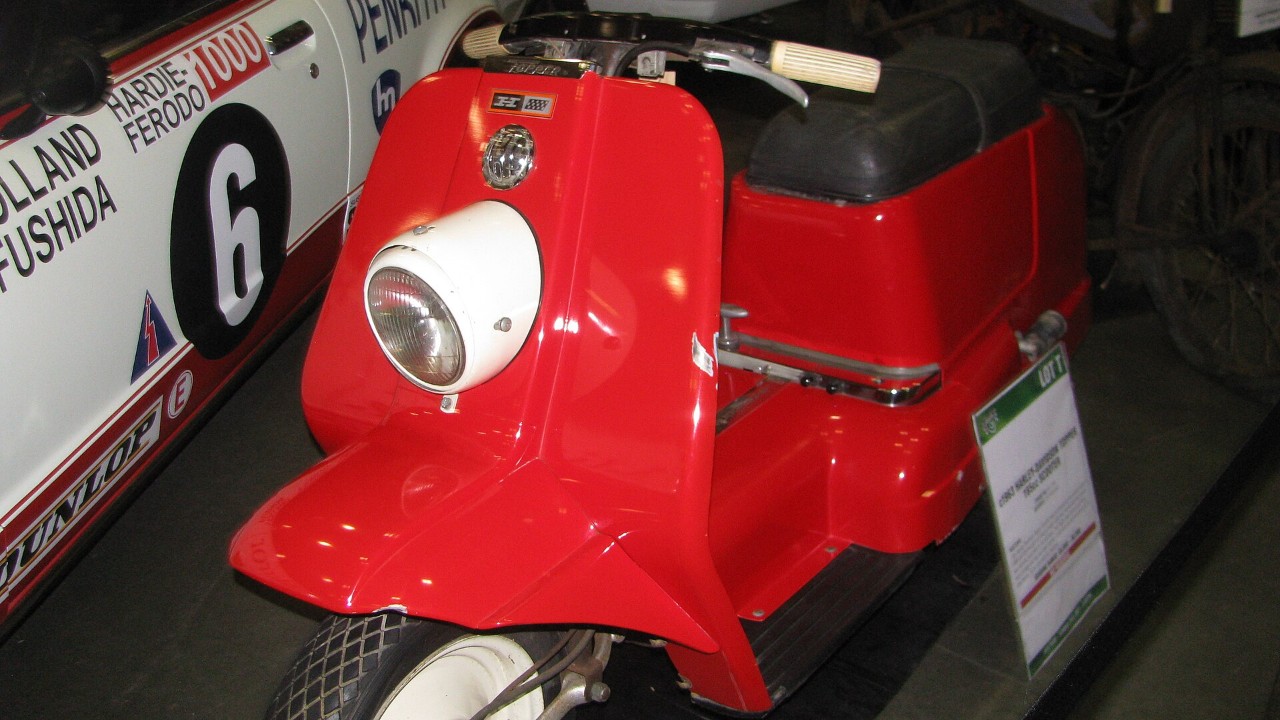
Yes, Harley built a scooter. The Topper ran from 1960 to 1965, and it was the only scooter Milwaukee ever produced. Under the bodywork sat a 165 cc reed-valve two-stroke single. That motor came from a DKW design, since Harley had picked up the tooling from Germany after the war.
According to Rider Magazine’s look back at the Topper, the engine made 9 horsepower. A belt-driven centrifugal clutch, sold as “Scootaway Drive,” meant you never touched a gear lever. You started it with a pull cord, and it topped out around 46 mph. For riders under licensing limits, Harley also sold a detuned Topper U with 5 horsepower.
Our favorite detail is the Milwaukee Brewers, who used a Topper with a sidecar to carry pitchers in from the bullpen for 35 years. Even so, the scooter itself didn’t last. Harley and Cushman both quit scooters in 1965, and Rider points to the Honda 50 as the reason. If you spot one at a swap meet, you’re looking at the oddest Harley of the era. For more Milwaukee and European oddballs, see our list of vintage motorcycles you forgot existed.
2. 1949 Cushman Eagle
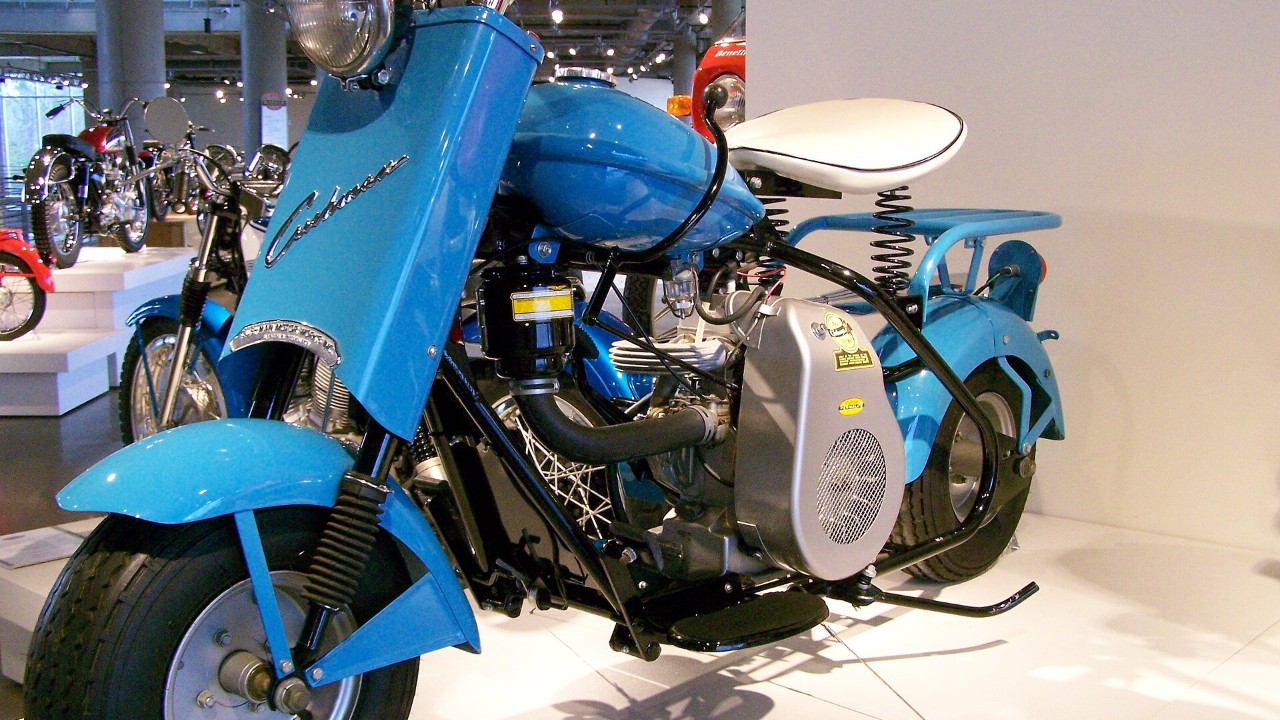
Cushman started in 1903 as a small engine maker in Lincoln, Nebraska. By World War II, it was building military scooters for the U.S. Army, including a version meant to be dropped by parachute with airborne troops. After the war, the company took that know-how and aimed it at teenagers and commuters.
The Eagle arrived in 1949 and looked like a shrunken Harley or Indian rather than a scooter. It had a teardrop tank, a sprung saddle and wide bars. In fact, it was an instant hit, and Cushman struggled to build enough at first. As Silodrome’s Cushman history explains, power came from an 8-horsepower flathead single of about 21 cubic inches. You worked a foot clutch and shifted the two-speed gearbox by hand, with the lever beside the tank. Tucked behind the headlight, a rider could see about 50 mph.
The Eagle became Cushman’s most successful scooter and stayed in production for roughly 16 years. Then the company left the scooter business in 1965. In our view, it’s the most American machine on this list, a motorcycle in miniature that a kid could buy with summer job money.
3. 1960 Heinkel Tourist
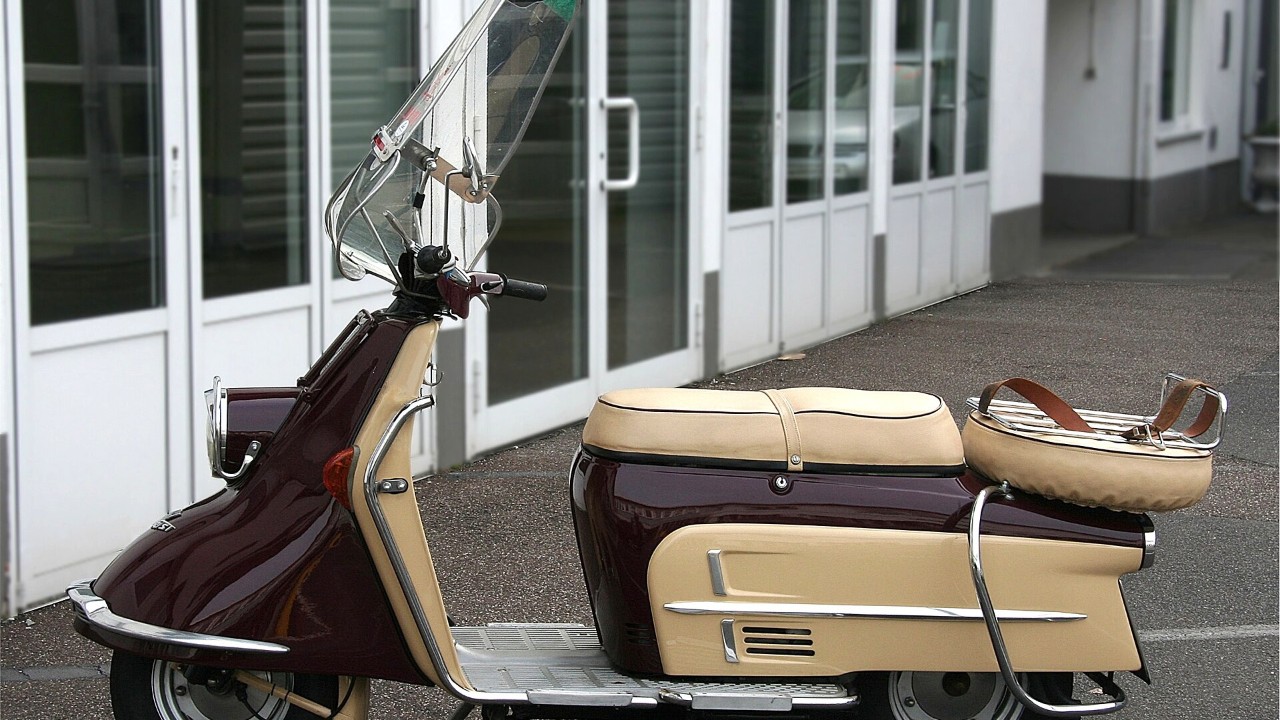
Heinkel built the He 178, the first jet plane, before the war. After the war, aircraft work was off the table, so the firm turned to scooters and microcars instead. The Heinkel Tourist was the result, a heavy, fully enclosed machine pitched at buyers who wanted comfort over flash.
The numbers show how well that plan worked. Old Bike Australasia’s Heinkel history counts 156,610 scooters built between 1953 and 1965 at the Karlsruhe factory. The first Tourist used a 149 cc overhead-valve four-stroke, which was unusual when most rivals ran two-strokes. Later the 102 A1 grew to 174 cc and gained a 12-volt electric starter.
The 103 A1 was the first Heinkel Tourist exported to the United States, and 50,050 were built before production ended in June 1960. That makes a 1960 example one of the last of that run. By comparison, Heinkel’s total output beat the Bella’s later on this list, even though few Americans remember the name. Our take: if you want a vintage scooter you can ride across a state, this is the one we’d pick, and you’ll rarely park next to another.
4. 1955 Zündapp Bella
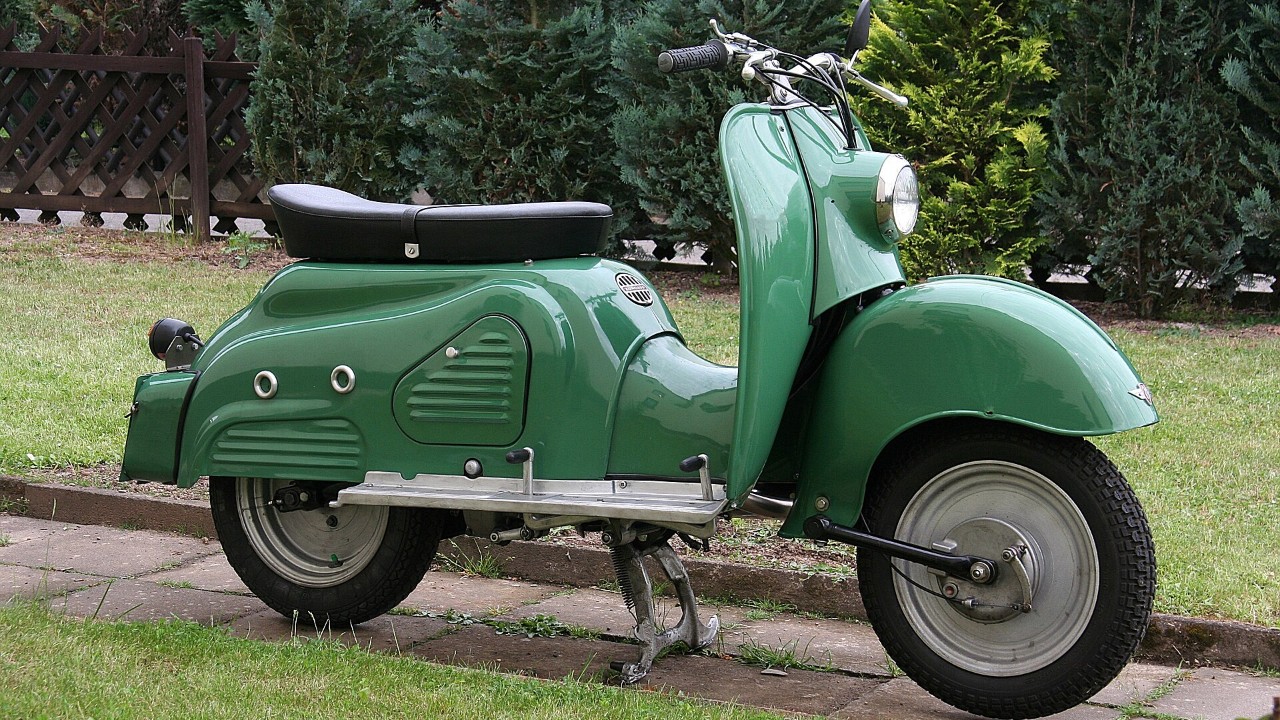
The Zündapp Bella was the German maker’s gentle side. It launched in 1953 with a 148 cc two-stroke, and buyers liked it enough that Zündapp sold around 130,000 over the run. The Bella sat somewhere between a scooter and a small motorcycle, with big 12-inch wheels that you could swap front to rear.
By mid-1954, the engine had grown to 197 cc. That bigger model also added a 12-volt battery and an electric starter, a real luxury at the time. According to Old Bike Australasia’s Bella history, the 1953 150 made 7.3 horsepower. The four-speed gearbox had separate heel and toe levers, and the rear chain ran fully enclosed. Later, a 1956 update gave the smaller model a bit more power, and it could also claim better than 100 mpg.
American buyers saw a list price of $389 for the 150 and $499 for the electric-start 197. That was real money for a scooter, yet the Bella earned it with solid German build quality. In our opinion, it’s the best rider of the three German machines here, and a 1955 197 gives you the electric start without the later restyles.
5. 1955 Maico Mobil
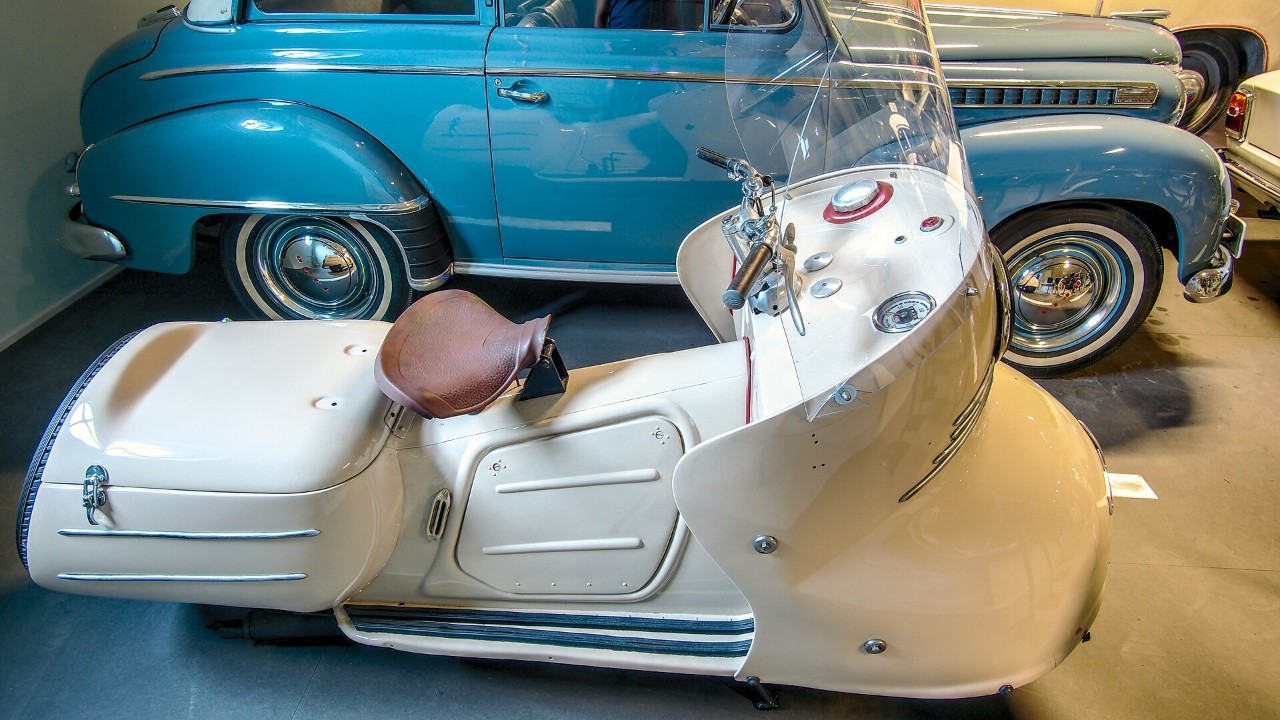
Maico sold the Mobil as a “car on two wheels,” and one look tells you why. Launched in 1950, it wrapped the rider in bulbous, fully enclosed bodywork with a big front fairing and a wraparound windscreen. Panniers were built into the body, and a full-size spare wheel rode on the back.
Underneath sat a two-stroke single, first a 150 cc unit and later a 175 cc engine. It rolled on 14-inch tires, with telescopic forks up front and a swingarm at the rear. That made it closer to a motorcycle in its chassis than its looks suggest. In other words, Maico treated it as a touring machine first and a scooter second. There was even a glove box, and reportedly room for a radio.
Maico built the Mobil from 1950 to 1958. Today many fans call it the holy grail of scooters, partly because so few people remember it at all. We’d rank it as the strangest design on this list. Still, it’s also the most practical one, since it carried luggage and a spare long before anyone called a bike a tourer.
6. 1946 Fuji Rabbit S-1
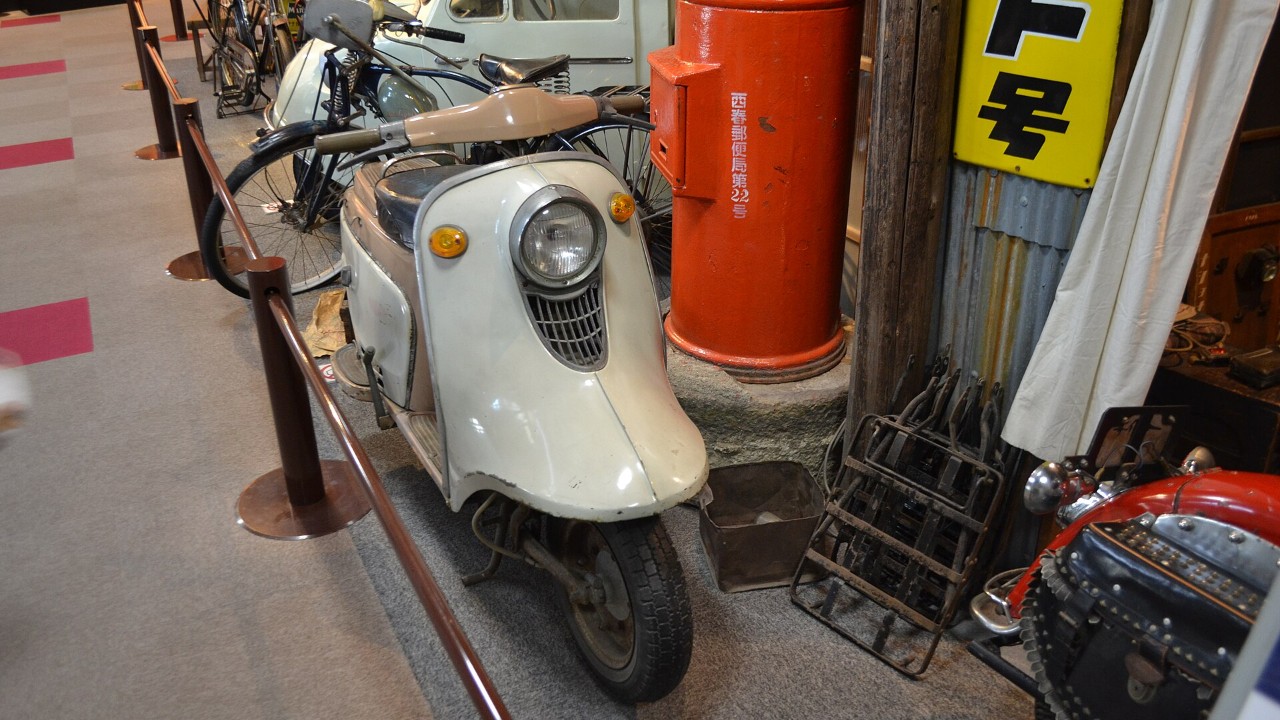
Before Subaru built cars, it built scooters. After the war, Nakajima Aircraft became Fuji Heavy Industries, and its first civilian hit was the Rabbit. The S-1 appeared in June 1946, and the Lane Motor Museum calls it Japan’s first motor scooter. Its design took cues from the American Powell Streamliner, examples of which U.S. paratroopers had brought to Japan.
The Rabbit line ran for more than two decades, with 25 different models. Later versions grew fancy, such as the 1960s Superflow with a torque-converter automatic and electric start. The last Rabbit left the line on June 29, 1968, as Fuji shifted its focus to the Subaru 360 car. The Society of Automotive Engineers of Japan now lists the 1946 S-1 as a landmark of Japanese automotive technology. By comparison, the 1963 Superflow S601 made 11 hp from 200 cc and cost about $495 new, according to the museum.
There’s also a twist for American readers. In Canada, Malcolm Bricklin imported Rabbits, and that deal led him to form Subaru of America. So in our view, every Subaru in your neighborhood owes a little to this humble scooter.
7. 1946 Mitsubishi Silver Pigeon C-10
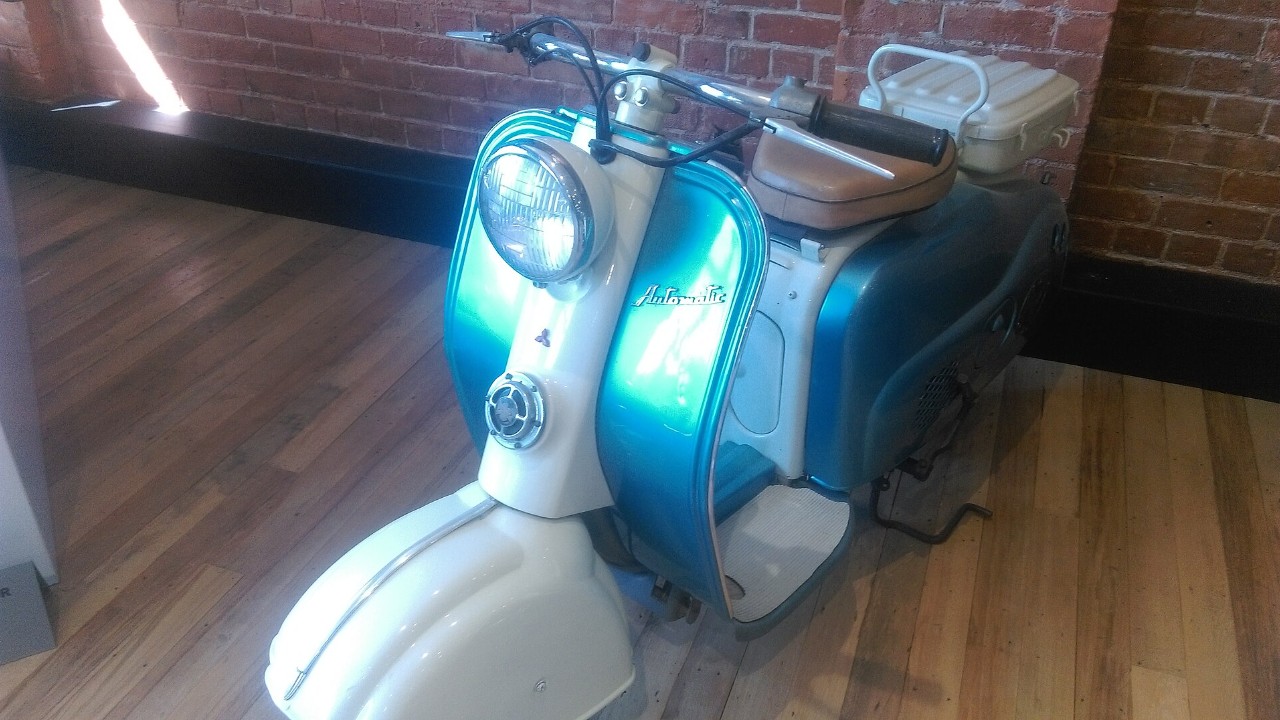
Mitsubishi’s scooter story began with one man and one souvenir. Kojiro Maruyama, an engineer who had worked for General Motors, brought a scooter back from America. Mitsubishi Heavy Industries then asked him to develop a Japanese version, and the first prototype was finished in 1946.
That machine became the Silver Pigeon C-10. As Mitsubishi’s own heritage page describes it, the C-10 used a 112 cc four-stroke side-valve single that made just 1.5 PS. Mass production began at the start of 1947. Over the next 18 years, the Silver Pigeon line fought the Fuji Rabbit for Japan’s commuters. That output sounds tiny today, but it was enough to get workers moving when cars were out of reach.
That same society also lists the C-10 as a landmark of Japanese automotive technology, just like its Fuji rival. Mitsubishi credits the scooter with helping the company recover and with aiding Japan’s postwar rebuilding. Our take: it’s the most important scooter most Americans have never heard of. If you love odd collections, you’ll also enjoy this car collection with a scooter in the trunk.
More from Fast Lane Only