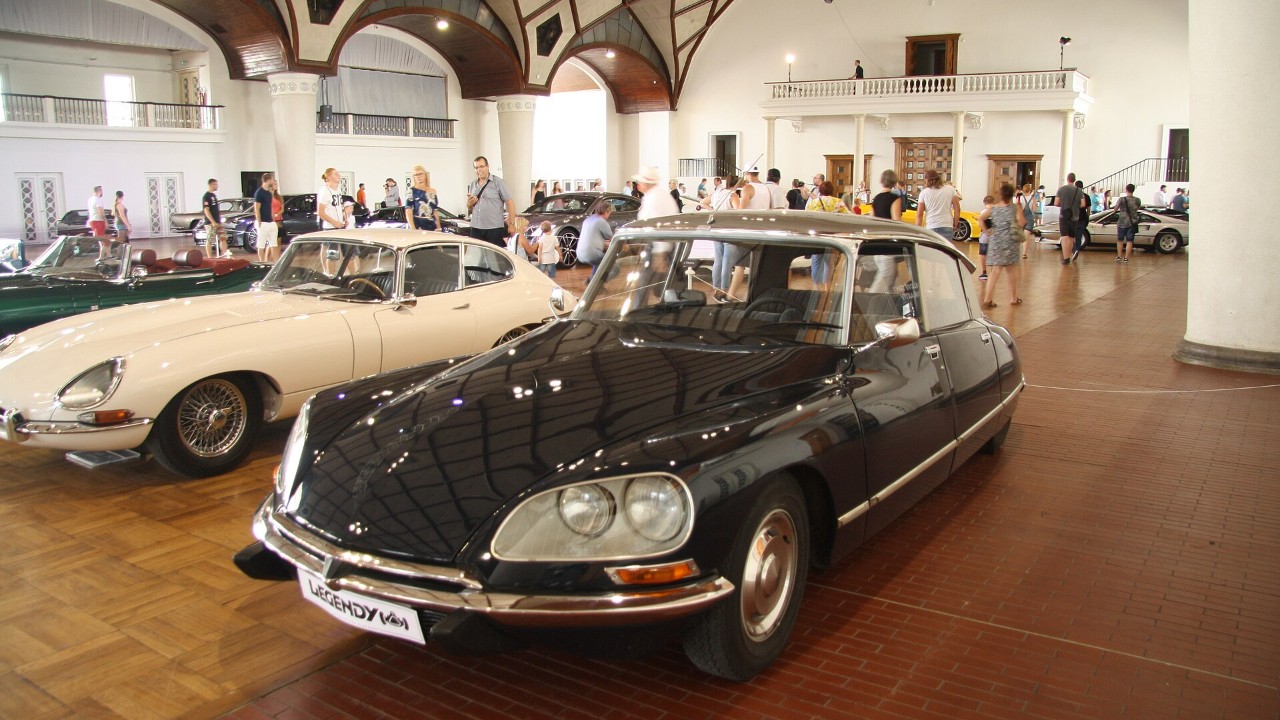
The 1955 Citroën DS19 ran its suspension, brakes, steering, clutch and gear change from one engine-driven hydraulic circuit. A single belt drove the pressure pump, and that pump fed everything else. The DS19 hydraulic system is the reason the car rode level, stopped on inboard front discs and changed gear without a clutch pedal.
Here is how that one system worked, based on Autocar’s 1955 road test of the DS19 and later technical accounts. None of those sources gives a working pressure, so no pressure figure appears here either.
The story starts with a pump, a tank and a pressure store, so that is where this explainer starts too.
One pump, one accumulator
In its 1955 review, reproduced on Citroënët, Autocar described a belt-driven hydraulic pump and reservoir feeding “an elaborate hydraulic system.” A twin V-belt from the camshaft pulley drove the dynamo and water pump. Meanwhile, a single belt from the same pulley drove the hydraulic pressure pump. Autocar called the result a complicated system of hydraulics, controlled from a master pressure pump and accumulator.
The accumulator is the heart of it. A technical history on Citroënët explains that the high-pressure pump takes fluid from the tank and discharges it into the accumulator. Then a regulator, the “connector-disconnector,” keeps the accumulator at the correct pressure by opening or closing the line from the pump. In other words, the pump fills a store, and the car draws on that store.
How the DS19 hydraulic system carried the car
Each wheel had its own suspension sphere. According to Citroënët, the spheres hold inert nitrogen gas rather than ordinary air. A tight rubber diaphragm separates the nitrogen from the hydraulic fluid. Autocar, for its part, called the arrangement oleo-pneumatic.
Height correctors handled the load. Autocar explained that a valve controls the flow of oil into the suspension cylinders, so static height stays the same regardless of load. Similarly, Citroënët says the height corrector “automatically maintains the car at a constant height above ground level.” It gives normal ground clearance as 16 cm.
The driver had a say, too. The corrector came with a manual control, so the driver could raise the car at will. In addition, stabilizer bars linked the front wheel arms and the rear wheel arms, and they also worked a slide valve that adjusted fluid volume after a load change.
Brakes and steering on the same supply
Autocar’s testers found disc brakes at the front, mounted inboard at the final drive, with drums at the rear. Each brake circuit had a small accumulator of its own, taken off the main accumulator circuit. As a result, the brakes kept a reserve of their own pressure.
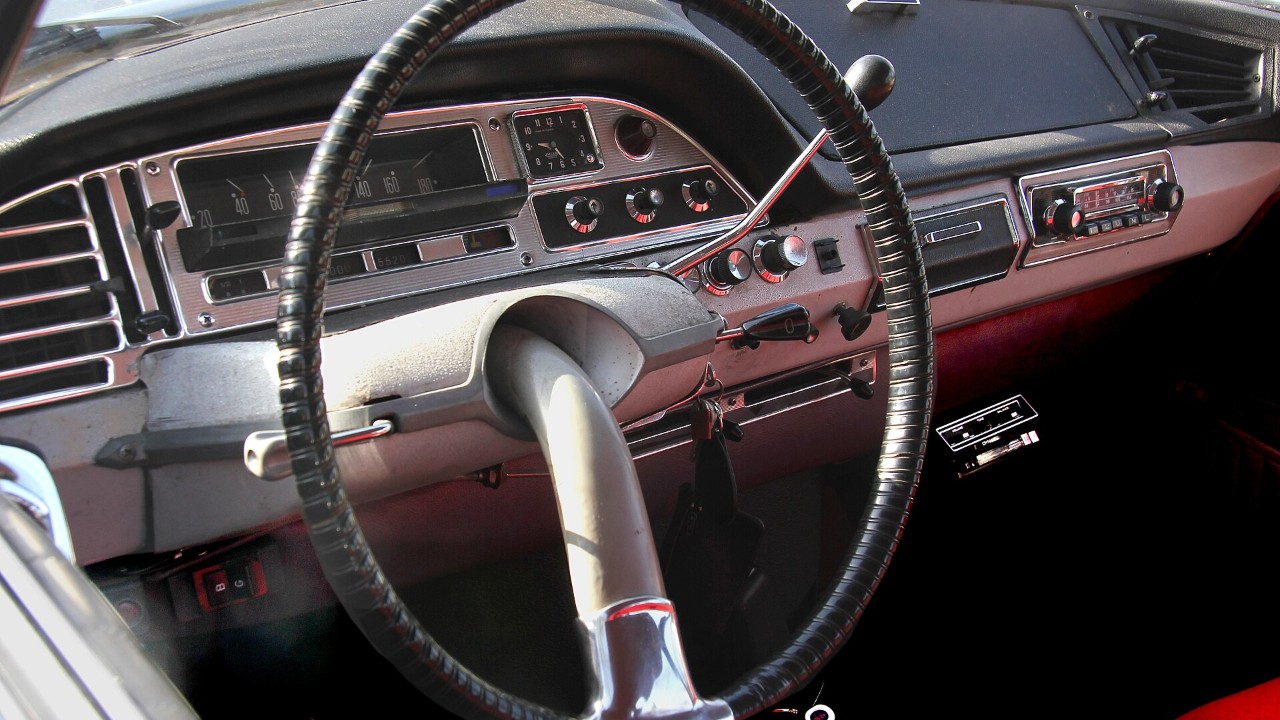
The controls looked different as well. Instead of a conventional pedal, the driver pressed a plunger with a circular pad only about 1¾ inches across. Meanwhile, a large pedal on the far left doubled as the parking and emergency brake.
Steering drew on the same circuit. The DS19’s rack-and-pinion steering, Autocar wrote, was hydraulically assisted by a booster cylinder on the end of the rack.
A gear change without a clutch pedal
The clutch pedal disappeared entirely, Autocar noted, because clutch action began automatically. Gear selection and clutch operation shared a single lever mounted above the steering wheel. The driver simply moved the lever into the required gear, and the system combined clutch operation with that movement.
Behind it sat a four-speed gearbox with synchromesh on second, third and top. According to Autocar, “other circuits supply hydraulic power” for the gearbox and clutch. Even so, drivers still had to move through the gears progressively, the testers added.
The car around the system
Under the bonnet sat a 1,911cc four-cylinder engine with a 78 mm bore and 100 mm stroke. Autocar quoted 75 bhp at 4,500 rpm. Conceptcarz says the overhead-valve four derived from the engine of the 11CV Traction Avant. In Britain, Autocar listed a basic price of £990, or £1,403 12s 6d with purchase tax, and a dry weight of 2,464 lb.
Conceptcarz also sums up the system in one line: hydraulic power ran “the brakes, power steering, clutch, transmission, and self-leveling suspension system.” Each wheel, it adds, used a sphere containing pressurized nitrogen.
Buyers took the leap. According to Conceptcarz, Citroën took over 12,000 orders on the first day of the October 1955 Paris Salon, and 80,000 by the time the show closed a week later. The DS then stayed in production through 1975, and Conceptcarz counts over 1,455,700 built in six countries.
More from Fast Lane Only
- Unboxing the WWII Jeep in a Crate
- 15 rare Chevys collectors are quietly buying
- 10 underrated V8s still worth hunting down
- Police notice this before you even roll window down
This article was created with the help of AI and was reviewed and edited by Fast Lane Only editors before publication.