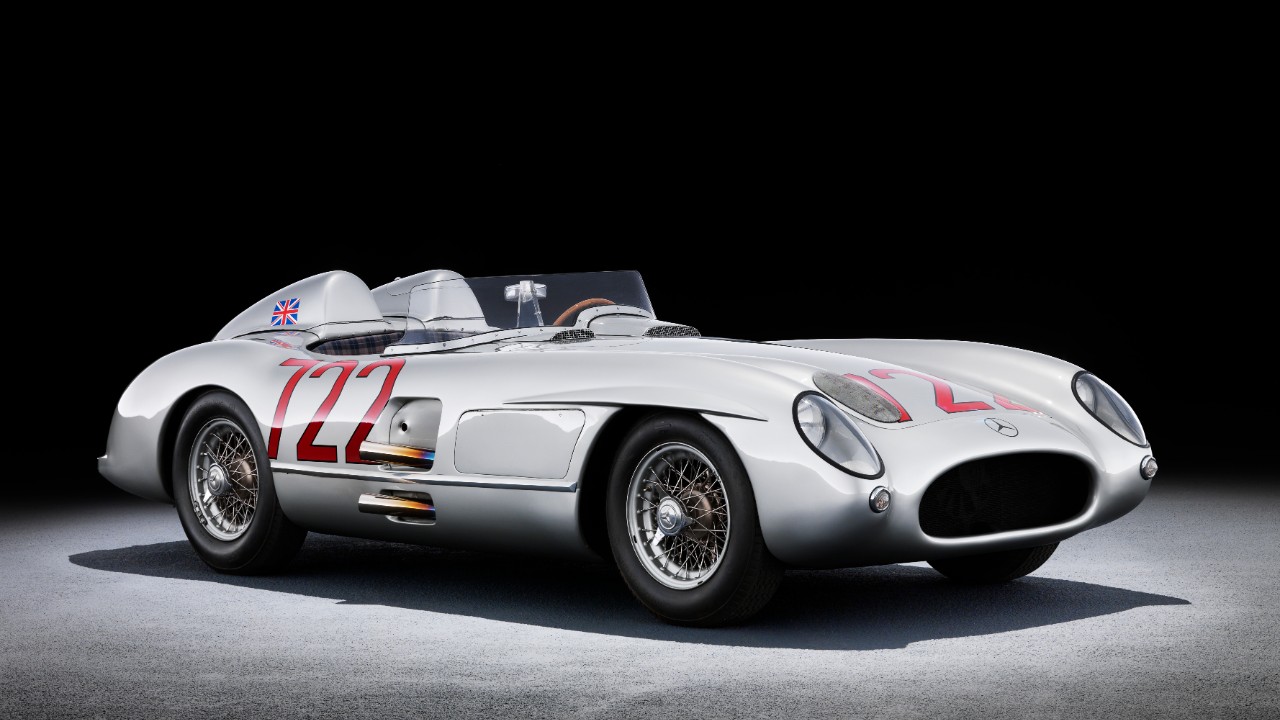
The number on the side of Stirling Moss’s Mercedes-Benz 300 SLR was a clock time. In the 1955 Mille Miglia, the car wore No. 722 because it left Brescia at 7:22 a.m. on May 1. Ten hours, seven minutes and 48 seconds later, Moss and co-driver Denis Jenkinson had won.
Moss became the only British driver to win the Mille Miglia, according to the Royal Automobile Club. Today the car sits in the Mercedes-Benz Museum in Stuttgart, still wearing its start number.
Here is how a race car got its name from a starting schedule, and what it took to cover Italy that fast.
Why the Mercedes 300 SLR wore 722
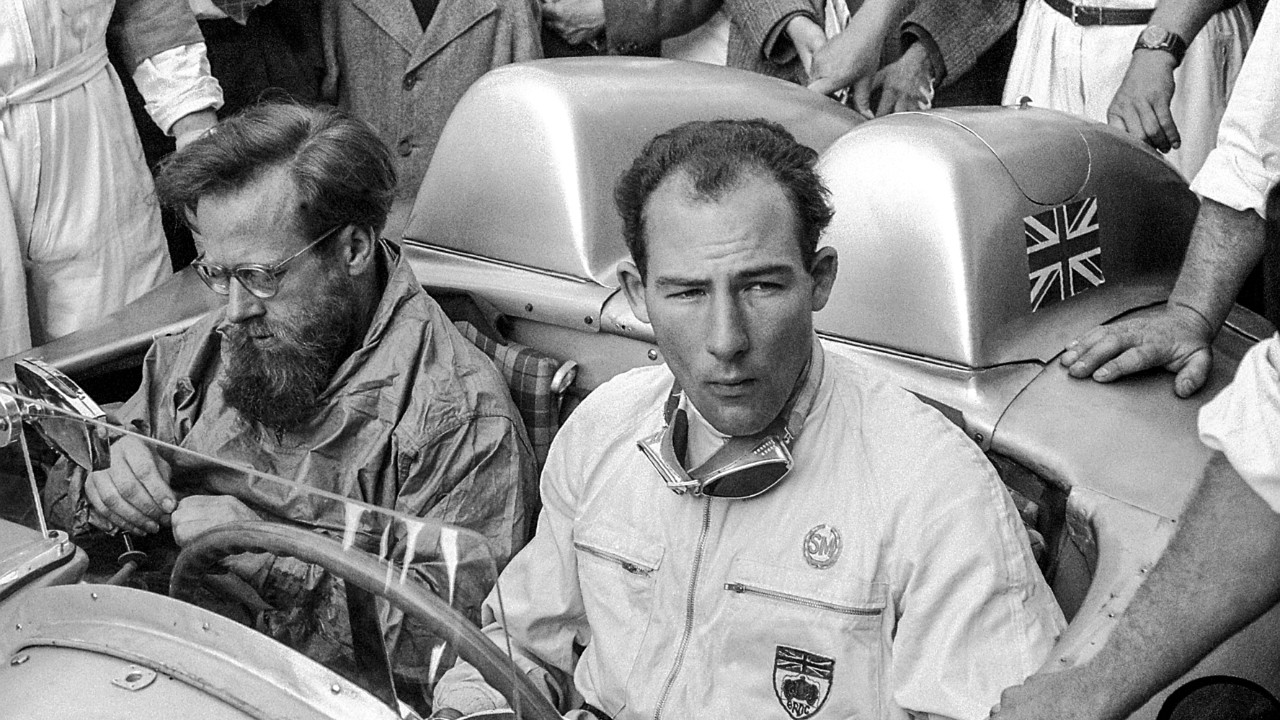
The Mille Miglia did not start every car at once. Instead, cars left one minute apart, and slower cars set off the night before, Drivingline explains. A car’s number matched its start time. So No. 722 meant 7:22 a.m.
Moss fired the engine 30 seconds before his slot, according to the RAC’s page on the car. Then he headed out on public roads from Brescia to Rome and back. The event ran on that kind of open-road course from 1927 to 1957, the RAC notes.
Mercedes-Benz puts the 1955 route at roughly 1,000 miles, or about 1,600 kilometers. After all, “Mille Miglia” means a thousand miles. In 1955, the field held 520 other cars, according to Mercedes. Crowds lined the roads, too. Drivingline cites an estimated five million spectators along the route.
A Formula 1 car for the road
The 300 SLR, internally coded W 196 S, was a sports car built from the W 196 R Formula 1 car. Unlike the single-seater, it was approved for road use, according to Mercedes-Benz Classic’s own description, published by Sports Car Digest.
Power came from a three-liter M 196 S straight-eight. Mercedes rates it at a continuous 203 kW, which is 276 hp. Inside, the rev counter reads to 11,000 rpm, with a red marker at 7,000. The Grand Prix car it came from won two world championships, the RAC says.
Jenkinson’s paper roll
Moss did not drive the Mercedes 300 SLR by memory alone. His passenger, Denis Jenkinson, was a journalist for Motor Sport magazine, known as “Jenks,” the RAC notes. Mercedes calls his navigation “a major factor” in the win. Later, Mercedes-Benz described the pair’s notes as a roadbook on a paper scroll.
Jenkinson condensed his pace notes onto one paper roll about 17 feet long, according to Drivingline. Moss had a special aluminum case made with two rollers so Jenks could scroll through them. Instead of talking, the pair used hand signals. Moss had tuned out the radio system Mercedes tried, and Jenkinson gave only one wrong signal in 10 hours.
The numbers from May 1, 1955
Moss and Jenkinson finished in 10:07:48. Mercedes gives their average speed as 157.6 km/h. In its 2020 tribute to Moss, Mercedes-Benz said that time was never beaten.
The win was also a team result. Juan Manuel Fangio finished second in another 300 SLR, about 32 minutes behind, Drivingline reports. That gave Mercedes a one-two. “Only Mercedes-Benz could build such a vehicle,” Moss later said.
The season went on from there. Moss also won the Targa Florio and the Tourist Trophy at Dundrod in 1955, according to Mercedes. His points helped Mercedes win the sports car world championship that year, alongside the Formula 1 title.
In Formula 1, meanwhile, Moss drove the W 196 R alongside Fangio. He finished runner-up to his teammate in the 1955 championship. He also won the British Grand Prix that year, his first Formula 1 victory, Mercedes notes. So the Mercedes 300 SLR win in Italy was one part of a very full year.
Where the 722 car is now
Moss died on April 12, 2020, at age 90. Mercedes marked his death with a tribute release that recalled the 722 car. However, the car itself still exists. Mercedes-Benz Classic keeps the 300 SLR “722” and has lent it out for events, including a display in the Royal Automobile Club’s Rotunda.
Its permanent home is the Mercedes-Benz Museum. There, the 300 SLR sits on the racing curve in Legend Room 7, still wearing No. 722, the number that once meant 7:22 a.m. in Brescia.
More from Fast Lane Only
- Unboxing the WWII Jeep in a Crate
- 15 rare Chevys collectors are quietly buying
- 10 underrated V8s still worth hunting down
- Police notice this before you even roll window down
This article was created with the help of AI and was reviewed and edited by Fast Lane Only editors before publication.