The station wagon carried postwar America to the beach, the ballpark and grandma’s house. For decades, most American carmakers offered one, and some put their boldest ideas into the long roof. There were two-door sport wagons, pillarless hardtop wagons and even a wagon with its engine under the cargo floor.
Many of those wagons are long gone, worn out by family duty. The ones people remember tend to be the obvious ones, too. Meanwhile, the clever and odd designs slipped out of memory.
These are our picks: eight station wagons we think are worth remembering. We chose them for what they tried, not for what they sell for, and the verdicts are our opinion. Every date, engine and production figure comes from period specifications, specialist histories and reference sources we checked.
1. 1957 Pontiac Star Chief Safari
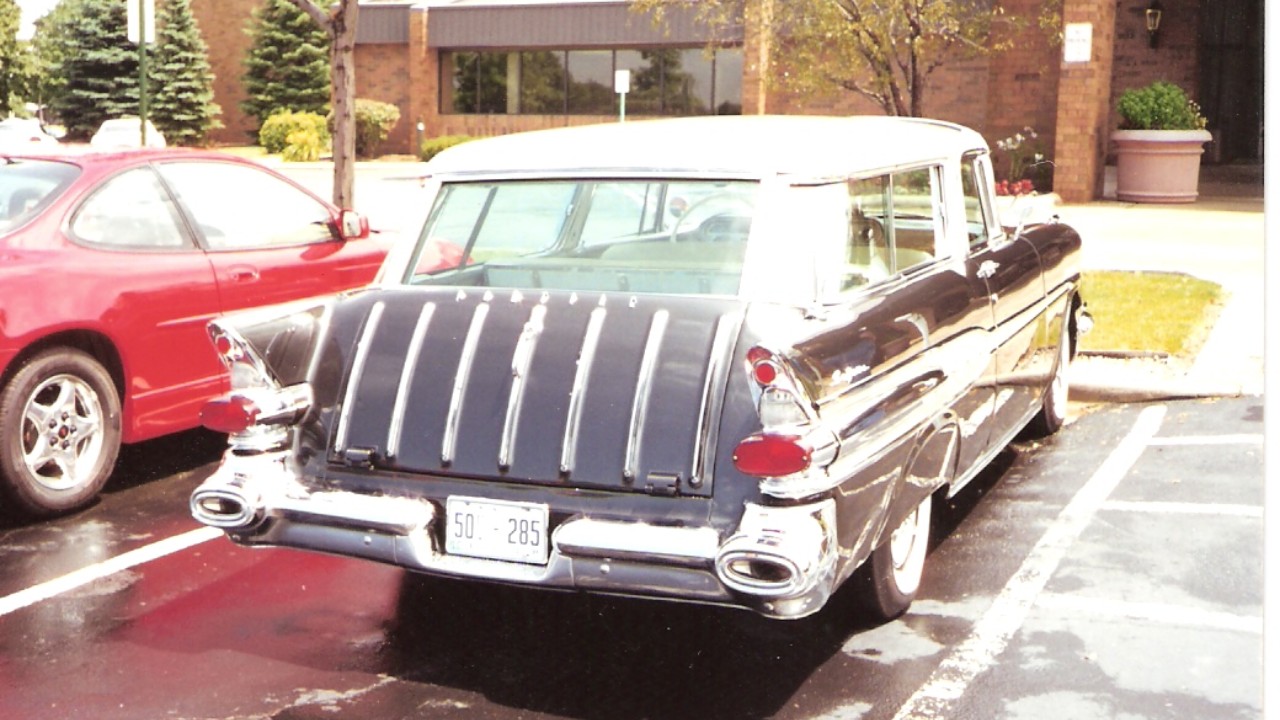
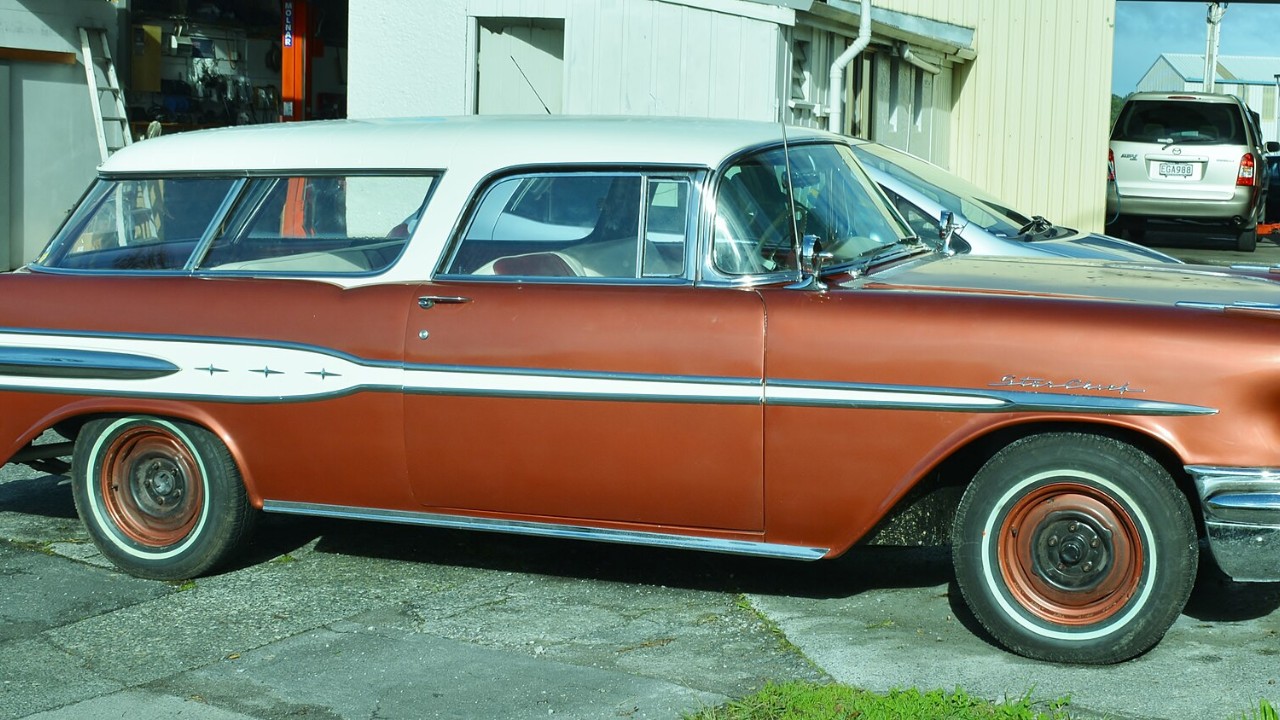
Pontiac launched the two-door Safari on January 31, 1955, as a mid-year model. Its official name was the Custom Star Chief Safari. It shared the swept-back roofline of Chevrolet’s Nomad, but it rode on Pontiac’s longer 122-inch chassis instead of the Chevy’s 115 inches.
Pontiac also aimed higher. The Safari came with leather upholstery and a V8 as standard, and at launch it cost $2,962, about $500 more than a Nomad, according to Mac’s Motor City Garage. In our view, that price kept sales small. Pontiac built about 9,000 Safaris from 1955 to 1957, compared with more than 22,000 Nomads.
By 1957, the Safari had a 347-cubic-inch V8 under the hood. That year, Pontiac also put the Safari name on all its wagons and added the four-door Custom Safari Transcontinental. So the 1957 two-door marks the end of the original idea. Our take: the Safari was the Nomad’s richer cousin, and it deserves the same attention. If you shop for one, check that the trim and roof panels are complete and correct, since originality drives interest in these cars.
2. 1958 Rambler Ambassador Cross Country
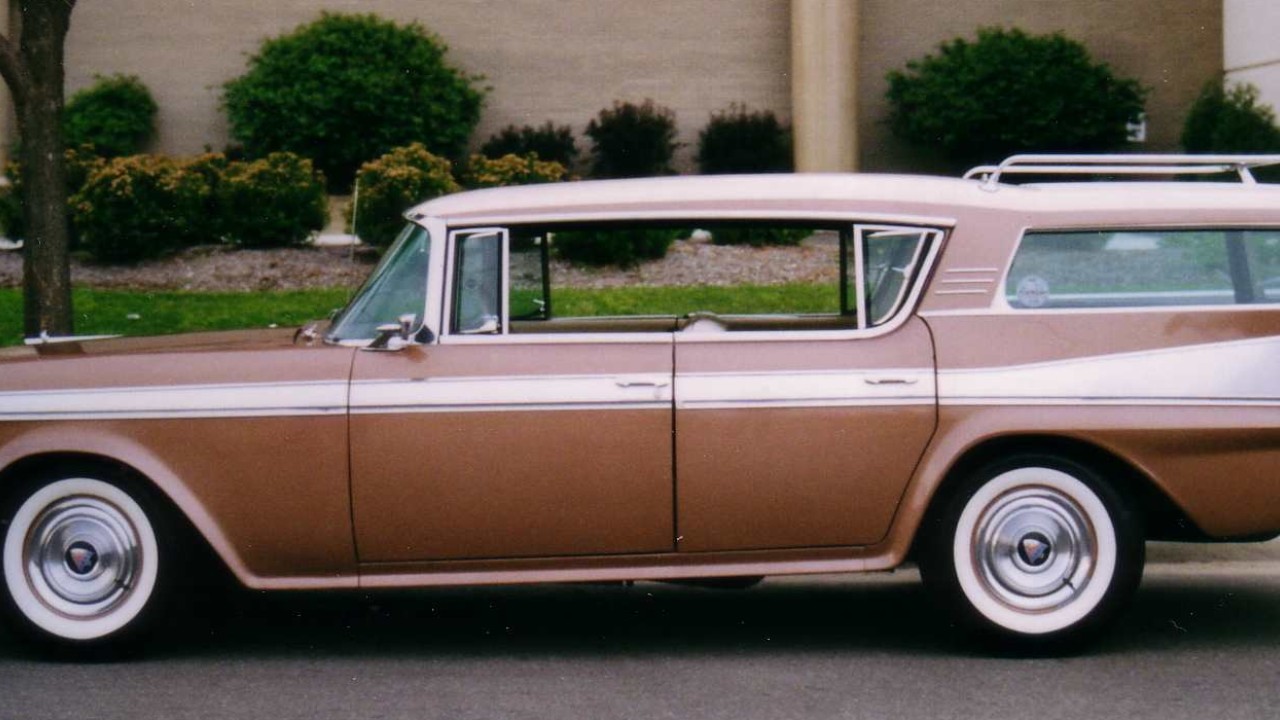
American Motors introduced the 1958 Ambassador on October 8, 1957. It stretched the Rambler body by nine inches between the firewall and the front spindles, giving it a 117-inch wheelbase. Under the hood sat a 327-cubic-inch V8 with a four-barrel carburetor and 270 horsepower.
Even so, the wagon was the headline. Alongside a regular wagon, AMC built a four-door pillarless hardtop wagon, with no center post between the doors. Hagerty notes that AMC was first with a four-door hardtop wagon. The Rambler version had appeared for 1956, and for 1958 it moved up to the bigger Ambassador.
The Ambassador line sold just under 15,000 cars that first year, at prices from $2,587 to $3,116. Then, with the 1961 redesign, the hardtop wagon disappeared. Our take: a pillarless four-door station wagon with a 270-horsepower V8 was a bold idea from a small company. It also showed that a small company could out-think much bigger rivals on a family car. If you find one, inspect the window seals and door alignment closely, since a wagon without a center pillar depends on them.
3. 1961 Pontiac Tempest Safari
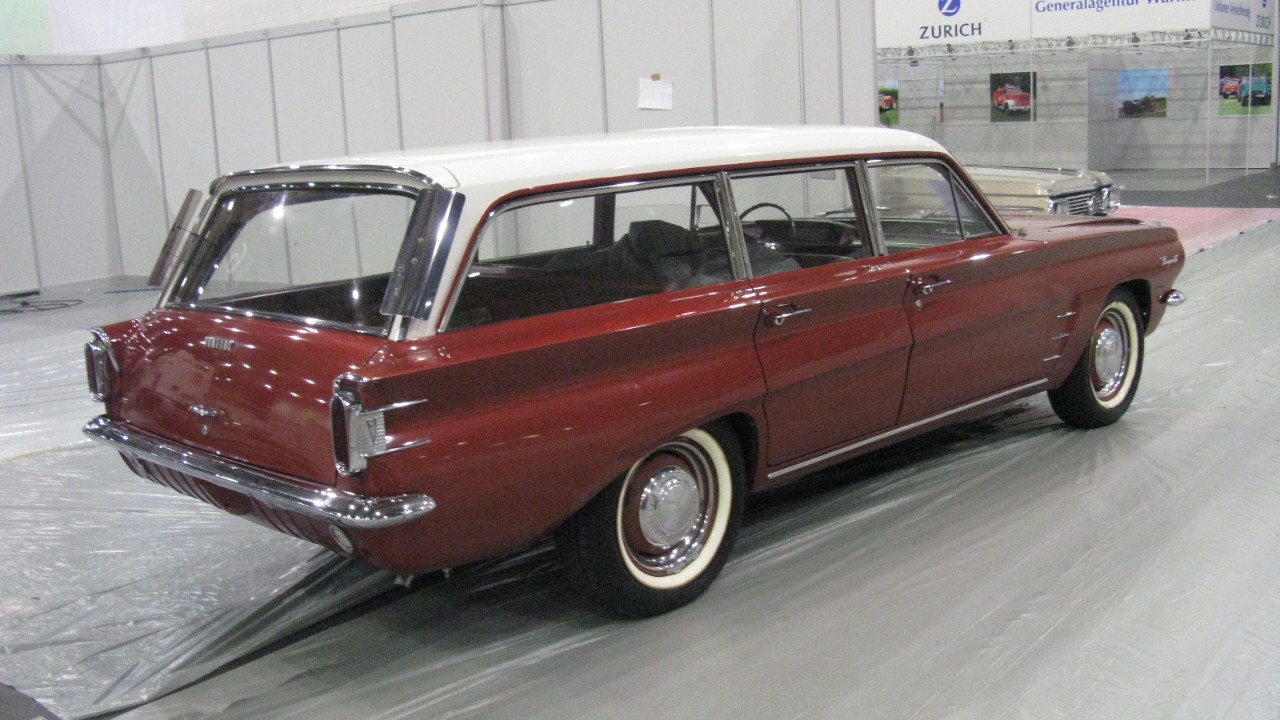
The 1961 Tempest was one of the strangest compact cars Detroit ever sold. Its engine sat up front, but the transaxle sat at the rear, connected by a thin steel “rope” driveshaft. That layout gave the car very nearly a 50/50 weight split.
Likewise, the base engine was just as unusual. Pontiac’s Trophy 4 displaced 195 cubic inches, made by using half of its 389 V8. The top four-barrel version made 166 horsepower. In addition, buyers could order Buick’s aluminum 215 V8, though only about 3,662 Tempests got one in 1961 and 1962. Independent swing-axle rear suspension completed the package.
Like Pontiac’s bigger wagons, the Tempest wagon carried the Safari name. Meanwhile, Motor Trend named the Tempest its 1961 Car of the Year, so the engineering earned praise right away. Our take: a station wagon with a rear transaxle and a half-V8 is a story you can tell at every car show. If you buy one, listen for noise from the rope drive and the transaxle on a test drive, and budget for a specialist who knows the layout.
4. 1966 Dodge Coronet 440 station wagon
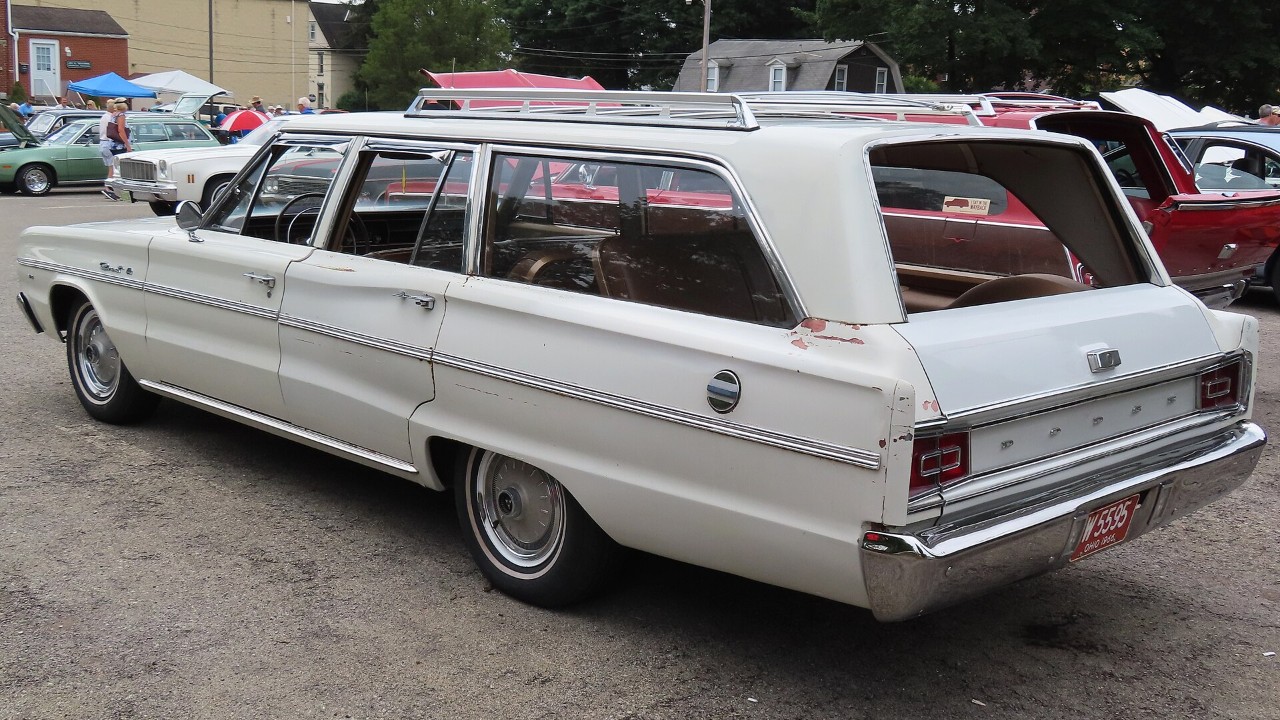
Dodge redesigned the Coronet for 1966. It was an intermediate B-body, and the wagons rode a 117-inch wheelbase. Dodge built around 251,000 Coronets that year, according to Oldride’s 1966 Coronet summary, with a 225-cubic-inch six as the base engine.
The 440 was the step-up trim. As a result, the upscale wagon came in six- and nine-passenger forms. The nine-seater required a V8. Meanwhile, 1966 was the year the 426 Hemi became available to the public, and buyers could order it on any Coronet model or trim. However, nobody has verified a Hemi-powered Coronet wagon.
In fact, that detail sums up the appeal. The Coronet 440 wagon shared its basic body with Dodge’s Street Hemi cars, yet it carried families instead. Our take: a clean mid-1960s Mopar wagon deserves to be remembered as much as the hardtops. If you buy one, confirm the fender tag and engine code, because the original engine matters to value and to history. Then check the rear floor and tailgate area, where water tends to collect on any old station wagon.
5. 1968 Ford Torino Squire
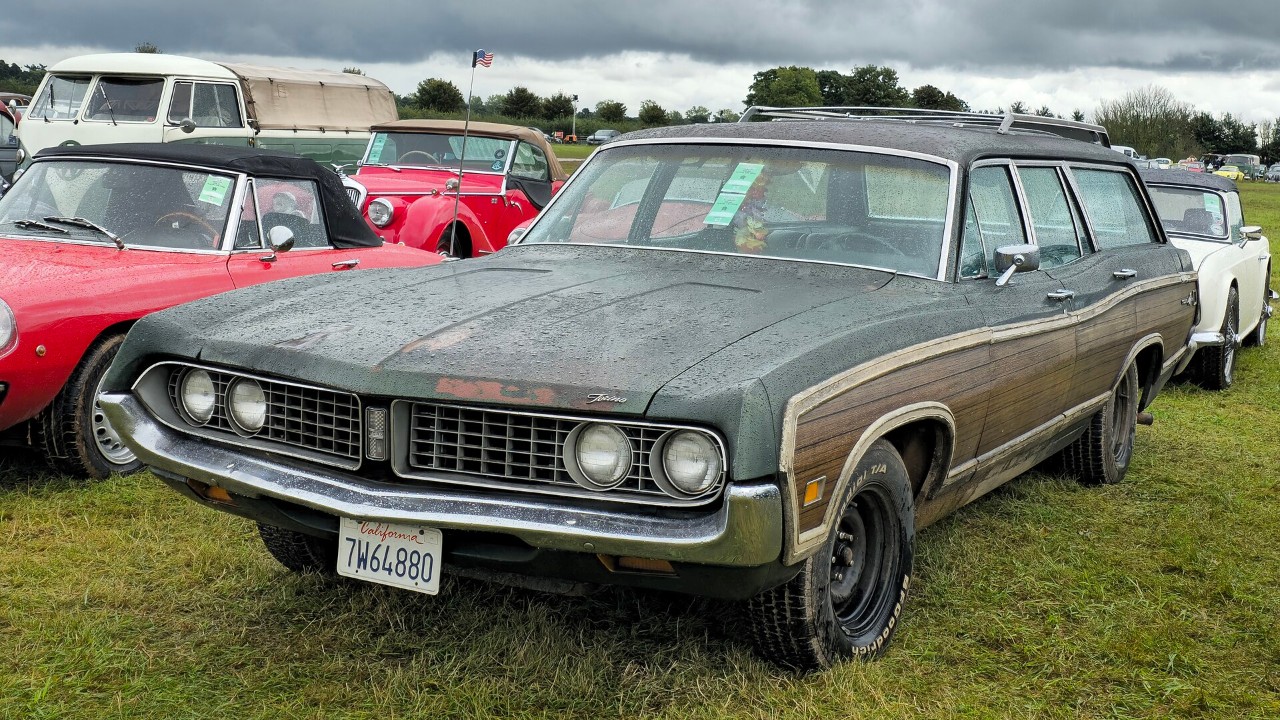
For 1968, Ford made the Torino an upscale sub-series of the Fairlane. The wagons came as the Fairlane, Fairlane 500 and the top-line Torino Squire. The Squire wore simulated woodgrain panels on its sides, along with the nicer trim and upholstery of the Torino sedans.
Ford also made the back end clever. All 1968 Fairlane and Torino wagons used the “Magic Doorgate,” which opened down like a tailgate or swung sideways like a door. A rear-facing third seat was optional, raising capacity from six to eight passengers. Under the hood, buyers could choose from a six through big V8s, including the 390 and, from mid-year, the 428 Cobra Jet.
The Squire name stayed on Ford’s midsize wagon through the 1976 Gran Torino Squire. Our take: a fake-wood Torino wagon is pure 1960s Americana, and a 1968 car shows the idea at its cleanest. If you shop for one, check the woodgrain decals and trim, since replacing them correctly is fussy work. For more on these family haulers, see our story on when station wagons carried both families and status.
6. 1975 Chevrolet Vega Kammback wagon
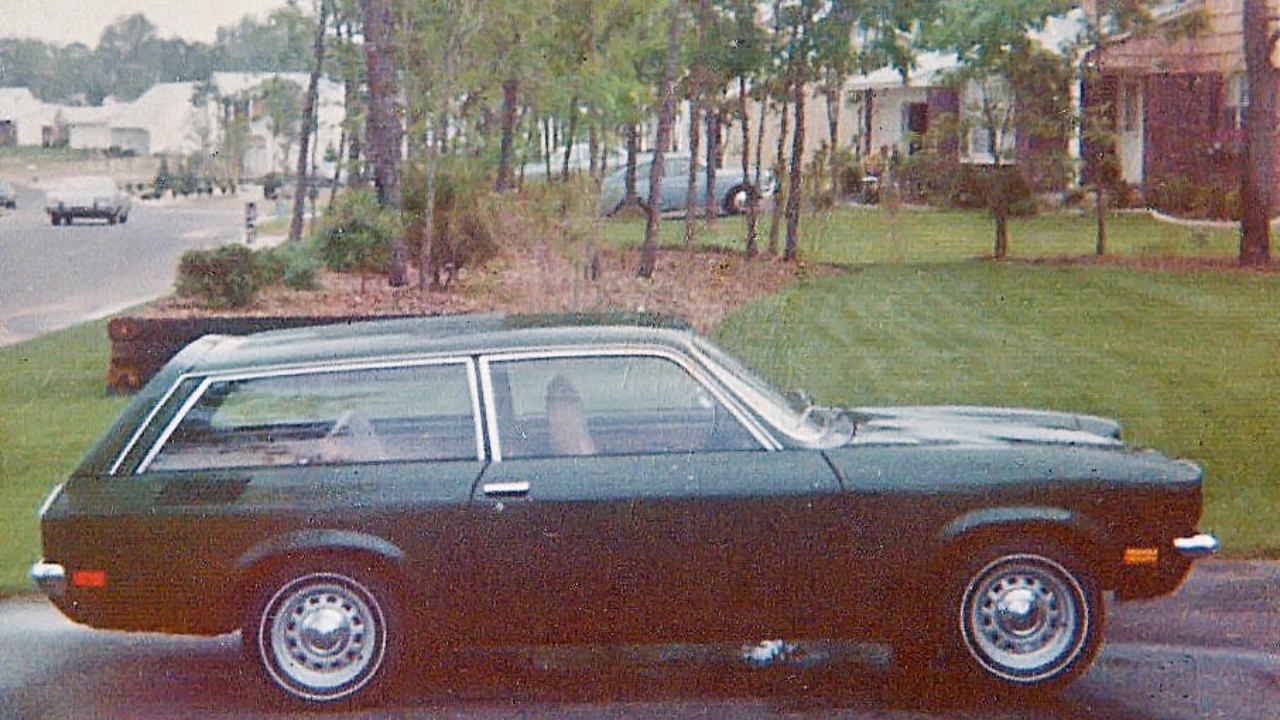
Chevrolet sold the Vega Kammback as a small two-door wagon with a sharply cut-off tail. A 1973 Chevy brochure promoted its “lower cargo liftover height and a swing-up liftgate.” Then, in mid-1973, an Estate version added simulated woodgrain on the sides and rear.
However, the engine was the Vega’s big gamble. Its 2.3-liter four used a die-cast aluminum block with a cast-iron head and a single overhead camshaft. By 1975, it made 78 horsepower in base form or 87 horsepower as an option. That year also brought high-energy electronic ignition and a catalytic converter.
The Vega’s early rust and engine troubles are well documented, and Chevrolet added fender liners in 1974. Even so, it sold in huge numbers, with over two million built. In our view, that volume is good news for anyone hunting parts today. For 1975 alone, Chevrolet built 56,133 Kammbacks. Our take: the little wagon was the most useful Vega, and it deserves a kinder memory. If you buy one, check the front fenders and the rockers first, then confirm the engine has never overheated.
7. 1961 Chevrolet Corvair Lakewood
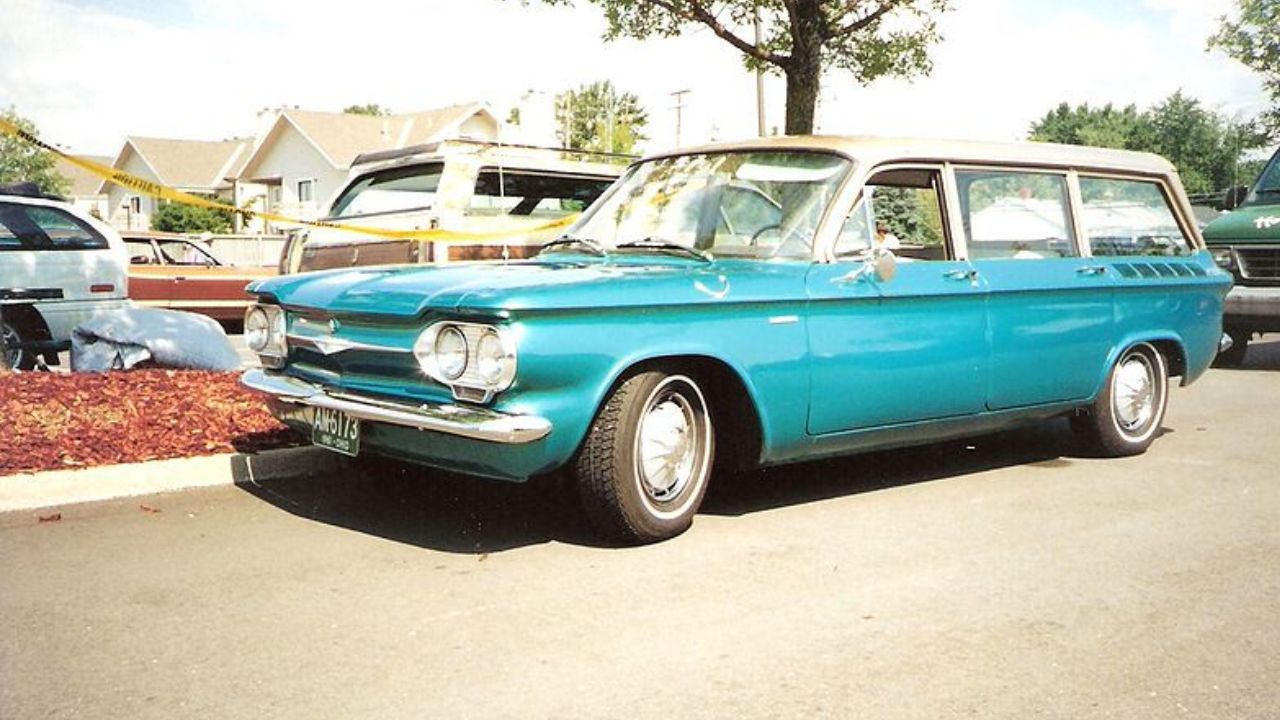
Chevrolet added the Lakewood wagon to the Corvair line for 1961. Like every Corvair, it had an air-cooled engine in the rear. In the wagon, that engine sat under the cargo floor.
Above all, the packaging was clever. The Lakewood offered 68 cubic feet of total cargo space, with 58 cubic feet in the main body and another 10 in the front trunk. So it was a wagon with two luggage areas, one at each end. That made it a neat answer for families who wanted compact size with real carrying room.
Unfortunately, the idea did not last long. By mid-1962, Chevrolet had dropped Corvair wagons in favor of the new convertible and the Chevy II. Our take: a rear-engined wagon from a major American maker is a rare piece of engineering history, and it is easy to forget it ever existed. If you find one, check the engine for oil leaks and make sure the heater works properly before winter. For more context, read our look at when station wagons were cooler than SUVs.
8. 1971 AMC Ambassador Brougham wagon
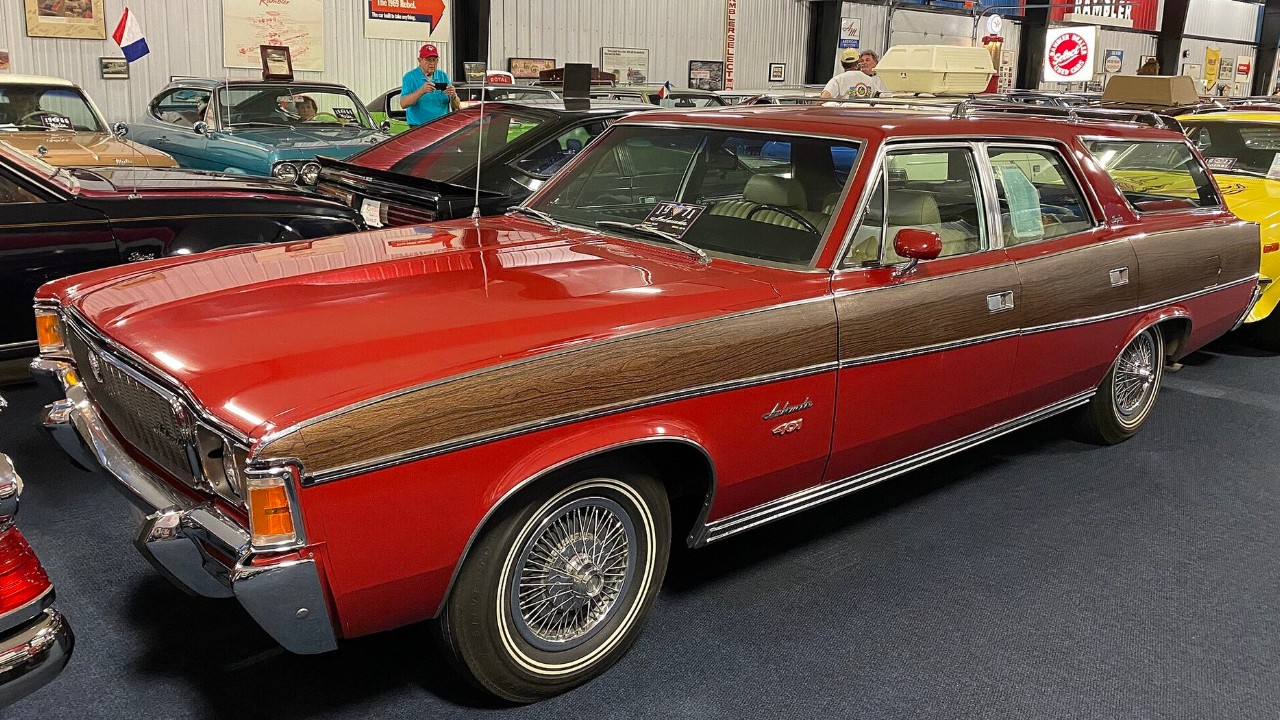
For 1971, AMC added a new top trim, Brougham, above the Ambassador SST. The Brougham came as a sedan, a two-door hardtop and a station wagon. Standard power came from a 304 V8 with 210 horsepower, while a 360 and a new 401 V8 rated at 335 horsepower were optional.
In addition, the wagon got thoughtful touches. Its optional woodgrain side trim swept down from the front fender, and the standard tailgate was dual-hinged, so it could fold down or swing open. The woodgrain on the tailgate was even reflective. Earlier, for 1968, the Ambassador had made air conditioning standard.
AMC built 5,479 Brougham wagons for 1971, against 13,115 Brougham sedans. In other words, most buyers who wanted AMC’s best chose the sedan, which makes this station wagon the more interesting find. Our take: a 401-powered luxury wagon from AMC is a forgotten piece of the brand’s late muscle era. If you buy one, check the floors and rear wheel wells for rust, and confirm which V8 it has, since a 401 car is the one to own.
More from Fast Lane Only