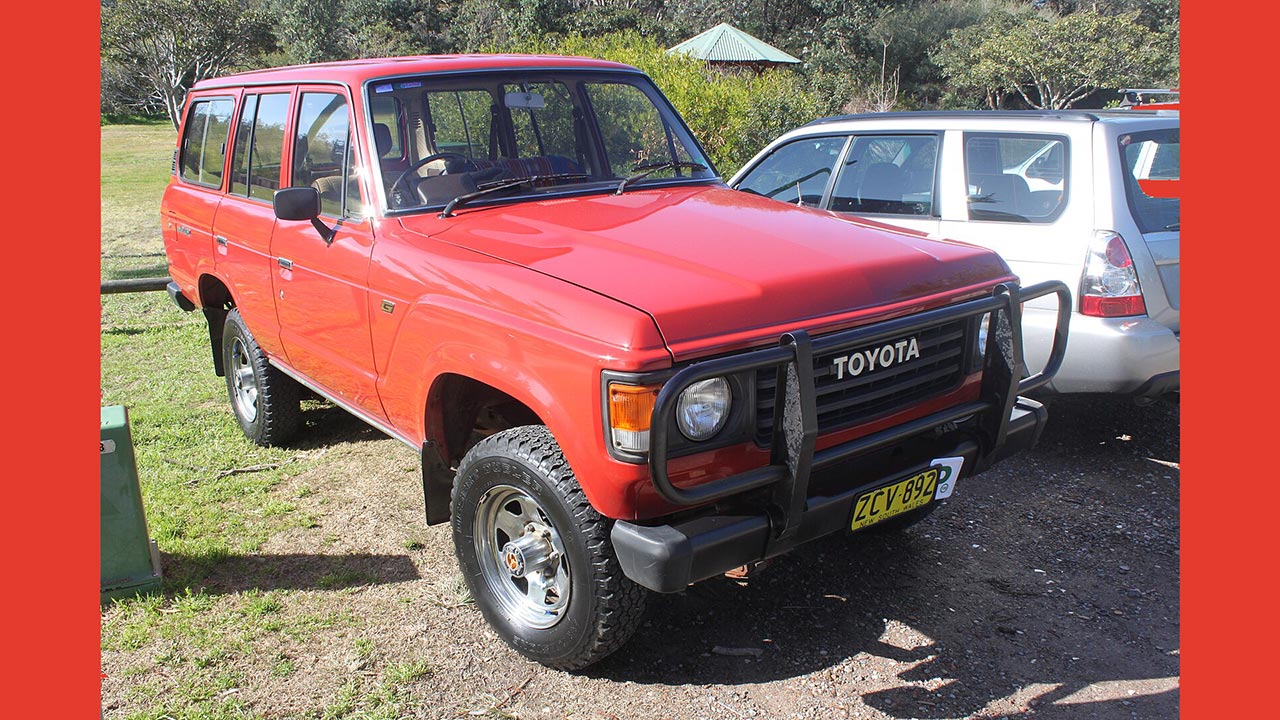
An inline-six is naturally smooth. Its six pistons balance each other so well that the engine needs no balance shafts, and its long block leaves room for a main bearing between every cylinder. That is why the layout ended up in Jeeps, Land Cruisers, school buses and heavy trucks.
Not every six earned a tough reputation, of course. Some were tuned too hard. Others shared their basic hardware with cheaper engines and paid the price. But a handful were built heavy, simple and slow-revving, then left in production for decades.
These are our picks: eleven inline-six engines we think were designed for extreme durability. The verdict is our opinion. However, every displacement, rating and production date comes from maker information, specialist histories and reference sources we checked. We did not count miles, because nobody keeps a reliable tally of those.
1. Toyota 2F inline-six
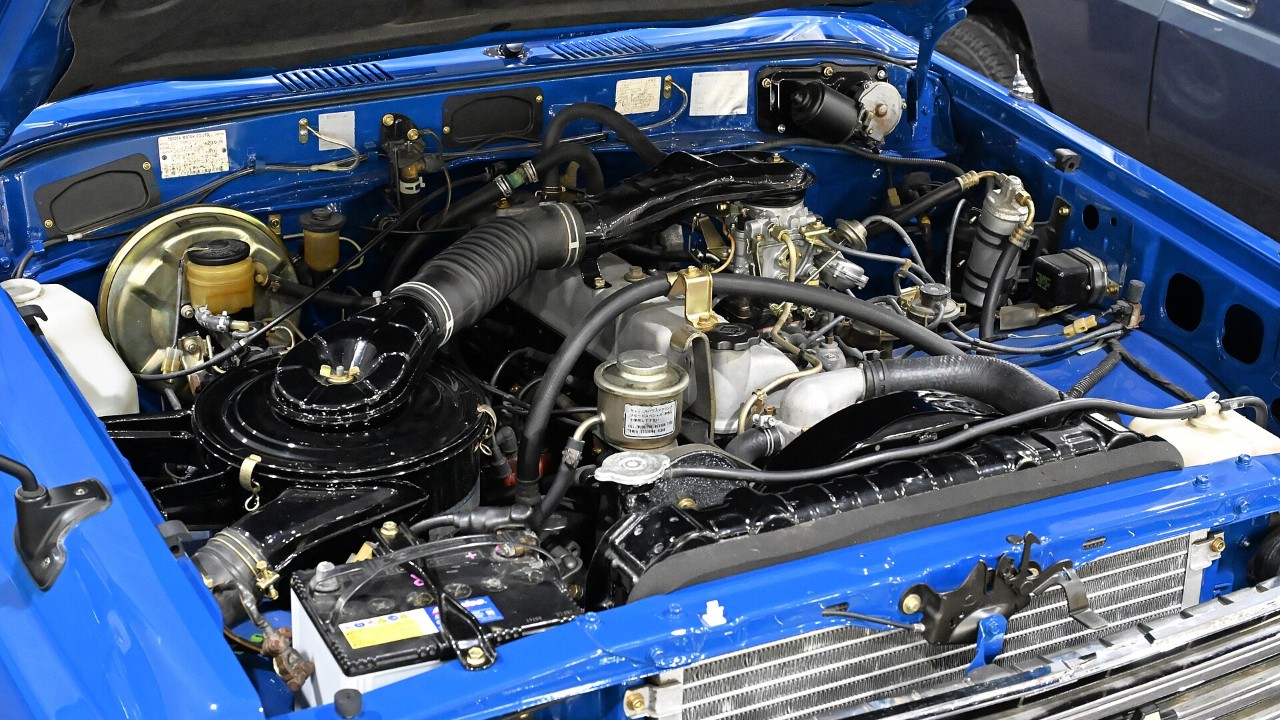
Toyota introduced the 2F in 1975 as the second version of its F engine. It displaced 4.2 liters, and like every F engine, it used pushrod-operated overhead valves. Toyota’s F family had already earned its fame as the Land Cruiser engine.
The 2F carried that job forward. An RM Sotheby’s listing for a 1982 FJ40 describes “the larger ‘2F’ 4.2-liter inline six engine paired to a four-speed manual,” and calls the engine “desirable.” That pairing of a big, slow-turning six with a four-speed is the classic Land Cruiser recipe.
Toyota replaced it with the 4.0-liter 3F, which arrived in 1985 but did not reach the United States until 1988. For more of the brand’s toughest motors, see our list of Toyota engines famous for surviving extreme mileage. Our take: a pushrod six with modest tuning, built for trucks used in remote places, is about as durable as a gasoline engine gets. If you buy one, run a compression test and ask about any overheating history, then simply keep it cool and clean.
2. AMC 4.0 inline-six
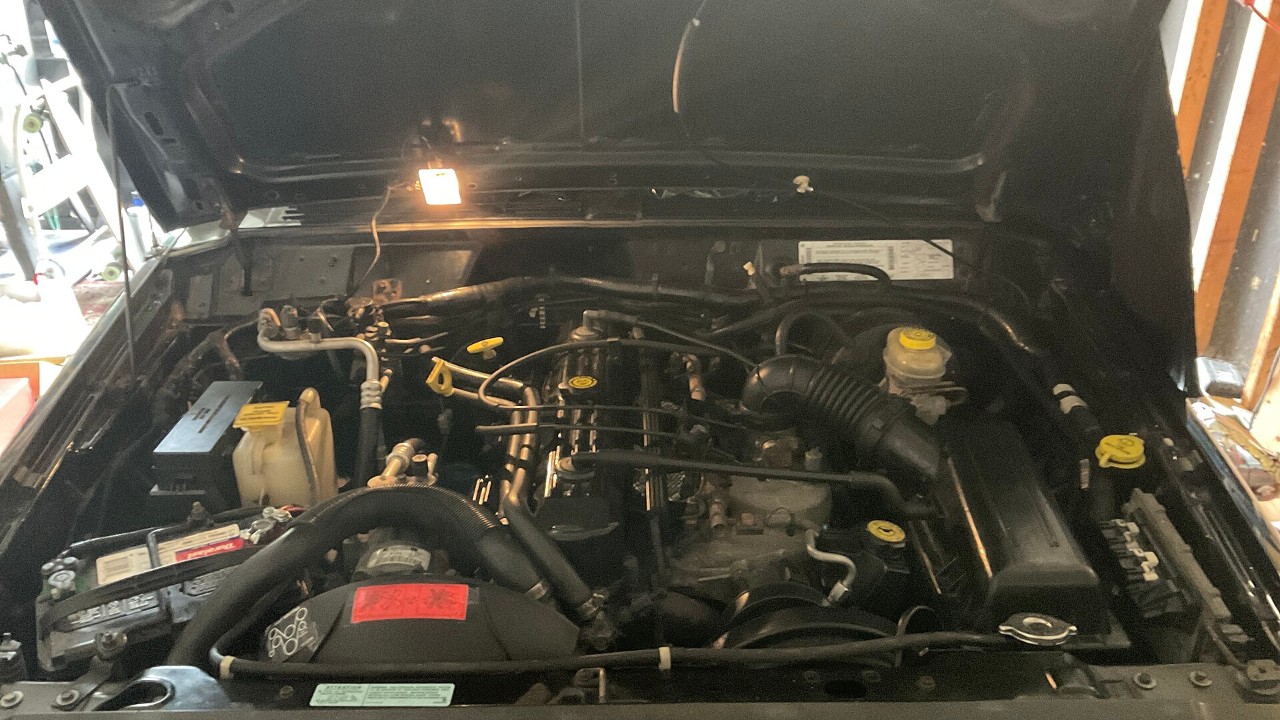
The Jeep 4.0 began as an evolution of AMC’s 258 six. It debuted for the 1987 model year in the Cherokee XJ, rated at 173 horsepower. Its family roots went back to 1964, when AMC launched a new six with seven main bearings in a special run of 2,520 Typhoon hardtops.
The engine improved steadily. Higher-flow injectors raised output to 177 horsepower for 1988. Then, in 1991, Chrysler multi-port injection replaced the Renix system, and most Jeeps wore “4.0 Litre HIGH OUTPUT” badges with 190 horsepower. A 1996 block redesign added a stud girdle for the main bearings.
The 4.0 went on to power the Cherokee through 2001, the Grand Cherokee from 1993 to 2004 and the Wrangler from 1991 to 2006. After that, Chrysler’s 3.8-liter V6 replaced it in the 2007 Wrangler. Our take: a long-stroke six with seven main bearings and simple multi-port injection was born to survive trail abuse. If you shop for one, favor a 1991 or later HO engine, and ask for proof of regular oil and coolant changes.
3. Ford 300 inline-six

Ford’s 300 first appeared in the F-Series for 1965. It shared its design with the smaller 240, and both ran seven main bearings. Better yet, both drove the camshaft with long-wearing timing gears instead of a chain or belt, so there was no stretch to worry about.
The engine’s job list explains its reputation. Besides F-Series trucks, the 300 powered E-Series vans from 1968, the Bronco from 1980 to 1992 and a long list of equipment, from ski lifts to generators and tractors. Most UPS trucks also used it until the fleet switched to diesel power. In 1987, fuel injection arrived, and output settled at 150 horsepower.
Production ended in 1996, and the 4.2-liter Essex V6 replaced it for 1997. That left a 31-year run. Our take: a gear-driven cam in a truck engine that ran ski lifts and delivery trucks tells you everything about Ford’s goal. If you buy a 300-powered truck, choose the fuel-injected version for easier starts, and ask for maintenance records, since a neglected cooling system hurts any old truck engine.
4. Chevrolet 250 Turbo-Thrift inline-six
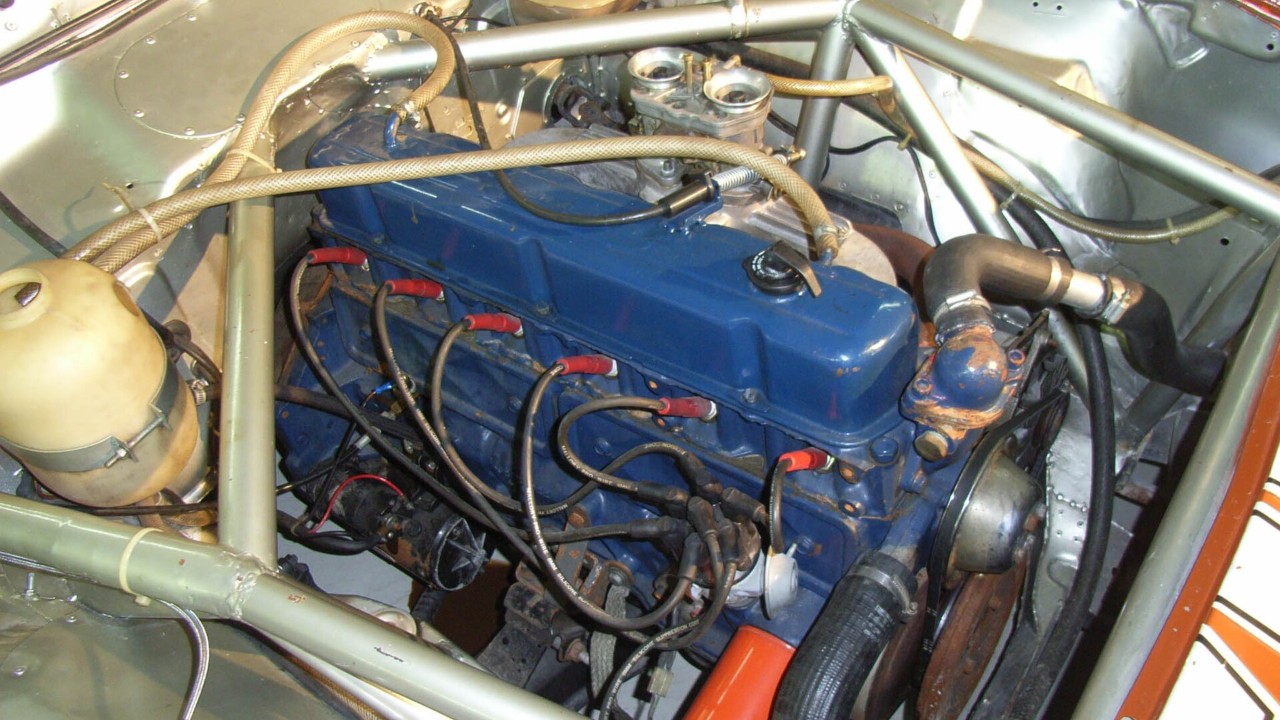
Chevrolet’s third-generation six arrived in 1962 in the Chevy II, as a 194-cubic-inch Hi-Thrift with 120 horsepower. In 1963, a 230-cubic-inch Turbo-Thrift version became the base engine for full-size Chevrolets. Then, for 1966, a longer-stroke 250 joined the family.
However, the big change was inside. The old Stovebolt six got by with four main bearings, while the new design used “the full complement of seven,” as Mac’s Motor City Garage explains. It was also more than 100 pounds lighter than the engine it replaced. In other words, GM made it lighter and stronger at the same time.
Meanwhile, the family spread far beyond Chevrolet. Buick, Oldsmobile, Pontiac and GMC used it, and factories in Brazil, South Africa and Argentina built it. A tall-deck 292 truck version even stayed in U.S. production through 1989. Our take: the 250 is the everyday six that refused to fade, because GM kept finding new jobs for the same sturdy design. If you buy one, confirm oil pressure when warm and listen for a quiet, even idle.
5. Volvo B30 inline-six
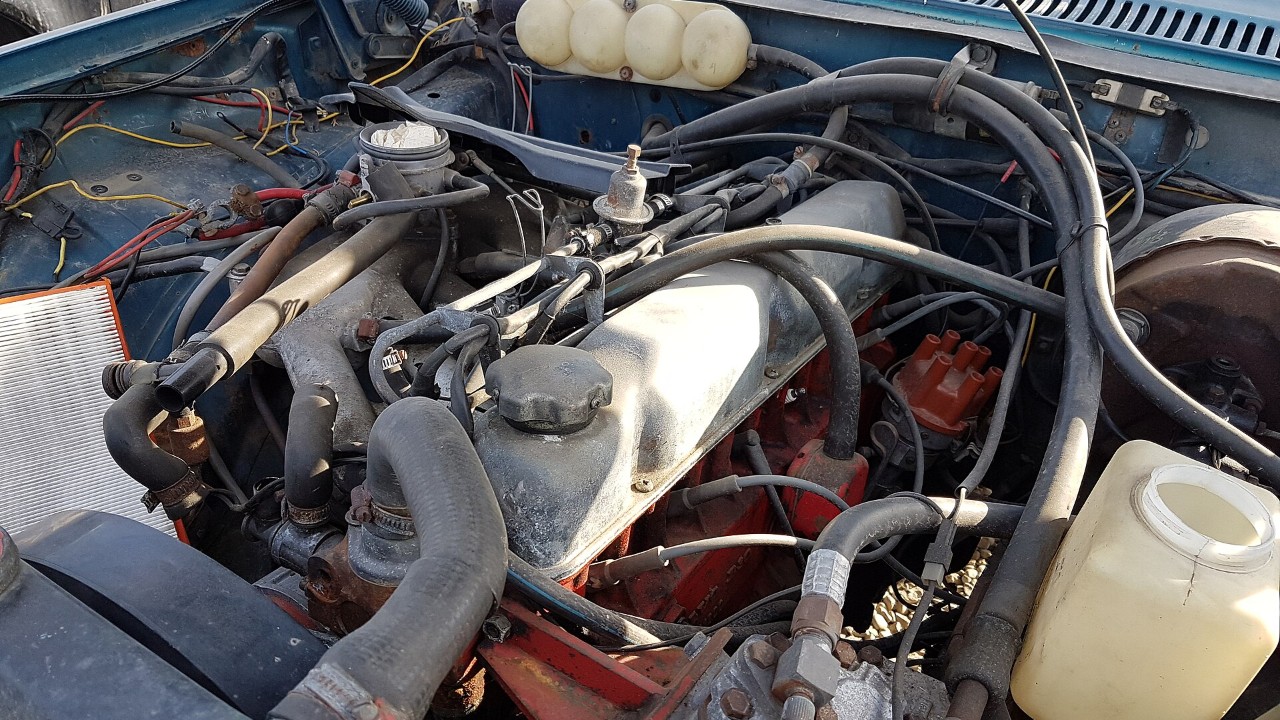
Volvo built the B30 for its larger 164 sedan, which used it from 1969 through 1975. The six displaced 2,979 cc. It borrowed the bore and stroke of Volvo’s B20 four, so it shared the same robust pushrod thinking.
Still, power was strong for the time. The carbureted B30A made 145 horsepower in 1969. Then, in 1972, the fuel-injected B30E reached 175 horsepower. The camshaft sat in the block and worked two overhead valves per cylinder through pushrods and rocker arms. That simple layout meant fewer parts to fail and easier repairs at home.
The B30 also served in uniform. Volvo’s C303, C304 and C306 military vehicles used a version rated at 117 horsepower at 4,000 rpm. In other words, Volvo detuned it for an easy life in army service. Our take: when an army trusts your car engine in its off-road trucks, the engineering has passed a hard test. If you shop for a 164, have a specialist check the fuel injection on a B30E, and source spare parts before you need them.
6. Nissan RB25DET inline-six
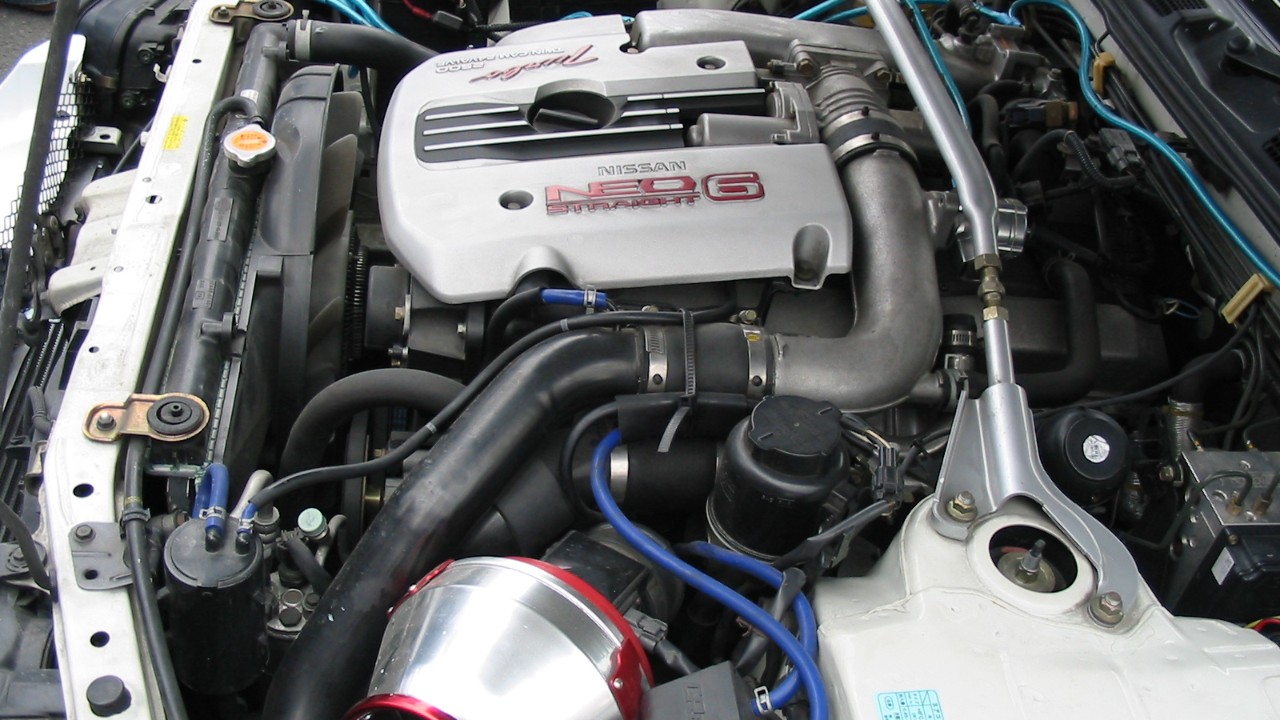
Nissan’s RB25DET displaced 2,498 cc and, like every RB engine, used a cast-iron block. Production began in August 1993. The Series 2 version arrived in 1995 with a revised electrical system and a ceramic turbine wheel, and the NEO head followed in May 1998.
Of course, output depended on the version. The standard turbo engine made between 245 and 250 horsepower, while the NEO reached 276 horsepower at 6,400 rpm. Nissan fitted the variable-cam turbo engine to R33 Skylines and the WNC34 Stagea wagon. That last one gave Japanese families a turbo six in a station wagon.
In our view, the iron block is the key. A strong bottom end gives room to add boost without immediate trouble. Our take: the RB25DET’s toughness comes from overbuilding, not from gentle tuning. That is a different route to durability than the slow-revving sixes on this list, but it clearly works on the street and at the track. If you buy one, find out how much boost it has run, and favor an unmodified car with a clear service history.
7. Nissan L28 inline-six
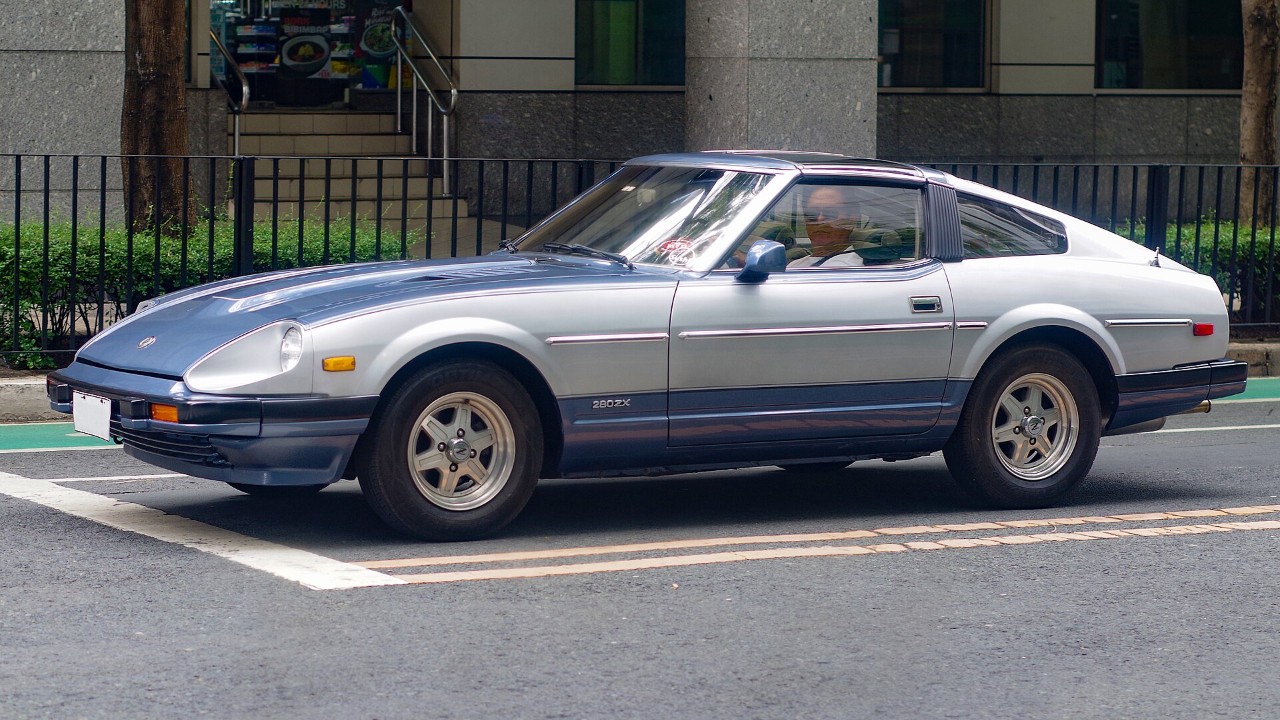
The L28 was the biggest member of Nissan’s L-series. It displaced 2,753 cc with 12 valves, an iron block and an aluminum head. Carbureted versions went into the Patrol, while the Datsun 280Z used it from 1975 to 1978.
Fuel injection made it a better road engine. The Bosch L-Jetronic L28E ran from 1975 to 1984, and a compression bump in 1981 raised output to 145 PS. Then Nissan added a turbo. From December 1980 to June 1983, the L28ET made 180 horsepower and 203 pound-feet of torque. It used a single Garrett turbocharger, no intercooler, 6.8 psi of boost and low 7.4:1 compression.
Nissan fitted the L28ET only to the Datsun 280ZX Turbo, and never sold it in Japan. Back then, Japanese rules allowed turbos only on engines under two liters. Our take: low boost and low compression on a stout iron block made a turbo six that seems built for the long haul. If you shop for one, confirm the injection wiring and sensors are sound, because the fuel system is the part most likely to have aged.
8. GM Vortec 4200 Atlas inline-six
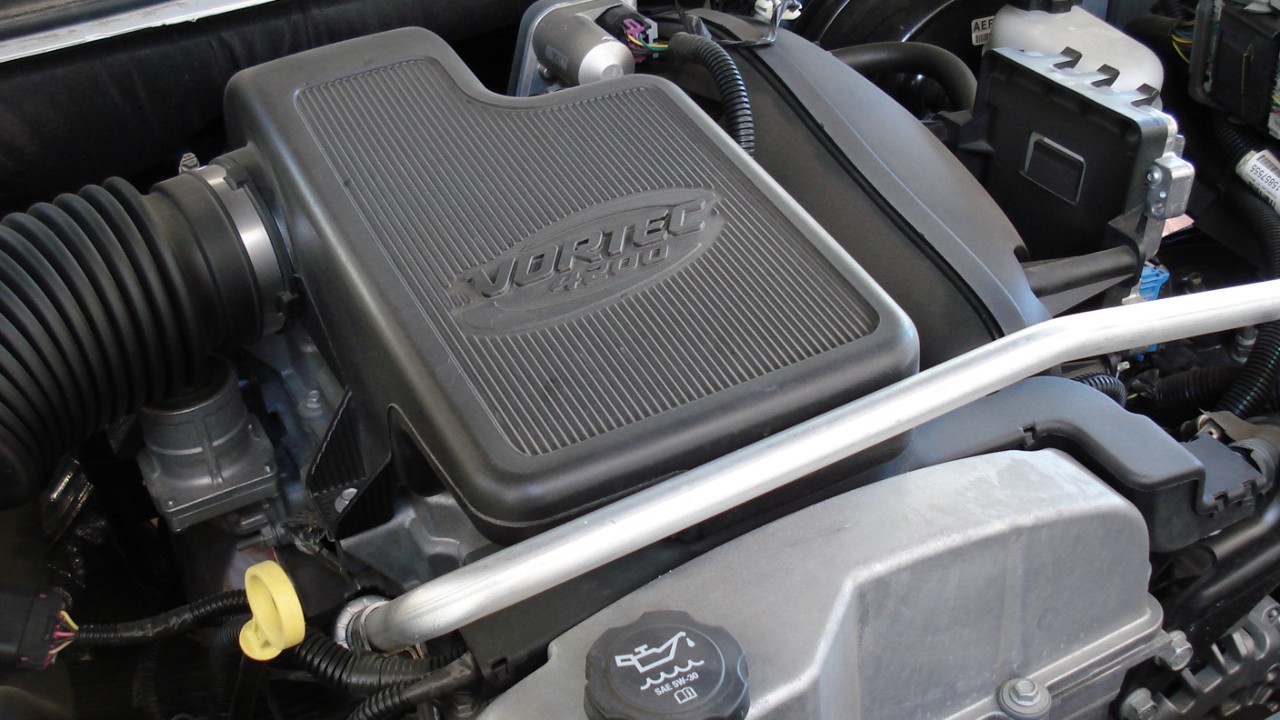
GM’s LL8 Vortec 4200 arrived in 2002 for the new midsize SUVs. It displaced 4.2 liters and used double overhead camshafts with four valves per cylinder. GM also gave it variable timing on the exhaust cam, unusual for one of its inline engines.
After that, output grew over its life. The LL8 launched with 270 horsepower, rose to 275 in 2003 and reached 291 horsepower from 2006. It powered the Chevrolet TrailBlazer, GMC Envoy, Buick Rainier, Oldsmobile Bravada, Isuzu Ascender and Saab 9-7X. In addition, it made Ward’s 10 Best Engines list from 2002 through 2005.
Production ended in 2009 when GM dropped the GMT360 platform, so the engine left with its trucks rather than for any flaw of its own. Our take: a modern twin-cam six with aluminum construction and steel liners proved that durability does not require a pushrod. It also showed GM could build a world-class six well into the 2000s. If you buy a TrailBlazer or Envoy, ask for oil-change records and make sure the cooling system works well, because overheating is the enemy of any aluminum engine.
9. International DT466 inline-six
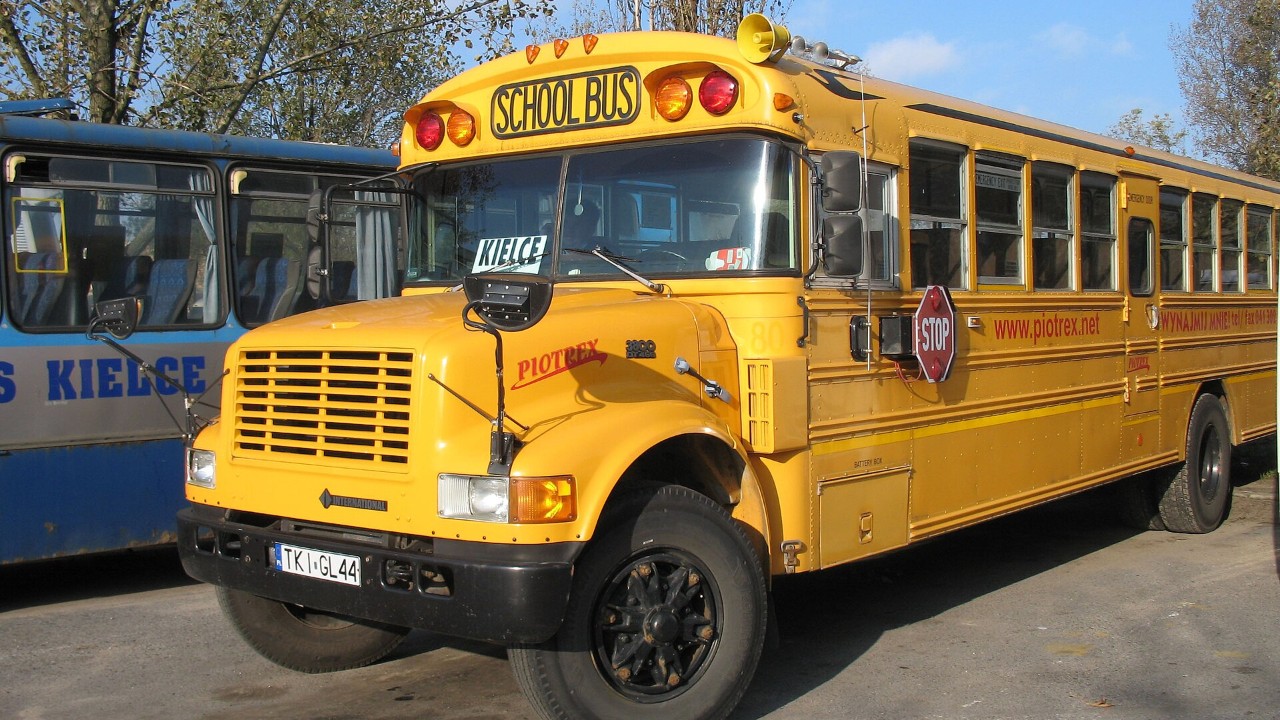
International developed the DT466 in the late 1960s, and production ran from 1971 to 2016 in the United States. It displaced 7.6 liters, or 466 cubic inches. The design used separate, replaceable cylinder liners in direct contact with coolant, a layout known as wet sleeves.
That choice, in fact, shaped the engine’s whole life. Navistar says the liners keep cylinders round and resist wear. Better still, mechanics can rebuild the engine to factory specifications, sometimes without removing it from the vehicle. Consequently, many school buses and medium-duty trucks could get a fresh engine in the shop bay.
Later, the MaxxForce DT version made 210 to 300 horsepower from 2007. Even so, the wet-sleeve, rebuild-in-place idea stayed at the heart of the design. Then, on July 22, 2016, Navistar announced that the DT would be discontinued entirely. Our take: an engine designed to be rebuilt in the frame is designed for a very long working life. If you buy a used truck with one, ask when the liners were last replaced, because a fresh in-frame overhaul resets the clock.
10. Detroit Diesel Series 60 inline-six

Detroit Diesel launched the Series 60 in 1987 and built it until 2011, when the DD15 replaced it. It came in 11.1-, 12.7- and 14.0-liter sizes, and the biggest arrived in 2001 with ratings up to 575 horsepower. Unusually for a highway diesel of its day, it used an overhead camshaft.
Above all, the electronics made history. Detroit calls the Series 60 “the first engine in the world to fully utilize electronic engine controls.” The maker also says it sold more than 1.2 million units since 1987 and became the most widely used heavy-duty truck engine in North America by 1992.
That volume came from trucks, motorcoaches and marine versions, which Detroit offered from 1999. Meanwhile, the overhead cam simplified the valvetrain compared with rivals using pushrods. For a wider look at long-life designs, see our list of engines designed for extreme longevity. Our take: a heavy-duty six that led North American trucking had to prove itself every working day, with fleets watching the costs. If you buy one, check the electronic control module history and the overhead valve adjustment records.
11. Mercedes-Benz M103 inline-six
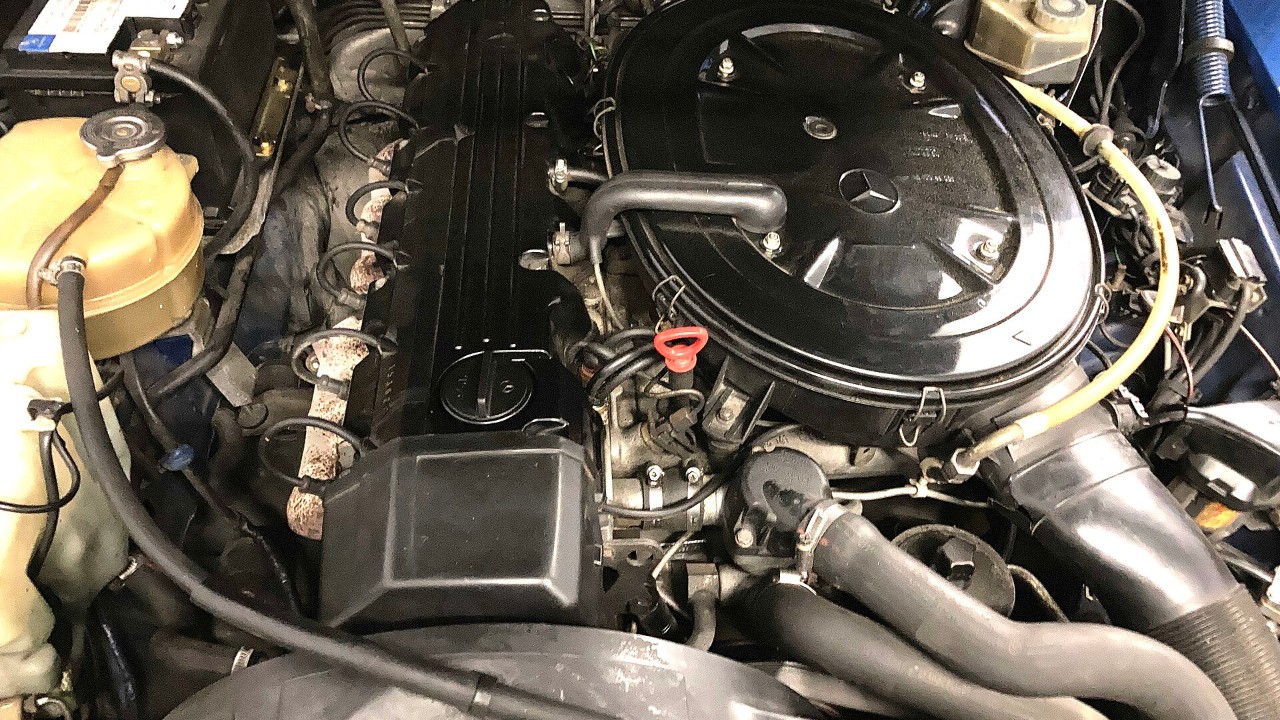
Mercedes-Benz built the M103 from the mid-1980s to 1997. It came in two sizes: a 2,599-cc 2.6 and a 2,962-cc 3.0. Both shared an 80.25-mm stroke, and the only mechanical differences were the bore, the intake valves and a slightly different airbox.
By Mercedes standards, the design was simple. It used a single overhead camshaft, two valves per cylinder and a crossflow head. With a catalyst, the 3.0 made 177 horsepower and 188 pound-feet. That is modest output for three liters, so the engine rarely worked near its limits. Because the 2.6 and 3.0 shared so much, many parts also cross over between models.
The M103 powered a wide range of cars: the 190 E 2.6, the 260 E and 300 E, the 300 SE and SEL, the 300 SL roadsters and even the 300 GE G-Class. Our take: a lightly tuned single-cam six in cars built to cross continents is the Mercedes idea of durability. If you buy one, look for oil leaks around the head and confirm the cooling system is healthy before anything else.
More from Fast Lane Only