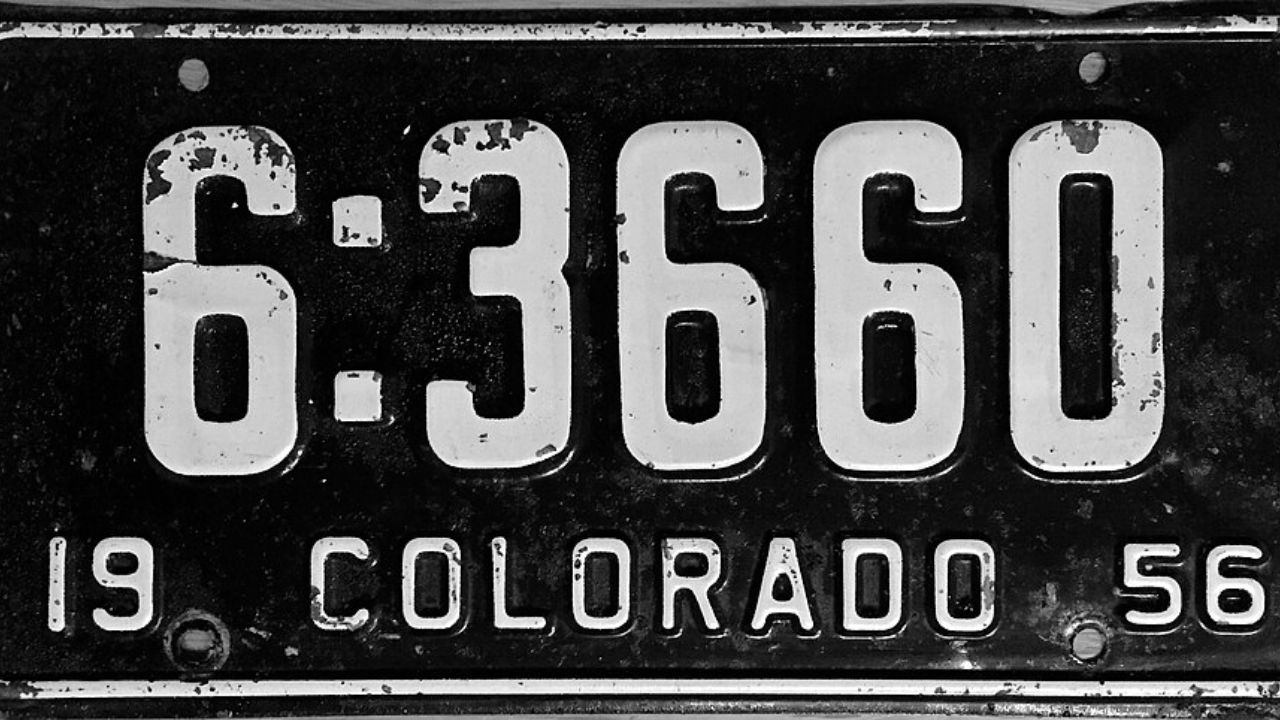
Colorado has quietly turned a simple design tweak into a statewide obsession, and it is paying off in real money. A sleek black license plate has surged past every other specialty option on the road, transforming a cosmetic choice into a powerful funding stream for disability services. Drivers may be chasing a certain look, but the state is cashing in on their fixation.
What started as a niche vanity plate has become a kind of rolling uniform, especially in Denver and along the Front Range, where those dark rectangles now seem to outnumber the classic green-and-white. The more the plates spread, the more they feed on their own popularity, and the more revenue Colorado quietly channels into programs that would otherwise be fighting for attention at the Capitol.
How a minimalist plate became Colorado’s must-have accessory
From the outside, the black plate trend looks almost overnight, but the appeal is easy to understand once you see it in traffic. Against a silver Subaru Outback or a blacked-out Ford F-150, the flat black background and simple white characters read less like government paperwork and more like a custom badge. I have watched drivers in crowded parking lots glance back at their cars, clearly pleased that their license plate finally matches the rest of their carefully curated aesthetic.
That visual payoff has translated into hard numbers. State officials report that the black license plate now ranks as Colorado’s most popular specialty option, outpacing every other themed design the Department of Revenue offers. The surge is not subtle: the black plate now makes up the largest share of specialty tags on the road, a shift that has pushed it from novelty to default choice for drivers who want something beyond the standard mountain scene, according to state data.
The psychology of a plate everyone suddenly wants
Once a design crosses a certain visibility threshold, it stops feeling like a risk and starts feeling like a signal that you are in on the trend. I have noticed that shift with the black plate in Colorado, where it has moved from a rare sighting to something you can count in clusters at a single stoplight. When a style becomes that common, it taps into a basic social instinct: people want to belong to whatever group looks confident and current, even if the buy-in is just a one-time fee at the DMV.
Social media has amplified that effect. In one widely shared clip, a Colorado driver admits they kept spotting the black plates “everywhere” and finally went digging to figure out what was going on. That curiosity is not isolated. The same video notes that nearly half a million people in Colorado now have the black license plate, a figure that instantly reframes the trend as mainstream rather than fringe, and confirms that those hundreds of thousands of tags are helping fund disability services across Colorado through the specialty plate fees, according to that breakdown.
From vanity to vital funding stream
What makes this particular craze more than a style story is where the money goes once drivers sign up. Specialty plates in Colorado come with extra fees, and the black design is no exception. Every time a driver chooses it, they are effectively opting into a small recurring donation that flows into a fund for disability services. The state has confirmed that the black plate has raised millions in fees, turning what might have been a purely cosmetic upsell into a reliable revenue source for programs that support Coloradans with disabilities.
I find that structure quietly elegant. Instead of asking residents to write a separate check or attend a fundraiser, Colorado has embedded a contribution into something people already need and want. The more the plate dominates the specialty market, the more stable that funding becomes. Officials say the black plate now tops all other specialty plates in popularity, and that dominance is precisely what has allowed it to generate millions of dollars for disability services, according to the same state figures.
Why drivers say the extra fee feels worth it
When I talk to Colorado drivers who have made the switch, they rarely lead with the charitable angle, even if they know about it. They talk first about how the plate looks on a specific car: a 2024 Toyota 4Runner with black wheels, a Tesla Model 3 in pearl white, a well-loved 2012 Jeep Wrangler with a fresh coat of paint. The black background cleans up the rear of the vehicle, they say, and makes the whole setup feel more intentional. For people who already spend money on window tint, upgraded rims, or a ceramic coating, the plate fee feels like a relatively small add-on that finishes the look.
Only after that do many of them mention the cause. Once they learn that their choice helps fund disability services, the decision becomes easier to justify, especially when they renew their registration and see the specialty fee again. In a state where nearly half a million drivers have already opted in, according to the social media breakdown of Colorado’s plate numbers, there is a sense that the black tag is both a style move and a quiet statement of support. That combination, aesthetics plus impact, is a powerful motivator in a culture where people increasingly want their purchases to reflect their values as well as their taste.
What Colorado’s plate craze hints at for other states
Watching Colorado’s experience, I keep coming back to how simple the underlying idea is. The state did not invent a new tax or build a complicated grant program. It offered a clean, modern design that drivers genuinely wanted, attached a clear beneficiary, and let the market do the rest. As the black plate climbed to the top of the specialty rankings and started raising millions for disability services, it quietly proved that small, voluntary fees can add up fast when the product is something people are proud to display every day.
Other states already experiment with themed plates for universities, wildlife, or veterans, but Colorado’s black tag shows what happens when a design breaks out of niche fandom and becomes a default choice across age groups and neighborhoods. If agencies elsewhere are paying attention, they might see an opportunity to refresh their own offerings, pairing sharp, minimalist designs with funding streams for under-resourced services. For now, though, Colorado has the clearest case study: a single license plate that drivers cannot seem to stop choosing, and a public sector that has learned how to turn that obsession into lasting support for people who need it most.
More from Fast Lane Only