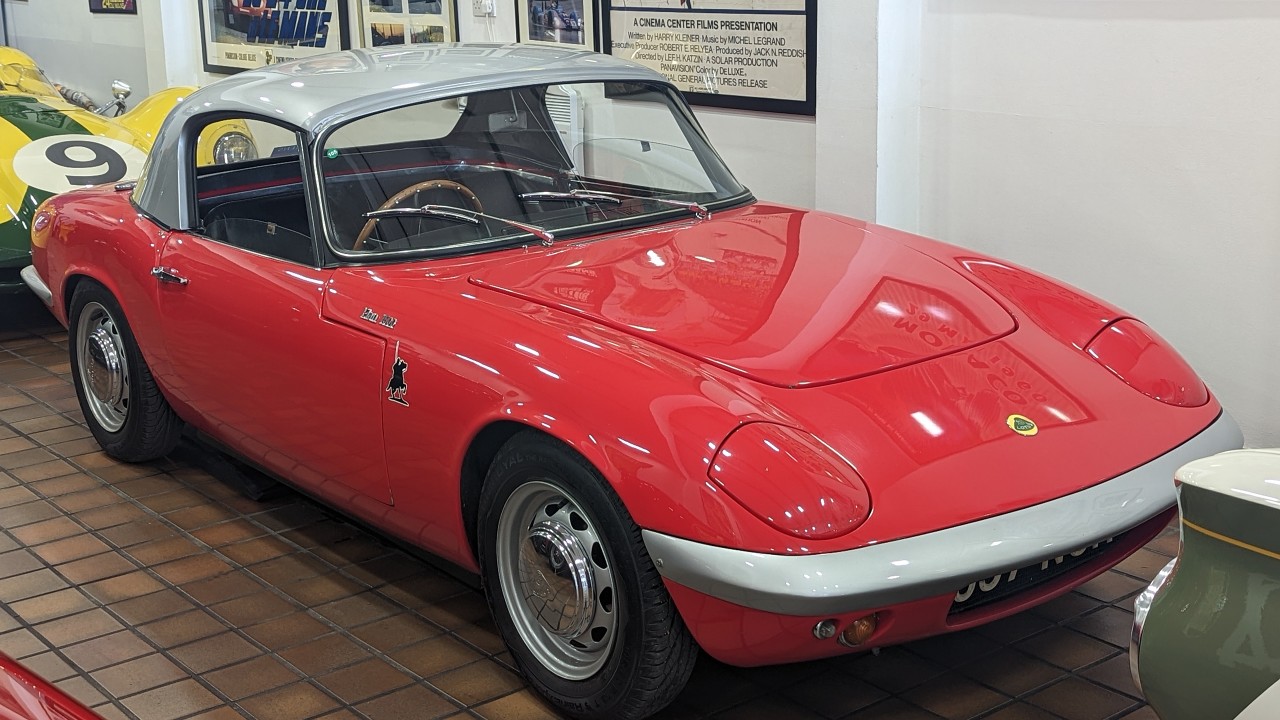
Compact, light and deceptively simple, the 1962 Lotus Elan arrived as a small British roadster that could humble far more powerful machinery on a twisting road. Its combination of a featherweight chassis, sharp steering and supple suspension reset expectations for how a sports car should feel from behind the wheel. Six decades on, its influence still shapes how engineers and enthusiasts talk about handling.
The car did not just handle well for its era. It created a template for modern lightweight sports cars and embedded Colin Chapman’s mantra of adding performance by removing weight into automotive culture. To understand why, it helps to look closely at how the Elan was conceived, how it was built and why its driving manners still loom so large.
Colin Chapman’s lightweight vision in production form
The Lotus Elan was designed in 1962 by the legendary Colin Chapman, whose fixation with saving weight had already transformed single-seater racing. Multiple accounts describe how The Lotus Elan grew directly out of his brilliance at lightweight chassis design, with the goal of producing one of the finest handling sports cars of its time for the road.
Chapman had already explored glassfibre bodies and minimalist engineering on earlier Lotus road cars, but the Elan represented a cleaner, more refined expression of that approach. Company material on the model notes that the car was intentionally compact, with a short wheelbase and tight packaging that kept mass concentrated between the axles. The official Lotus story of the Elan road car presents it as a turning point where race-bred ideas reached a wider audience.
Enthusiast histories reinforce this picture of a car designed from the outset around agility rather than straight-line numbers. Period advertising leaned on its low weight and quick responses instead of quoting headline power outputs. That philosophy would prove central to its reputation.
The radical backbone: tiny car, big idea
Under the Elan’s smooth body sat a structure that looked nothing like the ladder frames or monocoques used by rivals. The basic structure of the Lotus Elan comprised a fabricated mild steel backbone chassis, often compared to a double ended tuning fork, that ran down the center of the car and flared out to carry the suspension and drivetrain.
This backbone allowed the outer body to be a lightweight glassfibre shell that did not have to carry primary loads. The arrangement delivered impressive torsional stiffness relative to the car’s size and weight, while also simplifying manufacturing and repairs. If the chassis corroded or was damaged, it could be replaced as a single unit while the body remained intact.
The compact chassis also made the Elan physically small. Contemporary specifications show an overall length well under typical sports cars of the era and a low seating position that placed the driver close to the road. According to one detailed technical overview, the low driving position and careful use of interior space meant that, however, even tall occupants could sit comfortably despite the tight footprint, which helped the car feel usable as well as focused.
Suspension tuning and the art of adjustability
Structural innovation alone would not have mattered if the Elan had not translated it into real-world composure. Here, Chapman’s experience with racing suspensions was decisive. The car used independent suspension at all four corners, with geometry tuned to keep the tires working evenly and progressively as loads built up in a corner.
Analyses of the Elan’s dynamics highlight its rare combination of grip and feedback. One respected technical commentary notes that, moreover, the Elan had a throttle adjustability that people still adore today. Its oversteer could be progressively controlled, which meant that a skilled driver could trim the car’s line through a bend with small changes in throttle rather than abrupt steering corrections.
The steering itself was light, quick and unusually communicative. Contemporary testers and later enthusiasts repeatedly describe a sense that the front tires were talking directly through the wheel rim. That quality, combined with the car’s low mass, gave the Elan a kind of agility that many heavier sports cars struggled to match even with more power.
Powertrain: modest numbers, vivid response
In a straight line, the original Elan’s engine figures did not look spectacular beside large-capacity rivals. Yet the car’s performance felt vivid because its weight was so low and because the drivetrain was tuned for responsiveness rather than brute force.
Technical guides to the 1962 roadster point out that the Elan’s four-cylinder engine worked with a close-ratio gearbox and short overall gearing. The result was brisk acceleration and rapid throttle response that suited the car’s playful chassis. An overview of 1962 Lotus Elan notes that the low driving position and compact cockpit made the sensation of speed more intense, further reinforcing the impression of quickness.
Crucially, the engine’s modest weight helped keep the front end light, which supported the steering feel that defined the car. Chapman’s insistence on avoiding unnecessary mass meant that every component, from the engine ancillaries to the trim, was scrutinized for savings.
How the Elan felt from behind the wheel
Descriptions from owners and period testers converge on a common theme: the Elan felt alive. A detailed retrospective on classic Lotus Elan models emphasizes how the car’s light controls and compact dimensions gave drivers confidence to explore its limits on narrow roads.
Enthusiast discussions often highlight the car’s balance in mid-corner. One widely shared explanation from a Lotus-focused community states that The Lotus Elan was designed in 1962 by the legendary Colin Chapman whose brilliance at lightweight chassis design produced one of the best handling sports cars of its era, and that the car’s ability to be steered on the throttle is central to its appeal. That assessment matches accounts from people who have driven well set up examples on modern tires.
Another enthusiast post describes how, in practice, the Elan’s compact footprint lets it thread along tight country lanes where larger sports cars feel clumsy. Drivers sit low, with the scuttle close ahead, which makes the car feel like an extension of their hands and feet. The result is a level of engagement that many later, more powerful cars struggle to replicate.
Setting a standard for small sports car dynamics
Contemporary observers have argued that the original Elan set a benchmark for how a small sports car should behave. One assessment of the model notes that the original Lotus Elan set a standard for small sports car dynamics that was not easily matched, and that it embodied Colin Chapman’s philosophy of lightweight construction and simplicity, delivering a driving experience that still feels modern. That sentiment is echoed in a widely shared post that describes how the car’s dynamics continue to impress drivers familiar with much newer machinery.
Another enthusiast summary, focused on the car’s historical context, states that The Lotus Elan was designed in 1962 by the legendary Colin Chapman whose brilliance at lightweight chassis design produced one of the most influential sports cars of its type. The emphasis here is not just on raw performance but on the way the car connected driver and road, which many see as the defining measure of a great sports car.
These assessments help explain why the Elan is frequently cited when modern engineers discuss steering feel, weight distribution and the trade-offs between outright grip and progressive breakaway. The car’s solutions to those questions have aged remarkably well.
Influence on later icons and the wider industry
The Elan’s compact size and lively road manners did not just win over period buyers. They also left a deep impression on designers who would go on to shape later sports cars. Enthusiast retrospectives often point to the way the Elan’s proportions and philosophy influenced later compact roadsters, which adopted similar recipes of low weight, modest power and finely tuned suspension.
One detailed piece on the car’s legacy goes so far as to argue that the Elan may be the most influential sports car ever made, crediting it with inspiring generations of lightweight two-seaters that followed. That argument, presented through an analysis of Elan influence, rests on the idea that the car proved how much driving joy could be extracted from a small, relatively simple package.
The Elan’s impact was not confined to styling or broad philosophy. Specific elements such as its backbone chassis concept and its focus on steering precision informed later Lotus models and influenced how other manufacturers approached sports car development. Even where competitors did not copy the backbone layout, they increasingly recognized the value of shedding weight and honing steering feedback.
From road car to cultural touchstone
Over time, the 1962 Elan moved from being a cutting edge sports car to a cherished classic. Social media posts from enthusiast groups show how strongly it still resonates. One detailed appreciation of a 1962 example describes the 1962 Lotus Elan as a groundbreaking sports car designed by Colin Chapman and introduced as a lightweight, agile machine that redefined expectations for its class. That description captures how owners now see the car as both an object of engineering interest and a symbol of a particular era of British sports car design.
Another community focused on design and concept sketches calls for modern manufacturers to bring back the Lotus Elan, arguing that The Lotus Elan was designed in 1962 by the legendary Colin Chapman whose brilliance at lightweight chassis design produced one of the most engaging small sports cars ever built. The same group shares conceptual renderings that imagine how a contemporary reinterpretation could look while preserving the original’s compact footprint and purity of line.
Even outside specialist circles, the car appears in popular culture and digital simulations. Videos of players driving the Elan in Gran Turismo alongside modern machinery illustrate how its lightness and balance translate into virtual form, where it still feels quick and agile despite modest power compared with a Supra or other high-output cars in the same game.
Why enthusiasts still chase the original experience
Part of the Elan’s enduring appeal lies in how accessible its performance feels. Owners often stress that the car can be enjoyed at sensible speeds because its feedback and adjustability are present long before the limits of grip. That stands in contrast to many modern sports cars that only come alive near triple-digit speeds.
Video guides aimed at newcomers, such as one titled The Lotus Elan.. A Beginners Guide, invite viewers to join the presenter as they look into the secrets of the Lotus Alan and uncover what really makes this classic car tick. The emphasis in such content is typically on the car’s communicative steering, its willingness to change direction and the way its chassis talks to the driver through small body movements.
Other videos, including one focused on Gran Turismo that highlights the Lotus Elan, show how even in a game environment the car rewards smooth inputs and careful weight transfer. The contrast with heavier, more powerful machines such as the Supra helps illustrate how the Elan’s design priorities still make sense for drivers who value feel over raw numbers.
More from Fast Lane Only