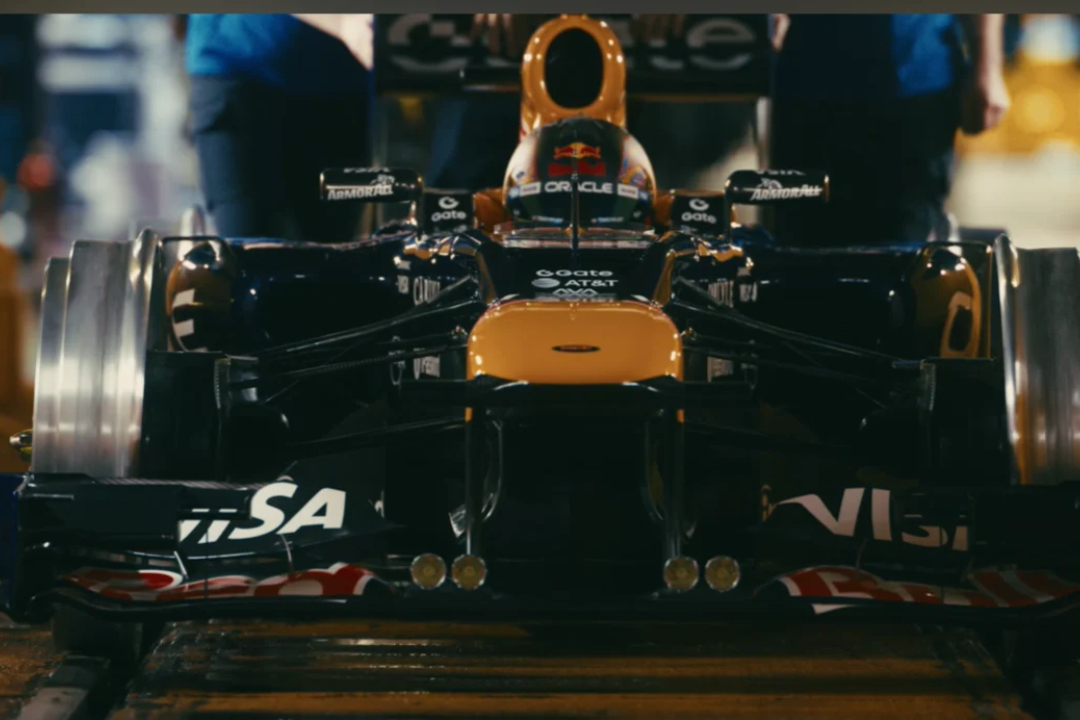
You now live in a world where a Corvette has humbled a McLaren Senna around one of America’s most demanding road courses. The new Corvette ZR1 has rewritten the production car hierarchy at Virginia International Raceway, taking the Lightning Lap crown and proving that a front-engine British hypercar no longer defines the benchmark there. For you as a driver or fan, that single lap forces a rethink of what a relatively attainable American supercar can do against the most exotic machinery on the planet.
The new record is more than a bragging-rights statistic. It caps a focused development program that had already produced multiple U.S. circuit records and now delivers a headline time at VIR that edges the Senna by a meaningful margin. If you care about lap times, value, or how far engineering can stretch a street-legal platform, the Corvette ZR1’s run matters.
How the Corvette ZR1 toppled the Senna at VIR
Start with the stopwatch. In the latest Lightning Lap at Virginia International Raceway, the Corvette ZR1 recorded a lap of 2 minutes 34.2 seconds, written in the source as 34.2 m, to become the quickest production car ever around the Grand Course in that format. That time did not just nibble at the previous mark; it beat the McLaren Senna by 0.7 seconds, a gap large enough that you would feel it from behind the wheel as the ZR1 claws out of Oak Tree and carries speed onto the back straight. Coverage of the event describes how the car was put through its in the Lightning Lap, with the Corvette making full use of VIR’s mix of high-speed esses, heavy braking zones, and technical complexes that tend to favor cars with both downforce and mechanical grip.
The context is just as telling as the raw number. The McLaren Senna arrived as a limited-run hypercar built around obsessive weight reduction and an extreme aero package, yet the new ZR1, which you can trace back to a more conventional sports car lineage, has now gone quicker in the same format on the same track. Reports on the record emphasize that the Chevrolet Corvette ZR1 did it in Virginia under the Lightning Lap rules that have become an informal industry benchmark, which means you can compare its time directly to not only the Senna but also cars such as the Porsche 911 GT3 and other track-focused specials.
Inside the Lightning Lap benchmark
If you follow performance cars, you already treat the Lightning Lap as more than a casual test. The format sends production cars around the full VIR Grand Course, a 4.1-mile layout with long straights, blind crests, and fast direction changes that expose any weakness in power delivery, aero balance, or braking. In the latest running, the Corvette ZR1 did not just beat the Senna; it set what has been described as the fastest Lightning Lap ever, placing it ahead of previous benchmarks such as a 911 GT3 Manthey that had recorded a time of 2:39.8. Seeing a gap of more than five seconds to a car as sharp as that Porsche underscores how dominant the new record is.
The Lightning Lap also matters because it is repeatable and filmed, giving you a chance to study how a car behaves at the limit. Video shared through enthusiast coverage shows the C8 Corvette ZR1 attacking VIR with minimal drama, which hints at why it can sustain such a pace over a full lap. The combination of long straights where power counts and technical sections where chassis balance rules means that a car that wins here is not just a drag strip hero; it is a complete package that you could realistically track without feeling that you compromised on either speed or stability.
What makes the ZR1 so fast
From your perspective, the record only matters if the car’s hardware backs it up, and the Corvette ZR1 arrives with the kind of specification that explains its pace. Reports on the car describe power figures deep into four digits, with one source referring to its “pedestrian 1,064 hp” to underline how wild the output has become in this class. That output feeds a chassis designed around aggressive aerodynamics and serious rubber, so when you picture the ZR1 through VIR’s high-speed esses, you can imagine a car that is using every square inch of its rear wing and underbody to stay planted. A detailed look at the test notes that the car can reach 60 mph in just 2.3 seconds, which gives you a sense of how brutally it launches out of slower corners on the Grand Course.
The ZR1’s performance at VIR is not a one-off miracle lap that came out of nowhere. Earlier, The Corvette ZR1 had already set five U.S., with The Corvette establishing new marks at tracks that included a 2:32.3 run around the Raceway Grand Course. Those earlier records showed you that the platform could handle different circuit types, from tight technical layouts to fast flowing tracks, and they set the stage for what the car has now achieved at VIR.
The dethroning of the McLaren Senna
For six years, you probably treated the McLaren Senna as the yardstick for production car pace at VIR, a car that blended hypercar performance with a track-focused mission. That hierarchy has now been “violently rearranged,” as one social media summary put it, with the Corvette ZR1 stepping into the top spot. Coverage of the new record frames it as the moment when the Chevrolet Corvette ZR1 dethroned the Senna at VIR, with the new time redefining what you expect from a car that is not limited to a handful of ultra-wealthy customers.
The shift matters because it changes how you talk about value. The Senna arrived as a hypercar with a price tag to match, and for years you could justify that cost by pointing to its lap time supremacy. Now, the Corvette has delivered “hypercar speed at supercar prices,” as one summary of the hierarchy puts it, which means that if you are shopping at the top of the performance market, you have to weigh whether a more exotic badge is worth a slower lap. The visual of a Corvette, a name tied to American performance since the 1950s, sitting ahead of the Senna on the VIR leaderboard is the kind of moment that sticks with you the next time you compare spec sheets or watch onboard footage from the Grand Course.
What the record means for you as a driver
If you are a track day regular, the new VIR record gives you a clear reference point for what a modern production car can do on a challenging circuit. You can look at the 2 minutes 34.2 seconds lap and understand that a street-legal Corvette now operates in a performance window that used to be reserved for race cars and ultra-rare hypercars. The fact that the record came at VIR, a circuit that hosts everything from club events to professional series, also means you might one day drive the same layout and directly feel how far beyond your own pace the ZR1 sits.
Even if you never plan to own a ZR1, the record reshapes your expectations for future performance cars. Manufacturers now have to answer for the fact that a Corvette has taken the Lightning Lap crown, and they will likely respond with even more focused models that chase or surpass that time. As coverage of the record spread across enthusiast outlets and social platforms, including posts on Jalopnik channels and other feeds, you could see how quickly the story filtered into enthusiast conversation. When you combine that buzz with the detailed test data from the Lightning Lap record, you end up with a new benchmark that will shape how you judge the next wave of supercars and hypercars that claim to be “race cars for the road.”
More from Fast Lane Only