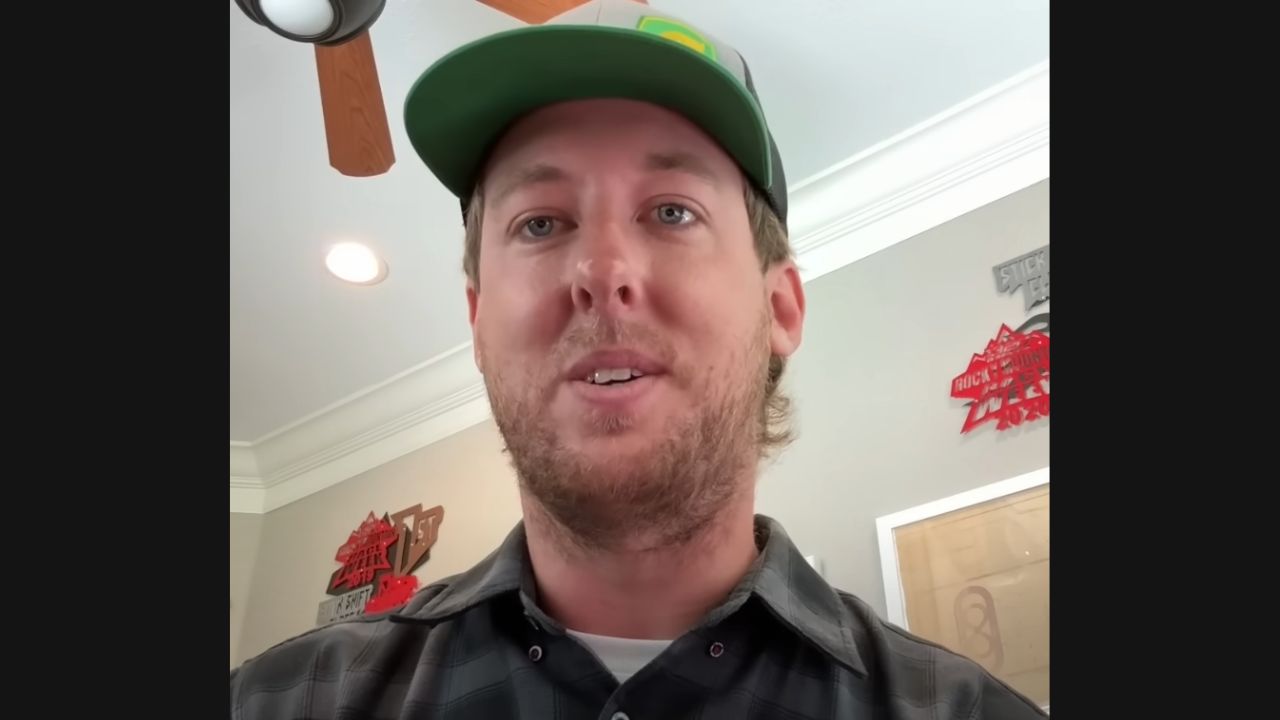
NASCAR’s decision to keep YouTube star Cleetus McFarland out of the Xfinity Series race at Talladega turned a routine eligibility ruling into a flashpoint over who gets to compete on stock car racing’s biggest stages. What might have been an inside-baseball call on driver credentials has instead triggered a broader debate about safety, celebrity, and how open the sport really is to outsiders.
The sanctioning body insists it is simply following its approval process. McFarland’s supporters see a missed opportunity to connect with millions of new fans, and some established voices inside the garage are now weighing in on whether NASCAR got this one right.
What happened
Cleetus McFarland, whose real name is Garrett Mitchell, applied to run the Xfinity Series event at Talladega Superspeedway with JD Motorsports in the No. 4 Chevrolet. The race is part of the O’Reilly schedule, and the entry would have marked his debut in one of NASCAR’s three national series. Instead, NASCAR reviewed his background and declined to approve him for Talladega, a track where the series runs in large packs at more than 180 mph.
According to series reporting, NASCAR’s competition officials evaluated McFarland’s resume and determined that his experience did not meet the standard they require for a first start on a drafting superspeedway. That decision effectively removed JD Motorsports’ planned driver for the event, forcing the team to adjust its lineup while McFarland’s fans flooded social media with questions about why the deal fell apart.
NASCAR has not released a detailed checklist for Talladega approval, but officials routinely look at a driver’s record in comparable cars and on similar tracks. McFarland has competed in a variety of machinery, from modified Corvettes to stock cars, and has run events with the ARCA Menards Series. At Talladega itself, he previously scored a top-10 result in an ARCA race after fighting through engine problems, a run captured in series footage that his supporters now cite as proof he can handle the track.
Yet ARCA and Xfinity are not identical. The Xfinity field is deeper, the cars are faster, and the stakes for points-paying teams are higher. NASCAR has long treated Daytona and Talladega as special cases, with stricter standards than short tracks or intermediate ovals. In this case, the sanctioning body appears to have concluded that McFarland’s resume, even with that ARCA top 10, did not justify a first national-series start in the middle of one of the year’s most volatile races.
The denial does not shut the door entirely on McFarland’s NASCAR aspirations. Coverage of the decision notes that he remains eligible to compete in the O’Reilly-backed short track events that sit under the national tours. One report on driver approvals explains that NASCAR has allowed him to run at smaller venues, where speeds are lower and the racing environment is less punishing for a newcomer.
For JD Motorsports, the outcome turns a creative marketing play into a scramble. The team had a chance to tap into McFarland’s online audience while filling a seat with a driver who brings sponsorship and attention. Now the organization must find another driver who satisfies NASCAR’s criteria for Talladega while explaining to partners why a heavily promoted entry will not happen as planned.
Why it matters
On the surface, this is a single driver approval. In practice, it touches several fault lines that run through modern NASCAR: the balance between safety and spectacle, the role of influencers in a traditional sport, and the way smaller teams survive in an era of escalating costs.
McFarland is not a typical prospect climbing the ladder through late models and regional series. He is a content creator with millions of followers who has built a business around high-horsepower entertainment, including events at his own Freedom Factory track. That profile made his potential Xfinity start at Talladega a marketing coup, and some analysts had already warned that the NASCAR venture was likely to run into institutional resistance long before the green flag.
From NASCAR’s perspective, the stakes are obvious. Talladega has a history of huge multi-car crashes, and the organization has spent years tightening safety standards after high-profile incidents. The current drafting rules keep cars bunched together, and even veterans can get caught in wrecks that start several rows ahead. Allowing a debut driver with limited experience in Xfinity-type equipment into that environment carries risk that goes beyond one car.
Officials also have to consider precedent. If a YouTube star with one ARCA top 10 at the track gets cleared for Talladega, it becomes harder to deny the next influencer with a similar background. That is especially sensitive at a time when teams are searching for drivers who bring both sponsorship and audience reach. A consistent standard, applied even when it frustrates fans, is one of the few tools NASCAR has to keep the field from becoming a revolving door of underprepared entrants.
At the same time, the denial runs against NASCAR’s need to grow its fan base. McFarland’s brand is tailor-made for younger viewers who consume racing through clips and livestreams rather than appointment television. A clean, competitive run in the No. 4 car would have given the Xfinity Series hours of exposure across his channels, something that many teams and sponsors crave. The decision to block that opportunity has fueled criticism that NASCAR is too cautious about embracing new pathways into the sport.
Reactions inside the paddock reflect that tension. Dale Earnhardt Jr., who combines Hall of Fame credentials with a strong media presence, weighed in after the ruling. Coverage of his comments describes how he acknowledged NASCAR’s safety concerns while also recognizing the marketing upside of a well-known content creator stepping into an Xfinity car. His remarks, detailed in analysis of his, framed the situation as a balancing act between protecting the integrity of the field and tapping into new audiences.
Fans, meanwhile, have been anything but quiet. Social media threads and comment sections quickly filled with arguments from both sides. Some supporters point to McFarland’s ARCA performance at Talladega and his extensive seat time in powerful machinery as evidence that he deserves a shot. Others argue that the Xfinity Series should not be treated as a content playground and that NASCAR is right to require a deeper oval resume before granting access to its most unpredictable track. A roundup of fan reaction captures that split, with some calling the decision embarrassing and others praising NASCAR for holding the line.
There is also a competitive angle. Talladega is notorious for producing surprise winners and upset finishes, in part because the draft can equalize equipment. Smaller teams like JD Motorsports often view it as one of their best chances to run near the front, especially if they can pair a solid car with a driver who avoids the chaos. Bringing in a newcomer with limited superspeedway experience introduces uncertainty that can affect not only that team but also the entire draft line around them. For drivers racing for playoff spots or championship points, one unpredictable move from a rookie can undo months of work.
The broader context inside NASCAR right now adds another layer. The Cup Series has been wrestling with fuel-saving strategies at superspeedways, where drivers sometimes lift and coast to make it to the end of stages, leading to criticism about the quality of the show. In a recent competition briefing, officials addressed fuel-saving concerns and indicated that they are looking at ways to keep racing aggressive but safe. Against that backdrop, inserting a high-profile novice into a tight pack at Talladega could be seen as adding one more variable to an already delicate formula.
For McFarland himself, the ruling is a test of how far his brand can push into sanctioned motorsports. He has built a loyal audience by blurring the line between showmanship and competition, but NASCAR’s approval process is not swayed by subscriber counts. If he wants to move deeper into the national series, he will likely need to build a longer record in regional stock car tours, particularly on ovals that mirror the demands of places like Daytona and Talladega.
What to watch next
The most immediate question is whether McFarland and JD Motorsports regroup for a different venue. Since NASCAR has signaled that he can run in O’Reilly short track events, the logical next step would be to target a smaller oval where speeds and pack dynamics are more forgiving. A strong performance there, especially in traffic and over a full race distance, would give NASCAR more data the next time his name comes up in an approval meeting.
Teams across the garage will also be watching how NASCAR communicates about this decision. So far, the sanctioning body has kept its reasoning relatively general, citing the standard review process rather than publishing a checklist of required starts or finishes. If the backlash continues, officials may feel pressure to spell out more clearly what a driver needs to show before debuting at a drafting superspeedway. Greater transparency could help manage expectations for future crossover attempts, whether they come from influencers, international drivers, or stars from other series.
For fans, the next Talladega race will serve as an informal benchmark. The Xfinity Series has a history of wild finishes at the track, including late-race pileups that reshape the running order. Recent Talladega results, such as the tightly contested Xfinity event in 2025, illustrate how quickly fortunes can swing in the draft. If this year’s race unfolds with the usual mix of big crashes and surprise contenders, critics of the McFarland decision may argue that the field is already chaotic enough that one more newcomer would not have changed much. If the race runs relatively clean, supporters of NASCAR’s caution will point to that as validation.
The reaction inside the industry will shape how other content creators approach similar opportunities. If the message from teams is that NASCAR approvals are too unpredictable to build a business plan around, some influencers may stick to exhibition events and independent promotions. If, instead, McFarland eventually earns approval after a series of short track starts, his path could become a template for others who want to convert online fame into national-series seats.
There is also the question of how JD Motorsports and similar organizations adapt. Smaller teams often rely on drivers who bring sponsorship or audience reach, and the McFarland episode highlights the risk in tying a race plan to a driver who still needs sign-off from the sanctioning body. Going forward, teams may hedge their bets by lining up multiple approved drivers for key events, or by pushing prospective entrants to build their resumes well in advance of high-profile races.
From a competitive standpoint, NASCAR’s stance on Talladega approvals could influence the makeup of the field over the next few seasons. If officials consistently require extensive experience before clearing drivers for the big drafting tracks, that will favor prospects who follow traditional development paths through ARCA and regional late model tours. It may also slow the influx of crossover names that generate short-term buzz but lack a deep oval background.
More from Fast Lane Only