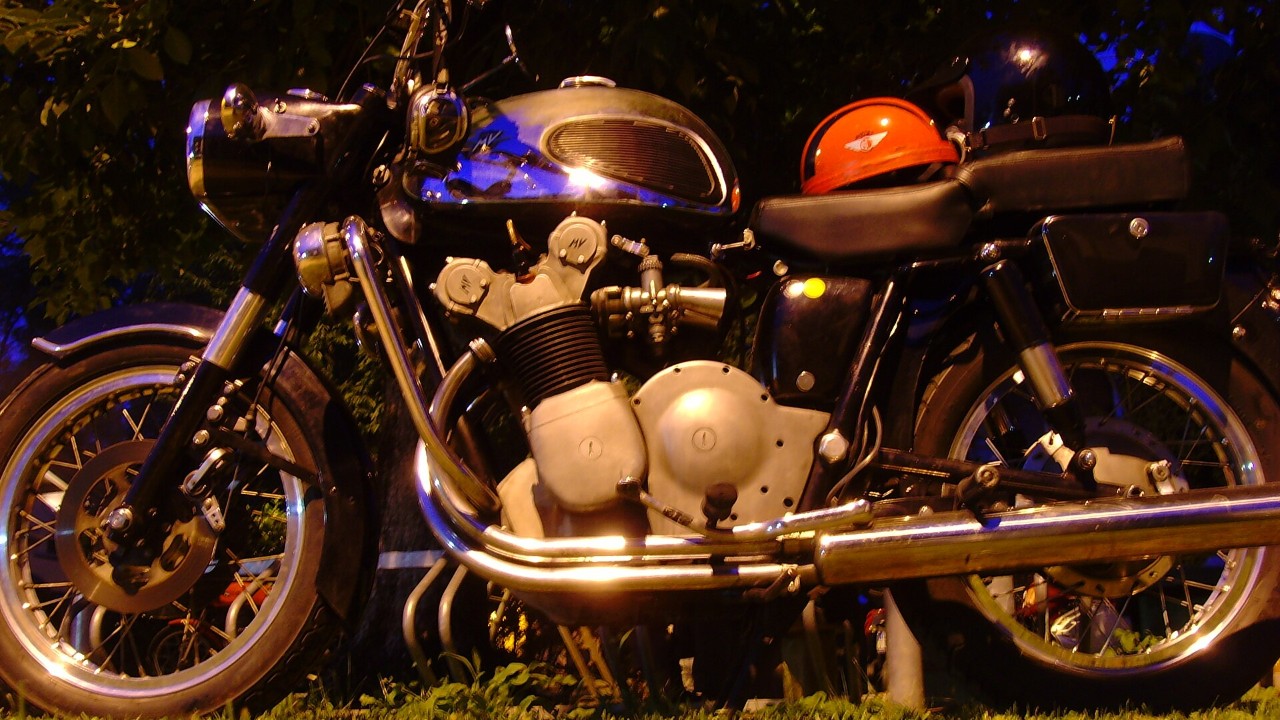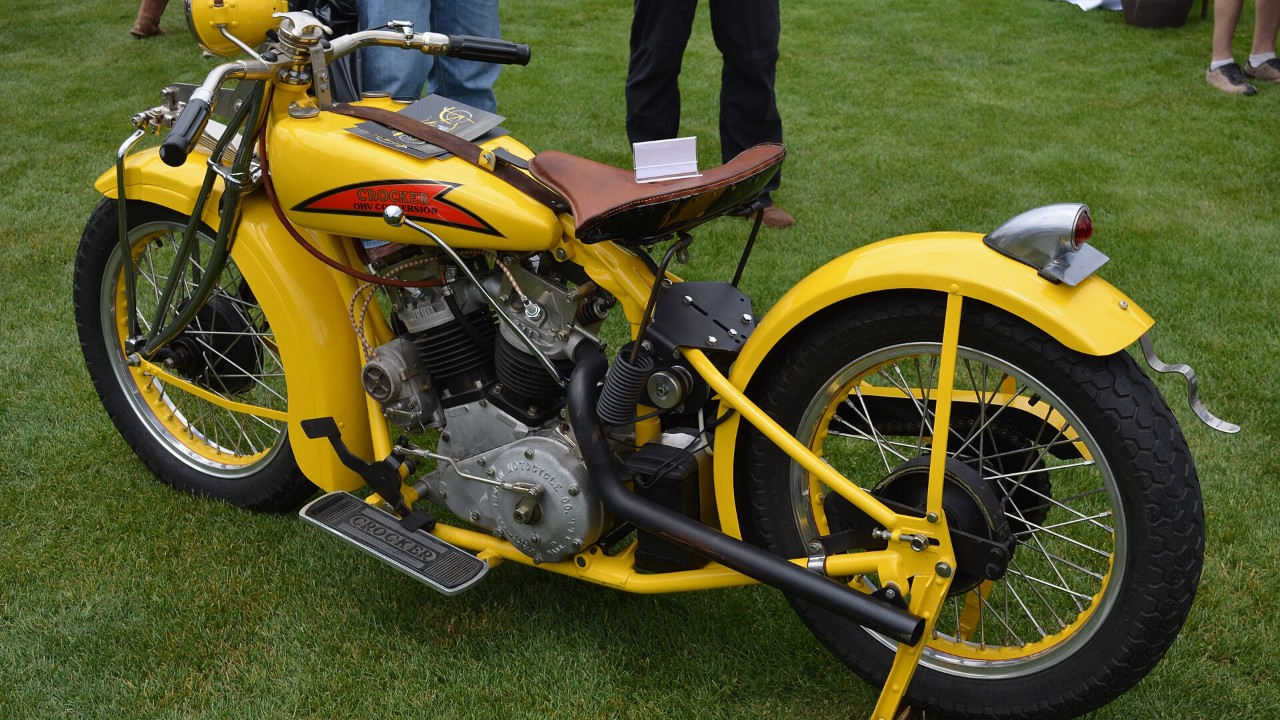
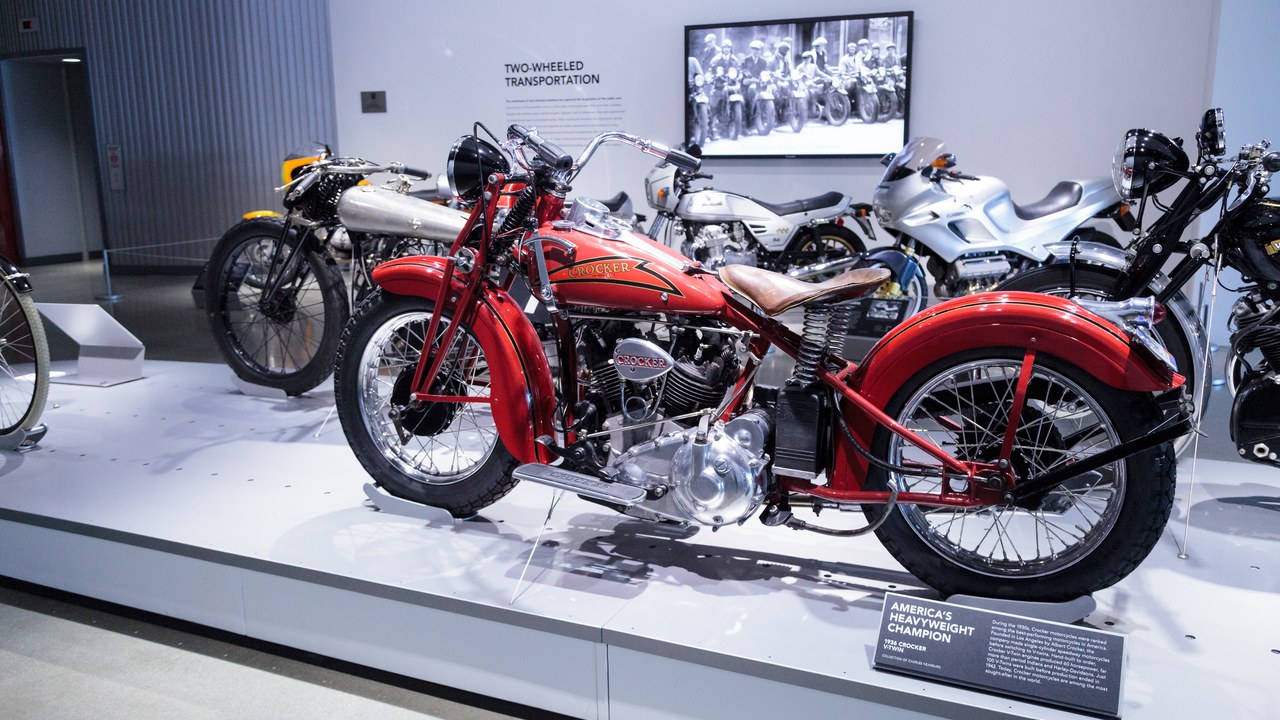
In 1936, Al Crocker rolled out a motorcycle from his small shop in Venice, California, that American riders had never been offered. The Crocker V-twin carried overhead valves, hemispherical combustion chambers and cylinders cast thick enough to bore out to 100 cubic inches. It came from a former racer and dealer, not from a big factory.
The bike had a short life, and Crocker built only a small number of them. Yet the engineering inside it still draws attention. Here is who built it, what made the engine unusual, and why production stopped.
Every figure below comes from published histories of the marque. Where those sources disagree, the article says so.
Who Al Crocker was
Albert Crocker was born in 1882 and earned an engineering degree from Northwestern, according to a RideApart history of Crocker motorcycles. He also designed and raced Thor motorcycles. Then, in 1909, he joined Indian.
By 1928, Crocker had moved to Los Angeles and taken on an Indian dealership, RideApart reports. Old Bike Mag credits him with pioneering Indian’s overhead-valve racing work. In other words, he knew both the factory side and the showroom side of the business.
His first machines were speedway racers. Silodrome says he began building them in 1933 around a 500cc single-cylinder overhead-valve engine, developed with Paul Bigsby. In fact, Crocker riders won nine of 12 heats in the bike’s first outing, according to a December 1933 report in The Motorcyclist that Silodrome quotes. Old Bike Mag and Silodrome both put speedway output at roughly 30 bikes.
The hemi-head Crocker V-twin of 1936
The road bike came next. Old Bike Mag says Crocker built the first V-twin bearing his name in 1936. Its overhead-valve cylinders sat 45 degrees apart, with a 3.25-inch bore and a 3.625-inch stroke.
That made a 61-cubic-inch engine, or about 1,000cc, according to Old Bike Mag, RideApart and BikeBound. Silodrome, by comparison, lists the standard engine at 62 cubic inches and 1,016cc. Compression was 7:1, Old Bike Mag reports, and a magneto handled ignition.
The heads were the headline feature. Early Crocker V-twin engines had hemispherical combustion chambers with exposed valve springs. However, Old Bike Mag notes that later engines switched to flat, squish-type chambers with enclosed springs. So “hemi-head” describes the early bikes, not every Crocker.
Cylinders built for more displacement
The detail that set the engine apart was its cylinder walls. RideApart says the walls were three-eighths of an inch thick. As a result, an owner could bore the engine out to 100 cubic inches without trouble.
Old Bike Mag says the same thing in different words. Crocker made the cylinders “extra thick to allow for overboring,” and the V-twins came in sizes up to 100 cubic inches. Meanwhile, Silodrome and BikeBound both say customers could order an engine anywhere from 1,000cc to 1,490cc.
Each bike was built to order, so no two were quite alike, RideApart notes. That also explains why displacement and tune varied from one machine to the next.
How much power it made
Old Bike Mag credits the hemi-headed 1936 machines with 60 hp. Silodrome also gives 60 hp for the standard engine. RideApart and BikeBound, by contrast, give a range of 55 to 60 hp.
BikeBound says that output was about 50% more than the Harley and Indian side-valve engines of the day. Timing mattered too. Old Bike Mag says the Crocker arrived five months before Harley-Davidson’s overhead-valve Knucklehead.
The rest of the bike was built to take the power. Crocker used a three-speed gearbox in a cast steel case that formed part of the frame, RideApart explains. Old Bike Mag adds that the gearbox was said to withstand up to 200 hp.
Old Bike Mag’s specifications for a 1939 Big Tank list a 62.5-inch wheelbase, a weight of 475 pounds and a top speed of “115+ mph.” The same bike had a rigid frame, a springer front end and drum brakes at both ends.
Small Tank, Big Tank and a famous promise
Crocker cast its fuel tanks in aluminum with the oil tank built in. According to RideApart, early tanks held 2.5 gallons, and larger tanks arrived in 1938. Those two styles gave collectors the names Small Tank and Big Tank.
Crocker also reportedly made a bold offer. Old Bike Mag, RideApart and Silodrome all say he promised a full refund to any buyer beaten by a rider on a standard Harley or Indian. Silodrome adds that no one ever claimed it. Still, a reader comment on BikeBound disputes that any record of the offer exists, so the story is best treated as reported, not proven.
How many Crockers were built
Nobody agrees on the exact total. RideApart estimates about 200 machines in all, with roughly half of them V-twins. The rest were speedway bikes and scooters.
Old Bike Mag counts only 61 to 64 Big Tank V-twins built from 1936 to 1941. It also warns that Crocker sometimes skipped serial numbers, so those numbers overstate output. Survivor counts differ as well. Old Bike Mag estimates 42 to 50 survive, while Silodrome says 68 V-twins are known.
Why production ended in 1942
The bikes cost more to build than they earned. Old Bike Mag says Crocker lost some $2,500 on each bike he built from 1936 to 1941. Then World War II took the materials.
Old Bike Mag, RideApart and BikeBound all date the end of motorcycle production to 1942. Afterward, RideApart says, Crocker took a contract with Douglas Aircraft to make airplane parts, and the company survived the war. He later sold the business to Borg Warner and never built motorcycles again. Al Crocker died in 1961, according to Old Bike Mag.
More from Fast Lane Only
- Unboxing the WWII Jeep in a Crate
- 15 rare Chevys collectors are quietly buying
- 10 underrated V8s still worth hunting down
- Police notice this before you even roll window down
This article was created with the help of AI and was reviewed and edited by Fast Lane Only editors before publication.