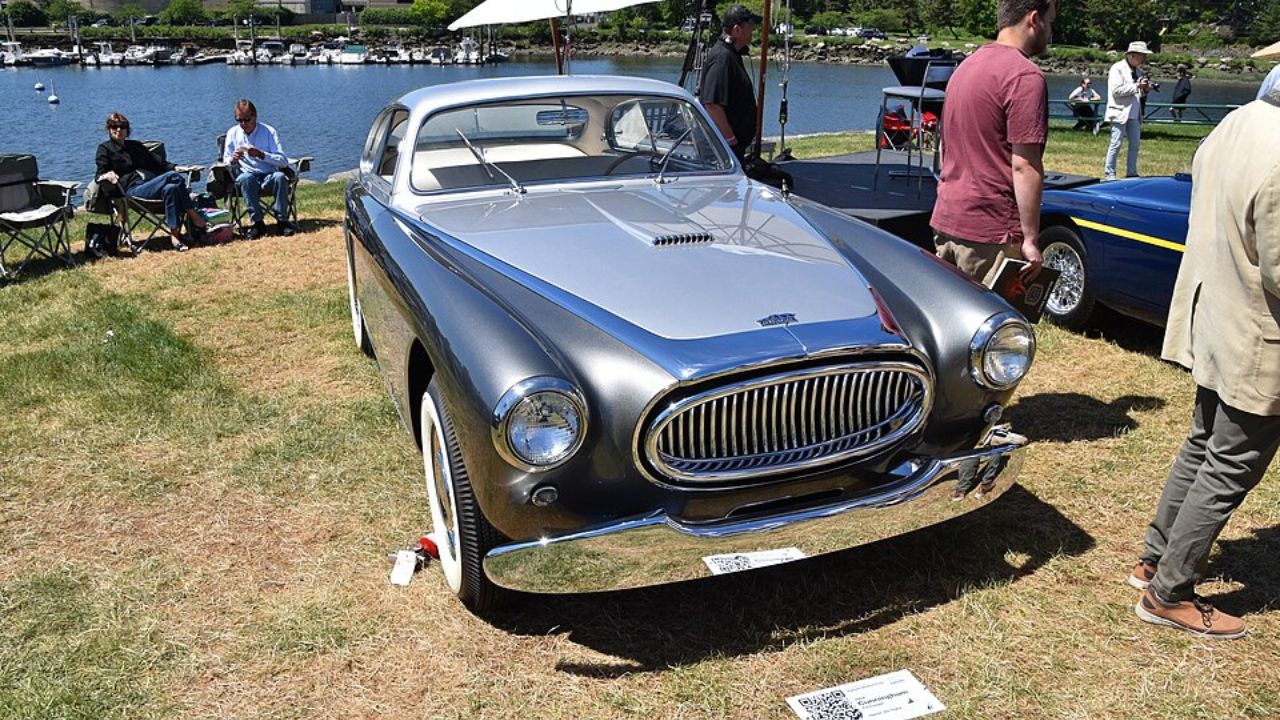
Briggs Cunningham wanted to win Le Mans with an American car, and to qualify he first had to become a carmaker. So he built the Cunningham C-3, a road car with a Chrysler Hemi V8 and a hand-shaped Italian body. He planned 25 for 1952. In the end, only 18 coupes and 9 convertibles left the works.
Each car crossed the Atlantic twice before a customer saw it. The chassis came together in Florida, and the body was built in Turin. Then the finished car came home to be sold.
That round trip made the Cunningham C-3 slow and costly to build. It also produced one of only two American cars on a celebrated 1953 museum list of the world’s best car designs.
Why Cunningham built the C-3
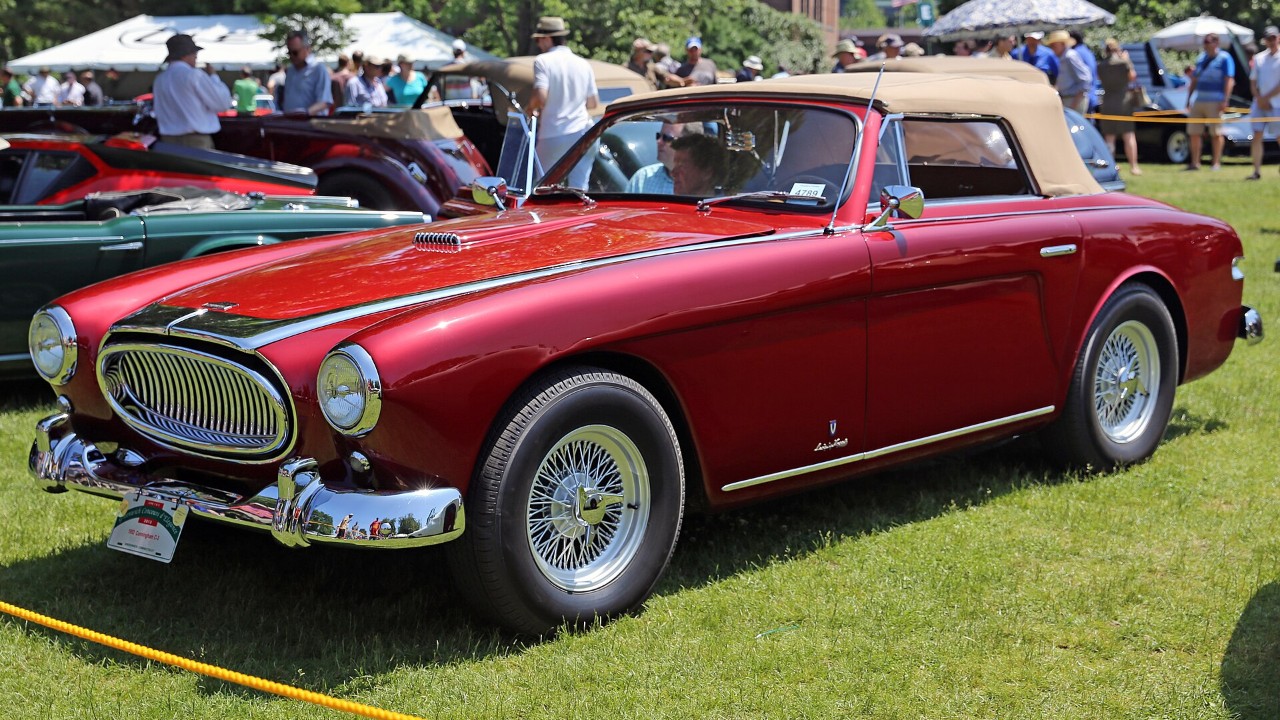
Cunningham had to become a manufacturer to qualify for Le Mans, according to the Revs Institute in Naples, Florida, which keeps a C-3 coupe in its collection. The plan called for 25 cars in 1952, the Le Mans minimum, and then 50 in 1953.
He could afford the gamble. Cunningham was an heir to the Swift meatpacking fortune, and he paid for his car efforts out of his own pocket, Classic Driver reports. His goal was the first Le Mans win by an all-American crew in an all-American car. He also hoped road-car sales would offset some of his racing costs, according to Silodrome.
A Florida chassis with a Turin body
The C-3 started at Cunningham’s own factory in West Palm Beach, Florida, Classic Driver explains. From there, each chassis went to Vignale in Turin for its body. Afterward, the finished cars went back to the United States for sale.
Underneath sat a stiff tubular steel frame carried over from the C-2R racer, Silodrome writes. Up front, the C-3 had independent coil-spring suspension, while a live axle carried the rear. The Revs Institute lists a 107-inch wheelbase and a weight of 3,460 pounds.
Giovanni Michelotti drew the shape. His brief, Silodrome says, was to make it better looking than the Ferraris and Jaguars it would face. However, the bodies set the pace for the whole program. Cunningham’s shop could finish a rolling chassis each week, but Vignale could take up to two months to shape a single body by hand.
The 220-hp Chrysler Hemi
Power came from Chrysler’s Hemi V8. The Revs Institute gives it as 331.1 cubic inches with four Zenith downdraft carburetors, rated at 220 horsepower at 4,000 rpm. Cunningham’s changes added about 40 horsepower over the stock Chrysler engine, Revs notes.
Buyers had two gearbox choices. A Cadillac three-speed manual was one, and a Chrysler Fluid-Torque automatic was the other, according to Revs. With the Cadillac box, the C-3 reached 60 mph in 6.9 seconds. With Fluid-Torque, it took 8.5 seconds. Top speed was about 135 mph, Revs says, and the car could cruise easily at 107 mph.
Road testers raved about the low-end pull. In 1952, John Bentley wrote in The Autocar of “spine-jolting acceleration that stems from phenomenal low-speed torque,” as Revs quotes him.
How many Cunningham C-3s were built
The Revs Institute puts actual production at 18 coupes and 9 convertibles, for 27 cars in all. Conceptcarz’s Cunningham C-3 history also cites the 18 and 9 split. Even so, counts vary. Conceptcarz notes that some sources say 20 coupes and 5 cabriolets, and others give a round 25.
Power claims vary too. Figures quoted for individual cars run from about 210 to 235 horsepower and higher. This story uses the Revs Institute’s 220-hp rating because Revs holds the Cunningham collection and publishes the full specification.
What the C-3 cost, then and now
The C-3 sold in the $10,000 range, which was very expensive at the time, according to Revs. Classic Driver puts the starting price at roughly $9,000. One first owner’s bill is on record. Karl Kiekhaefer, first owner of chassis 5206, paid $9,000 plus a $900 excise tax in 1952, Conceptcarz reports.
That price still didn’t cover the work. In fact, Cunningham lost money on every car, Revs says. Conceptcarz cites an estimated build cost of about $15,000 per car.
Critics noticed the design anyway. In 1953, Arthur Drexler of New York’s Museum of Modern Art picked the C-3 Continental Coupe as one of the world’s 10 best contemporary car designs, according to Revs. The Studebaker Starliner was the only other American car on that list.
Cunningham never did win Le Mans outright, though his team finished third overall in 1953 and 1954, Classic Driver notes. Collectors have since paid far more than the original invoices. According to Conceptcarz, RM sold chassis 5211 for $374,000 in 2006, and Gooding sold chassis 5226 for $539,000 in 2011.
More from Fast Lane Only