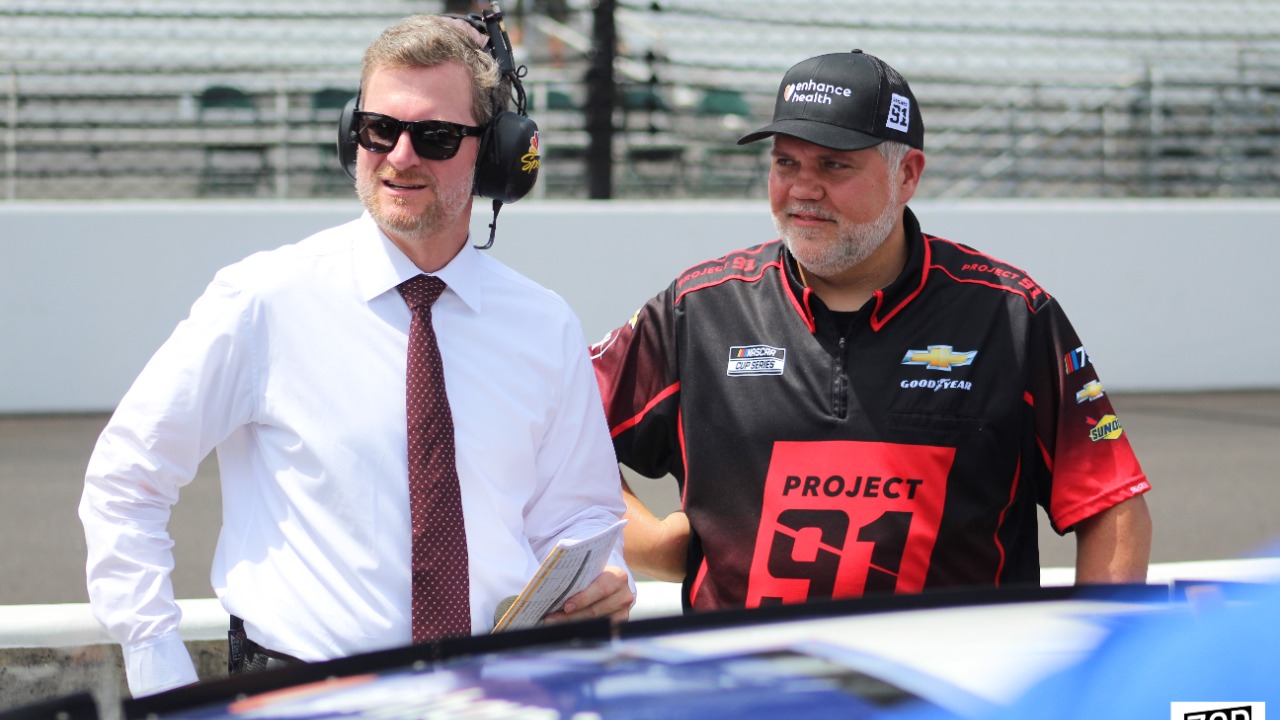
Dale Earnhardt Jr. is preparing to return to short-track competition after his wife’s pointed request around the Daytona 500 nudged him toward one more run behind the wheel. The veteran, long associated with NASCAR’s biggest stages, is now steering his comeback toward the grassroots tracks that shaped his career and still define his connection with fans.
His decision blends family influence, a part-time racing itch, and a strategic push to spotlight short-track venues that have been fighting for relevance. Instead of rejoining the Daytona 500 field, he is positioning himself at the center of the sport’s ongoing debate over where its heart really lies.
The Daytona request that reopened the door
The spark for Earnhardt’s latest return traces back to his wife Amy and her on-air suggestion that he should drive the Daytona 500 again. In conversations recounted around and after the race, Amy urged him to “drive Daytona,” a line that resurfaced when Dale Earnhardt Junior discussed the idea on his own platform and acknowledged how her push had stirred fresh speculation about a comeback at the 500. That moment, amplified by fan chatter and clips that repeated Amy’s request, turned a private nudge into a public storyline that followed him out of Speedweeks.
As the Daytona 500 buzz grew, Earnhardt addressed the swirl of expectations and clarified that he was not planning a full-fledged NASCAR Cup Series return. Reports described how he sparked talk of a Daytona 500 entry after Amy’s podcast suggestion, then emphasized his insistence that he did not intend to rejoin the big race as a regular competitor despite the emotional pull of Daytona and his family history there. The tension between Amy’s “drive Daytona” plea and his reluctance to reenter the 500 field helped frame an alternative: a smaller, more controlled schedule that still let him race, just not in the sport’s most pressure-packed event.
From tease to confirmation: a part-time short-track slate
What began as a Daytona 500 tease soon evolved into a concrete plan for a limited return to racing. Earlier this year, Earnhardt confirmed that he would be back behind the wheel in April, with reports emphasizing that in a little over a month he would be racing again and that the news quickly spread among fans who had followed his post-retirement experiments in part-time competition. Coverage of that announcement highlighted how he framed the move as a manageable way to satisfy his competitive drive without reopening the door to a full-season grind, a balance that has defined his approach since stepping away from full-time NASCAR.
The structure of that slate came into focus when JR Motorsports detailed that Dale Earnhardt Jr would race late models on a part-time basis for the team. The organization’s own confirmation of his 2026 racing plans described a schedule built around select short-track events and made clear that the focus would be on late model competition rather than a return to NASCAR’s top touring series. The announcement aligned with Earnhardt’s long-standing habit of choosing one-off or limited appearances, from occasional Xfinity Series starts to regional late model shows, and it signaled that his answer to Amy’s Daytona challenge would be rooted in smaller tracks rather than the Cup Series spotlight.
Why short tracks, and why now
Earnhardt’s choice of venues reflects a deliberate return to his roots. His broader career profile, captured in overviews of Dale Earnhardt Jr., traces a path from short-track beginnings to Daytona victories and national prominence, yet he has repeatedly spoken about the pull of local tracks and the communities that sustain them. By choosing late model events instead of a Cup or Xfinity expansion, he is reinforcing that identity as a bridge between big-league NASCAR and the grassroots scene that still feeds it. The decision also allows him to race in environments where his presence can materially change ticket sales and attention for a single weekend.
Specific venues on the 2026 slate underscore that strategy. Announcements that DALE JR SET TO RACE IN NEWPORT, TN at Newport Speedway, for instance, tied his appearance to the track’s own comeback effort under owner Chuck Ward, with promoters touting his participation as one of the biggest events on the calendar. Other reporting has linked Earnhardt to traditional short-track hubs such as Nashville Fairgrounds, long a symbol of stock car heritage and the ongoing fight to keep historic facilities active. By aligning his limited schedule with places like Newport Speedway and similar ovals, he is using his star power to spotlight tracks that often operate on thin margins yet remain central to how fans and young drivers experience the sport.
Balancing owner duties, legacy, and fan expectations
Any Earnhardt return now has to fit around his responsibilities as a team owner and media figure. JR Motorsports, profiled through its own JR Motorsports platform, fields competitive entries in NASCAR’s Xfinity Series and manages a deep roster of drivers and crew members who depend on the organization’s stability. The team’s confirmation of his late model schedule made clear that these new races would be part-time and carefully slotted around his ownership and broadcasting commitments rather than a step back into weekly national touring. That balance reflects a broader pattern in which he has chosen targeted on-track appearances that complement, rather than compete with, his off-track roles.
His activity at Daytona as a team owner also shapes how fans interpret this short-track return. Reporting on Daytona International Speedway has noted that Dale Earnhardt Jr brought his team back to the Daytona 500 as an owner in 2026, with entries such as Justin Allgaier carrying his organization’s colors in the NASCAR field. At the same time, social posts from outlets like Heavy described how he sparked Daytona 500 return buzz after Amy’s suggestion yet reiterated that he was not planning a comeback as a Cup driver. That split identity, owner at the 500 and short-track racer elsewhere, allows him to honor the Daytona legacy that defines his name while still charting a more personal path on smaller stages.
More from Fast Lane Only