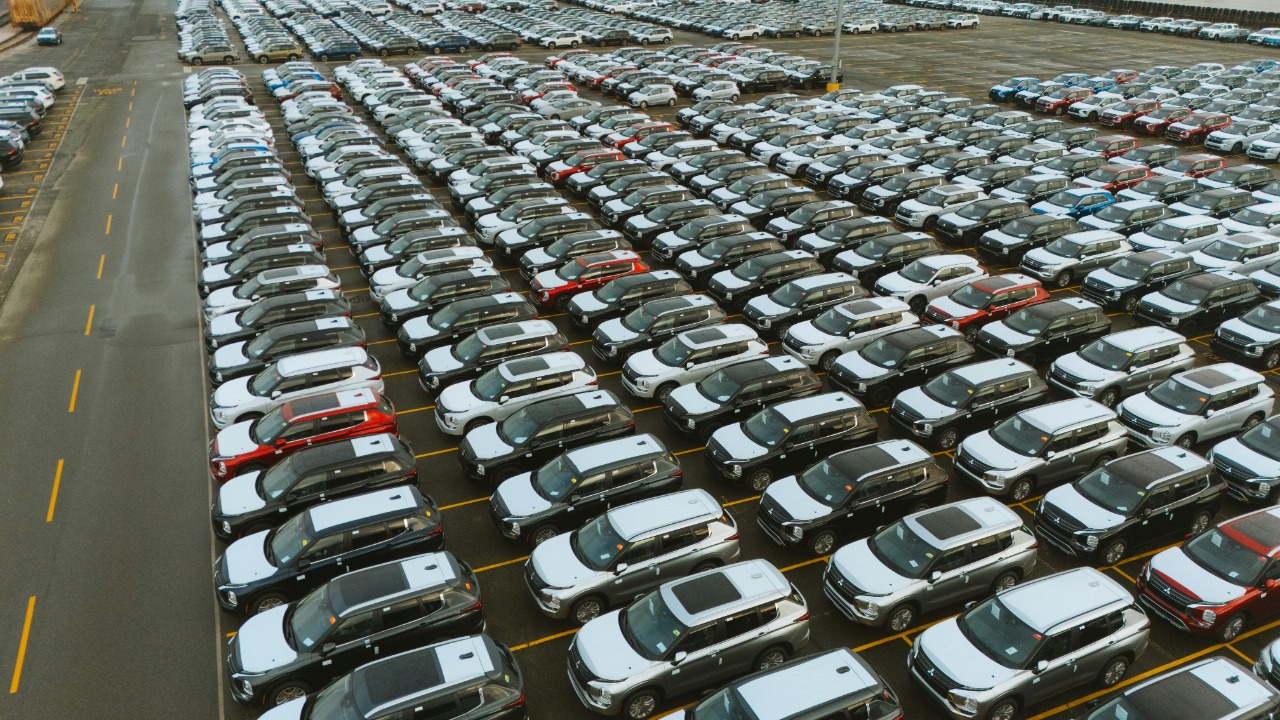
China has eclipsed Japan as the leading source of new vehicles shipped into Australia, ending a decades-long pattern in which Japanese factories dominated the local showroom mix. The shift reflects not only the rise of Chinese manufacturing scale and pricing power but also Australian buyers’ rapid embrace of new brands and battery-powered models built in Chinese plants. It marks a structural realignment in how cars reach Australian driveways, with implications for trade, technology, and consumer choice.
For an industry that once treated Japanese supply as a given, the new hierarchy underscores how quickly global production networks can be rewired when cost, policy, and product planning align. It also highlights how Mar has become a reference point for a broader transition, as Chinese vehicles and China-built models from global brands move from the fringes of the market to its statistical centre.
From a 28-year streak to a sudden handover
For nearly three decades, Japan sat comfortably at the top of Australia’s import table, with the Federal Chamber of Automotive Industries reporting that Japan had been Australia’s leading source of vehicles every month since 1998. That long run has now been broken, with China becoming Australia’s largest source of new vehicles and displacing Japan in the rankings after a sustained surge in shipments. Analysts point to a combination of aggressive pricing, rapid product rollout, and capacity expansion in Chinese plants as the foundation for this shift, which has unfolded far faster than many local executives expected.
Industry data for February captures the turning point with unusual clarity. The Federal Chamber of Automotive Industries stated that 22,362 new vehicles sourced from China were sold nationally, enough to push China ahead of Japan in that month’s tally. Separate figures show that of the 90,712 vehicles sold during the month, 22,362 came from China, putting it ahead of Thailand and South Korea as well. Against that backdrop, last month, 21,671 new cars from Japan were sold, giving it a 23.9 per cent market share, which was not enough to retain first place. The result formally ends what one analysis described as China Dethrones Japan as Number One Source of New Vehicles in Australia, a narrative captured in a detailed Country of Origin breakdown that spelled out how the hierarchy has changed.
The numbers behind China’s surge
The headline change in ranking rests on a broader shift in volume and market conditions. According to one statistical summary, China has become Australia’s largest source of new vehicles, even as the overall market dipped, with commentators noting that Australian buyers have been the beneficiaries of that competition on price and specification. The same analysis explained how a modest contraction in total sales has coincided with a sharp rise in shipments from Chinese ports, confirming that the new leader is gaining share rather than simply inheriting it in a shrinking pie. Another report on the same trend observed that China becomes Australia’s top vehicle source as the market dipped 4.5% in February, a reminder that Chinese manufacturers are growing in a tougher environment rather than riding a broad upswing.
More granular data from February shows how that growth is distributed across brands and segments. One breakdown, headlined around China Dethrones Japan as Number One Source of New Vehicles, detailed how Chinese-owned marques and joint ventures now account for a significant share of the import mix, with models from Great Wall, BYD, and MG contributing thousands of units to the monthly total. The same China has become a dataset that underlined that buyers are responding to a combination of lower entry prices and generous equipment lists, particularly in the small SUV and light commercial categories. In parallel, a separate analysis of February sales noted that China leads source markets in February. Of the 90,712 vehicles sold, which reinforces the sense that this is not a one-off spike but part of an entrenched pattern.
Electric vehicles and global brands made in China
China’s ascent is closely tied to the rise of electric and electrified vehicles in Australia. Battery electric vehicles accounted for around 13 per cent of new registrations, according to one assessment of how Electric vehicle adoption in Australia is accelerating, and a large share of those EVs are sourced from Chinese factories. The Australian new car market has also been reshaped by the arrival of new makes and models, most from China, with one sales review noting that it has been fuelled by these entrants and the rise of hybrid or electric vehicles that combine lower running costs with sharp pricing. That trend is especially visible in the rapid growth of brands such as BYD, which has used aggressive pricing on battery-electric hatchbacks and SUVs to win share from established Japanese and Korean competitors.
Global manufacturers have quietly reinforced the same pattern by shifting production of key models into Chinese plants. One investigation into cross-border sourcing explained how, then there was a rush of offerings when Tesla switched to Chinese sourcing for the Australian market, and BMW started exporting the iX3 from China, while Chinese-owned Volvo and Polestar added various models from the same manufacturing base. Another marketing-focused analysis highlighted that many new energy vehicle entrants manufacture vehicles in China and ship them to Australia, creating an ecosystem in which Chinese factories serve both domestic brands and international nameplates. That report, authored by Matthew Eaton, framed the development as a structural change, noting that Matthew Eaton described how these entrants manufacture vehicles in China and leverage that scale to compete aggressively on price.
Policy, tax breaks, and what comes next
Government policy is beginning to respond to the new import hierarchy, particularly in relation to emissions and tax settings. One analysis of national emissions performance argued that Australia still lags global leaders on vehicle emissions, even as Electric vehicle adoption in Australia is accelerating, which places additional weight on the sourcing of cleaner models from Chinese factories. In that context, the treasurer has signalled openness to extending EV tax breaks at the same time that China has become the number one source of new cars, a linkage that reflects both climate objectives and the commercial reality that many affordable EVs now arrive on ships from Chinese ports. The policy debate is therefore entangled with trade flows, since any adjustment to incentives will shape demand for vehicles that are disproportionately built in China.
More from Fast Lane Only