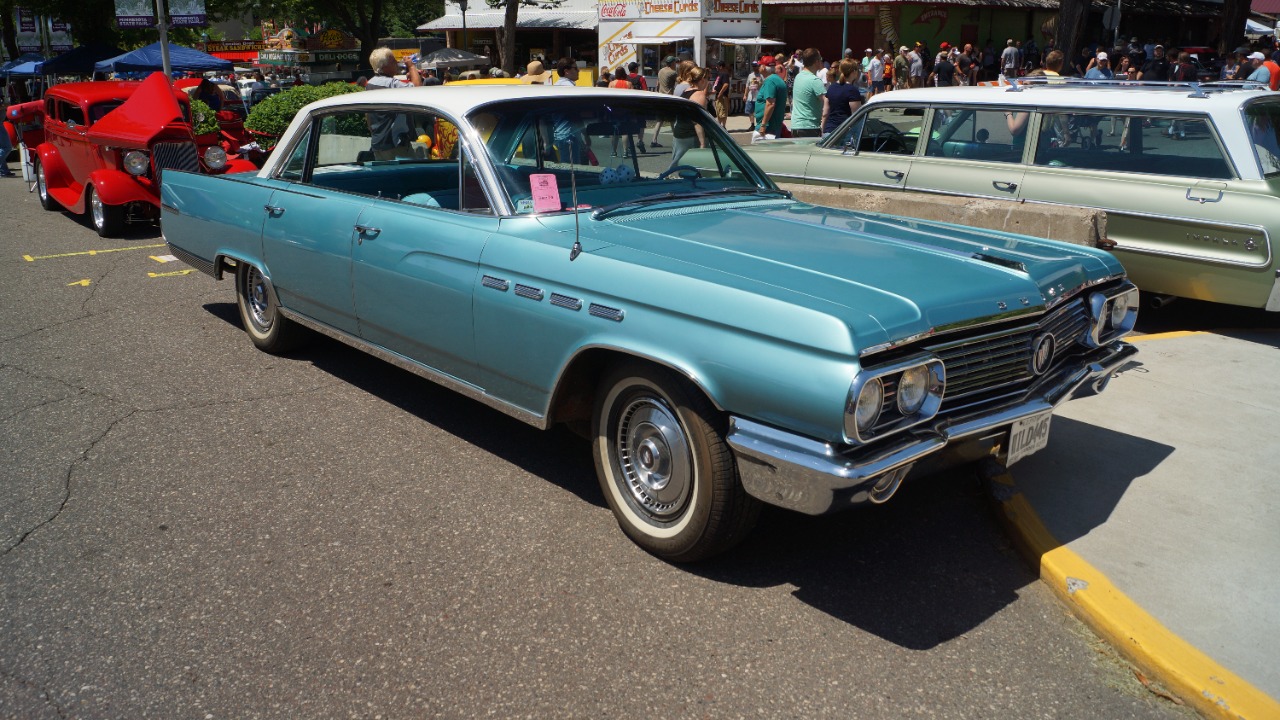
You hear “deuce and a quarter” and you are not just talking about a car, you are stepping into a whole scene of big‑body cruising, neighborhood pride, and American luxury at full scale. That phrase grew directly out of the Buick Electra 225, especially the early 1960s cars, which turned a simple number into a badge of identity. By the time the 1963 Buick Electra 225 was gliding down city streets, the nickname had become shorthand for a certain way you carried yourself behind the wheel.
To understand how that culture formed, you have to start with the way Buick reshaped its lineup, then follow how the Electra 225’s size, style, and presence resonated in Black communities, custom scenes, and family driveways. Once you see how “225” became “two‑twenty‑five,” then “two and a quarter,” and finally “deuce and a quarter,” you can trace a straight line from a spec sheet to a living piece of slang.
From 225 inches to “deuce and a quarter”
When you look back at the late 1950s, Buick was busy reorganizing its full‑size cars, turning the old Super into the Invicta and the Roadmaster into the Electra and Electra 225, while the Limited quietly disappeared from the catalog. The Electra 225 sat at the top of that new hierarchy, its name built around a simple figure: the car stretched a full 225 inches from bumper to bumper, a fact that later owners would repeat with pride as they explained why the model carried that numeric tag. In everyday speech, that “225” quickly morphed into “two‑twenty‑five,” then “two and a quarter,” and eventually into the smoother “deuce and a quarter” that you still hear attached to the big Buick.
By the early 1960s, that nickname was inseparable from the car’s identity, especially once the 1963 Electra 225 arrived with the long, low proportions that made the length figure feel more like a statement than a statistic. Enthusiasts point out that the “225” portion of the badge literally referenced those 225 inches, and that this direct link between a measurement and a model name is what allowed the slang to click so naturally into place. You can see that logic spelled out in detailed histories of the 225, which tie the nickname directly to that original dimension.
How Buick positioned the Electra 225
If you want to understand why “deuce and a quarter” felt so aspirational, you have to look at where Buick placed the car in General Motors’ pecking order. The Electra 225 was Introduced as a flagship that sat between more modest offerings and the most expensive GM luxury sedans, originally positioned between rivals like the Oldsmobile 98 and higher priced prestige models. Internal “Key Points” about the Buick Electra stressed that it was Not just another full‑size car but a statement of comfort and status, arriving at a Moment Too Soon for buyers who wanted something grand without stepping all the way up to a chauffeur‑class sedan.
That positioning mattered for the culture that grew around the car in the 1960s. You were not just buying a long vehicle, you were buying into a promise of quiet power, thick upholstery, and the kind of highway ride that made long trips feel easy. Owners who talk about their 1960s and early 1970s Electra 225s still emphasize how the car made them feel like they had arrived, and that sense of elevation is part of why the “deuce and a quarter” nickname carried so much weight. Later retrospectives on the Buick Electra underline how carefully the brand cultivated that aura of attainable luxury.
Naming the Electra 225 and the woman behind “Electra”
The story of “deuce and a quarter” is not just about numbers, it is also about the name that came before them. When Buick settled on “Electra 225,” it was drawing on a family connection to Electra Waggoner Biggs, a Texas heiress whose life reached far beyond the oil fields. Among her talents, Electra Waggoner Biggs was an accomplished sculptor whose Notable subjects included Will Rogers and Dwight Eisenhower, and her first name gave Buick a touch of high‑society glamour that fit the car’s ambitions. That personal link turned what could have been a generic badge into something with a story, which made it easier for owners to feel like they were part of a lineage rather than just a product cycle.
Enthusiasts who dig into the background of the model name point out that the numeric “225” was layered on top of this more intimate reference, creating a full title that combined a person’s name with a precise measurement. Commentators who have unpacked the naming of the Buick Electra note that this kind of personal naming was not a normal GM policy, which makes the Electra 225 stand out even more. When you say “deuce and a quarter,” you are, in a way, compressing all of that, the sculptor’s legacy, the 225‑inch length, and the luxury positioning, into one easy phrase.
Black car culture and the rise of the nickname
The phrase “deuce and a quarter” did not grow in a vacuum, it took root in specific communities that embraced the Electra 225 as their own. In the Afro‑American neighborhoods around New York City, owners developed their own slang for the car, sometimes calling the 225s “9s,” a nod to the sum of the digits in the model number. That same environment helped popularize the more melodic “deuce and a quarter,” which captured both the car’s length and its street presence. Discussions among longtime enthusiasts in In the Afro American community around New York City describe how naturally that language attached itself to the 225 and how widely it spread.
You can see the cultural imprint in the way people still talk about specific cars. In one Atlanta‑focused history group, for example, members swap memories of a 1969 Electra 225 convertible in Beautiful Color The 1969 model is praised as a perfect highway cruiser, with owners like John Hall Sr and Zee Walker chiming in about how the big Buick made long trips a breeze. That kind of storytelling, preserved in posts about the Electra, shows you how the nickname became part of everyday language, not just something printed in brochures.
Design, luxury, and the long shadow of the 1963 Electra 225
By the time you get to the 1963 model year, the Electra 225 had fully grown into the image that “deuce and a quarter” still conjures today. The car rode on a long wheelbase, with a sweeping profile that made those 225 inches feel even more dramatic, and it carried the kind of chrome and interior trim that signaled you were in Buick’s top tier. Later accounts of the model’s evolution point out that the 225 designation began in 1959, when that year’s Buick was 225 inches in length, and that the nickname “Deuce and a Quart” followed naturally from that figure. Coverage of the 1970 version of the Buick notes that the 225 m model designation still carried that same meaning, even as the styling evolved with a redesigned grille and tail lights.
Fans often single out late 1960s and early 1970s cars as the purest expression of the look, but the 1963 Electra 225 helped set the template that later years refined. Enthusiast groups describe the 1969 Buick Electra 225 convertible in Beautiful Color The 1969 car as a shining example of late‑1960s American opulence, with its long hood, formal roofline on hardtops, and plush interiors that turned every drive into an occasion. Posts celebrating that Buick Electra treat it as a symbol of American automotive opulence, and that same sensibility was already present in the early 1960s cars that first cemented the nickname.
More from Fast Lane Only