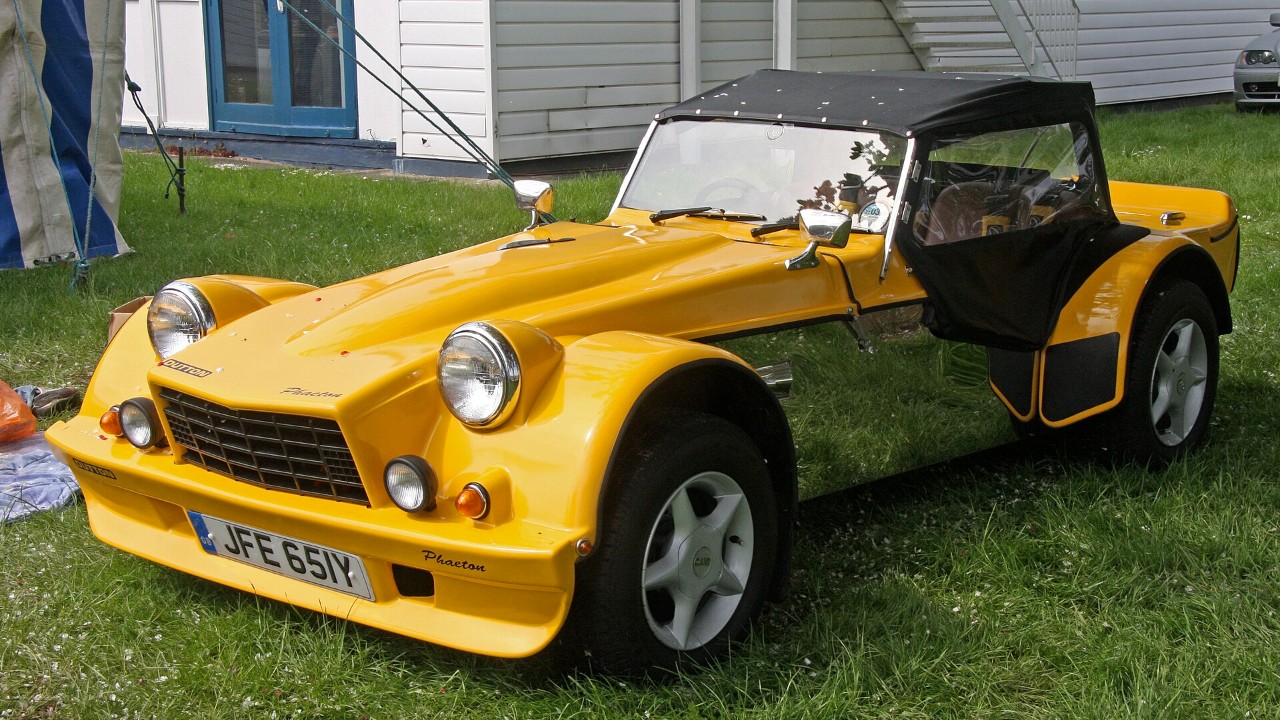
By 1984, the British firm behind the Dutton Phaeton was turning out more than 1,000 kits a year. Few people outside Britain knew the name. Yet Dutton had become the biggest kit-car maker in the world by the number of kits it produced.
That is the strange charm of kit cars. A company sells you a body, a frame and a box of parts. Then you supply the engine and running gear from a donor car and build it yourself, often in a home garage. Some kits turned out rough. Others outlived the cars that donated their parts.
These are our picks for the kit cars that never lost their shine. They come from Britain and America, from beach buggies to mid-engine supercars. The facts come from period records, maker pages and marque histories. The verdicts are our own opinion.
1. Dutton Phaeton S3
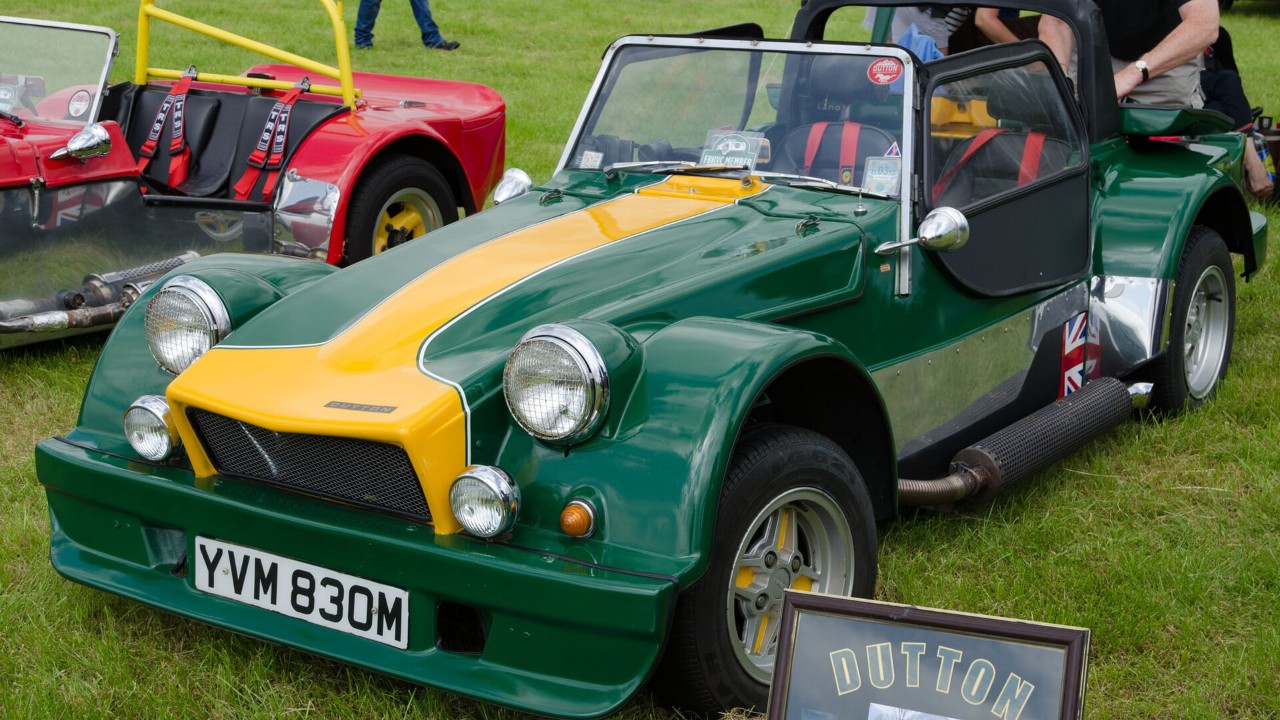
Tim Dutton-Woolley started Dutton in a small workshop in Worthing, Sussex, in 1970. Later the firm moved to a larger factory at Tangmere, near Chichester. Its early B-Type used Triumph Herald parts. Over time, it grew into the Phaeton, a simple open two-seater.
The Dutton Phaeton ran in four series. The Series 3 shown here ran from 1981 to 1986, the years when the firm hit its peak. Like most Duttons, it took its mechanical parts from the Ford Escort. That choice mattered, because Escorts were cheap and everywhere in Britain.
The Dutton Phaeton formula worked so well that the firm later added an Escort-based estate called the Sierra. At its peak, that model sold 22 cars a week. If you like the idea of building your own, see our guide to cool kit cars you can actually buy.
Our take: the Dutton Phaeton was never fancy, and that is the point. It turned a tired family car into a weekend toy for very little money. Better yet, Escort mechanicals are simple to understand, so a well-built one is easy to live with.
2. Davrian Mk V
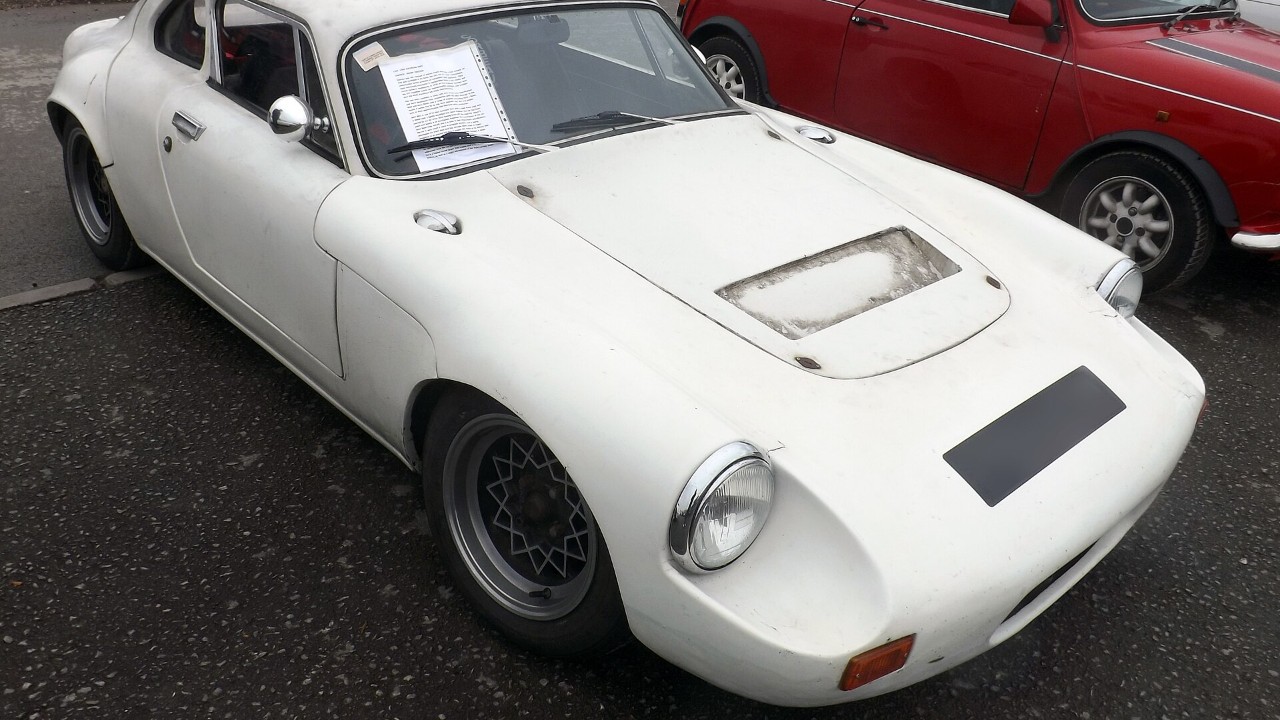
Adrian Evans was a structural engineer, and you can tell from his cars. Instead of a separate chassis, the Davrian used a glass-fibre monocoque, where the body itself carries the loads. The design from 1967 onward was a compact two-seat coupe. Evans began building Davrians in 1965.
For power, Davrian used the aluminum Hillman Imp engine, a Coventry Climax-based unit, along with the Imp’s transaxle. Some cars used rear-mounted Volkswagen or Renault power instead. Davrian sold the cars in kit form, first from London and later from Tregaron and Lampeter in Wales.
As a result, owners soon found out how light and nimble they were. The cars became very popular with amateur drivers in rallying and circuit racing. In our view, that racing record is why the name lives on, even though production ended in 1983.
Our take: the Mk V is a fine way into the Davrian story. It has the light, stiff shell that made the name. It also shows how one engineer’s idea could hold its own at club events.
Davrian built cars across eight marks in all, so it pays to check which one you are looking at. A seller should be able to tell you its history and engine. That is just as true for any kit car, where each one is a little different.
3. Midas Bronze
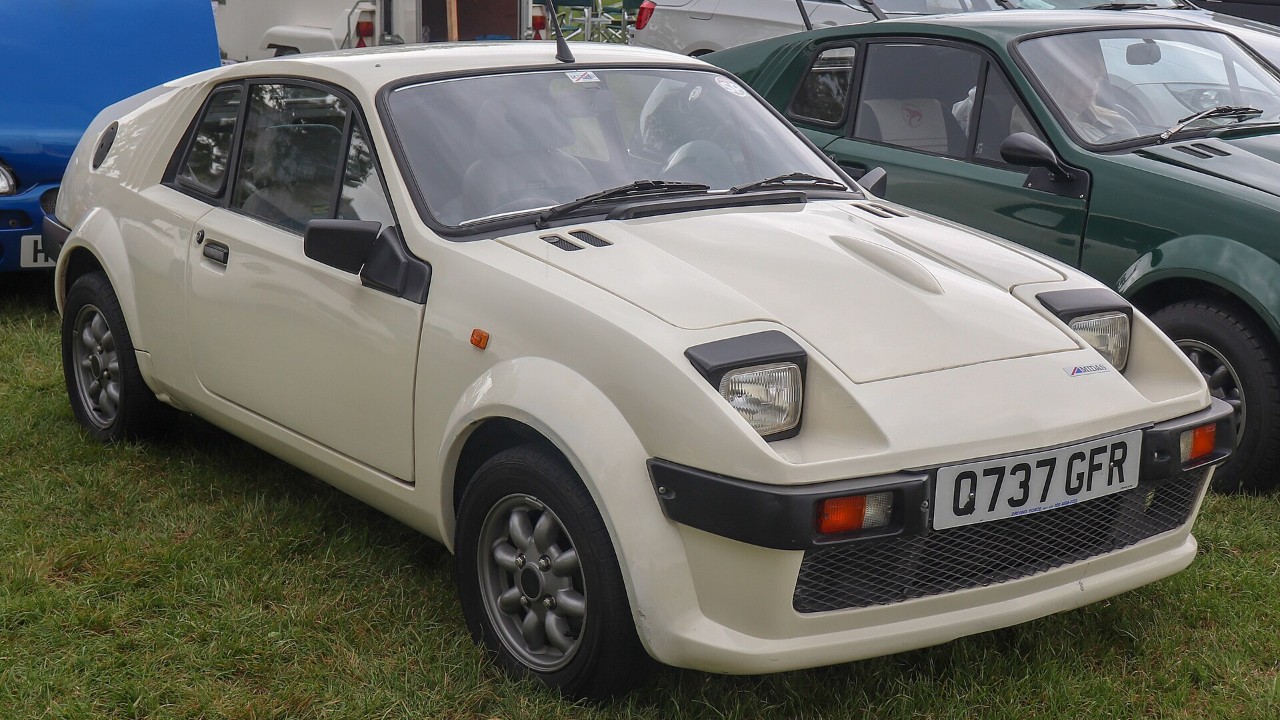
The Midas came from Harold Dermott, a former Jaguar man who ran D&H Fibreglass Techniques in Oldham. According to Hagerty UK, the first Midas went to a customer in August 1979. Sales reached the hundreds during the 1980s.
Also, the car had serious talent behind it. Richard Oakes drew the shape, and former Team Lotus man Arthur Birchall also helped. Gordon Murray, of Brabham Formula 1 fame, gave input on the 1985 restyle. The Bronze used a composite body with no separate chassis. It ran a Mini engine, gearbox and front subframe, with a beam axle at the rear.
Murray was also an early owner. His car eventually ended up with a mid-mounted Alfa Romeo boxer engine. Sadly, the Midas story stopped suddenly in March 1989, when a fire destroyed the company’s premises.
Our take: a small, light coupe shaped with help from an F1 designer is hard to beat for the money. The Bronze is the practical, everyday version of the idea. Because it uses Mini parts, it is also simple to maintain.
4. 1958 Devin SS
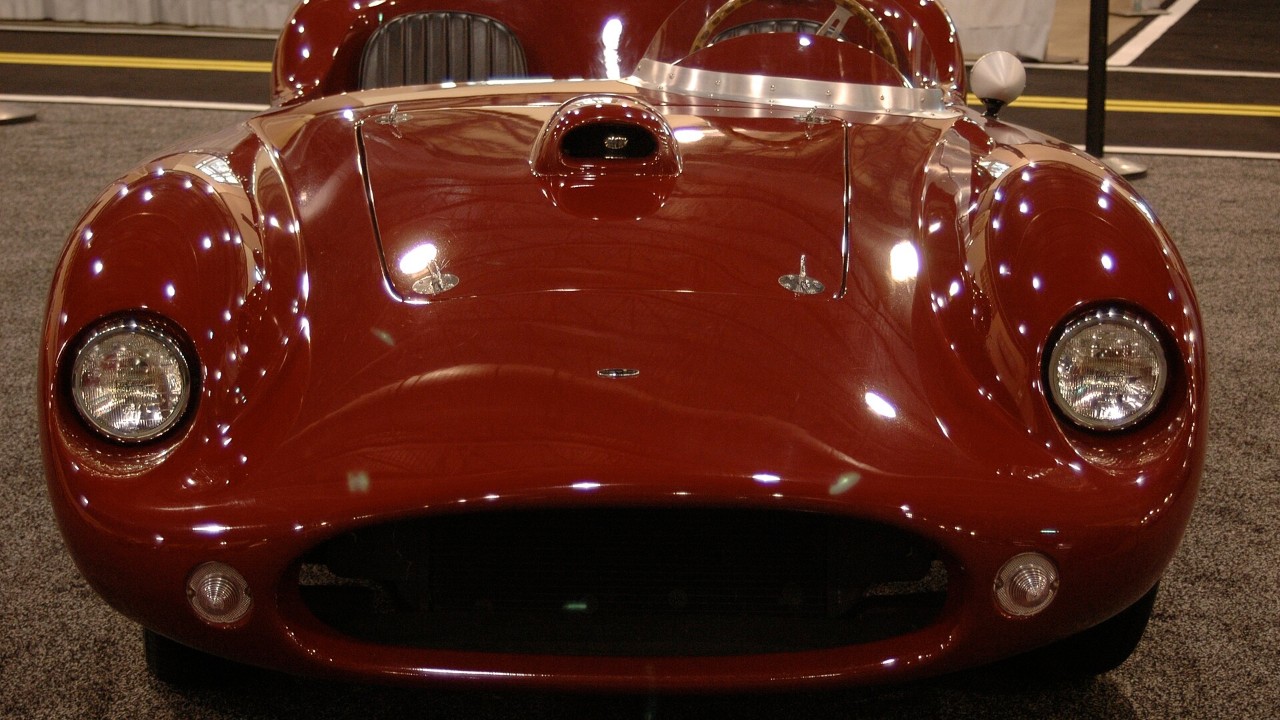
Bill Devin made his name selling fiberglass bodies. From 1956, his company offered shells for custom and one-off cars, built from 50 separate molds. Those molds could make 27 sizes, so a body could fit anything from a Crosley to an MG or a Healey. The best-known body cost $295, which is why many people call it the “295” body.
The Devin SS took the idea further. It was a complete sports car with a 283-cubic-inch Chevrolet small-block V8 rated at 220 bhp in Devin tune. A BorgWarner T-10 four-speed sent the power to the rear wheels. The first chassis came from Malcolm MacGregor in Northern Ireland, but problems led Devin to build his own in California.
On top of that, the numbers were strong. The SS weighed about 2,179 pounds, ran 0 to 100 km/h in 4.8 seconds and topped out near 140 mph. It started at $5,950 and rose to $10,000 in its final year. About 18 cars got the Irish chassis, and fewer than 10 got the American one.
We’d call the SS the car that proved a fiberglass special could run with the best. With fewer than 30 built in all, it is also a car you will rarely see.
5. GP Super Buggy
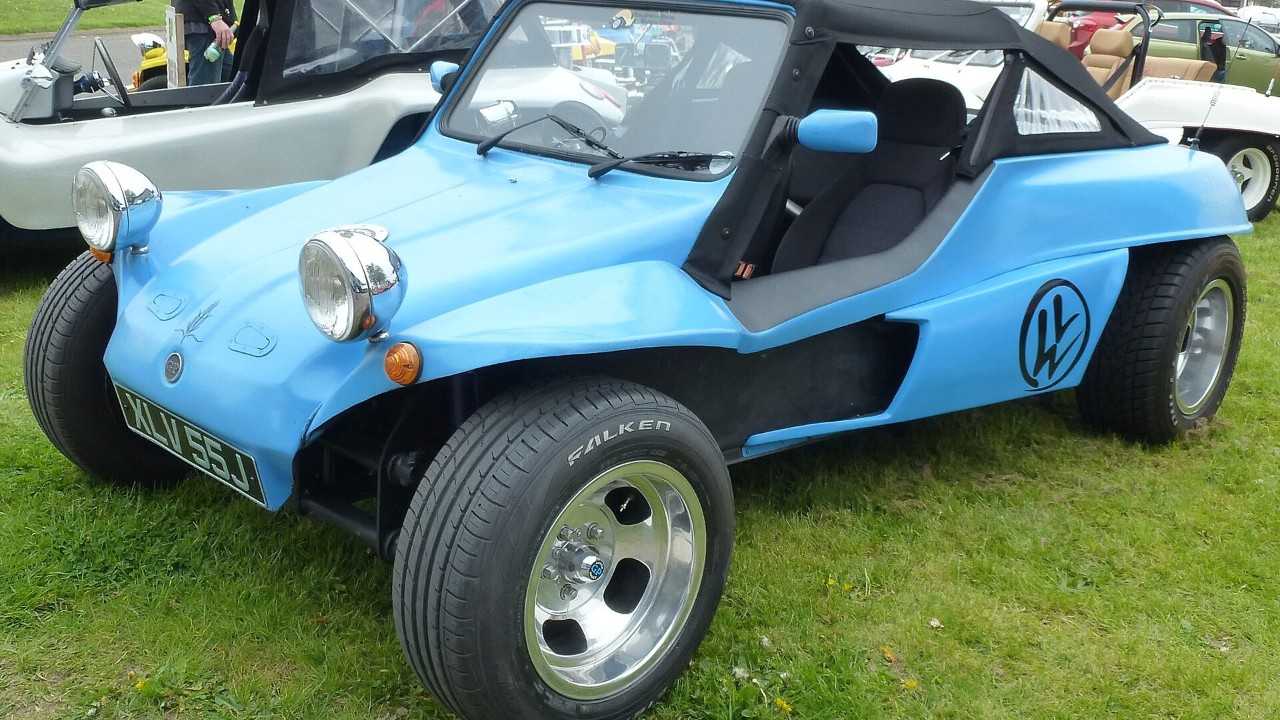
GP began as GP Speedshop in 1966. Its founders were John Jobber, formerly of Jaguar and Brabham, Pierre du Plessis, formerly of Lola Cars, and Peter Allnutt. Du Plessis had seen a buggy called the Lolette in South Africa, which was based on the Meyers Manx. He brought one back to England, and the idea took off.
Like the Manx, the GP body sat on a shortened Volkswagen Beetle chassis. That meant the buggy used cheap, tough VW parts and an air-cooled flat-four in the back. As Motor Car History records, kit production began in 1968. Around that time, GP was making about 100 kits a month.
The design proved so durable that other firms kept it alive. Madison Car Company, GP Buggies and Halifax Beetles all built GP models under the GP name in later years. The company itself moved several times, from Brentford to Hanworth, then Islington, Princes Risborough and Helston.
Our take: the Super Buggy is the kit car for people who just want to have fun. You can build one from a tired Beetle, and you can fix it with basic tools. Few cars of any kind make a summer day feel this easy.
6. 1965 Mini Marcos
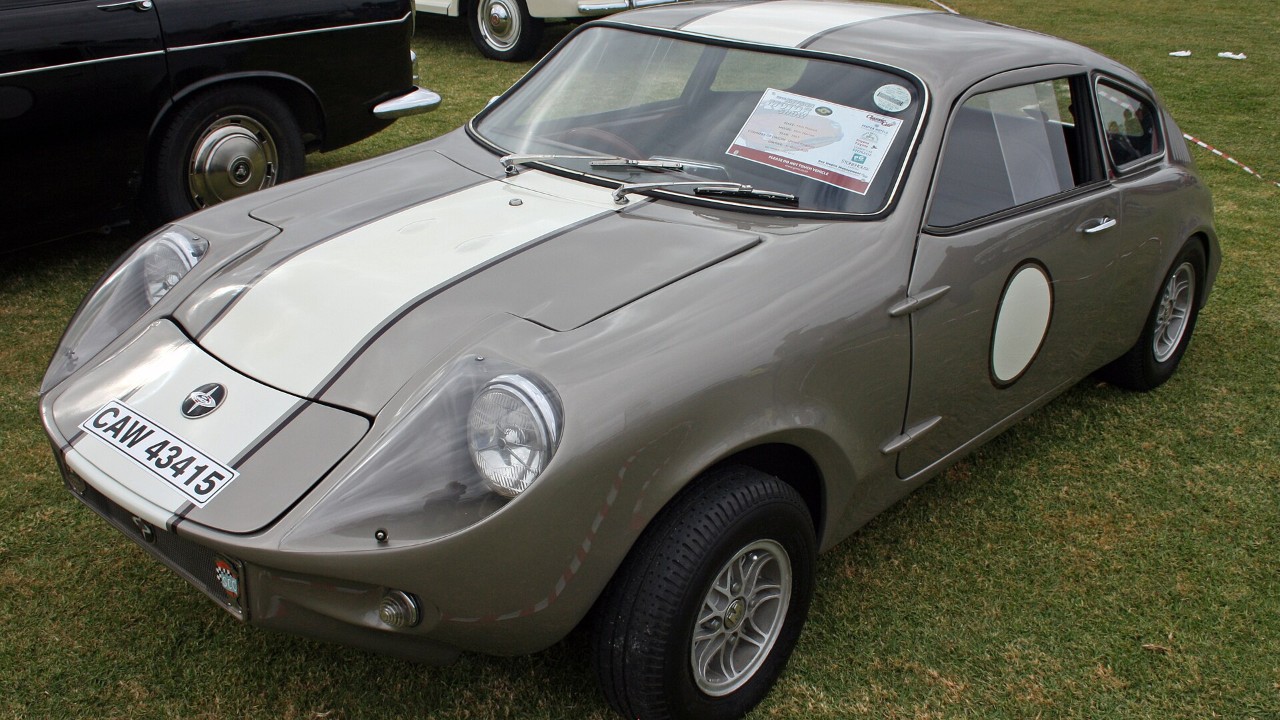
The Mini Marcos took the Mini’s running gear and wrapped it in a tiny glass-fibre shell. Jem Marsh developed the first version. Instead of a steel body, the car used a GRP monocoque with Mini subframes and a BMC A-series engine. Buyers usually bought it as a kit and finished it at home.
Its finest hour came in 1966. That year, a Mini Marcos driven by Jean-Louis Marnat and Claude Ballot-Léna finished 15th at Le Mans. It was the only British car to finish the race. In our view, that result is why the car has kept its fans.
The design also refused to die. Marcos built it from 1965 to 1970, and then D&H Fibreglass Techniques built it from 1974 to 1981. Later, Marcos brought it back again from 1991 to 1996. Very few small kit cars can claim a production life with three separate chapters.
In our view, the Mini Marcos is one of the best bargains in British club motoring. You get a real Le Mans story and cheap Mini parts. Just check the shell carefully, because the body is also the structure.
7. Locost Seven
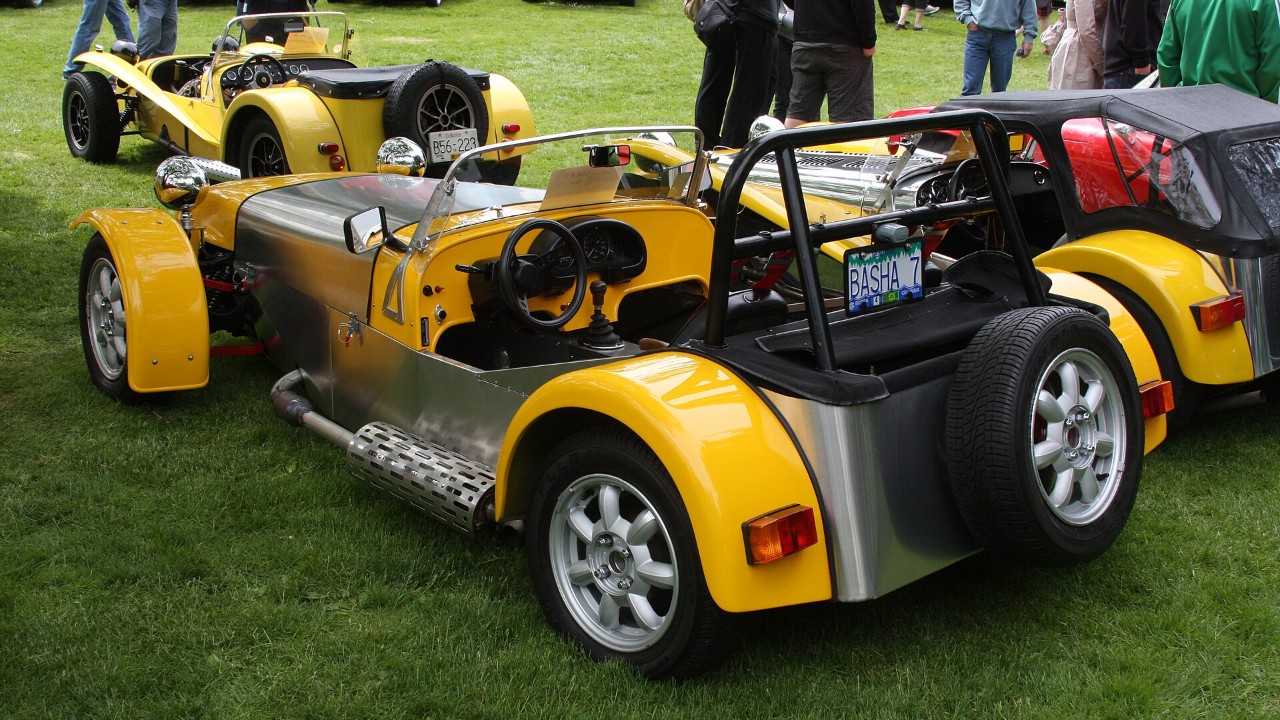
The Locost is a home-built car inspired by the Lotus Seven. It took off in the mid-1990s, around the time Haynes published Ron Champion’s book, Build Your Own Sports Car for as Little as £250. The title alone explains the appeal. Instead of buying a kit, you build the frame yourself.
The Locost frame is a space frame, usually welded from 1-inch mild steel square tubing. The suggested donor for Champion’s design is a Mk1 or Mk2 Ford Escort. Later, the Haynes Roadster design moved to Ford Sierra parts. Either way, the donor parts come from common, affordable Fords.
Locosts also race. The 750 Motor Club runs a Formula Locost championship, which regularly draws around 35 drivers in UK club racing. For a look at kits that did not age as well, read about 10 kit cars that looked better than they drove.
Our take: no car on this list gives you more fun per dollar. The Locost also teaches you how a car works, weld by weld. If you buy one someone else built, ask to see the welds and the build records first.
8. Factory Five GTM
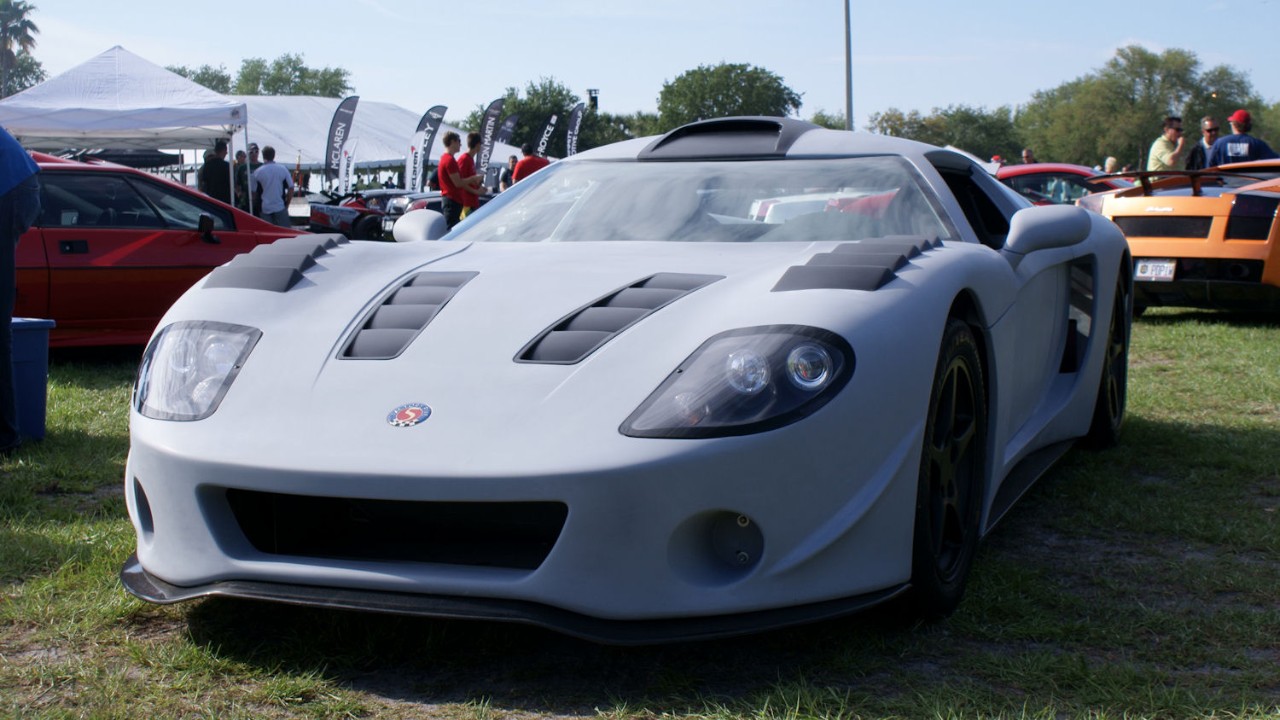
Factory Five Racing was founded in 1995 in Wareham, Massachusetts. With the GTM, it aimed very high. It is a mid-engine supercar kit that takes its engine, drivetrain and suspension parts from the C5 Corvette. The frame is a steel tube chassis that Factory Five designs and builds itself.
According to Factory Five’s own GTM guide, the engine is a Corvette LS1 or LS6. Some builders have used a 505-horsepower LS7. The transaxle is a Porsche G50 from a 1990 to 1998 911. Ready to drive, without a driver, the car weighs about 2,400 pounds.
However, building one is a big job. Factory Five puts the average build at about 600 hours. The kit costs $24,990, and most builders spend $35,000 to $50,000 to finish the car. When Car and Driver tested an LS7 prototype in 2007, it ran 0 to 60 mph in 3.0 seconds.
Our take: the GTM is proof that a kit car can be a true supercar. For the price of a used sports car, you get numbers that rival exotics. The catch is the time, so finish the build or buy a finished one with records.
9. 1963 Gilbern GT
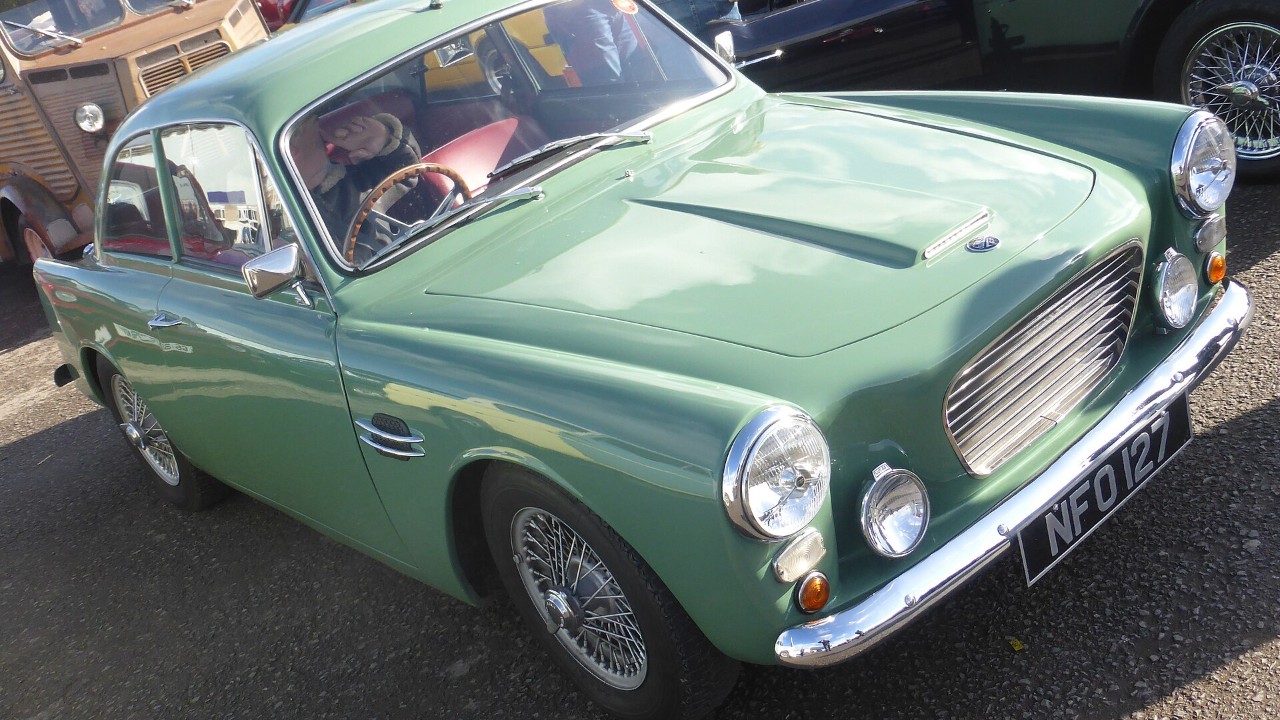
Gilbern came from an unlikely partnership in Wales. Giles Smith was a former butcher, and Bernard Friese was a German engineer with glass-fibre experience. The name joins the first three letters of Giles with the first four of Bernard. At first, the company worked from a small workshop at Church Village and later moved to Llantwit Fardre.
The GT was Gilbern’s first car, built from 1959 to 1967. It used a square steel tube chassis and a one-piece molded body. Unlike many kits, the body arrived trimmed and painted, so the buyer only had to finish the mechanical work. Early cars used a 948 cc BMC A-series, with an optional supercharger, or a 1,098 cc Coventry Climax.
Later on, GTs moved up to MGA engines of 1,500 or 1,600 cc. Then an 1,800 cc MGB engine arrived, and the car became the GT1800. Gilbern built 280 GTs in all. It also remains one of the few cars ever made in Wales.
In our view, the Gilbern GT is the kit car that looks the most like a real factory coupe. That finish is why it has aged so well. It is also a car with a story every owner loves to tell.
10. Fiberfab Aztec
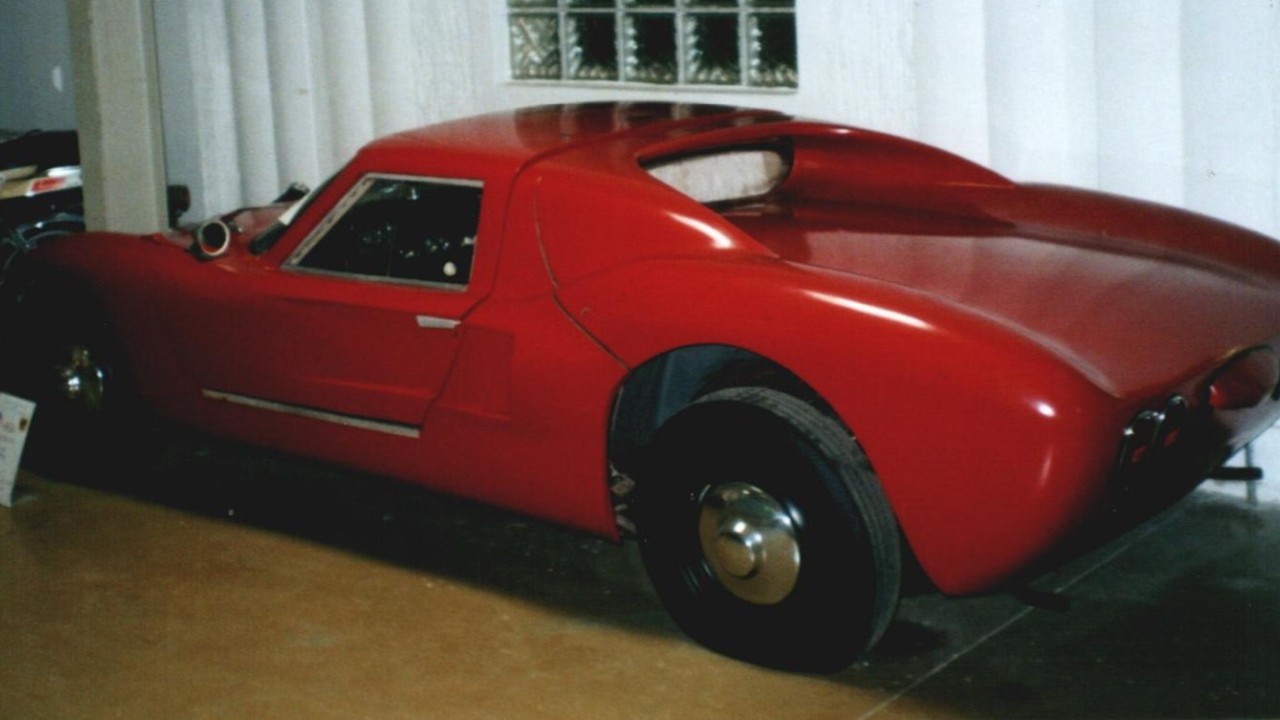
Bud Goodwin and John E. Hebler founded Fiberfab in Palo Alto, California, in 1964. Their first big hit was the Aztec GT, built from 1964 to 1965. Some people compared its body to the Ford GT40, while others saw the Lola GT in it. Either way, it gave home builders a race-car look for a fraction of the cost.
For example, buyers could pick a canopy door, gull-wing doors or normal doors. The company reportedly sold hundreds, possibly thousands, of Aztec GTs. Then, in the fall of 1965, the Aztec II arrived with a bobbed tail, a rear spoiler and a longer nose.
The name lived on into the 1970s. The Aztec 7 was a wedge-shaped kit with gull-wing doors, inspired by the 1968 Alfa Romeo Carabo concept. It sat on a Volkswagen platform, so builders could use cheap Beetle parts. Fiberfab built roughly 400 of them, starting in the early 1970s.
Our take: the Aztec is the kit car that made the 1960s dream of a race car in the driveway real. It looks wild, but under the skin it was simple. Fiberfab later moved to Sunnyvale and opened a Valkyrie plant in Santa Clara in January 1967.
More from Fast Lane Only