Ferrari built 11,273 examples of the Ferrari F355 between 1994 and 1999, and every one carried its V8 behind the seats. That layout puts the heaviest part of the car near its middle. As a result, a mid-engine car turns in quickly and feels balanced in a way few front-engine cars can match.
The catch is that mid-engine cars are rarely easy to live with. Luggage space shrinks, engine access gets awkward, and some early designs bit back when drivers lifted off mid-corner. Yet the good ones reward you every time you take them out, whether they wear a Ferrari badge or a Toyota one.
These are our picks for eight mid-engine cars we would keep no matter what someone offered. The verdicts are our own opinion. However, every year, engine and figure below comes from period reports, maker records and model histories.
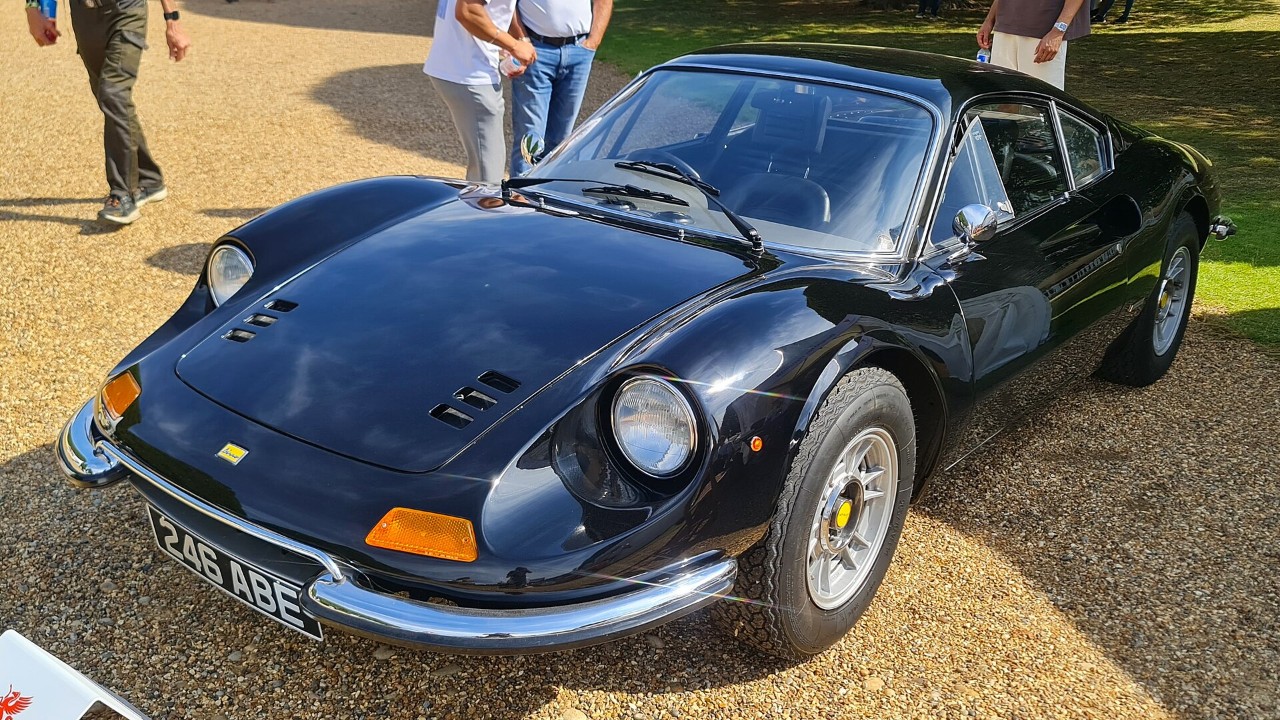
1. 1972 Ferrari Dino 246 GT
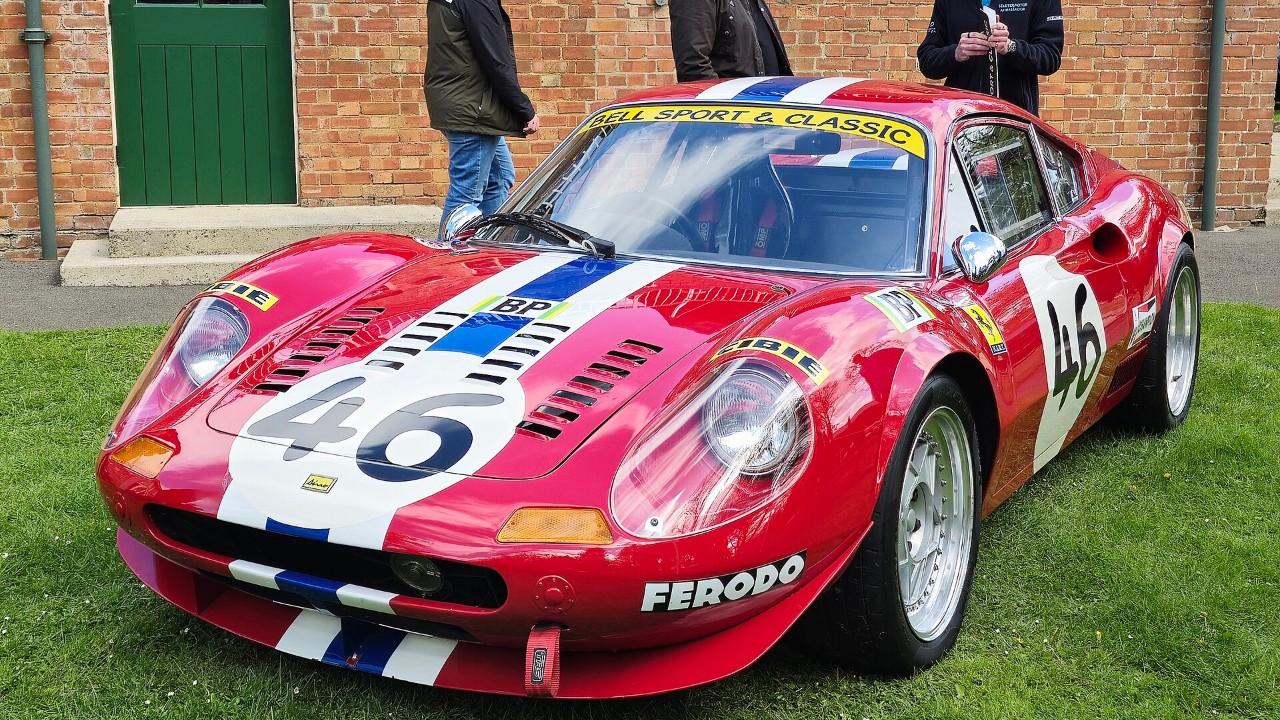
The Dino carried the name of Enzo Ferrari’s son, Alfredino, who died in 1956 at age 24. It was the first production car to wear that name, and it wore no Ferrari badge at all. In fact, Motor Sport’s 1989 profile of the 246 notes that its badge gave no clue about who built it.
The 246 GT replaced the 2.0-liter 206 GT in 1969 and stayed in production until the end of 1974. Its 2,418 cc V6 sat crosswise behind the seats and made 195 bhp at 7,600 rpm. The engine traced back to a Formula 2 unit. Because the rules demanded 500 production engines a year, Fiat offered to build them on Ferrari’s behalf. Meanwhile, the body changed from light alloy to thin steel, which added 396 pounds and brought the weight to 2,380 pounds. The 246 also grew three inches taller than the 206, with a wheelbase 2.3 inches longer.
Our take: the Dino is the reason we love small mid-engine cars. Its Pininfarina shape first appeared at the 1965 Paris Salon, and it still looks right today. The open GTS joined the coupe in 1972. Either way, we would never let one go.
2. 1997 Ferrari F355 Berlinetta
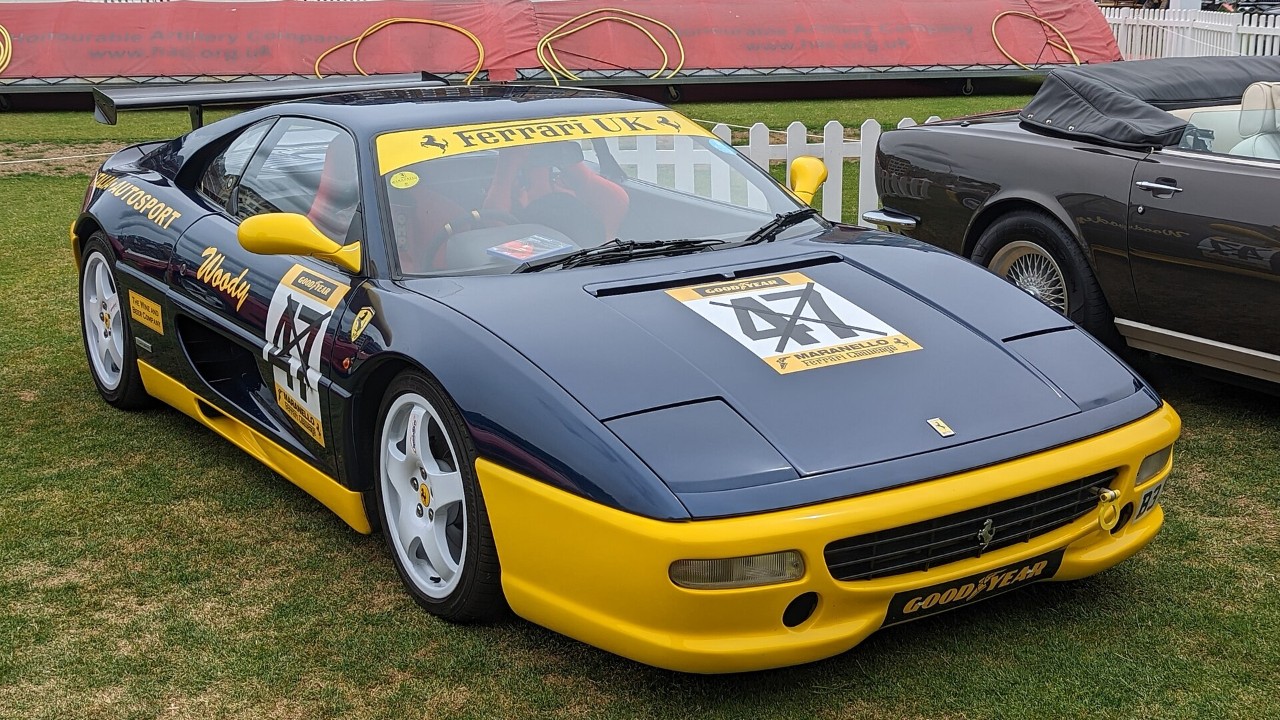
Ferrari built the F355 from May 1994 to 1999 as a revised 348. Its 3.5-liter V8 used five valves per cylinder and made 380 PS, or 375 hp, at 8,250 rpm. Also, a fairing under the body generated downforce at speed. In our view, details like that made the F355 a much sharper car than the 348.
Then, in 1997, Ferrari added an F1-style paddle-shift gearbox. Even so, most Berlinetta buyers kept the gated manual. Of the 4,871 Berlinettas built, 3,829 had a manual and 1,042 had the F1 system. Across all body styles, Ferrari built 11,273 F355s. We covered the purist side of this car in our story on how the F355 Berlinetta earned its purist reputation.
Our take: the Ferrari F355 is the V8 Ferrari we would keep forever. It has a screaming engine, a Pininfarina body credited to designer Maurizio Corbi and a gated shifter that makes every gear change an event. If you buy one, insist on a complete service history, because skipped maintenance is the costliest thing an F355 can hide.
3. 2001 Lamborghini Diablo VT
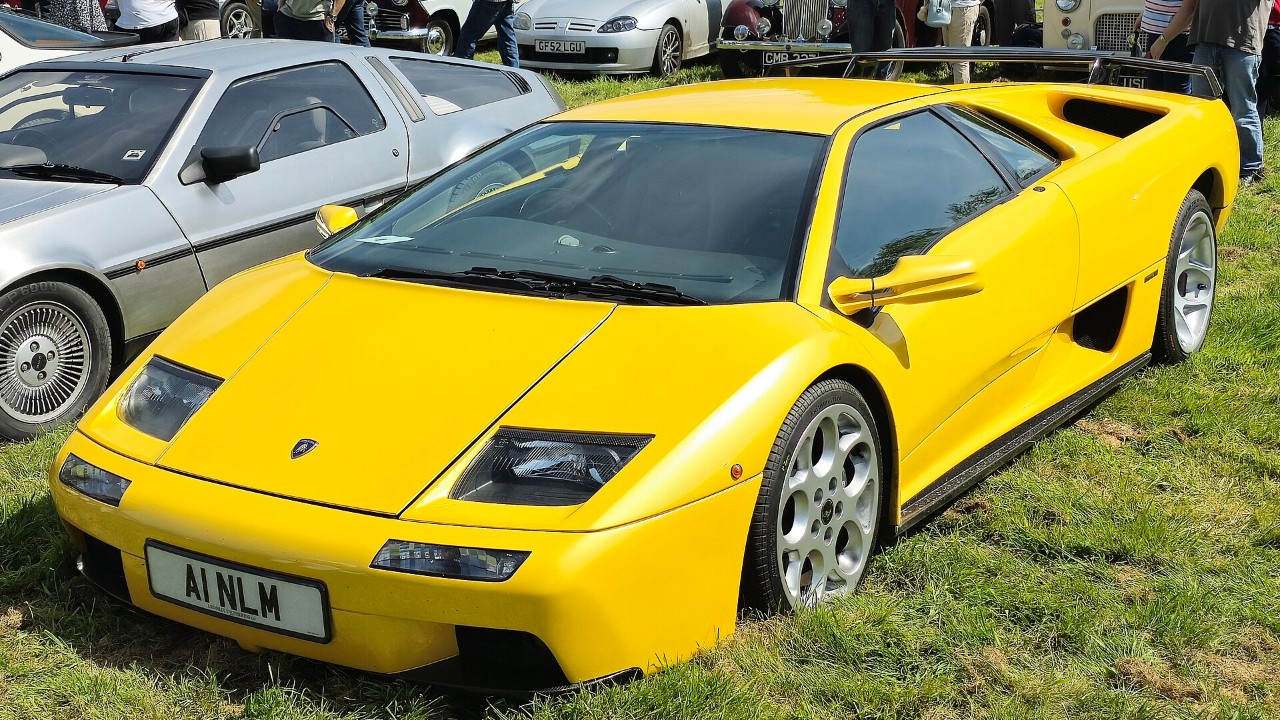
Marcello Gandini drew the first Diablo, and Lamborghini built the V12 car from 1990 to 2001. In 1993, the VT added all-wheel drive through a viscous center differential. The system could send up to 25% of the torque to the front wheels when the rear wheels slipped. VT, in fact, stands for Viscous Traction.
A 1999 facelift swapped the pop-up lights for fixed lamps from the Nissan 300ZX and raised output to 530 PS. Audi bought Lamborghini in 1998, and the final Diablo shows that change. For 2000 and 2001, Luc Donckerwolke restyled the car as the VT 6.0. Its 6.0-liter V12 made 550 PS, or 542 hp. Lamborghini built just 343 VT 6.0 coupes, plus 42 VT 6.0 SE cars. In all, the Diablo line totaled 2,903 cars before the Murciélago replaced it in 2001.
Our take: the VT 6.0 is the Diablo we would choose, and we would not sell it. It keeps the wild Gandini shape and adds a bigger V12 and Donckerwolke’s cleaner styling. For more on this car, see our look at how the Diablo VT became the wild child of its decade.
4. 1991 Toyota MR2 Turbo (SW20)
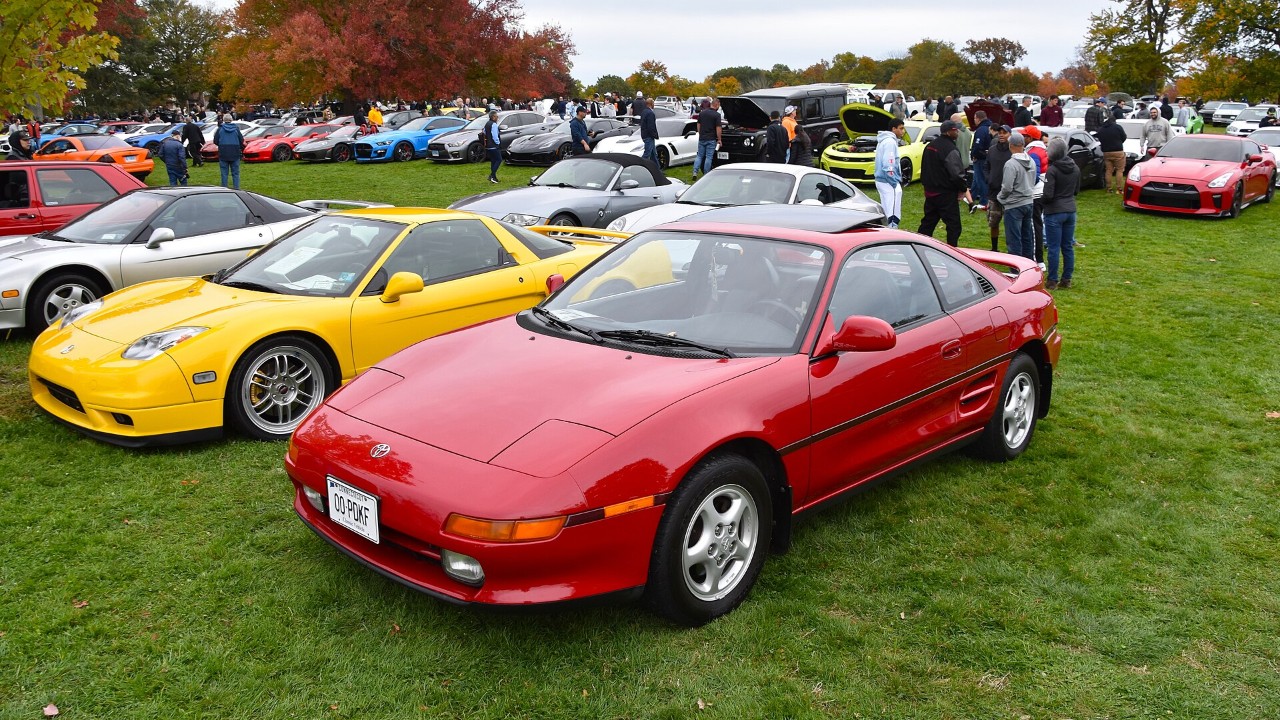
Toyota built the second-generation MR2 from 1989 to 1999, and North American buyers first got it as a 1991 model. The Turbo used a 2.0-liter 3S-GTE four rated at 200 bhp at 6,000 rpm and 200 lb-ft at 3,200 rpm. In the US, it came only with a five-speed manual. It could reach 60 mph in 6.1 seconds.
After journalists reported snap oversteer in early cars, Toyota changed the suspension geometry, tire sizes and power steering in January 1992 for the 1993 model year. Toyota said the updates were “for drivers whose reflexes were not those of Formula One drivers.” The 1991 car in our photo is one of the original Revision 1 cars.
Our take: we would keep an MR2 Turbo because it gives you a mid-engine sports car experience for a fraction of exotic money. It is also a Toyota, so it is far easier to live with. If you buy a 1991 or 1992 car, have the alignment checked by someone who knows SW20s, because the early geometry is less forgiving. Toyota ended American sales in 1995.
5. Porsche Boxster S (986)
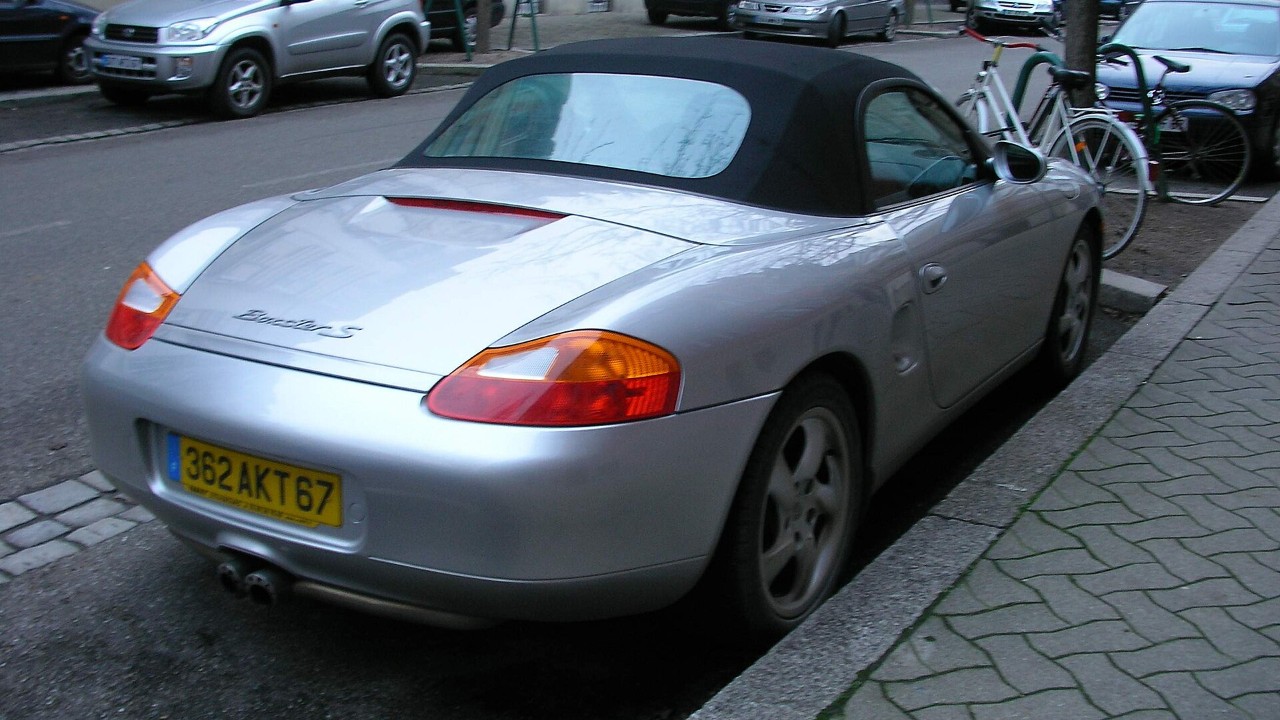
Porsche built the first Boxster, the 986, from 1996 to 2004. It was a two-seat, mid-engine roadster, and Porsche assembled it in Stuttgart and in Uusikaupunki, Finland. The S model used a 3.2-liter flat-six. In 2000 form, it made 250 PS, ran from 0 to 100 km/h in 5.9 seconds with the manual and reached 162 mph.
The Boxster also shared parts with the more expensive 911. Those parts included the hood, front fenders, headlights, interior and engine design. The 986 then became Porsche’s best-selling model until the Cayenne arrived in 2003. We told that story in our piece on how the 1999 Porsche Boxster saved a company.
Our take: the Boxster S is the mid-engine Porsche that most enthusiasts can afford, and we would hang on to a good one. For 2003, output rose to 258 PS, and the manual car cut its 0 to 100 km/h time to 5.7 seconds. Early engines had cracked or slipped cylinder liners and porous blocks, until Porsche redesigned them in late 1999. So if you shop for one, buy a car with a documented engine history.
6. 2016 Lotus Evora 400
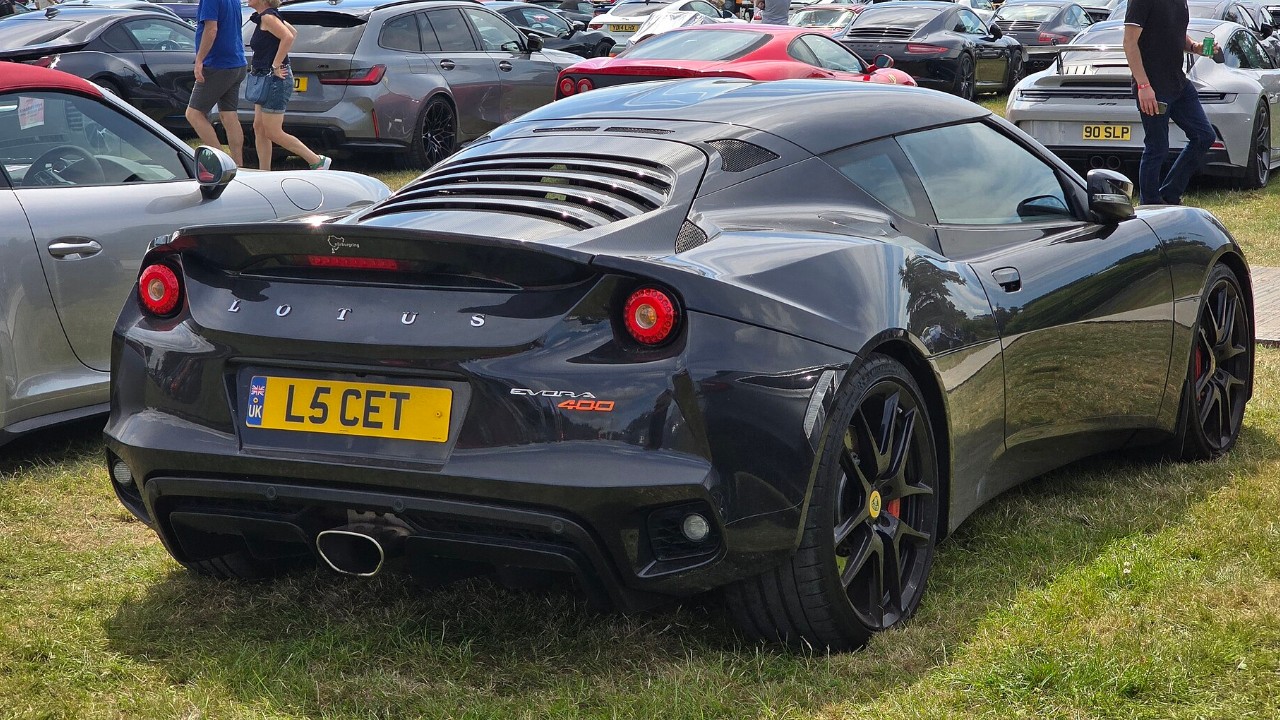
Lotus unveiled the Evora 400 at the 2015 Geneva Motor Show. It replaced the Evora and Evora S, and Lotus said the car was “over two-thirds” new. A supercharged 3.5-liter Toyota V6 made 400 bhp, 55 more than the Evora S, along with 302 lb-ft of torque. The supercharger is an intercooled Edelbrock unit, and a six-speed manual came as standard.
According to Top Gear’s Geneva report, the car ran 0 to 60 mph in 4.1 seconds and reached 186 mph. It also weighed about 22 kg less than before, mostly thanks to lighter seats and engine mounts. Then, on the Hethel test track, it lapped six seconds quicker than the Evora S.
Our take: the Evora 400 is a mid-engine car you can use every day, and that is rare. After all, it has 2+2 seating, a Toyota engine behind the seats and Lotus steering up front. Lotus also narrowed the sills to make getting in and out easier. At launch, Top Gear expected UK prices of about £70,000 to £72,000. In our view, that is a car worth keeping long after the novelty fades.
7. 2008 Audi R8 V8
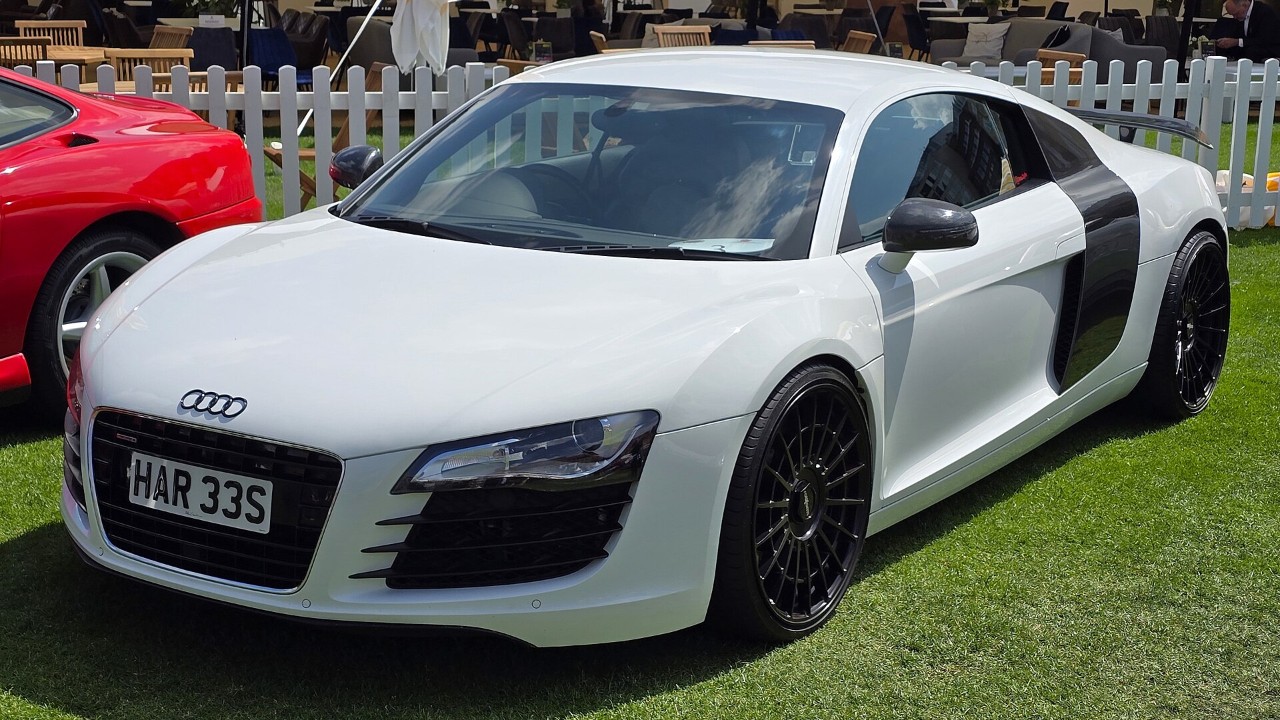
Audi started building the first R8 in June 2006 at Neckarsulm, Germany. The car shared its chassis and some parts with the Lamborghini Gallardo. Its 4.2-liter FSI V8, however, was basically the same engine as the one in the B7 RS4. It made 420 PS, or 414 hp, plus 430 Nm of torque. From 2010, the V8 rating rose to 430 PS, and the first-generation car stayed in production until August 2015. Buyers who wanted more could step up to the V10, which was the engine the R8 shared with the Gallardo.
Buyers could choose a six-speed manual with a metal shift gate, sourced from Lamborghini, or Audi’s R tronic automated manual. The R8 also offered magnetorheological dampers from BWI Group. Then, in 2008, a V8 R8 appeared in the first Iron Man film.
Our take: a gated-manual R8 V8 is one of the best everyday supercars ever built, and we would never sell one. The open metal gate gives it a classic feel that modern paddle-shift cars lack. If you buy one, check the clutch and the damper condition, and ask for the full service history.
8. Saleen S7
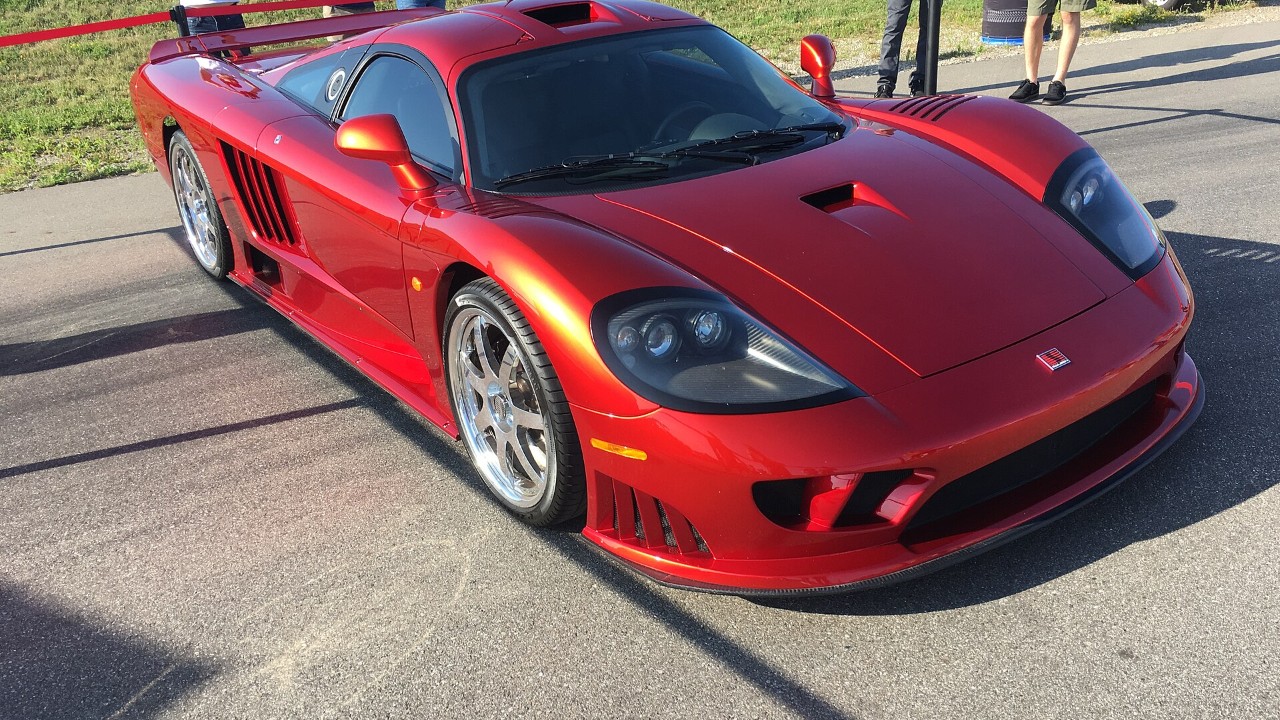
Saleen unveiled the S7 at the Monterey Historic Races on August 19, 2000. It was the company’s first fully in-house car, assembled in Irvine, California, where Saleen also built the chassis and suspension. Behind the cockpit, meanwhile, sat a 7.0-liter, 427-cubic-inch V8. It was a bored and stroked development of Ford’s small-block, and it made 550 hp at 6,400 rpm. Estimates put the original car’s 0 to 60 mph time at 3.3 seconds.
For 2005, Saleen added twin Garrett turbochargers and raised output to 750 hp, with an estimated top speed of 250 mph. The S7 was also America’s sixth mid-engine production sports car, after the Pontiac Fiero, Consulier GTP, Mosler Raptor, Vector W8 and Vector M12. Its racing version was serious, too. In 2004, a Vitaphone Racing S7-R won overall at Imola against Ferrari and Maserati.
Our take: the S7 is the American mid-engine car we would never part with. It is hand-built and loud, and it beat Ferrari and Maserati on track. At the 2010 24 Hours of Le Mans, Larbre Compétition’s S7-R won the LMGT1 class.
More from Fast Lane Only