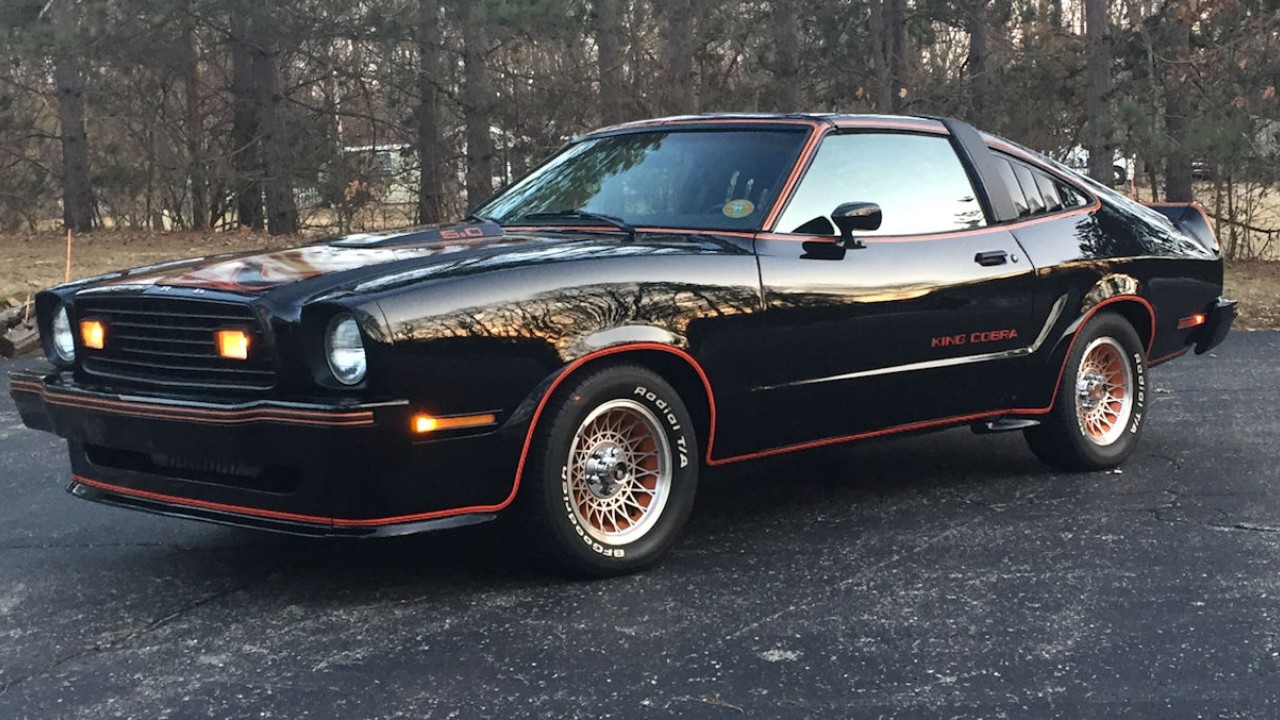
Ford built 4,313 Mustang King Cobras for 1978, and every one wore a giant snake across the hood. Today the Mustang King Cobra sits in a sweet spot that a lot of pony cars share right now. People remember them, yet in our view many sell for less than they deserve.
That window doesn’t stay open forever. After all, buyers who grew up with these cars now have garages and budgets of their own. Meanwhile, we think clean, unmodified survivors get harder to find every year. After all, many owners drove them hard, raced them or modified them.
These are our picks, and the verdict is our opinion. We think each of these eight pony cars is worth buying before the market catches up. The production counts and ratings come from factory figures, road tests and model histories. So the facts are solid even if you disagree with the list.
1. 1978 Ford Mustang II King Cobra
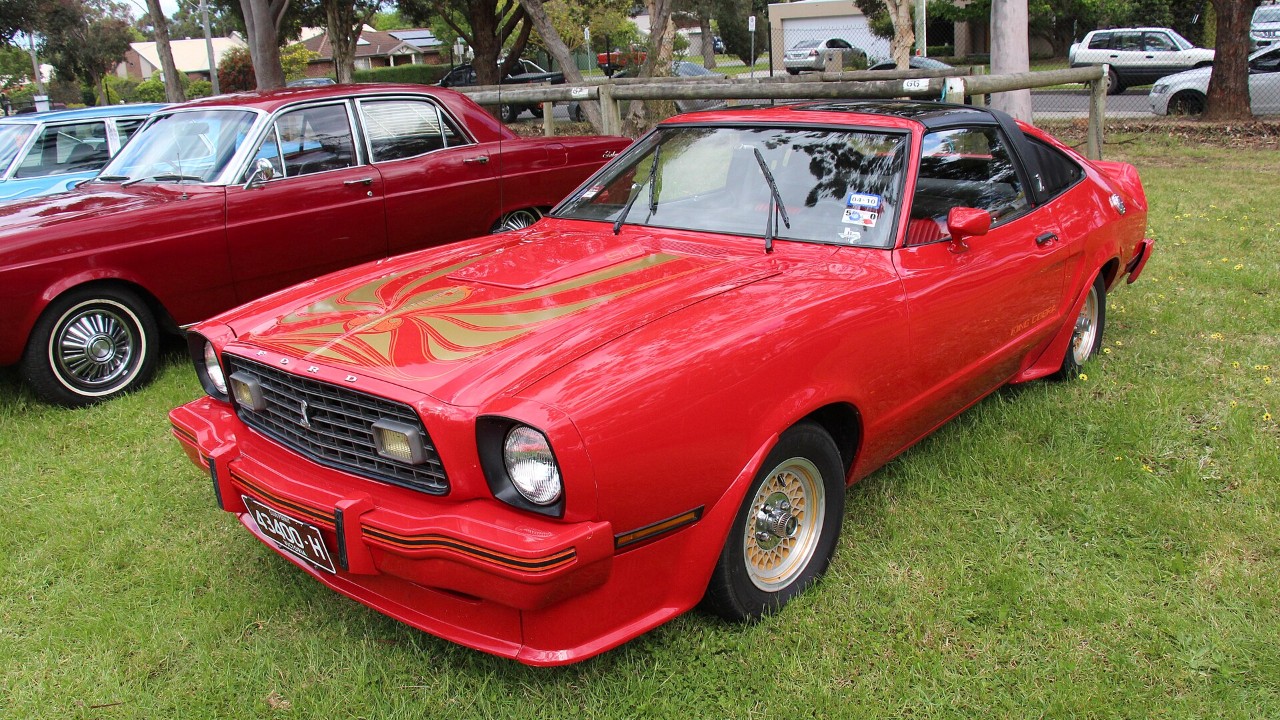
The Mustang II ran from 1974 to 1978, and the King Cobra was its loud goodbye. It came only as a hatchback. Ford added a front air dam, a rear deck spoiler, flares and a reverse-facing hood scoop with a “5.0” decal. Then it painted that huge cobra on the hood. Buyers could pick from six colors: red, silver, black, brown, blue or white.
Under the scoop sat the 302-cubic-inch V8, the only engine offered. According to MustangSpecs’ King Cobra guide, it made 139 hp at 3,600 rpm and 250 lb-ft at 1,600 rpm. It also breathed through a two-barrel carburetor. Buyers split almost evenly, too: 2,017 cars got the four-speed manual and 2,289 got the C4 automatic.
Our take: the Mustang II spent decades as the punchline of pony car history. However, the King Cobra was a one-year package on the last Mustang II. That kind of story tends to age well. So if you shop for a Mustang King Cobra, look for the original decals and spoilers, because they define the car.
2. 1999 Ford Mustang GT 35th Anniversary
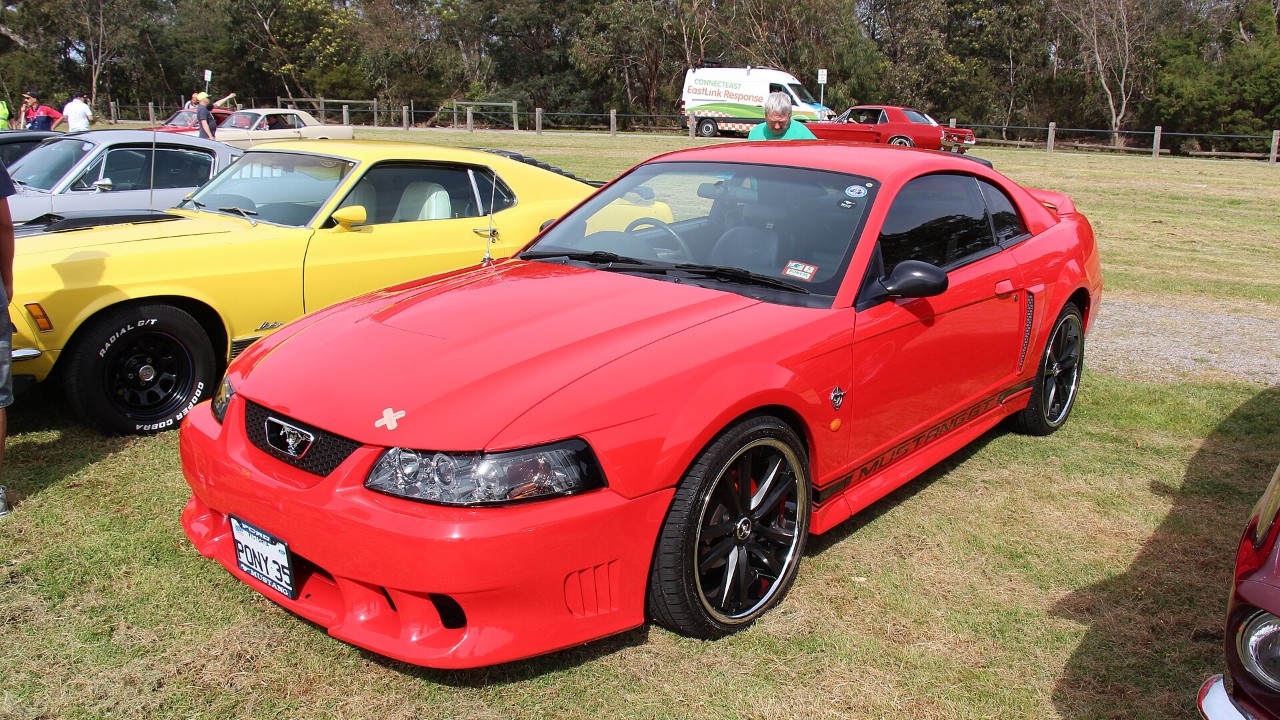
For 1999, the SN95 Mustang got sharper sheet metal and a running horse back in the grille corral. Ford had left it out since 1973. To mark 35 years, both V6 and GT models wore 35th Anniversary fender badges. Ford also sold a Limited Edition GT with its own trim.
The package added a raised hood scoop with a black center stripe, extended side scoops and a wing-style spoiler. It also put a black honeycomb insert in the decklid. According to The Mustang Source’s 1999 timeline, Ford built 4,628 of them, with 2,318 coupes and 2,310 convertibles. In addition, Performance Red was exclusive to this edition, and 1,555 cars wore it.
In our view, this is the anniversary Mustang that people forget about. Its scoops, wing and decklid panel make it easy to spot. That’s why we expect clean, low-mile cars in Performance Red to draw more interest as SN95 buyers come back to the hobby. Keep the original scoops and spoiler, because they are what separate this car from a regular GT.
3. 2002 Chevrolet Camaro SS 35th Anniversary
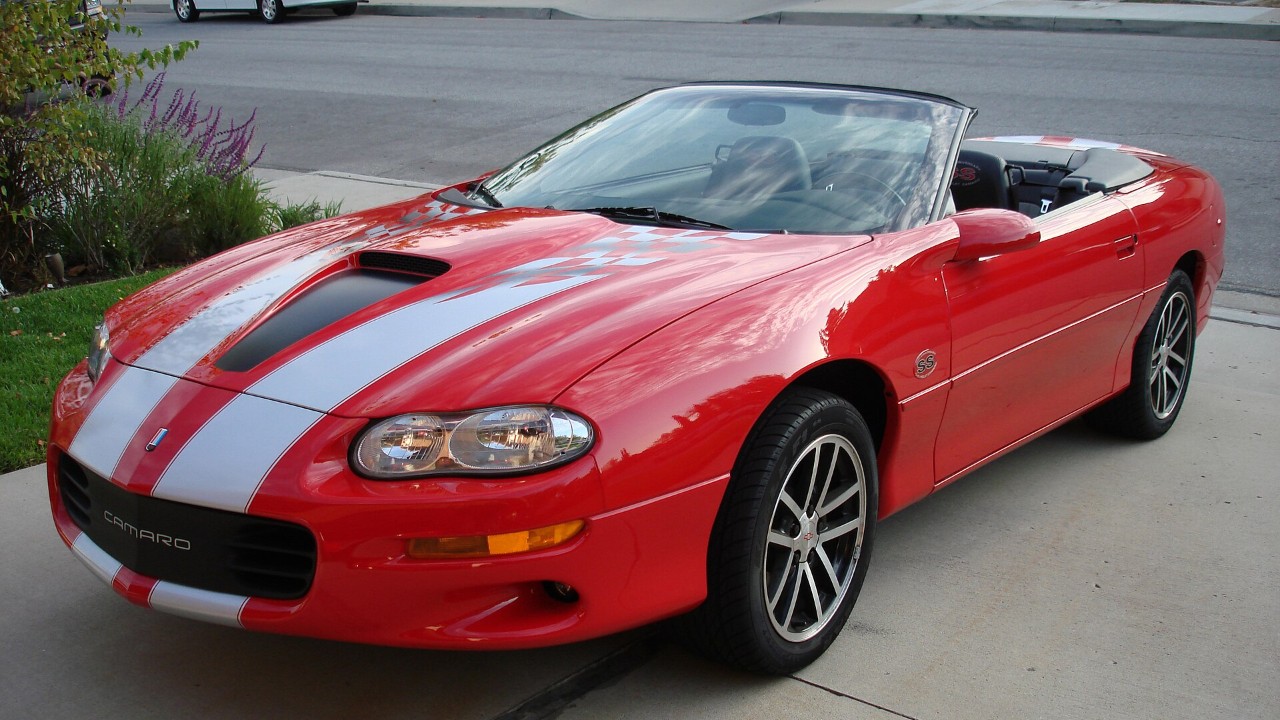
The fourth-generation Camaro ran from 1993 to 2002, and its final year came with a send-off. MotorWeek’s 2002 road test called it “the last year that these icons of American horsepower will be built.” Specifically, the 35th Anniversary SS wore Rally Red paint, wide stripes and special badges.
Power came from GM’s 5.7-liter LS1 V8, rated at 325 hp and 340 lb-ft in the SS. Buyers could also pick a six-speed manual or a four-speed automatic. MotorWeek’s manual car ran 0 to 60 mph in 5.2 seconds and the quarter mile in 13.5 seconds at 108 mph. A fully loaded 35th Anniversary SS stickered at $32,780. MotorWeek had first tested a Camaro Z28 against a Mustang GT back in 1982. As a result, the farewell closed a long chapter.
Our take: final-year cars with a factory anniversary package rarely stay overlooked. Owners modified many fourth-gen Camaros, so an unmolested SS with its stripes and badges intact is the one to chase. We would also save the window sticker and paperwork, since that documentation matters more every year.
If this era of pony car is your thing, we also rounded up 11 underrated pony cars worth another chance.
4. 1996 Ford Mustang SVT Cobra
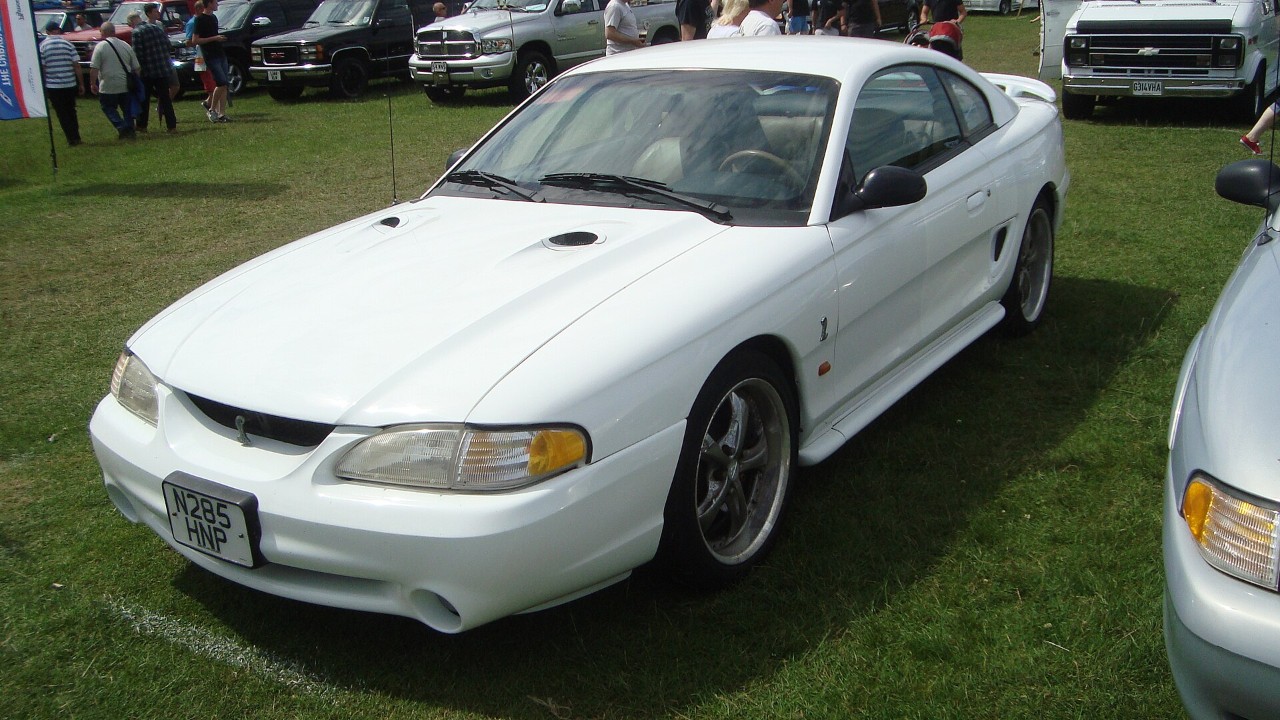
For 1996, the SVT Cobra traded the old pushrod 5.0 for something new. Instead, it got a 4.6-liter, 32-valve DOHC V8 with an aluminum block cast by Teksid of Italy. It was the first Mustang with the aluminum version of the modular V8. Ford also needed a new domed hood to fit it.
The MustangSpecs guide to the 1996 Cobra lists 305 hp at 5,800 rpm and 300 lb-ft at 4,800 rpm. Ford built 10,006 that year, split into 7,496 coupes and 2,510 convertibles. In addition, about 2,000 wore Mystic, the color-shifting paint that debuted on this car. The same guide quotes a 0-to-60 time of 5.5 seconds. It also had a dual-runner intake whose secondary runners stayed shut until about 3,000 rpm.
We like this car because it marks a turning point. After all, it replaced the 5.0 that Ford had used before. Mystic cars get the headlines, but any clean, documented 1996 Cobra is worth a look. Before you buy, check the engine for its original intake and service history. A high-revving four-cam V8 rewards careful owners.
5. 2000 Pontiac Firebird Trans Am WS6
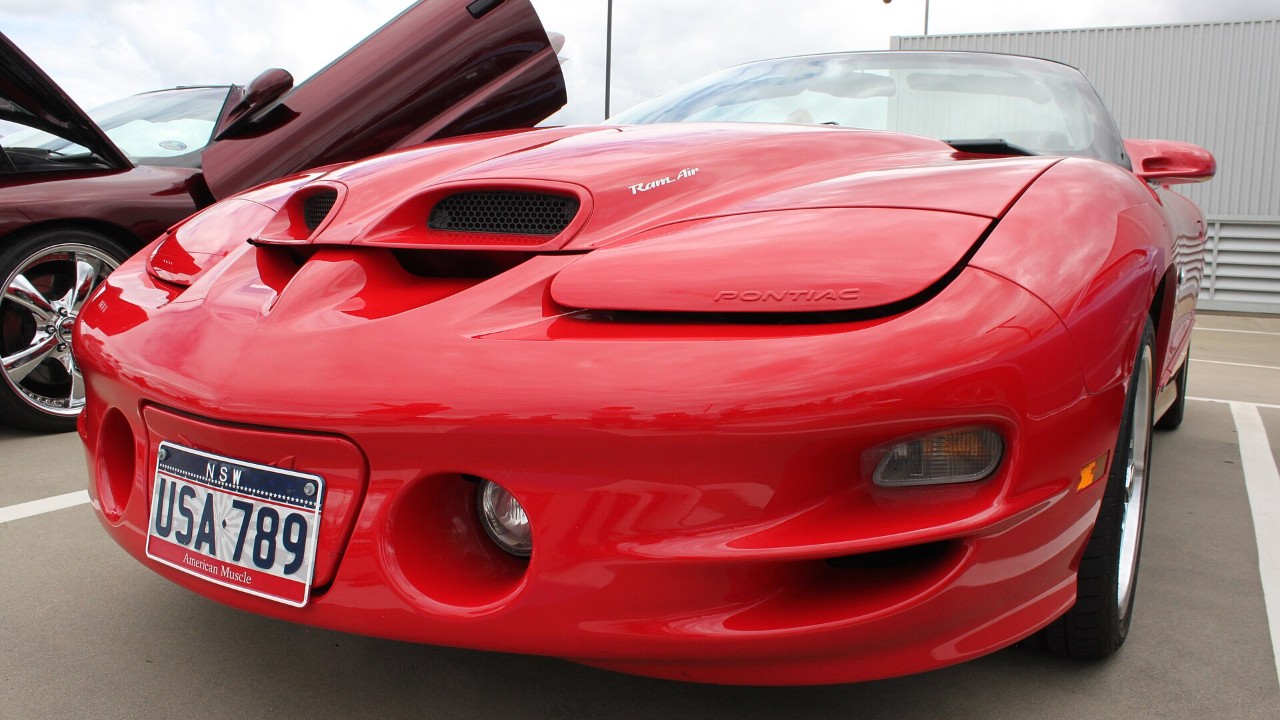
The Firebird ran as a pony car from 1967 to 2002. Late in that run, the WS6 package gave its last generation real teeth. It brought a functional dual-inlet Ram Air hood, 17-by-9-inch wheels with 275/40ZR17 tires, suspension upgrades and oval dual tailpipe tips. Finally, a WS6 badge finished the job.
By 2000, the hardware under that hood was the 5.7-liter LS1 V8. A Washington Post review of a 1999 Trans Am tested that setup. It listed the WS6 Ram Air engine at 320 hp and 335 lb-ft. Meanwhile, the hood scoops on a WS6 were not just styling. Instead, they fed the engine. Back in 1996, the first Ram Air WS6 had lifted the older LT1 from 285 to 305 hp.
Our take: the LS1 WS6 delivers modern V8 performance in a shape that looks wild to this day. Plenty of Trans Ams lived hard lives. That’s why a well-kept WS6 with sealing T-tops and an untouched Ram Air hood is worth paying up for. Ask for the build sheet or option codes, since the WS6 is easy to fake with parts. Our list of Firebirds that showed what Pontiac could really build covers more of the family.
6. 1979–1981 Mercury Capri RS Turbo
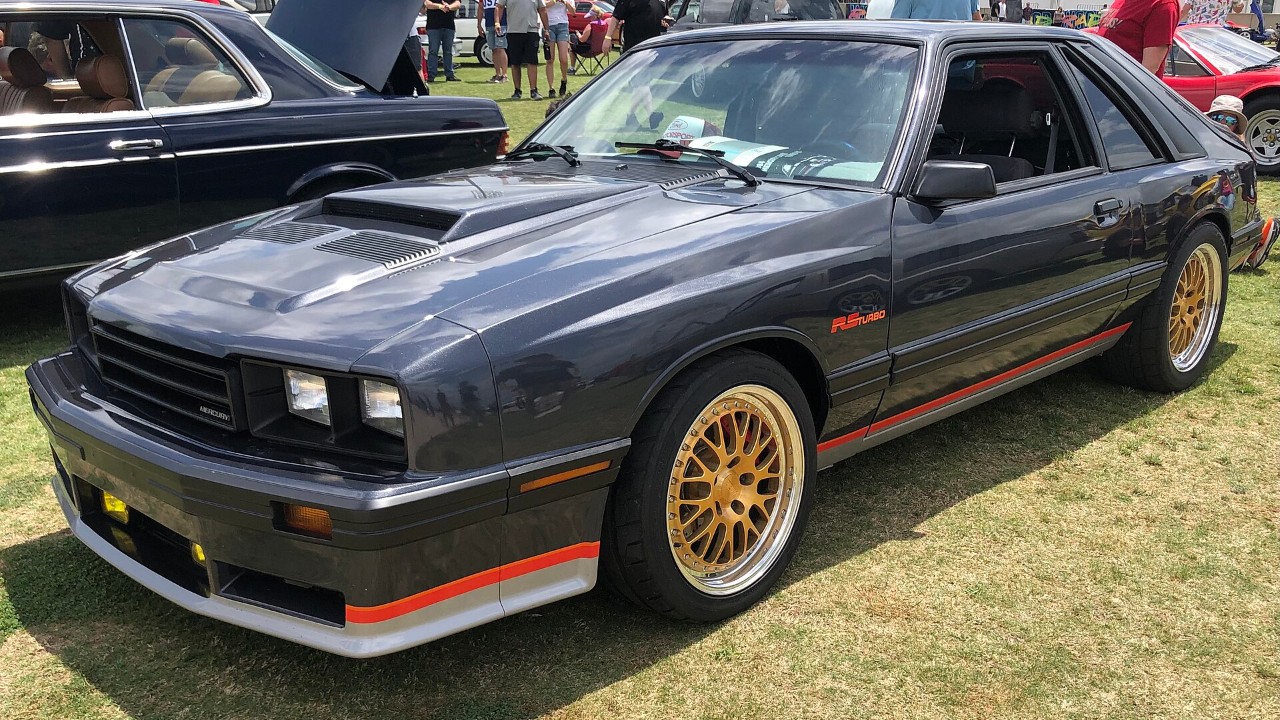
For 1979, Mercury gave its Capri the same Fox platform as the new Mustang. That made the Capri the Mustang’s badge-engineered twin, with its own grille, flared fenders and taillights. It stayed in production through 1986, according to Classic Industries’ history of the 1979–1986 Capri.
At first, the RS Turbo used Ford’s turbocharged 2.3-liter four with a carburetor. A Curbside Classic look at the Capri RS Turbo puts the 1979–1981 engine at 130 hp. It also notes drivability problems. A fuel-injected turbo with 145 to 150 hp followed for 1983, after Ford developed it for the new Thunderbird. That same year, Mercury gave the Capri a compound-curve “bubble-back” rear window to set it apart from the Mustang.
In our view, this is the pony car most people walk past at a show. It shares its platform with the Mustang, yet it has its own look. Cars like that tend to climb once people notice. If you want one, buy the most complete car you can find. We expect Capri-only body and interior pieces to be harder to find than Mustang parts.
7. 1993 Ford Mustang LX 5.0 Convertible
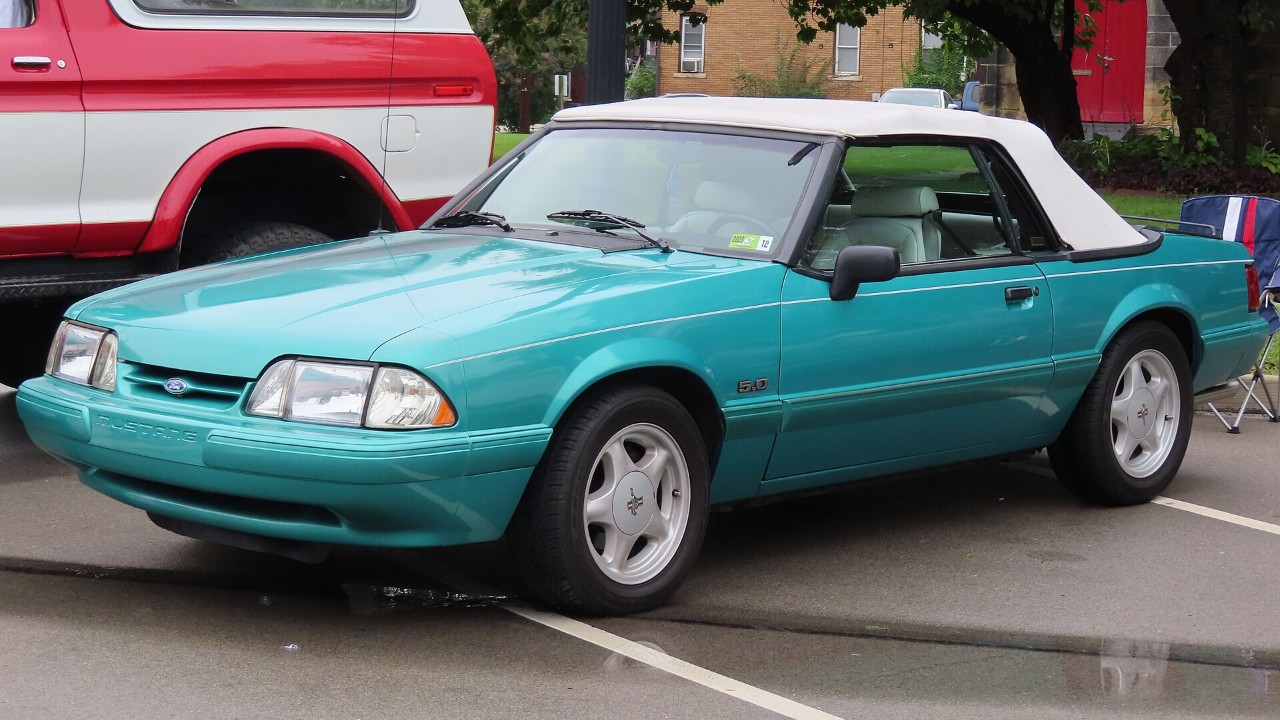
The Mustang convertible returned for 1983 after a nine-year absence, and the Fox body kept it through 1993. That year also ended a 15-year run. The last Fox-body car left the line on August 26, 1993. By then, Ford had built more than 2.5 million Fox Mustangs since 1979.
For 1993, Ford restated the output of its 5.0 V8 in both the GT and the LX. Hagerty’s 1993 Mustang 5.0 LX entry lists the 302 at 205 hp and 275 lb-ft with sequential fuel injection. Ford had changed the numbers because the older ratings predated the mass airflow system and later cam changes. Hagerty also notes a Special Edition LX 5.0 convertible with white wheels, a white top and a unique spoiler.
Our take: the LX 5.0 was the lighter, plainer way to get Ford’s V8, and the convertible adds open-air fun to the mix. Final-year Fox cars carry extra appeal for collectors. Overall, Ford sold 114,335 Mustangs that year, and 4,993 were SVT Cobras. So look for a stock car with the original top mechanism. Also, budget for a fresh top if the one on the car is tired.
8. 2011 Dodge Challenger SRT8 392
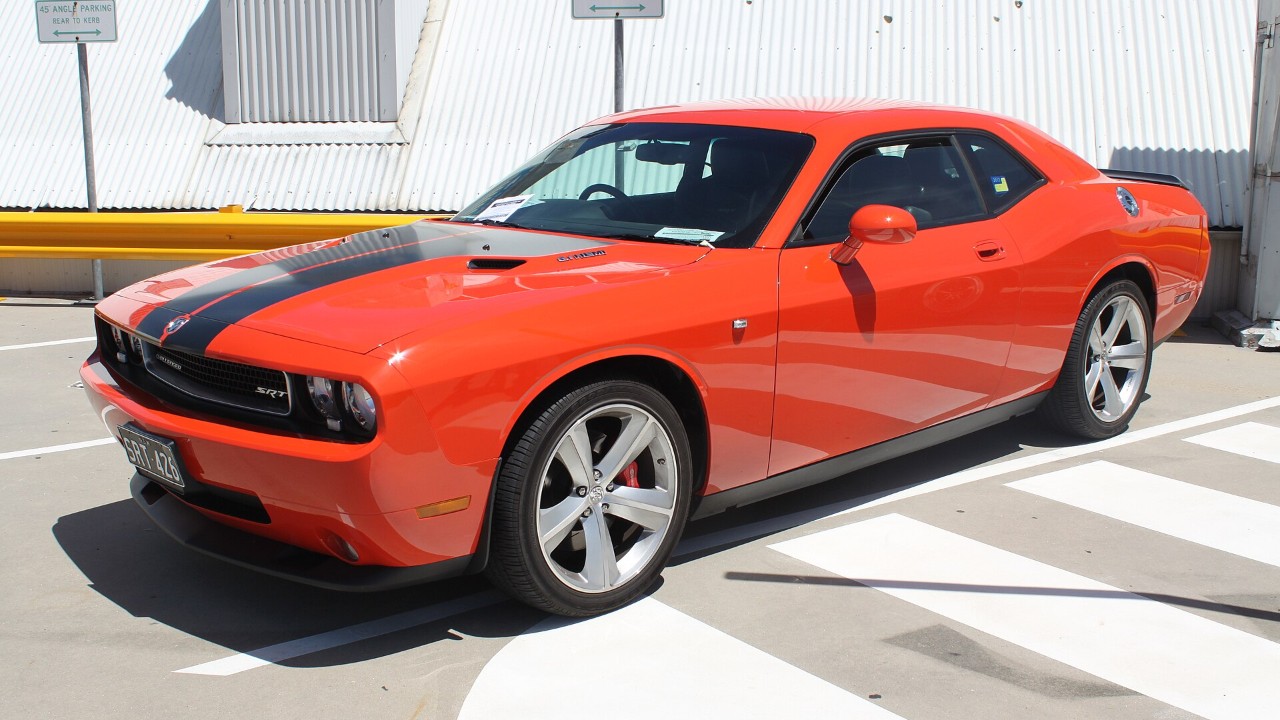
Dodge showed the Challenger concept at the 2006 Detroit auto show. Then the production car landed for 2008 to take on the Mustang and Camaro. All 7,119 Challengers sold as 2008 models were SRT8s with a 6.1-liter Hemi. Then the 2011 model brought a bigger engine and a new name, SRT8 392.
Dodge rated the 6.4-liter Hemi at 470 hp and 470 lb-ft of torque. The 2011 SRT8 also gained a two-mode adaptive suspension. Elsewhere in the 2011 lineup, the 3.6-liter Pentastar V6 replaced the old six and the base SE became the SXT. Like every modern Challenger, it came from Brampton Assembly in Ontario, Canada. Our roundup of Challengers that showed what Dodge could really build covers more of the line.
We think the 392 cars are where early modern Challengers start to look like collectibles. The 392 badge and the adaptive suspension make it a clear step up from the 2008 car. Before buying, check for a clean history and stock suspension, because owners modified many of them. Challenger production ended on December 22, 2023. The final car, a Pitch-Black Demon 170, left the Brampton plant that day.
More from Fast Lane Only