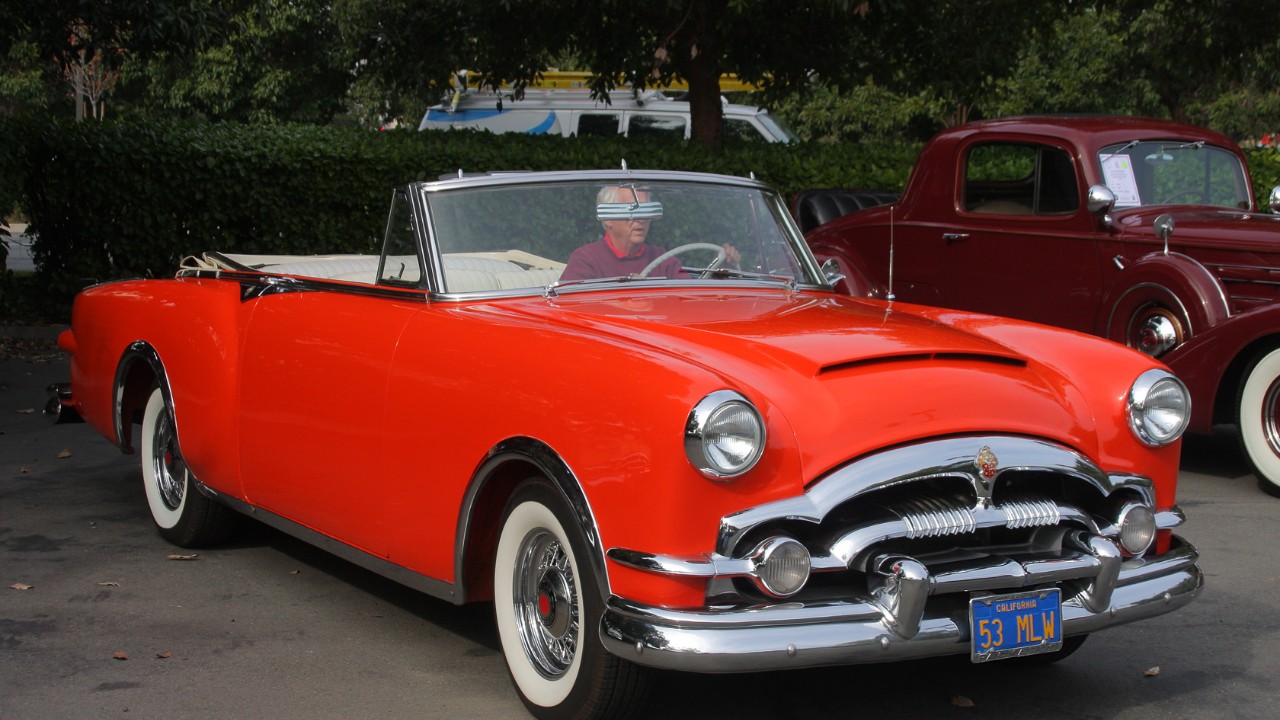
Packard built 750 copies of its 1953 Packard Caribbean, and that was a big run by the standards of this list. Detroit loved a halo convertible in the 1950s and 1960s. However, halo cars cost a fortune to build, so makers often ran them in tiny batches and then moved on.
The muscle years added their own low-production open cars. Most buyers of those cars picked a hardtop, so the drop-top versions of a few famous nameplates ended up in the hundreds, not the thousands. In fact, one muscle-era convertible below had a smaller run than any 1950s car on this list.
These are our 12 picks, the convertibles we think you are least likely to see roll across a block. The rarity call is our opinion. The production counts, engines and prices behind it come from auction catalogs, car magazines and model histories.
1. 1953 Packard Caribbean
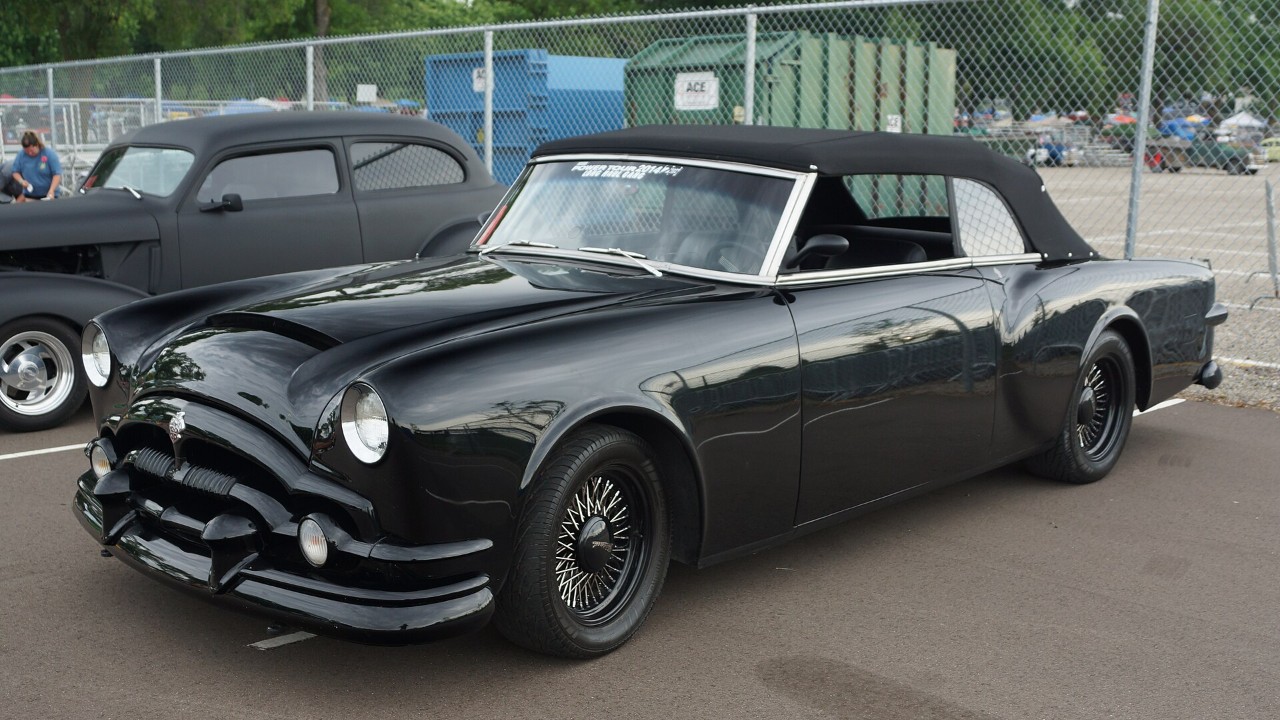
Packard’s Caribbean answered the new crop of sporty luxury convertibles, and it came only as a convertible from 1953 through 1955. For the first year, Packard did not build the body in the usual way. Instead, the Mitchell-Bentley Corporation of Ionia, Michigan, modified the bodies, taking over from longtime body supplier Briggs.
Those changes show up all over the car. It had fully open rear wheel arches, a chrome band along the lower body and a broad, low hood scoop leaded into the sheet metal. Meanwhile, a steel Continental spare sat out back. Under the hood, the 327-cubic-inch Thunderbolt straight-eight made 185 horsepower. Leather, power windows, a power seat and power steering all came standard.
All of that cost $5,210 in 1953, and Packard built 750 cars that first year. If you want more on how the Caribbean changed later, our look at six Packard Caribbeans most collectors never spot picks up the story. Our take: the 1953 Packard Caribbean is the purest of the bunch, because it is the one Packard built first.
2. 1960 Chrysler 300F convertible
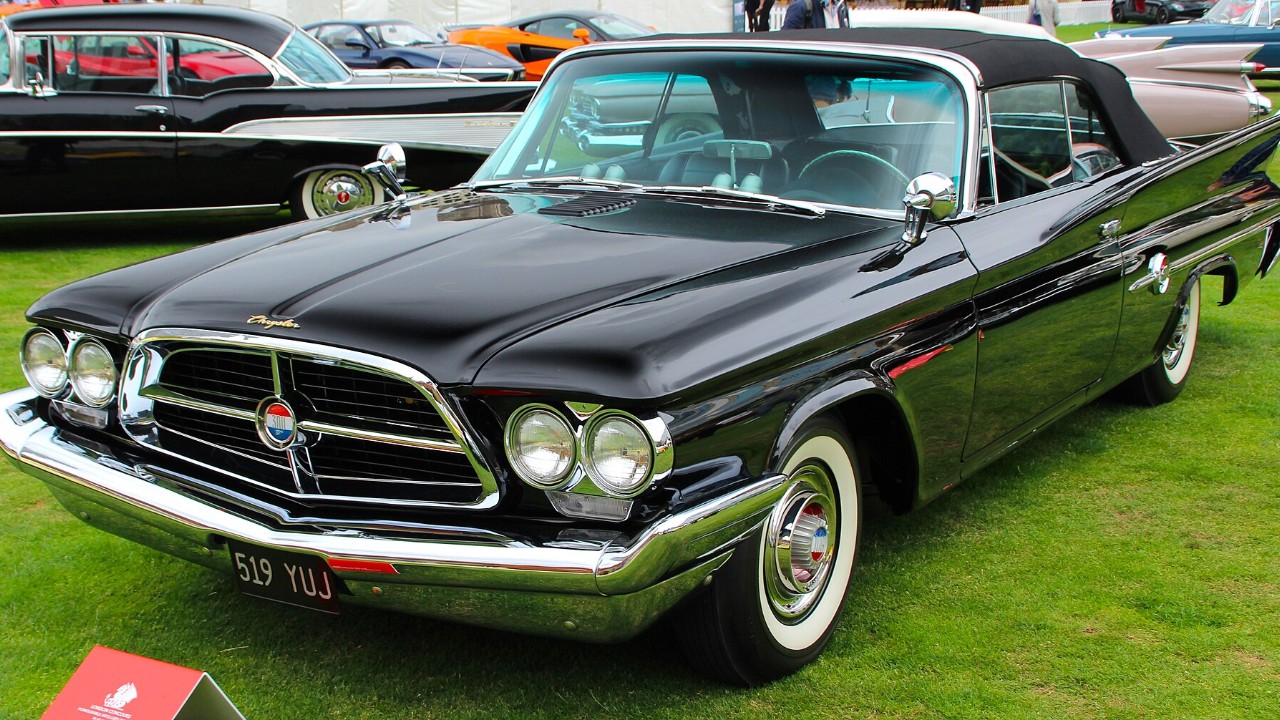
Chrysler’s letter-series 300 was a big, fast luxury car, and 1960 brought big changes. The 300F moved to Chrysler’s new lightweight unibody construction. It also gained swiveling front seats as standard equipment, so you could turn toward the door before climbing out. The driver worked them by hand, and they were not tied to the door.
The engine story is even better. A 413-cubic-inch wedge V8 with Cross-Ram induction made 375 horsepower. Its long tuned intake pipes crossed over the engine, so each carburetor fed the opposite bank. In addition, a short-ram racing version made 400 horsepower, and Chrysler built just 15 of them with a French Pont-à-Mousson four-speed manual.
Chrysler built 969 300F coupes and only 248 convertibles. The convertible listed at $5,841, against $5,411 for the hardtop, which helps explain those numbers. For the wider letter-car family, see our rundown of seven Chrysler 300 letter cars. In our view, the 300F convertible is the best mix of muscle and luxury that Chrysler ever sold in such small numbers.
3. 1968 Shelby GT500KR convertible
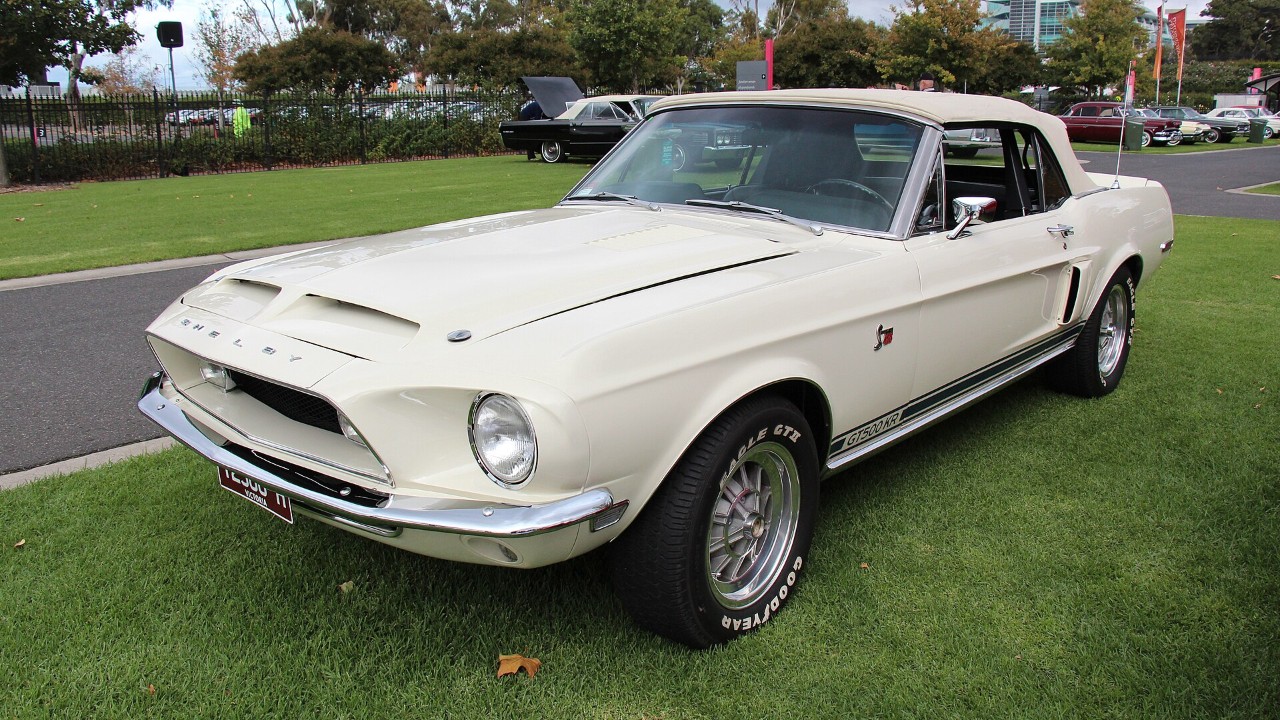
Carroll Shelby revised the GT500 in the middle of the 1968 model year, and the result wore a bold new name. KR stood for “King of the Road.” The key change sat under the hood, in the form of the new 428 Cobra Jet V8.
Ford rated the Cobra Jet at 335 horsepower and 440 lb-ft of torque at 3,400 rpm. Ford had started factory-installing the Cobra Jet in April 1968. Even so, the KR was a one-year car, because Shelby built no GT500KRs after 1968. The model returned as a plain GT500 for 1969.
According to RM Sotheby’s catalog for a red 1968 GT500KR convertible, production totaled 933 coupes and only 318 convertibles. That car had a four-speed, air conditioning, a power top, a roll bar and 10-spoke Shelby aluminum wheels, and it sold for $137,500 at Auburn in 2014. Our take: if you want a Shelby you will almost never see parked next to yours, this is it.
4. 1970 Plymouth Road Runner convertible
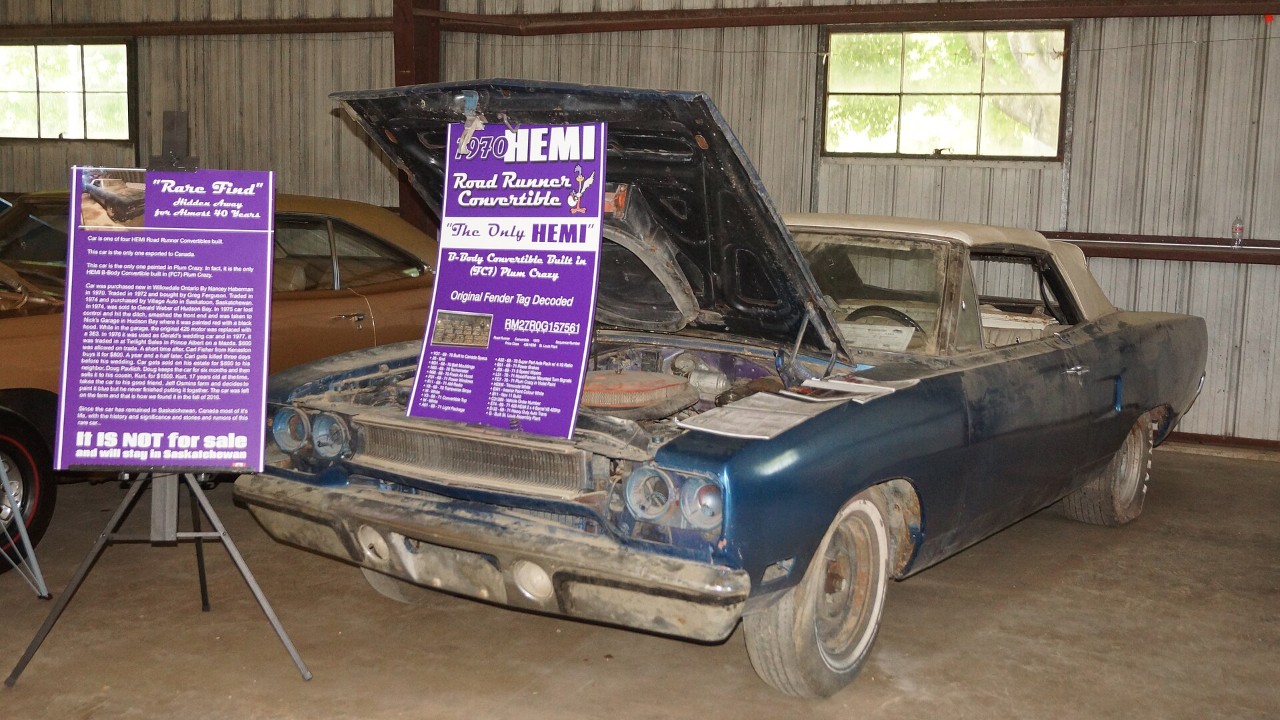
The Road Runner started as a cheap, stripped muscle car, so a convertible seemed like an odd fit. Plymouth added one for 1969 anyway and built 2,128. All but ten of those had the 383, and the other ten had the Hemi. Then 1970 became the second and last year of the Road Runner convertible, and output fell to just 834 cars.
The 1970 car kept the 383 as its standard engine, with the 440 Six Barrel as an option. You could also order the 426 Hemi. However, Plymouth built only three Hemi convertibles, plus one more that went to Canada. That is a tiny number even by muscle-car standards.
Plymouth also redesigned the Air Grabber hood for 1970. A switch under the dash raised the scoop with a vacuum servo and showed off shark-tooth decals. Meanwhile, High Impact colors such as In-Violet, Moulin Rouge and Vitamin C made these cars hard to miss. In our view, a 1970 convertible in one of those colors is about as loud as 1970 got.
5. 1970 Chevrolet Chevelle SS 454 convertible
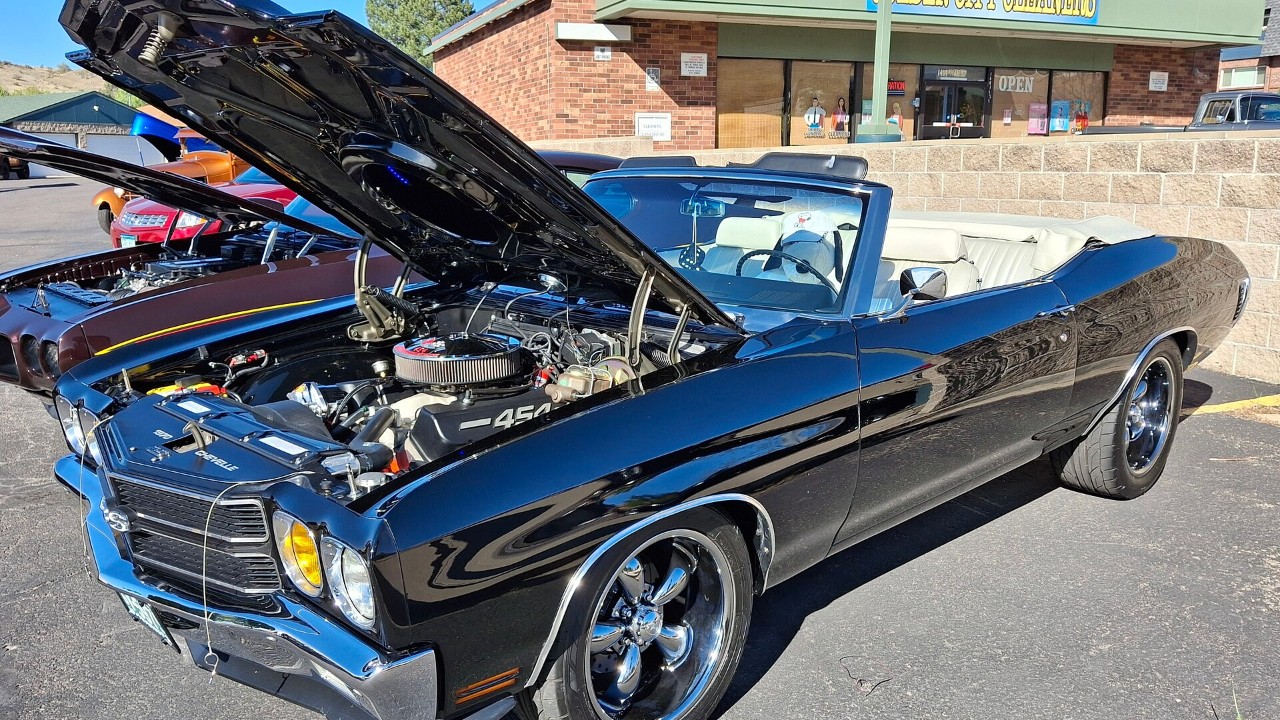
Chevrolet launched the SS 454 version of the Chevelle for 1970, and it came with two very different engines. The LS5 454 had an advertised 360 horsepower and 500 lb-ft of torque. Above it sat the LS6, a four-bolt-main 454 that Chevrolet conservatively rated at 450 horsepower. It also made 500 lb-ft, but at 3,600 rpm instead of 3,200.
Old Cars Weekly reports that Chevrolet sold 4,475 LS6 cars and 4,298 LS5 cars that year. However, no breakout exists for coupes, convertibles and El Caminos. That is why nobody can give you an exact convertible count. The same Old Cars Weekly feature on an LS6 convertible cites an estimate of fewer than 100 LS6 convertibles.
So the SS 454 convertible sits in an odd spot. Chevrolet built plenty of Chevelles, with 442,046 Malibu and Chevelle models in the U.S. and Canada for 1970. Yet the open-top big-block car is a needle in that haystack. Our take: if you find one, check the paperwork twice before you pay a big-block price.
6. 1968 Plymouth GTX convertible
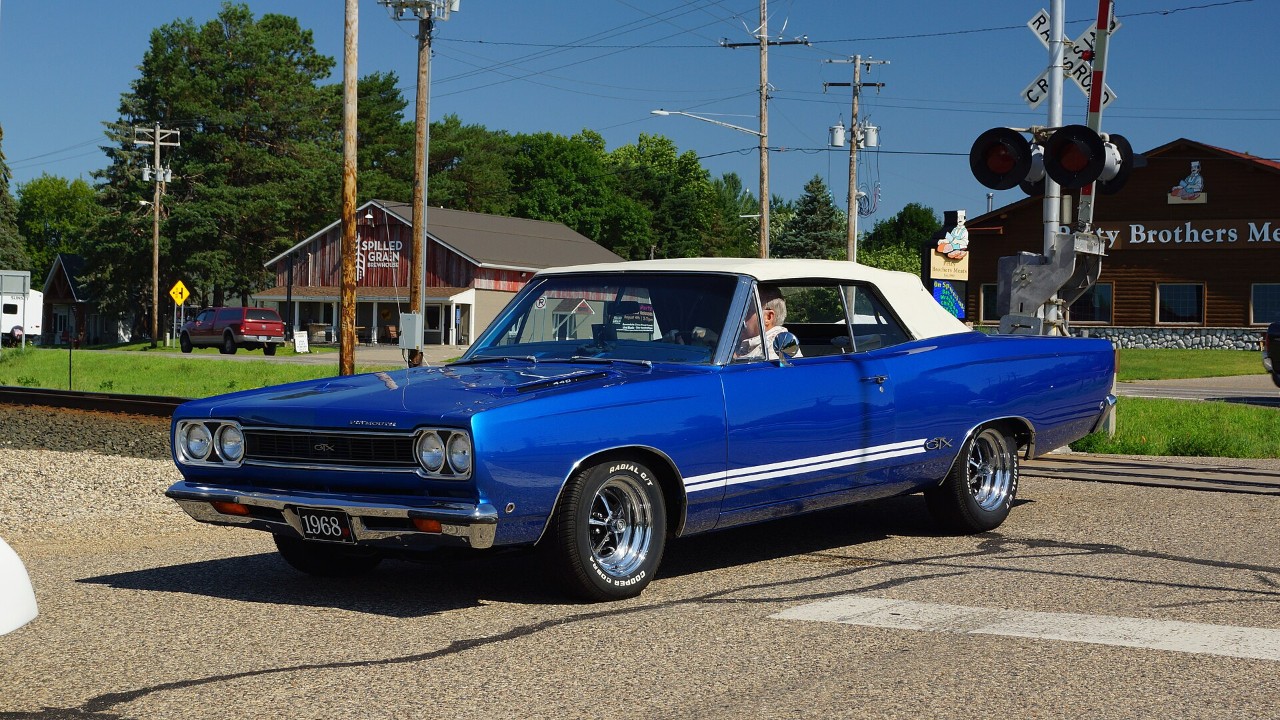
The GTX was Plymouth’s gentleman’s muscle car, a nicer-trimmed sibling to the bare-bones Road Runner. For 1968, a 440 V8 rated at 375 horsepower came standard. On top of that, the 426 Hemi was optional at 425 horsepower. That gave the GTX a big engine as standard, not as an extra.
The convertible had a short life. Plymouth offered the GTX convertible only for 1968 and 1969, and then dropped it for 1970. Total production for the 1969 GTX convertible was just 701 cars. We could not confirm a 1968 convertible count, so we won’t guess at one here.
What we can say is that the GTX convertible gets overlooked next to the Road Runner. It had the bigger standard engine and the nicer cabin, and it lasted only two seasons. In our view, a 1968 GTX convertible with the 440 is a smarter buy than a hardtop, if you ever get the chance.
7. 1957 Dodge Custom Royal D-500 convertible
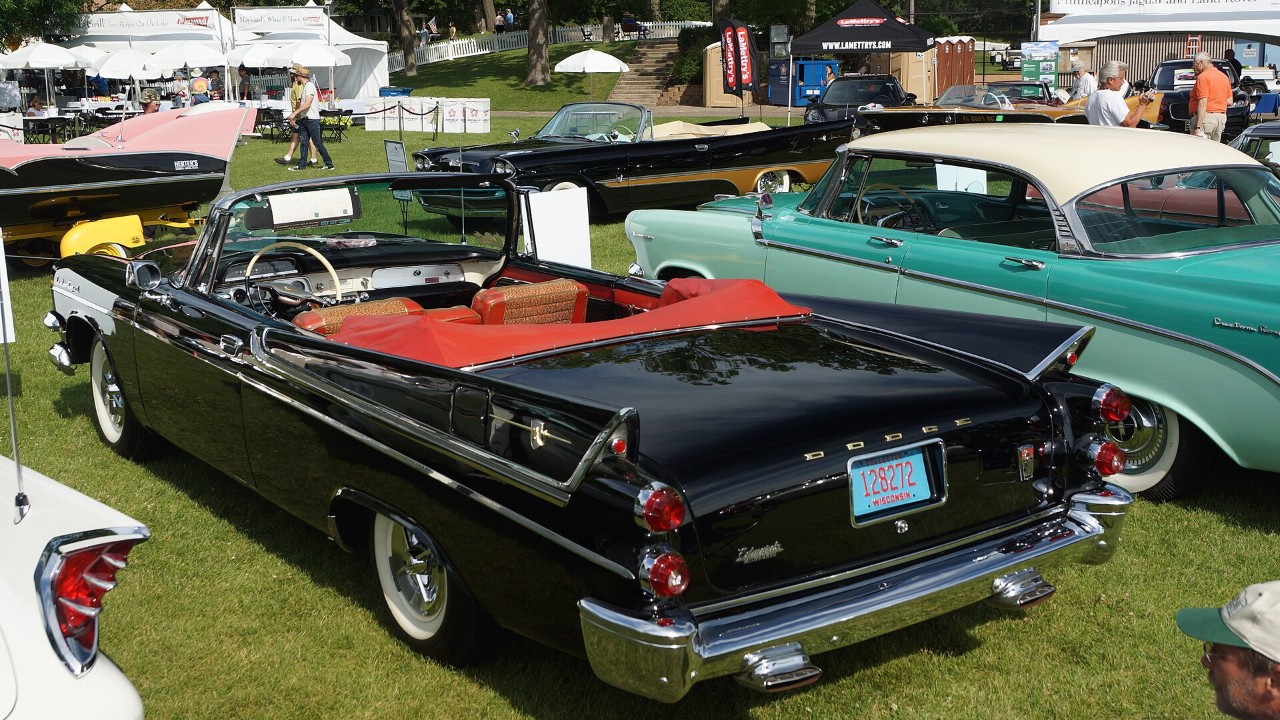
Dodge’s 1957 cars wore Virgil Exner’s “Forward Look” styling, with long fins and a low stance. Under the skin, Dodge’s new Torsion-Aire front suspension used torsion bars and anti-dip control arms. RM Sotheby’s calls that system a revelation for the company.
The D-500 package was the performance option. It took the 325-cubic-inch V8 and added a pair of Hemi cylinder heads, new pistons and hydraulic lifters. It also brought dual exhaust and a Carter four-barrel. The result was conservatively rated at 285 horsepower, nearly 10 percent more than the base engine.
Dodge built 2,456 Custom Royal Lancer convertibles for 1957. Some Mopar experts estimate that fewer than 125 of them had the D-500 package, according to RM Sotheby’s Hershey 2023 catalog. That car sold for $46,750. Our take: for the money, few rare 1950s convertibles offer this much engineering.
8. 1953 Cadillac Eldorado convertible
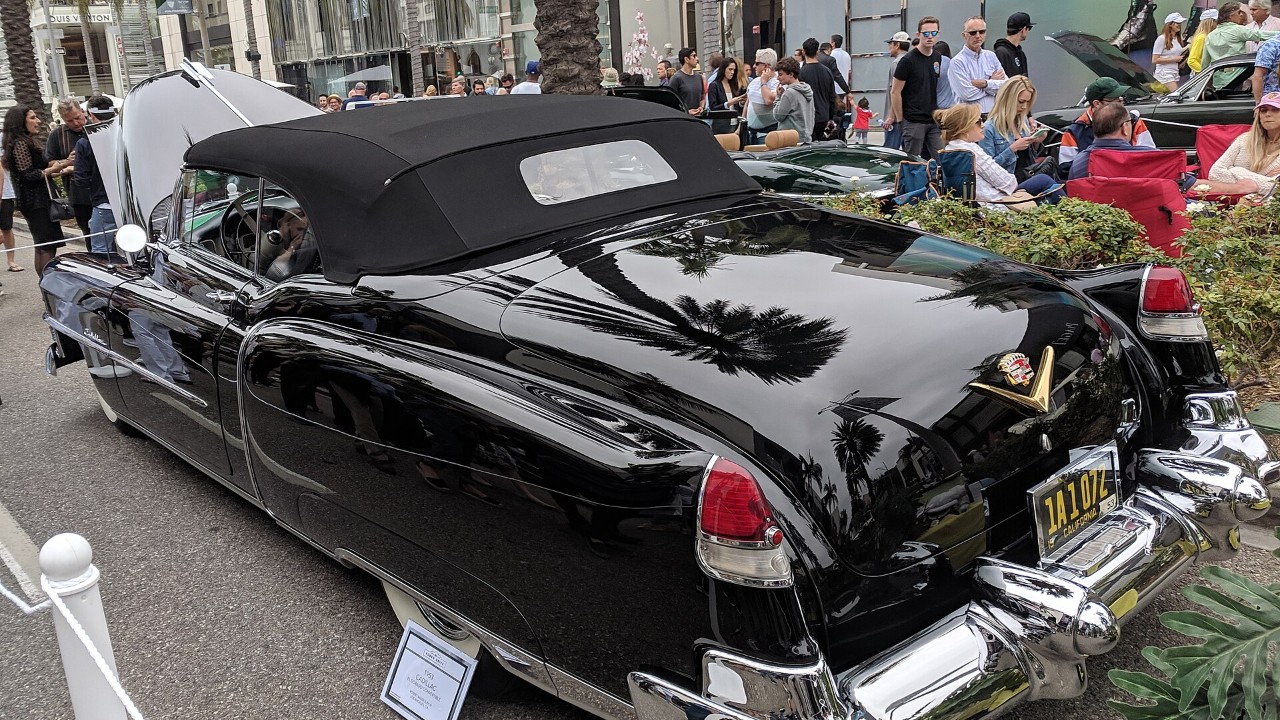
The first Eldorado was a show car for the street. Cadillac built it as a special version of the Series 62 convertible and shared that car’s engine. Even so, the Eldorado brought something new to Cadillac, because it introduced the wraparound windshield and a cut-down beltline.
A hard tonneau cover sat flush with the rear deck and hid the folded top. Meanwhile, a dip in the sheet metal at the bottom of the side windows set the body apart. Together, those touches gave the car a clean, low look. However, the price was steep. At $7,750, the Eldorado cost nearly twice as much as the Packard Caribbean.
Cadillac produced only 532 Eldorados for 1953, just 0.5 percent of its sales that year. We have covered the later, more lavish cars in our look at eight loaded Cadillac Eldorados. In our view, the 1953 car is the one to want, because it started the whole Eldorado line.
9. 1953 Oldsmobile Fiesta
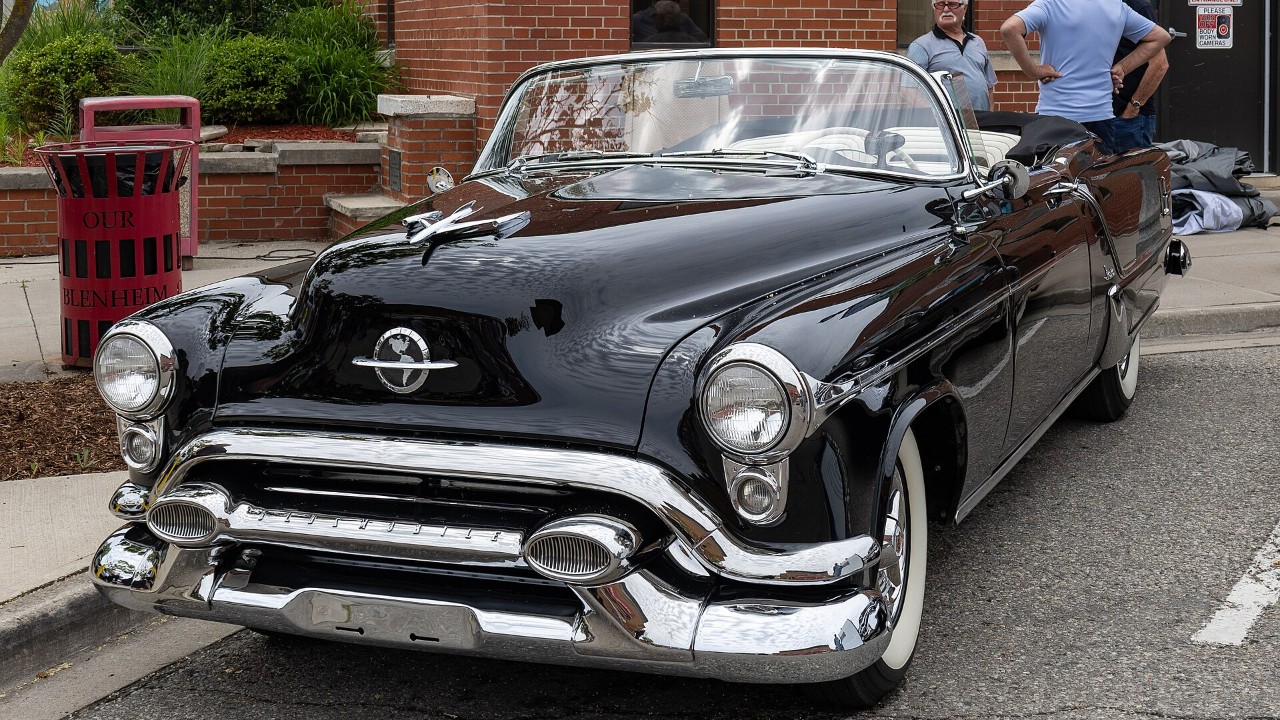
Oldsmobile’s Fiesta was the third of GM’s 1953 specialty convertibles, next to the Eldorado and the Buick Skylark. Its key feature was the Panoramic windshield. Harley Earl’s team developed it with Libbey-Owens-Ford, and it sat three inches lower than the standard 98’s glass.
The Fiesta came with almost every gadget Oldsmobile offered. That list included a hydraulic power top, windows and seats, plus the Autronic Eye automatic headlamp dimmer. A special 303-cubic-inch Rocket V8 made 170 horsepower, five more than other Oldsmobiles. Oldsmobile got there with a higher 8.3:1 compression ratio and a streamlined manifold. Buyers could also pick two-tone leather and two-tone paint. Its three-bar wheel covers became so popular with customizers that people call them “Fiesta spinners.”
At $5,715, the Fiesta cost nearly double a regular Ninety-Eight convertible. According to Mac’s Motor City Garage, only 458 Fiestas found buyers before Oldsmobile dropped it after one year. Our take: the Fiesta is the most overlooked of GM’s three 1953 dream-car convertibles.
10. 1962 Chrysler 300H convertible
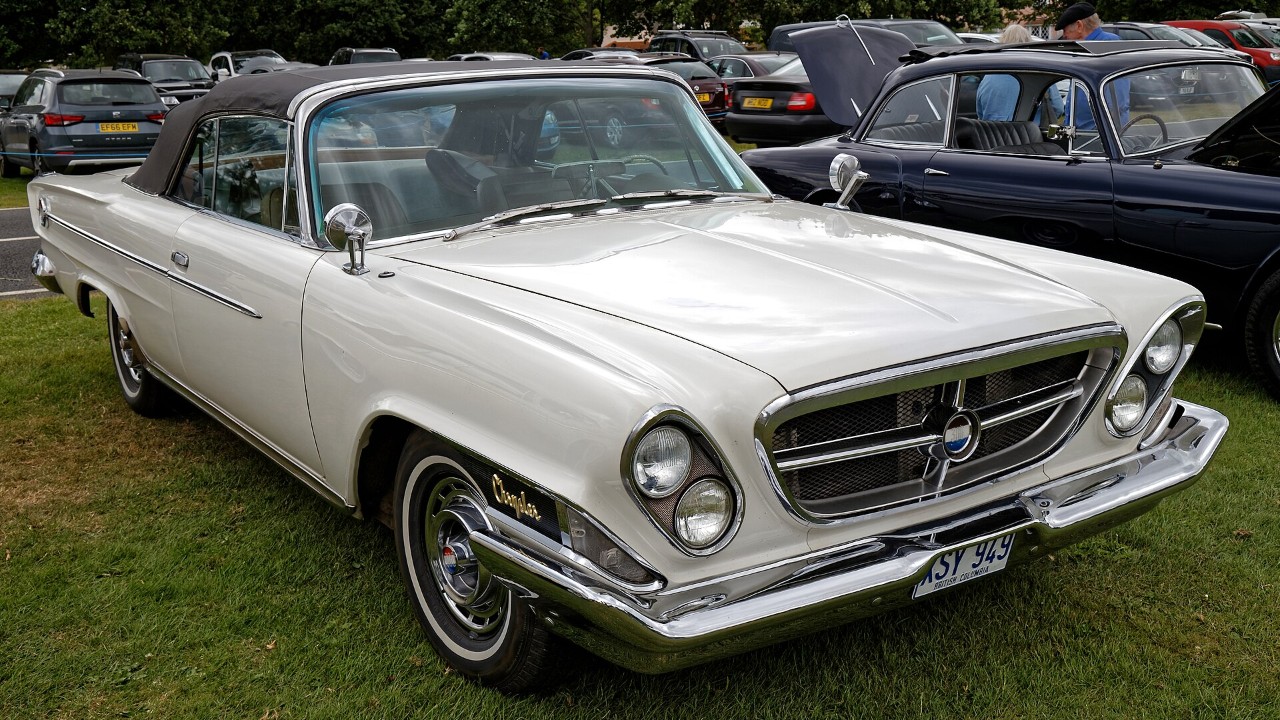
For 1962, the letter car changed its engine plan. The 300H went back to an inline dual four-barrel setup as its base engine, and the Cross-Ram intake became an option. The change brought a slight power boost over the year before.
Inside, the 300H had bucket seats front and rear, split by a full-length console. That was a sporty layout for a full-size luxury car. Meanwhile, the convertible listed at $5,461. The hardtop was cheaper at $5,090. Few buyers paid either price, because Chrysler built 435 300H coupes and just 135 convertibles, for 570 cars in all.
That makes the 300H convertible rarer than the 300F convertible earlier on this list, by a wide margin. In fact, the 300H convertible run was only about half the size of the 300F’s. In our view, it is the letter car to hunt if you care about rarity above all else, though finding one may take years.
11. 1969 Pontiac GTO Judge convertible

Pontiac created The Judge as a loud GTO package for 1969. It cost $332 more than a standard GTO, and Pontiac sold 6,833 Judges in that first year. Most buyers chose the hardtop, though.
By the end of 1969, Pontiac had sold 72,287 GTOs. Only 108 of them were Judge-badged convertibles, as Jalopnik’s rundown of the rarest GTOs notes. Just five combined the drop top with the Ram Air IV, a $558.20 option rated at 370 horsepower. The only one in Starlight Black sold through RM Sotheby’s for $682,000.
The numbers stayed tiny after that. Pontiac built 168 Judge convertibles for 1970, and only 17 of those had the Ram Air IV. Then 1971, the Judge’s last year, brought just 17 convertibles. Our take: real Judge convertibles are so scarce that you should treat any one for sale as a clone until Pontiac Historic Services paperwork proves otherwise.
12. 1957 Mercedes-Benz 300 SL Roadster
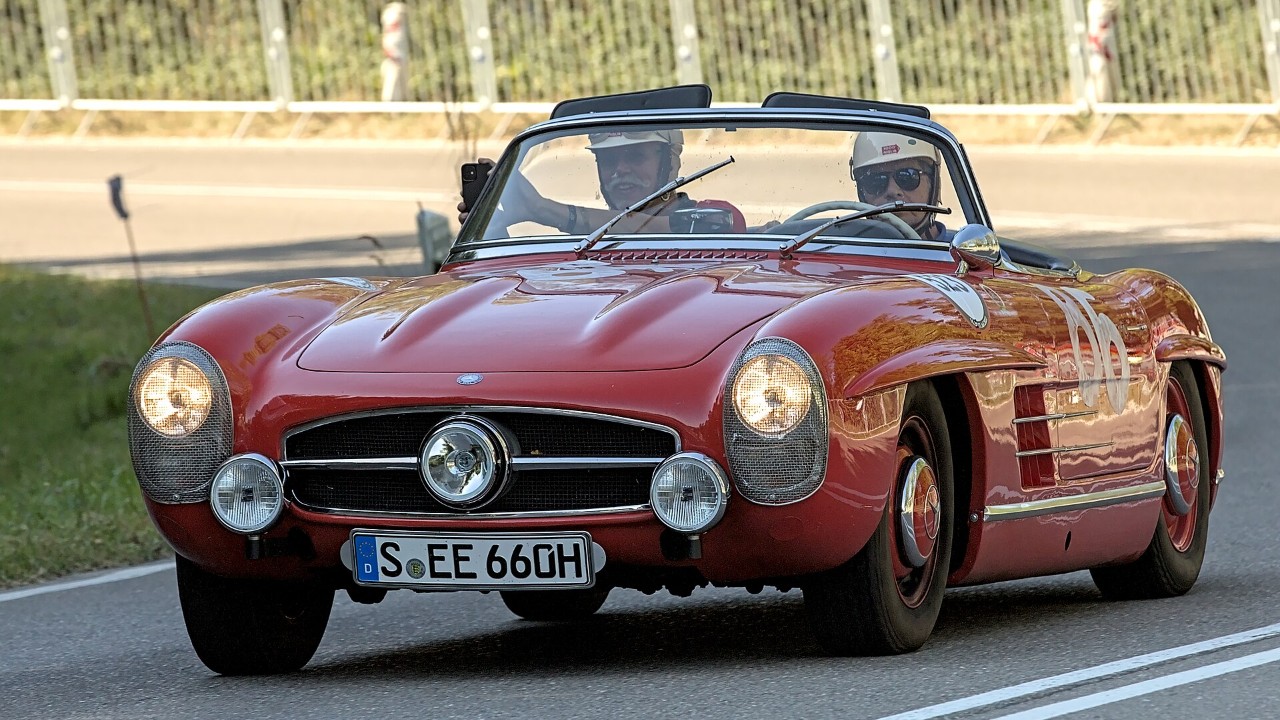
The 300 SL Roadster was the open version of Mercedes’ 300 SL, and Mercedes built it from 1957 to 1963. It used the M198 straight-six, a 2,996-cc overhead-cam engine with Bosch mechanical direct fuel injection. Mercedes also revised the swing-axle rear suspension for the roadster.
U.S. importer Max Hoffman had pushed the 300 SL idea in 1953. At first, Hoffman was the roadster’s only distributor. Then, in March 1961, disc brakes replaced the drums at all four corners. The U.S. price was $10,950, and the German price was DM 32,500. Either way, it was a huge sum for a two-seater at the time.
Production ended in February 1963 after a run of 1,858 roadsters. That is more than any other car on this list. However, it is a small number for a car this famous. In our view, an early 1957 car, with the drum brakes it was born with, is the one to look for.
More from Fast Lane Only