Modern engines are packed with technology, yet the core hardware still follows a simple logic: air and fuel go in, power comes out, and heat must be controlled. When I understand the main components that make this happen, I can spot problems earlier, talk clearly with a mechanic, and make smarter decisions about maintenance and repairs.
Instead of memorizing every part number, it is far more useful to grasp how a few key systems work together. The engine block, pistons, valvetrain, fuel and ignition systems, cooling, and lubrication all play distinct roles, and knowing their jobs helps any driver read warning signs before they turn into expensive failures.
The engine block, cylinders, and pistons
The engine block is the foundation of the powertrain, a solid casting that holds the cylinders where combustion happens and the passages that carry coolant and oil. I think of it as the chassis for the engine’s moving parts, because the crankshaft, pistons, and sometimes balance shafts all live inside this structure. In most passenger cars, the block is made from cast iron or aluminum alloy, materials chosen for strength, heat management, and weight, and it is machined with precise bores so the pistons can move smoothly up and down.
Inside each cylinder, a piston rides on a connecting rod that links it to the crankshaft, converting the straight-line motion of combustion into rotation at the crank. The piston rings seal the gap between piston and cylinder wall, keeping combustion pressure in the chamber while scraping excess oil back down into the crankcase. When those rings wear or the cylinder walls score, drivers start to see symptoms like blue exhaust smoke, rising oil consumption, and rough running, all of which trace back to that basic sealing job inside the block.
Crankshaft, connecting rods, and the four-stroke cycle
At the heart of every conventional gasoline engine is the crankshaft, a heavy, precisely balanced shaft that turns the pistons’ up-and-down motion into the rotation that ultimately spins the wheels. Each piston connects to the crank through a connecting rod, and the offset crank throws create the leverage that produces torque. I pay attention to how smoothly an engine idles or revs, because vibration often points to problems with crankshaft balance, worn bearings, or damage from oil starvation.
Most modern engines follow the four-stroke cycle: intake, compression, power, and exhaust. On the intake stroke, the piston moves down and draws in an air-fuel mixture; on compression, it moves up and squeezes that mixture; the spark plug ignites it for the power stroke; and finally the exhaust stroke pushes out the burned gases. The crankshaft and camshaft are synchronized so that each piston and its valves follow this pattern in sequence, and when that timing slips because of a worn chain or belt, drivers can experience misfires, loss of power, or in severe cases internal damage if pistons and valves collide.
Valvetrain, timing belt or chain, and variable valve timing
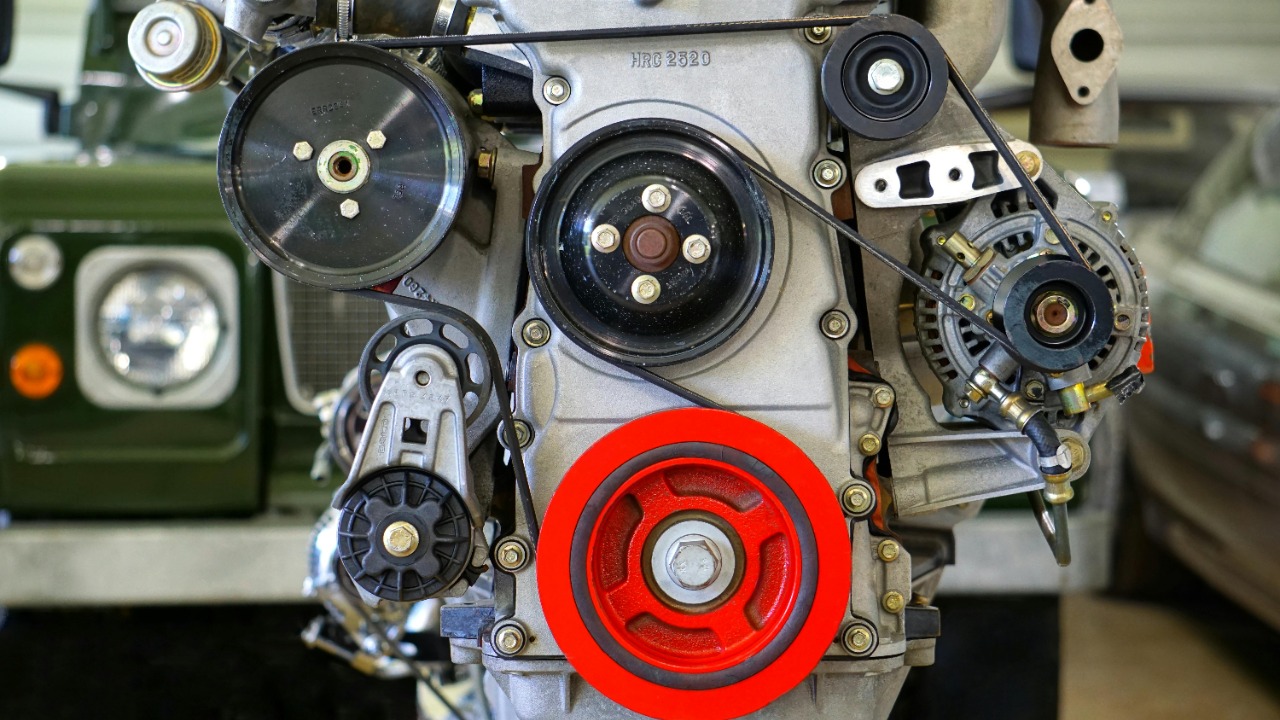
Above the cylinders, the valvetrain controls how air enters and exhaust leaves the combustion chamber. Intake and exhaust valves open and close in a carefully timed dance, usually driven by one or more camshafts that ride either in the cylinder head or, in older designs, lower in the block. I see the valvetrain as the engine’s breathing system, because if valves stick, leak, or open at the wrong moment, the engine cannot fill or empty its cylinders efficiently, which shows up as rough idle, poor fuel economy, or a noticeable loss of power.
The camshaft’s rotation is linked to the crankshaft by a timing belt or timing chain, and that link must stay precise. A rubber timing belt typically needs scheduled replacement, while a metal chain is designed to last longer but still depends on good oil pressure and clean lubrication. Many engines now add variable valve timing, which adjusts cam timing on the fly to improve torque at low rpm and efficiency at higher speeds. When that system develops issues, such as a sticking actuator or low oil pressure to the phasers, drivers may see a check engine light, sluggish response, or rattling noises on startup that trace back to the timing hardware.
Fuel delivery, intake system, and turbocharging
The fuel system’s job is to deliver the right amount of gasoline at the right moment, and modern engines rely on precise electronic control to do it. In port fuel injection, injectors spray fuel into the intake ports, where it mixes with air before entering the cylinder. Direct injection goes a step further by spraying fuel straight into the combustion chamber at high pressure, which can improve efficiency and power but also introduces new maintenance concerns, such as carbon buildup on intake valves that no longer see fuel washing over them.
Air reaches the engine through the intake system, which includes the air filter, throttle body, and intake manifold. A clogged filter or sticky throttle plate can choke airflow and make the engine feel sluggish or unresponsive. Turbochargers and superchargers add another layer by compressing the intake air so more oxygen reaches the cylinders, effectively increasing the engine’s output without increasing displacement. When a turbo’s bearings wear or its seals fail, drivers may notice whistling noises, loss of boost, or oil smoke, all of which are easier to interpret when I understand that the turbo is simply an exhaust-driven air pump feeding the intake.
Ignition system and engine management electronics
Even with the right air and fuel mixture, an engine will not run without a strong, well-timed spark. The ignition system starts with the battery and alternator supplying electrical power, then uses ignition coils to step that voltage up so each spark plug can ignite the compressed mixture in its cylinder. Modern engines typically use coil-on-plug setups, which place an individual coil directly on each spark plug, improving control and reducing energy loss compared with older distributor-based systems.
All of this is coordinated by the engine control unit, a computer that constantly reads sensors and adjusts fuel, spark timing, and sometimes valve timing to keep the engine running efficiently and within emissions limits. Sensors such as the oxygen sensor, mass airflow sensor, crankshaft position sensor, and knock sensor feed data into that control loop. When one of these sensors fails or drifts out of range, the ECU often compensates as long as it can, then triggers a check engine light. I find that understanding the basic role of these electronics makes it less intimidating to see a diagnostic trouble code, because I can connect a symptom like hard starting or poor fuel economy to a likely sensor or ignition component instead of guessing blindly.
Cooling system, lubrication, and why heat management matters
Combustion generates intense heat, and the cooling system’s job is to carry that heat away from the engine so metal parts stay within safe temperature limits. Coolant circulates through passages in the block and head, absorbing heat and then releasing it through the radiator as air flows past. The water pump keeps coolant moving, the thermostat regulates temperature by opening and closing flow to the radiator, and the radiator fan helps at low speeds or in traffic. When any of these parts fail, drivers may see the temperature gauge climb, warning lights appear, or in extreme cases steam from under the hood, all signs that the engine is no longer shedding heat effectively.
Oil handles the other half of the heat and friction problem by lubricating moving parts and carrying away some of the heat they generate. The oil pump pushes lubricant through galleries in the block and head, feeding bearings, camshafts, and valvetrain components before the oil drains back to the pan. Regular oil changes keep that system healthy by removing contaminants and replenishing additives that protect against wear and corrosion. If oil pressure drops because of low level, a clogged pickup, or a failing pump, the thin film that separates metal surfaces can collapse in seconds, leading to bearing damage or seized components. I watch for low oil pressure warnings, unusual ticking or knocking sounds, and visible leaks, because they often provide the earliest clues that the lubrication system needs attention.