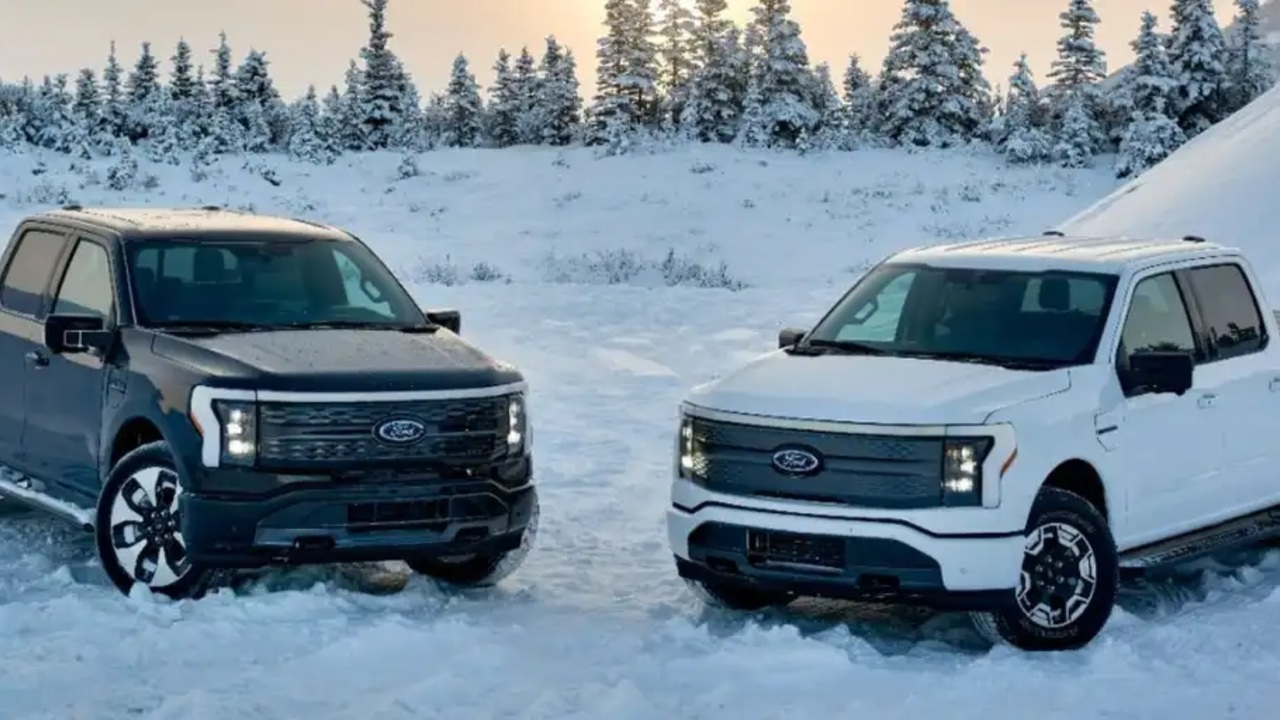
In the coldest corners of the map, where diesel engines have long been treated as the only reliable option, electric vehicles are quietly rewriting the rules. Real world testing from Arctic truck yards to Norwegian highways shows that battery powered models not only keep working when temperatures plunge, they often match or exceed diesel performance while slashing operating costs. For fleet managers and private drivers alike, the data now points to a simple conclusion: even in brutal cold, the numbers favor electric.
The shift is not driven by hype or social media arguments, but by operators who live or die by total cost of ownership. From heavy trucks in Germany to school buses in snow belt cities, the people signing purchase orders are comparing uptime, fuel spend, and maintenance line by line. As more of those comparisons include subzero conditions, the supposed winter advantage of diesel is looking less like a fact and more like a habit.
Cold weather myths meet Arctic reality
For years, critics have leaned on a familiar talking point, that batteries cannot cope when the mercury drops and that only diesel can be trusted in deep winter. Controlled testing and field experience now undercut that claim. A study backed by NREL examined how electric vehicles and EVSE performed in temperatures as low as -40 degrees C (-40 degrees F), and found that the vehicles continued to operate, with charging that, though slower, remained functional even at that extreme. In parallel, operators in Norway report that modern EVs, from compact cars to larger models, are running reliably through long, dark winters, with range losses that are manageable rather than catastrophic.
Those findings are echoed in Arctic trials that put electric trucks into some of the harshest conditions on the planet. In Alaska’s remote Arctic communities, tests described as an Arctic Surprise found that EVs tested in Alaska’s remote Arctic communities, including heavy duty models, could Out Perform Diesel In Extreme Cold on key measures such as start up reliability and low speed torque. Reports from Otsego, Minnesota, where Our coldest location is likely in Otsego, Minnesota, at a Ruan facility, describe similar outcomes, with electric yard trucks matching diesel performance despite frequent subzero spells. In Buffalo, where In the 2018 to 2019 winter season, Buffalo received 94 inches of snowfall, and the average annual snowfall for the city was 70 inches, electric trucks have been evaluated in heavy snow and freezing temperatures and have continued to operate within service expectations.
Range loss is real, but diesel suffers too
None of this means that cold has no effect on batteries. Chemically, lithium ion cells are less efficient at low temperatures, and cabin heating draws directly from the pack. Independent testing has shown that severe cold can cut EV range by up to 40 percent, particularly on short trips where the cabin must be reheated repeatedly. Consumer guidance from groups such as AAA notes that the need for a dedicated electric heater to warm the cabin is a major contributor to this drop. Community programs have also observed that While EVs may experience as much as a 20 percent decline in charging capacity, and therefore range, in cold temperatures, drivers can plan around that reduction with preconditioning and smart charging habits.
What is often left out of the debate is that internal combustion vehicles also lose efficiency in winter. Federal energy data on Fuel economy in Cold weather shows that in city driving, cold temperatures and winter conditions significantly reduce fuel economy for gasoline and diesel vehicles, with typical range reductions that are substantial even if they are less visible to drivers. Engines take longer to reach optimal temperature, idling increases, and denser air raises aerodynamic drag. In practice, both powertrains see their effective range shrink, but only one can be refueled at home or at a depot while the driver sleeps. When EV owners plug in overnight and start each day with a full battery, the impact of range loss is cushioned in a way that diesel drivers, who must detour to fuel stations, cannot match.
Performance advantages that matter in winter
Beyond raw range, winter driving exposes the mechanical strengths and weaknesses of each technology. Electric motors deliver instant torque at low speeds, which is exactly what drivers need when pulling away on packed snow, maneuvering in tight yards, or climbing icy grades. Operators of electric yard trucks in Minnesota report that their vehicles can push and pull heavy trailers in subzero conditions without the lag or stalling risk associated with a cold diesel engine. In Arctic trials, Tests Find EVs Out Perform Diesel In Extreme Cold by starting reliably after long, frigid nights, without the need for block heaters, fuel additives, or extended warm up idling that wastes time and money.
Passenger EVs also offer winter specific conveniences that combustion cars cannot replicate. Charging at home allows drivers to preheat the cabin and battery while still plugged in, so energy for comfort comes from the grid rather than from the usable driving range. Advocacy groups highlight that Charging is much cheaper than gas and that An EV can be warmed up in a closed garage without exhaust fumes, a practical safety advantage on the coldest mornings. Industry organizations note that They include the ability to charge and warm up a vehicle at home, so drivers step into a defrosted cabin with full torque available, instead of scraping ice while a diesel idles noisily at the curb.
Fuel and maintenance costs tilt the ledger
If performance parity in the cold removes one of diesel’s perceived advantages, the cost side of the ledger is where EVs begin to pull away decisively. Electricity is typically far cheaper per unit of energy than diesel, and that gap widens in winter when combustion engines burn extra fuel just to stay warm. Analyses of fleet operations in Europe show that In Germany, the TCO of EV trucks can be up to 15 Euro-Cent less per kilometer compared to a diesel vehicle, the IRU study found, with some routes seeing savings of 5 Euro-Cent/km even under conservative assumptions. For long haul and regional carriers, those per kilometer differences compound into six or seven figure annual savings across a fleet.
Maintenance further strengthens the economic case. EV drivetrains have far fewer moving parts than internal combustion engines, which reduces wear and the number of components that can fail. One assessment of service records notes that Lower Maintenance Costs Compared to ICE vehicles, EVs have far fewer parts. For instance, a typical ICE vehicle has around 2,000 m, including complex exhaust treatment systems that are especially vulnerable in cold weather. Dealership data from service departments reinforces that While EVs generally have a higher purchase price, the EV maintenance costs vs. gas vehicle maintenance costs tend to be lower, because Gas engines require regular oil changes, filters, and repairs to transmissions and emissions systems that simply do not exist on an electric platform. In harsh climates, where cold starts and road salt accelerate mechanical stress, the simplicity of an electric powertrain becomes a financial asset.
Fleet managers follow the numbers, not the noise
Perhaps the clearest sign that the winter narrative is shifting comes from the people whose livelihoods depend on reliable vehicles. Fleet managers do not get paid to argue on Facebook. They get paid to look at the numbers, and make decisions in the best financial interest of their companies. Reports from school districts that have adopted electric buses in cold regions state plainly, What we are seeing is that these buses are doing great in cold weather they still maintain a battery charge even when it’s cold, and that drivers appreciate the quiet, warm cabins. In Norway, where EV market share is among the highest in the world, Confidence is one issue that has already been resolved in practice, as Just about every EV critic who predicted winter failures has been contradicted by years of routine, all weather operation.
More from Fast Lane Only