Aston Martin has stepped away from its role supplying safety and medical cars to Formula 1, a move that hands full responsibility for those critical machines back to Mercedes. The decision ends a high profile dual supplier arrangement and reshapes how the sport will showcase road car partners during its most visible neutralizations.
The withdrawal closes a brief but contentious chapter in which Aston Martin’s presence on track drew both marketing attention and pointed criticism from drivers. It now leaves Mercedes as the sole brand tasked with leading the field under caution and supporting trackside medical response.
A sudden end to a short lived partnership
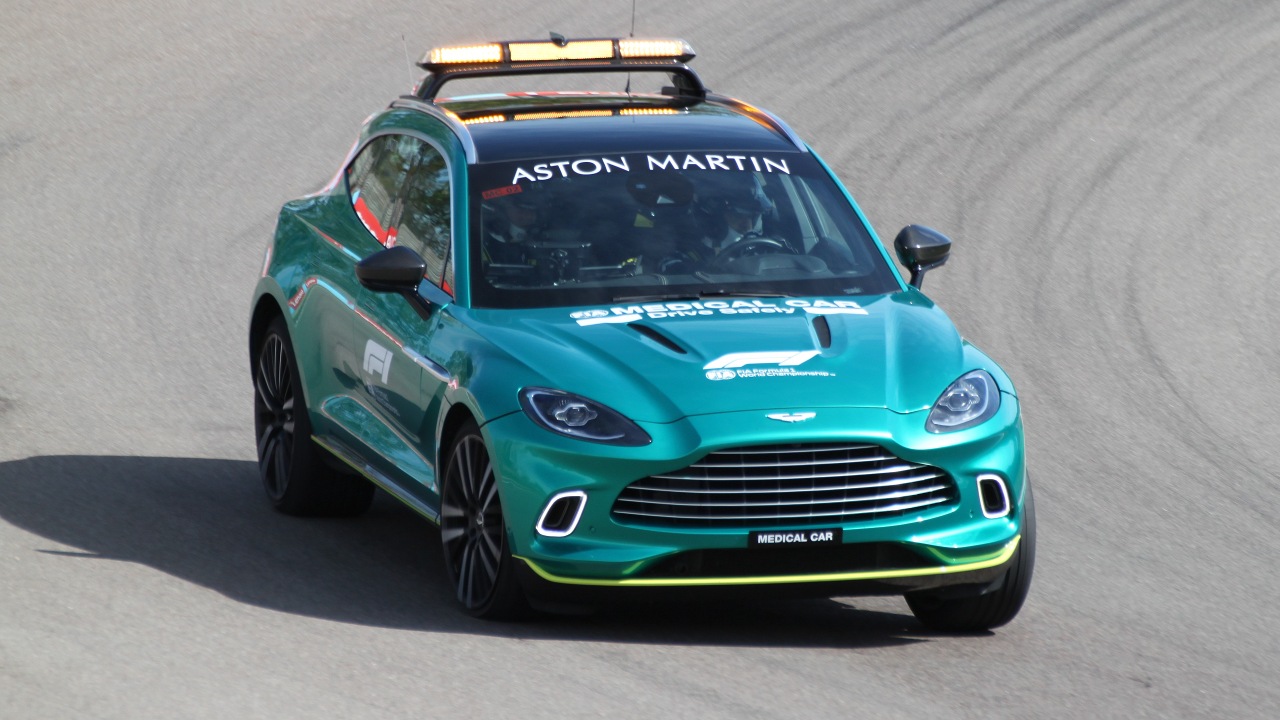
Aston Martin has chosen not to renew its contract to provide safety and medical cars, bringing its stint in that role to an abrupt halt. According to reporting that cites The Race, the British manufacturer decided to walk away rather than extend the agreement, which had seen its road car based machinery share duties with Mercedes. That choice means Mercedes is set to become the exclusive supplier again, ending the alternating arrangement that had split weekends between the two brands.
The exit has been framed as unexpected, with one detailed account describing a sudden safety car departure that caught many in the paddock off guard. Aston Martin issued a first public statement after the decision became clear, confirming that its period supplying Formula 1 safety cars had ended and that Mercedes would be left as the sole provider. The move closes a relatively short chapter in which the green liveried cars had become a regular sight at the front of the field during incidents.
Performance criticism that never quite faded
From early in Aston Martin’s tenure, questions were raised about whether its safety car could run quickly enough to keep modern Formula 1 tyres and brakes in an optimal window. Four time world champion Max Verstappen was particularly blunt in his assessment, at one point labelling the Aston Martin machine the “green turtle” when he felt the pace under caution was too slow. That remark, reported in detail in coverage of the shock decision to end the deal, crystallised a wider frustration among some drivers who believed the car’s limits were being reached before the field’s needs were met.
Those criticisms resurfaced as Aston Martin’s withdrawal became public, with one analysis noting that the criticism around its performance was unlikely to disappear quickly. The manufacturer had invested in upgrades to improve its offering, but the perception that its car was slower than the Mercedes equivalent lingered. In a sport where tyre temperatures can decide restarts and race outcomes, the safety car’s ability to push hard enough is not a cosmetic concern, it is a competitive one, and Aston Martin never fully escaped that debate.
How Mercedes regained exclusive control
With Aston Martin stepping aside, Mercedes will once again be the only brand supplying safety and medical cars to Formula 1. Reports on the decision underline that Mercedes is set to become the sole supplier, restoring a status quo that existed for many years before the British marque joined the programme. The change simplifies logistics for the championship, which will no longer need to alternate between two different fleets or balance commercial exposure for rival manufacturers in the same role.
Mercedes has long treated the safety car as a showcase for its high performance road models, and the return to exclusivity strengthens that link. The company’s cars have been developed specifically for the demands of leading a Formula 1 pack, with extensive track testing and close collaboration with race control. As Aston Martin’s contract ends, the German brand’s continuity and established performance record are central reasons it was positioned to take back full responsibility once the dual supplier arrangement collapsed.
Aston Martin’s technical push and its limits
Aston Martin did not leave the stage without trying to address the concerns that had been raised about its cars. The safety car package it fielded was upgraded over time, including aerodynamic revisions such as a new rear deck spoiler and other performance improvements designed to make it as quick as possible in the conditions it faced. Reporting on the end of the deal notes that the car featured aerodynamic upgrades and further tweaks aimed at closing the gap to the Mercedes benchmark.
Despite that technical push, the perception battle proved harder to win than the engineering one. Even as Aston Martin refined its product, the earlier “green turtle” label from Max Verstappen and the recurring complaints about pace shaped how fans and teams viewed the car. One detailed account of the decision to withdraw notes that the manufacturer went further still in its internal assessment of the programme, weighing the marketing benefits against the scrutiny that came with every deployment. In the end, the upgrades were not enough to convince Aston Martin that remaining in the role was worth the continued spotlight on its limitations.
Brand stakes and what comes next for F1
The safety car is one of the most visible pieces of branding in Formula 1, appearing at moments of maximum tension when global audiences are focused on the track. For Aston Martin, the role offered a chance to align its road cars with the drama of grand prix racing, but it also exposed the company to direct comparison with Mercedes in a highly technical environment. As one report on the end of the programme makes clear, the decision to stop providing safety cars leaves Mercedes alone in that spotlight, with Aston Martin choosing to focus its Formula 1 presence elsewhere.
For the championship, the shift simplifies operations but also narrows the range of manufacturers directly showcased in official roles. According to detailed coverage of the withdrawal, the arrangement that split duties between Aston Martin and Mercedes is now over, with no immediate indication that Formula 1 will look for an additional supplier. Unverified based on available sources whether the sport is actively courting another brand, but for now, the field will form up behind a familiar silver car whenever the racing is neutralised.
More from Fast Lane Only