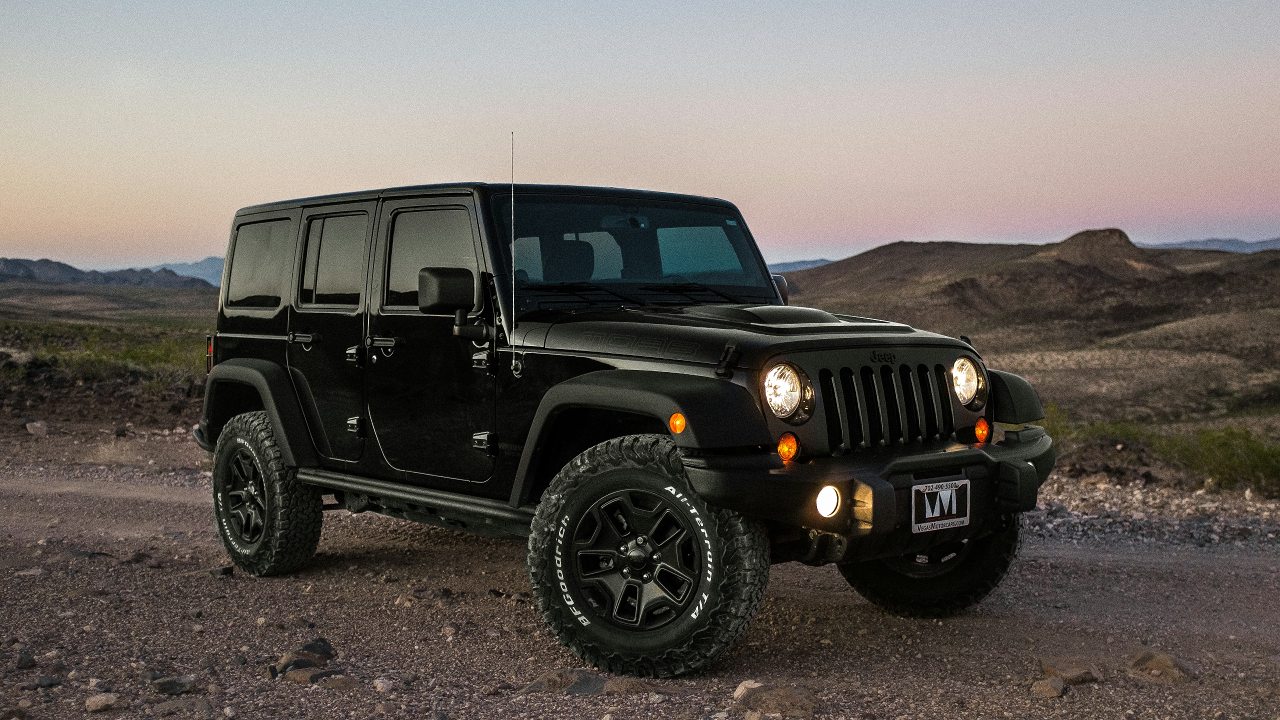
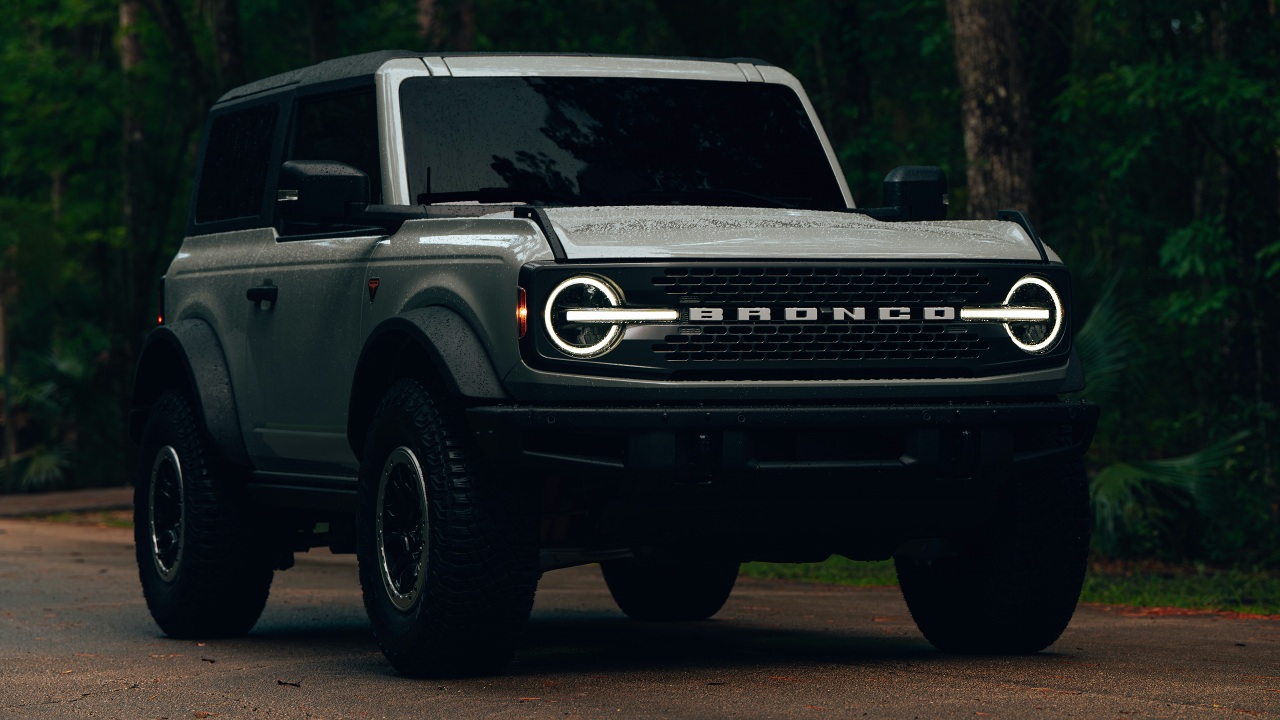
Ford’s reborn Bronco has finally hit its stride, with record sales that confirm it as a serious force in the off-road SUV market. Yet even with that surge, Jeep’s Wrangler still finished ahead, extending a rivalry that has reshaped how both brands think about capability, heritage, and everyday usability. The sales scoreboard shows a narrowing gap, but it also underlines how deeply the Wrangler’s formula is embedded in the American market.
The story behind those numbers is not just about who sold more trucks. It is about how two companies, each with decades of 4×4 history, are trying to balance nostalgia with modern expectations while fighting for the same adventurous buyer.
Record Bronco momentum meets a stubborn Wrangler lead
Ford’s decision to bring back the Bronco as a dedicated 4×4 has paid off in hard numbers. The brand moved a record 146,007 Broncos in 2025, a figure that would have been unthinkable when the nameplate was still a memory and a few vintage rigs on auction blocks. That volume confirms that the Bronco is not a niche experiment but a core player in Ford’s lineup, with demand strong enough to sustain a full family of trims and body styles. The Bronco looked like it was on pace to close the gap entirely, and the trajectory of its growth has put real pressure on Jeep’s long-held dominance.
Yet even with that record, the Wrangler stayed in front. Reporting on 2025 results notes that Wrangler sales climbed enough to put the model up 11 percent over its 2024 performance, reversing two straight years of declines and keeping it ahead of the Bronco in total volume. That rebound matters because it shows that Jeep did not simply defend its turf by default; it grew again at the very moment its most direct rival was surging. The result is a market where Bronco’s momentum is undeniable, but the Wrangler’s position at the top of the off-road heap remains intact.
A rivalry years in the making
The current sales battle did not appear out of nowhere. When Ford launched its reborn Bronco SUV at the start of this decade, the target was explicit: Jeep’s Wrangler. Ford built the Bronco around serious off-road hardware, from available locking differentials to removable doors and roof panels, and it framed the vehicle as a direct alternative to the Wrangler’s long-standing blend of trail capability and open-air fun. That clarity of purpose is part of why the rivalry has become so heated, with each new Bronco variant or Wrangler special edition read as a move in an ongoing chess match.
By 2025, that rivalry had boiled over into a full-scale sales contest. Analysts tracking the numbers noted that if trends continued, Ford and Jeep could converge around the 150,000 m mark in annual sales, a level that would have both models operating as high-volume pillars rather than niche toys. That projection helps explain why both brands have been so aggressive with updates, packages, and marketing. Each Bronco sale is not just a win for Ford, it is a customer who might otherwise have been in a Wrangler, and Jeep has responded accordingly.
How Jeep kept the Wrangler in front
Jeep’s ability to keep the Wrangler ahead, even as Bronco volumes climbed, rests on a mix of heritage and breadth. The Wrangler has decades of name recognition and a reputation built on everything from Moab trail runs to daily commutes in snowy climates. That history translates into loyalty, and it shows up in the detailed breakdown of Jeep Sales in the USA by Model and Sales, where the Wrangler remains a cornerstone despite shifts in other parts of the lineup. The 11 percent year-over-year Change in Wrangler volume is particularly telling, because it came after a period of softness that might have signaled a plateau.
Product strategy has also helped Jeep hold its ground. While Ford focused on building out Bronco variants, Jeep continued to refine the Wrangler’s mix of trims, powertrains, and special editions, keeping the model fresh without abandoning its core identity. The fact that Wrangler could reverse two consecutive years of declining volumes at the exact moment the Bronco hit record numbers suggests that Jeep’s adjustments resonated with buyers who might have been tempted to switch. In other words, the Wrangler did not simply coast on its past; it adapted just enough to stay ahead.
Ford leans on heritage and value to close the gap
Ford, for its part, has been just as deliberate in how it has built the Bronco’s appeal. The company has leaned heavily into the truck’s history, and it is marking that story with a 60th birthday celebration that includes a dedicated Anniversary Package for the 2026 Bronco. That package is more than a badge exercise; it signals to buyers that the Bronco is not a one-off revival but a nameplate with enough staying power to justify commemorative editions. Ford is also using pricing and equipment tweaks, such as offering certain doors for no additional cost, to sharpen the Bronco’s value proposition against the Wrangler.
Those moves sit alongside the broader strategy that has pushed Bronco volumes to 146,007 units. By offering a wide spread of trims, from more affordable models to hardcore off-road variants, Ford has been able to capture buyers who might otherwise have defaulted to Jeep. Commentary from enthusiasts and dealers, including video walk-throughs that compare Bronco and Wrangler features, often highlight how the Bronco’s tech and on-road comfort can sway shoppers who still want trail capability. One such video even points viewers to a Utah dealer, Murdoch in Santa Quinn, as an example of how aggressively some retailers are pushing Bronco inventory, a small but telling sign of how Ford is trying to convert Wrangler intenders into Bronco owners.
What the next phase of the Bronco–Wrangler fight looks like
With Wrangler still on top and Bronco closing in, the next phase of this rivalry will likely be defined by how each brand balances evolution with authenticity. Forecasts that If the current trends continue, both models could hover around the 150,000 m level, suggest a market that can support two high-volume, body-on-frame off-roaders. That is unusual in a segment that used to be dominated by a single nameplate, and it raises the stakes for every product decision, from powertrain updates to interior tech. Neither brand can afford a misstep, because the other is ready to capitalize.
From my perspective, the most striking part of the 2025 results is not that the Wrangler stayed ahead, but that the Bronco has already forced Jeep to fight this hard. The headline outcome, that even record Bronco sales could not knock the Wrangler off its perch, is accurate, yet it risks understating how much the competitive landscape has shifted. A few years ago, the idea that a revived Bronco could push into six-figure annual sales and pressure Jeep’s flagship would have sounded optimistic. Now it is reality, and the real question is how long Wrangler can keep its edge as Ford continues to refine the Bronco and celebrate its growing legacy.
More from Fast Lane Only: