Dodge did not just build a fast engine when it created the Hellcat V8, it rewrote what a modern American production car could get away with on the street. From two-door coupes to family sedans and even a three-row SUV, full Hellcat output turned ordinary nameplates into factory hot rods that treated 700 horsepower as a starting point rather than a ceiling. I want to walk through every production model that received the complete Hellcat treatment, and how each one pushed that supercharged 6.2-liter formula in a slightly different direction.
The first hit: Challenger SRT Hellcat breaks 700
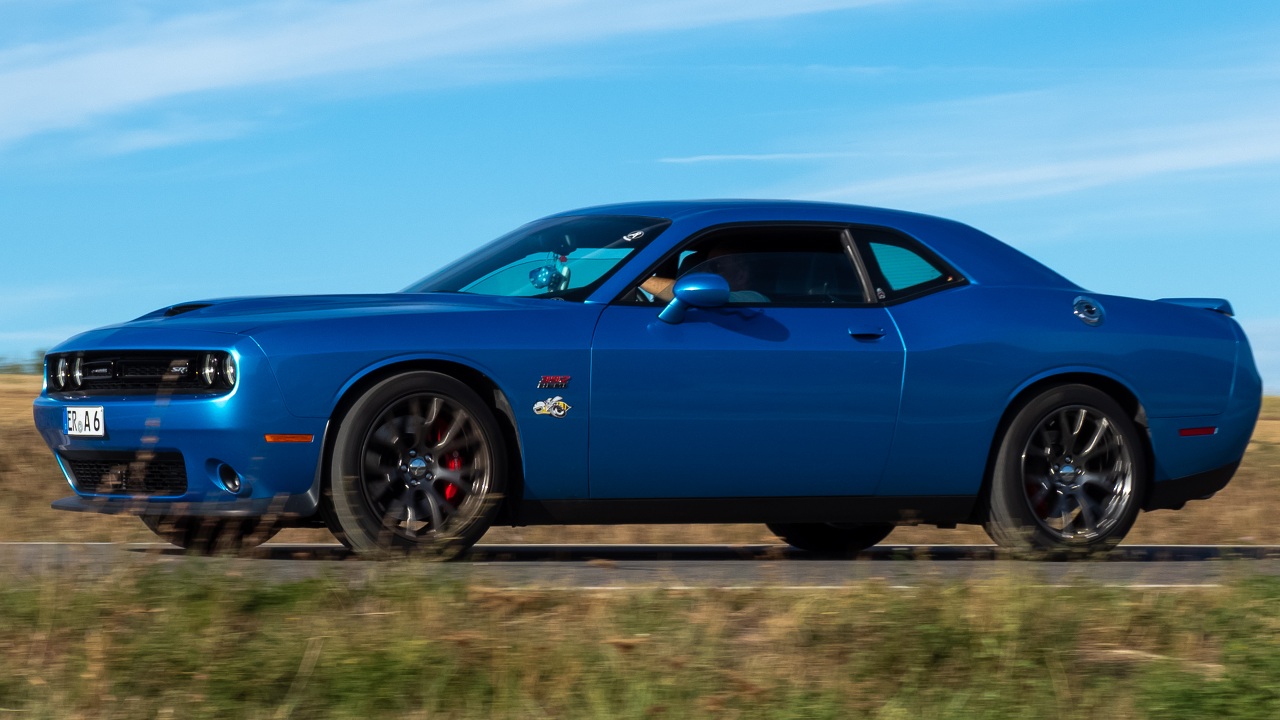
The story of full Hellcat power in production cars starts with The Challenger SRT Hellcat, the car that took Dodge from retro-styled muscle to something closer to a street-legal drag package. When Dodge dropped the supercharged Hemi V-8 into the Challenger, it was not just adding another performance trim, it was creating the first Dodge with a supercharged Hemi that would reset expectations for showroom horsepower. Reporting at the time underscored that the Challenger with the Hellcat engine was the first American muscle car to blow past the 700 horsepower threshold, a psychological barrier that had stood for decades in this segment. That single number turned The Dodge Challenger from a nostalgia piece into a benchmark, and it set the tone for every Hellcat-powered product that followed.
From there, the Challenger line evolved into a whole family of supercharged variants, but the core idea remained the same: a production coupe with a Hellcat engine that treated drag-strip numbers as part of the spec sheet. Later versions like the Dodge Challenger SRT Super Stock pushed the concept even further, pairing the familiar body with hardware and tuning that let The Dodge SRT Super Stock run the quarter mile in serious bracket-racing territory while still being sold as a regular production car. Even though the Dodge Challenger SRT Super Stock does not wear the Hellcat badge in its name, it is built around the same Hellcat philosophy of absurd power and straight-line focus, which is why it is consistently grouped with the rest of the Hellcat family in performance breakdowns.
The four-door muscle car: Charger SRT Hellcat
If the Challenger proved that a two-door could carry full Hellcat power, the Dodge Charger SRT Hellcat showed that a big sedan could be just as wild. The Dodge Charger took the same supercharged V8 and wrapped it in a four-door shell that still traced its roots to classic American muscle, but now with room for a family and a trunk full of luggage. When Dodge put the Hellcat engine into the Charger, it created a sedan that could legitimately claim to be one of the quickest production four-doors in the world, while still looking like something you might see in a commuter parking lot. That dual identity is part of why the Charger SRT Hellcat became such a fixture at events like Cars and Coffee, where owners would park with the hood open so everyone could stare at the supercharged V8 nestled neatly between the shock towers.
The Charger’s Hellcat era also brought visual and mechanical refinements that made the car feel more purpose built. The 2020 Dodge Charger Hellcat Widebody, for example, widened the stance and added serious rubber to help the sedan put its power down more effectively. Reviews of that car emphasized how Dodge had “gotten religion” on underhood appearance and overall presence, turning the Charger Hellcat into a car that looked as aggressive as its numbers suggested. In the broader Hellcat story, the Charger matters because it proved that full Hellcat output was not limited to coupes or special editions. It was a regular part of the lineup, a production sedan that treated supercar-level power as something you could option like a sunroof.
The unexpected brute: Durango SRT Hellcat
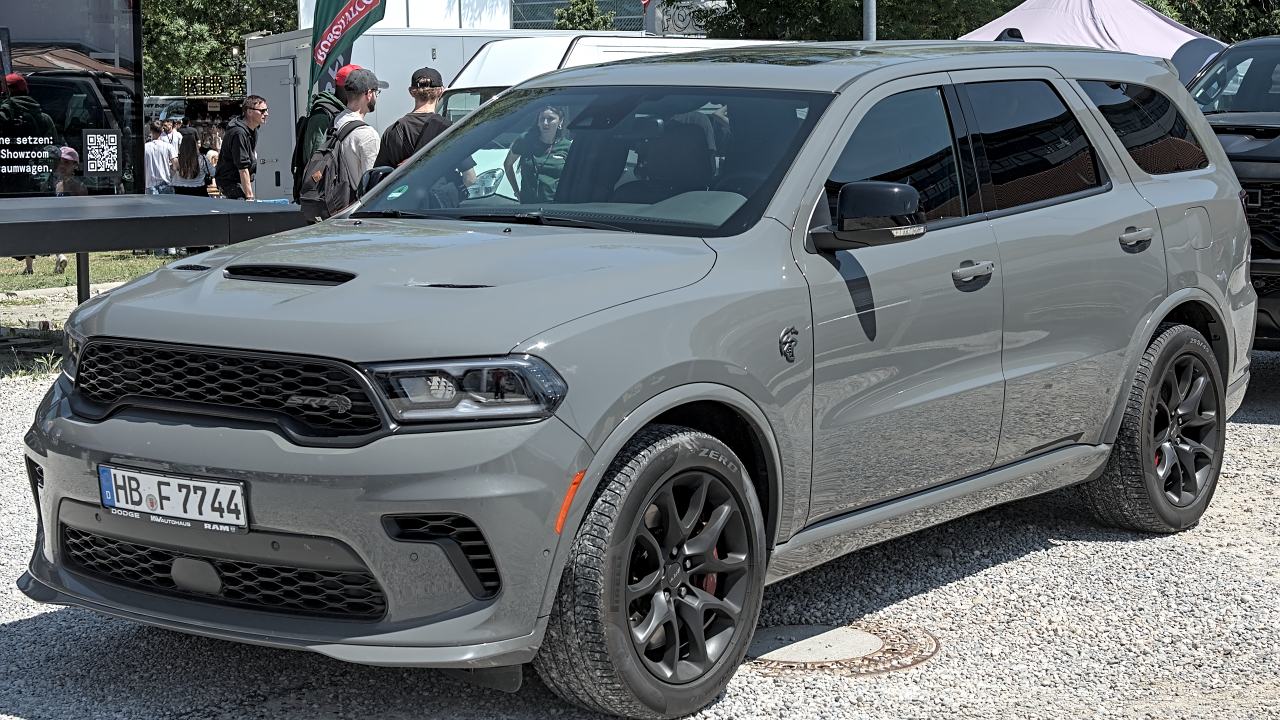
The most surprising application of full Hellcat power arrived when Dodge decided to drop the engine into its three-row SUV, creating The Dodge Durango SRT Hellcat. On paper, a family hauler with a supercharged V8 sounded like a stunt, but the execution turned it into one of the most outrageous production SUVs ever sold. The Durango SRT Hellcat came about in 2021 and boasted 710 horsepower from the 6.2-liter HEMI Hellcat V8, a figure that put it in the same conversation as exotic crossovers that cost far more. That output, combined with all-wheel drive and a launch-friendly setup, meant the Durango SRT Hellcat could sprint to highway speeds in supercar-like fashion while still towing and carrying kids.
What made the Durango SRT Hellcat especially notable is that it was not a long-running trim, but a short-lived burst of excess that has already taken on cult status. Reporting on the broader Hellcat program notes that the 6.2L supercharged hemi V8 Hellcat engine has been found in models such as the Challenger, Charger and a one year model of the Durango SRT, underscoring how rare that SUV application really was. In the context of every production car Dodge unleashed with full Hellcat power, the Durango stands out as the moment Dodge proved it could bolt the Hellcat into almost anything in its portfolio and still deliver a cohesive product. It was not just a marketing exercise, it was a fully realized performance SUV that happened to share its engine with some of the wildest muscle cars on sale.
How much power “full Hellcat” really meant
Talking about “full Hellcat power” can sound like shorthand, but the numbers behind that phrase are what made these production cars so disruptive. The 6.2L supercharged hemi V8 Hellcat engine produced anywhere from 702 to 840 horsepower in factory trim, depending on the specific model and tune. That spread covers everything from the “standard” Hellcat outputs in early Challenger and Charger variants to the more extreme configurations that pushed the envelope even further. When I talk about full Hellcat power in production cars, I am referring to that family of engines and calibrations, all built around the same basic 6.2-liter supercharged architecture that turned Dodge into a horsepower arms dealer.
Those figures did more than just look good on spec sheets. They redefined what buyers could expect from a showroom car with a warranty, especially in the American muscle space. Earlier coverage of the Challenger Hellcat highlighted that Dodge broke the 700 horsepower barrier for a muscle car, a milestone that signaled to rivals and regulators alike that the performance envelope had shifted. Once that line was crossed, it became easier for Dodge to justify variants at 702, 710 or even 840 horsepower, because the brand had already normalized the idea that a street car could carry that kind of output. In that sense, “full Hellcat power” is as much about the cultural shock of those numbers as it is about the mechanical details of the engine itself.
Hellcat as a performance blueprint, not just a badge
Over time, Hellcat evolved from a single engine program into a broader performance blueprint that shaped how Dodge approached its entire muscle portfolio. The Challenger and Charger lines sprouted a hierarchy of trims, from Scat Pack models to Hellcat and Redeye variants, all orbiting around the idea that Dodge would offer more power and more attitude than almost anything else in their price brackets. A detailed look at the Hellcat and Scat Pack Models In the lineup describes how Dodge used this structure to create a clear ladder of performance, with Hellcat cars serving as the beacon of raw power and thrilling dynamics at the top. Even when a model like the Dodge Challenger SRT Super Stock did not carry the Hellcat name, it still drew on the same hardware and philosophy, which is why it is often discussed in the same breath as the core Hellcat cars.
This blueprint also influenced how Dodge presented its cars to enthusiasts. Events like Cars and Coffee became informal showrooms where owners could display the engineering drama of a supercharged Hemi under the hood, and where the Hellcat name quickly became shorthand for a certain kind of unapologetic performance. Coverage of the original Challenger Hellcat launch captured that shift, noting that The Challenger SRT Hellcat was the first Dodge with a supercharged Hemi V-8 and that Dodge was already planning to extend that formula to other models. That prediction proved accurate as the Charger and Durango joined the roster, and as the brand continued to refine the package with variants that chased quicker quarter-mile times and higher trap speeds while still being sold as regular production cars.
The end of an era and what survives
As emissions rules tighten and electrification accelerates, the full Hellcat era is winding down, and Dodge has already signaled that the Hellcat engine program is ending. Reporting on that decision makes clear that the 6.2L supercharged hemi V8 Hellcat engine, which produced between 702 and 840 horsepower and powered the Challenger, Charger and a one year model of the Durango SRT, is being retired from new production. For enthusiasts, that means the list of vehicles that ever carried full Hellcat power is now finite, and each surviving example becomes a rolling snapshot of a brief, unrestrained moment in American performance history. The cars themselves, from The Dodge Challenger to the four-door Charger and the Durango SRT Hellcat, now represent the high-water mark of internal-combustion excess in Dodge’s lineup.
What survives, though, is the template that Hellcat established. Even as Dodge pivots toward new powertrains, the expectation that a Dodge performance model should feel outrageous, accessible and a little bit unhinged will not disappear. The Hellcat years proved that there was a strong market for production cars that treated 700-plus horsepower as a baseline, and that buyers were willing to live with the compromises that came with that level of performance. When I look back at every production car Dodge unleashed with full Hellcat power, I see more than a list of models. I see a clear statement that, for a decade, Dodge was willing to push the limits of what a mass-market brand could bolt together and sell with a warranty, and that is a legacy future performance cars will have to live up to, even if they never again carry the Hellcat name.