Washington is quietly edging toward one of the toughest positions in the country on winter traction gear, with lawmakers again weighing whether drivers who cling to studded tires should face not just fines but potential criminal penalties. The debate pits safety and road preservation against the reality of icy mountain passes and rural highways where drivers say metal studs still feel like the only reliable lifeline. As the political fight returns to Olympia, the outcome could reshape how millions of Northwestern drivers prepare for winter.
At the heart of the push is a simple but high-stakes question: should a piece of equipment that helps some vehicles grip snow and ice be treated more like a seasonal tool or a year-round threat to public infrastructure and safety? I see Washington’s emerging answer as a test case for how far a state is willing to go to protect its roads, even if that means turning a long-accepted winter habit into a potential crime.
Why Washington is targeting studded tires now
Washington has been tightening the screws on studded tire use for years, and the current push to escalate penalties grows out of that long campaign. The state already limits when drivers can legally run metal studs, with transportation officials reminding motorists each spring that the March 31 deadline to remove studded tires is firm and that the devices are unlawful for most of the year. In official guidance out of OLYMPIA, agencies describe how studded treads are meant for the harshest winter conditions in the Northwest, not as a year-round default, and they warn that drivers who ignore the seasonal cutoff risk tickets and damage to the roads they rely on.
Regulators have also been blunt that studded tires are a narrow tool, not a cure-all. The Washington State Department of Transportation has said that while studs can bite into ice, they are illegal outside the winter window and can be outperformed by a good set of modern winter or all-weather tires once the pavement is bare. In public reminders, The Washington State Department of Transportation stresses that studded tires are unlawful for most of the year and that drivers should instead focus on high-quality rubber that can handle slush and snow that has yet to be fully plowed. That framing, which elevates tire technology and driver responsibility over metal hardware, sets the stage for lawmakers to argue that anyone still clinging to studs outside strict limits is choosing convenience over the public interest.
From seasonal rules to a potential criminal offense
The new political push in Washington goes well beyond seasonal reminders and modest fines. Lawmakers in OLYMPIA have been exploring legislation that would not only phase out studded tires but also treat their use as a more serious violation, potentially rising to the level of a criminal offense in some circumstances. Earlier efforts in the Washington Legislature floated a $100 fee on each new studded tire, paired with a future ban, signaling that the state was willing to use both financial pressure and outright prohibition to change driver behavior. That proposal, which explicitly called for a $100 surcharge and a phaseout target, framed studs as a luxury that should pay for the damage they cause until they disappear altogether.
More recent discussions build on that foundation and add sharper teeth. Reporting on the latest round of bills describes a two-step strategy: first, restrict or eliminate legal studded tire use over time, and second, attach stronger penalties for anyone who keeps using them anyway. One proposal would ban the sale of new studded tires after a set date, then make it illegal to drive on them at all, effectively turning what is now a seasonal equipment violation into a year-round offense. Another concept would treat repeat or egregious violations as criminal, not just civil, especially if a driver’s illegal studs are linked to crashes or severe road damage. While the exact statutory language is still in flux, the direction is clear: Washington is moving from “please remove your studs by Spring” toward “keep them on and you could end up in court.”
The cost of metal studs: rutted highways and repair bills
Supporters of a tougher line on studded tires point first to the pavement itself. Transportation engineers in Washington have long warned that metal studs chew into asphalt, scraping away the top layer and carving ruts that trap water and slush. Over time, those grooves deepen, forcing the state to resurface lanes earlier than planned and creating hazardous channels that can grab a tire or send spray into a neighboring windshield. In official explanations of the policy, Washington agencies describe how the repeated impact of studs wears the road surface away and how those ruts form faster on heavily traveled corridors that already strain maintenance budgets.
Lawmakers have tried to tie any ban to a broader road repair strategy, arguing that if the state is going to ask drivers to give up a familiar winter tool, it should also promise smoother, safer pavement in return. One re-proposed studded tire ban has been explicitly linked to a road repair plan that would use the savings from reduced rutting, and potentially revenue from any remaining stud-related fees, to fund resurfacing projects. In that framework, the $100 fee floated in earlier Washington Legislature debates was not just a deterrent but a kind of pavement impact fee, a way to make studded tire users pay directly for the ruts they leave behind. The logic is straightforward: if metal studs are a major driver of premature road wear, then phasing them out or criminalizing their misuse is as much a budget decision as a safety one.
Safety tradeoffs in a state of mountain passes and black ice
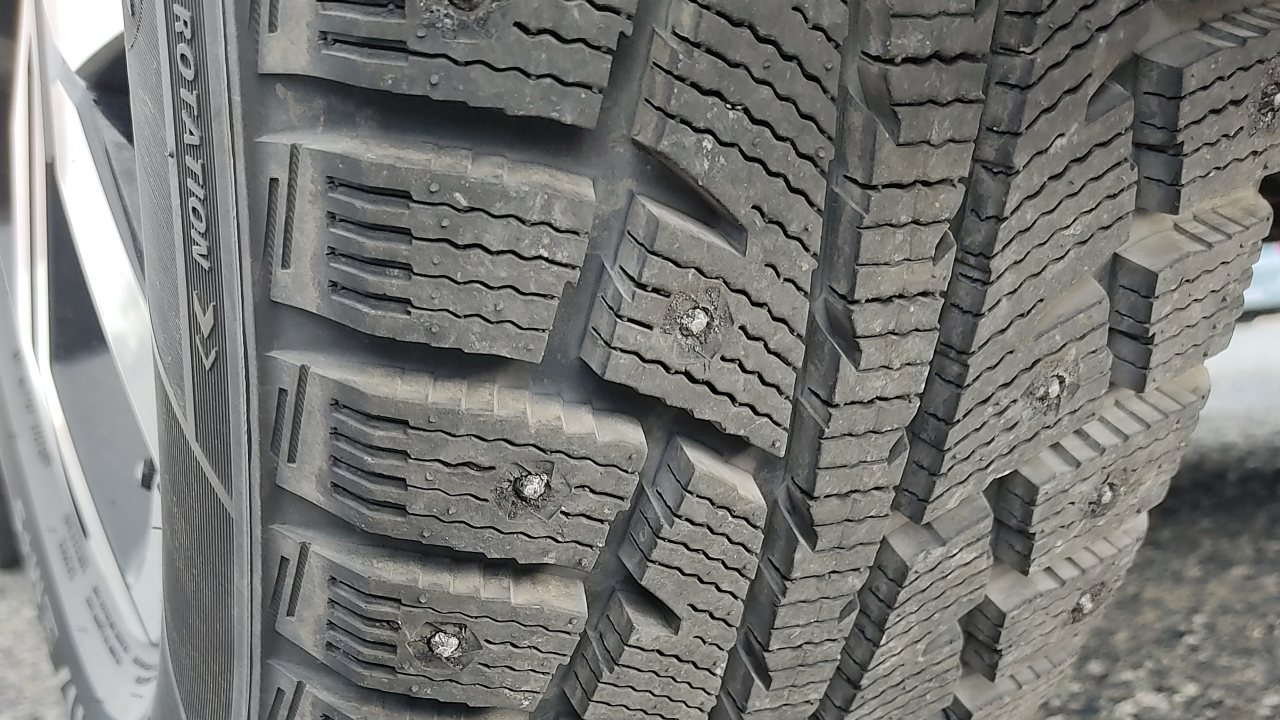
For many Washington drivers, especially those who live east of the Cascades or regularly cross high passes, the idea of criminal penalties for studded tires feels disconnected from winter reality. Studded tires were designed for exactly the kind of harsh winters that grip the region, giving drivers peace of mind when they face black ice, compact snow, and steep grades. In coverage of the current debate, officials acknowledge that studs can still offer superior grip on pure ice, which is why they remain popular among drivers who commute before plows arrive or who live on unpaved or steep rural roads. That lived experience is why some lawmakers have hesitated to endorse a full ban, let alone criminalization, without clear alternatives.
Yet safety advocates counter that modern tire technology has narrowed, and in many cases erased, the gap that once justified metal studs. The Washington State Department of Transportation has emphasized that a good set of non-studded winter tires can provide excellent traction on snow and slush while avoiding the downsides of studs on bare pavement. Officials also note that studs can lengthen stopping distances on wet or dry roads, turning a tool that helps on ice into a liability in more common conditions. In that light, the safety tradeoff looks different: the state is not simply taking away a lifeline, it is nudging drivers toward equipment that performs better across the full range of winter weather. The criminal angle, in this view, is reserved for those who ignore both the science and the law and keep grinding metal into asphalt long after the ice is gone.
What a full ban would mean for drivers and enforcement
If Washington ultimately moves from seasonal limits to a full prohibition backed by criminal penalties, the change will ripple through everything from tire shops to traffic courts. A complete ban on studded tires, of the kind already floated in earlier bills, would force retailers to stop selling them after a set date and push drivers toward studless winter options. For motorists who currently swap between studded and all-season sets each year, that would mean investing in new tires and, in some cases, new driving habits, such as carrying chains more often or adjusting travel plans when storms hit. The state’s own messaging, which already urges drivers to have chains handy and to rely on high-quality rubber rather than studs, suggests that officials see this as an achievable shift rather than an impossible ask.
Enforcement, however, is where the criminal label becomes most tangible. Today, driving on studs outside the legal window is typically treated as a traffic infraction, something that might result in a ticket if a trooper notices the metal in your treads. Under a stricter regime, officers could be empowered to treat repeat violations or particularly dangerous uses as criminal offenses, potentially involving court appearances, higher fines, or even short jail terms in extreme cases. Some proposals also envision escalating penalties for drivers who ignore warnings or who cause crashes while running illegal studs. That would align studded tire misuse with other equipment-related offenses that can cross from civil to criminal when they create clear risks, such as tampering with emissions systems or driving on bald tires that contribute to a serious collision.
Washington’s decision as a national test case
Washington is not the first state to question whether studded tires still belong on modern highways, but it is emerging as one of the most aggressive in how it answers. The state already treats studs as unlawful for most of the year, with a firm March 31 removal deadline and clear warnings from OLYMPIA that drivers must comply. Lawmakers have previously explored a mix of fees, such as the $100 charge on new studded tires, and future bans, and they are now weighing whether to attach criminal consequences to ongoing use. That evolution, from seasonal rule to potential offense, reflects a broader shift in how policymakers balance individual equipment choices against collective infrastructure costs.
As I see it, the outcome in Washington will send a signal far beyond the Northwest. If a state with mountain passes, rural stretches, and a strong culture of winter driving can phase out or criminalize studded tires, others may feel emboldened to follow, especially as they confront their own rutted highways and tight transportation budgets. On the other hand, if backlash from drivers and local communities forces lawmakers to retreat, it will underscore how deeply embedded studs remain in winter driving culture. For now, one thing is clear based on the available reporting: Washington is moving steadily away from treating studded tires as a seasonal inconvenience and toward viewing them as a problem serious enough to warrant the full weight of the law. Unverified based on available sources.