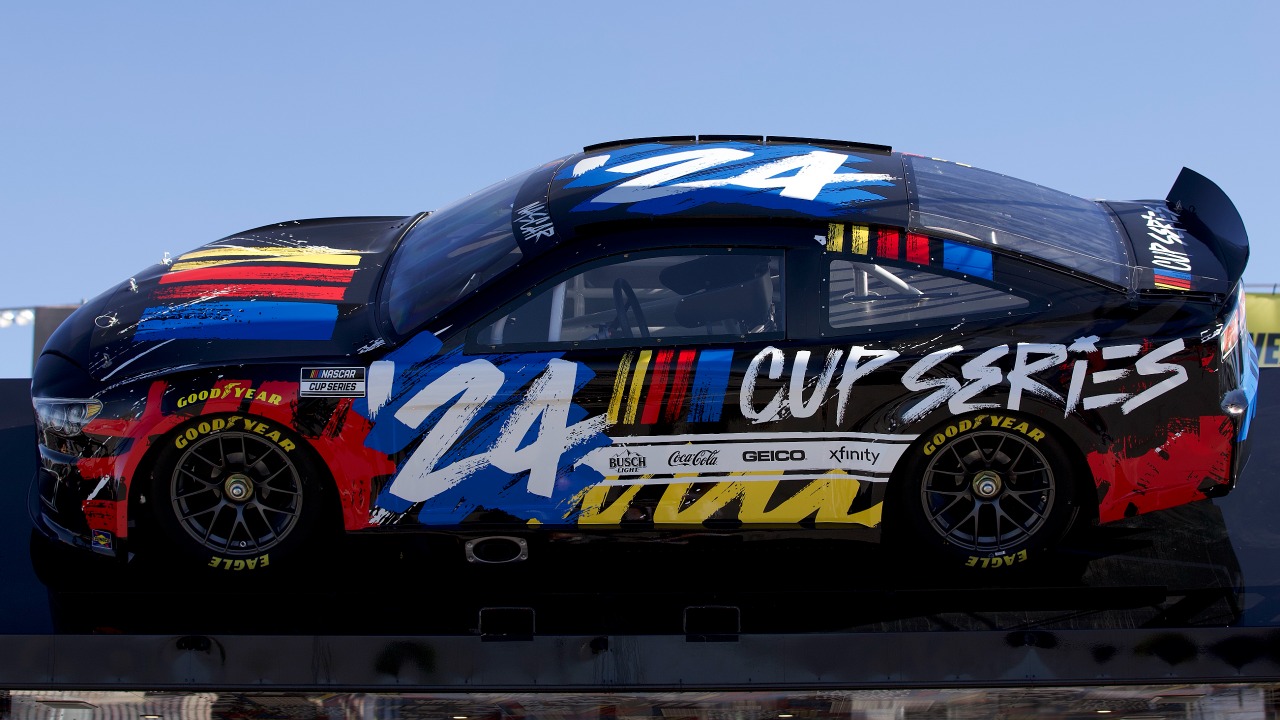
An ex Formula 1 race winner is attempting one of the most audacious pivots in modern motorsport, mounting a public campaign to secure a full time seat in the NASCAR Cup Series. His push comes at a moment when the boundaries between elite racing categories are blurring, and when both F1 and NASCAR are reassessing what kind of star power they want on their grids.
The bid has ignited debate across paddocks and fan bases about whether a former grand prix specialist can truly adapt to the rough edged world of stock cars, and whether NASCAR teams are prepared to gamble on a global name rather than a homegrown oval expert. It is also unfolding against a backdrop of other high profile drivers locking in their futures, from Daniel Ricciardo’s retirement to Valtteri Bottas’s return with Cadillac, which sharpens the spotlight on the few remaining open seats.
The ex F1 driver making a NASCAR play
The most concrete push for a NASCAR Cup Series opportunity is coming from a Former Formula 1 driver who has begun actively campaigning for a place on the 2026 grid. Reporting describes him as a young competitor who lost his F1 seat before the new season and is now positioning stock car racing as his preferred route back to the global stage, rather than waiting on a reserve role or a lower tier single seater program. His effort is framed not as a casual experiment but as a deliberate attempt to build a second career in the Cup Series, with public comments and behind the scenes conversations aimed at convincing team owners that his open wheel pedigree can translate to heavy, high power stock cars in the top level of NASCAR.
The driver’s situation reflects how unforgiving the modern F1 marketplace has become, with teams willing to replace even promising talents if they do not deliver immediate results. Once his place on the grand prix grid disappeared, he moved quickly to explore alternatives, and the Cup Series emerged as the most attractive option because it offers a full national schedule, major sponsorship exposure and a clear hierarchy of teams. Coverage of his campaign notes that he is targeting a proper full time seat rather than a handful of guest appearances, a distinction that underscores how serious he is about embedding himself in NASCAR rather than treating it as a novelty.
Why NASCAR’s door is suddenly ajar for F1 alumni
The timing of this push is not accidental, because NASCAR has already seen how a high profile international arrival can shake up the Cup Series. When SVG, a multiple time champion from another discipline, stunned the field with a debut victory on a street circuit, it proved that an outsider with elite car control and race craft could adapt quickly to stock cars in the right conditions. That result has become a reference point for every crossover hopeful, including the current ex F1 campaigner, who can argue that his own background in high downforce machinery and complex race strategy is at least as strong as SVG’s résumé was before his first Cup start.
Yet the same example has also made some fans more skeptical. As one recent discussion of a 25 year old F1 driver’s interest in NASCAR noted, supporters are already pushing back against the idea of an “SVG 2.0,” warning that not every open wheel convert will replicate that immediate success. Although the commentary acknowledged that a visiting F1 driver would not automatically be relegated to the back of the garage, it also stressed that the unique demands of the Cup Series, from pack racing on superspeedways to tire management on worn short tracks, make it unlikely that a newcomer could dominate straight away, even as a guest driver. That tension between opportunity and realism is the environment into which the former F1 racer is launching his campaign.
Ricciardo’s retirement and the shrinking F1 lifeboats
The broader F1 landscape helps explain why a NASCAR switch has become so attractive. Daniel Ricciardo, one of the most recognizable faces of the hybrid era, has formally confirmed that he has retired from motor racing for good, choosing instead to become an ambassador and public face for a major automotive brand. His decision closes the door on one of the most obvious comeback stories and signals to other drivers that the window for returning to the F1 grid can shut quickly, even for a multiple grand prix winner. Ricciardo’s own journey, which included a winless 2015 campaign for Red Bull followed by a resurgence that delivered a maiden pole position in Monaco and victory at the Malaysian Grand Prix in 2016, illustrates how volatile a top level career can be, and how quickly a star can move from title outsider to retired figurehead.
Ricciardo had previously been linked with a potential move into stock car racing after his shock F1 Exit, with one report describing how “Daniel Ricciardo Linked To Huge NASCAR Move After Shock” departure from the grid had prompted speculation about him taking the wheel of a Cup car. That chatter, which surfaced when he was still only 35, showed that NASCAR is increasingly seen as a viable second act for elite single seater drivers who still crave competition but no longer have a clear path in F1. The fact that Ricciardo ultimately chose retirement and a corporate ambassador role instead of pursuing that route leaves a vacuum that the current ex F1 campaigner is eager to fill, positioning himself as the next big crossover story at a time when the most obvious candidate has stepped away.
Cadillac, Bottas and the battle for elite seats
At the same time, the arrival of Cadillac as a new F1 entrant has tightened the market for experienced drivers who might otherwise have looked to NASCAR. Team boss Graeme Lowdon has explained that the Team cast the net widely when selecting its 2026 race lineup, speaking to a broad range of candidates before ultimately choosing Valtteri Bottas and Sergio Pérez. Lowdon, who also manages Chinese driver Zhou, made clear that the priority was proven race pace and development feedback for a manufacturer that is still at the start of its journey in the sport. That decision to go with two established grand prix winners rather than an American hopeful or a crossover specialist underlines how difficult it is for displaced F1 drivers to find a way back once the musical chairs stop.
Bottas has already been through a seat fit with Cadillac as part of his preparations for the 2026 season, a process that has been documented in detail as the team integrates him into its new car. Reports on the session describe how Bottas worked closely with engineers to fine tune his driving position and controls, a reminder that even for a veteran, joining a fresh project requires months of adaptation. For the ex F1 driver now eyeing NASCAR, the message is stark. With Cadillac’s seats locked in and other established teams similarly settled, the realistic options for staying in F1 are dwindling. That scarcity makes the Cup Series, with its larger field and more fluid driver market, an increasingly logical target for someone determined to remain at the top level of professional racing.
IndyCar, endurance racing and why NASCAR still stands out
The former F1 racer’s decision to prioritize NASCAR also comes in the context of other open wheel and endurance alternatives. The Japanese driver Yuki Tsunoda, for example, has been linked with a possible IndyCar switch by 2026, with reports noting that The Japanese competitor, who has spent four seasons with Red Bull’s junior team, is hoping Honda can use its influence to secure him a seat in the American single seater series. That pathway, which would keep Tsunoda in a formula style car with high downforce and road and street circuits, is arguably a more natural transition for an F1 graduate than jumping straight into stock cars. Yet it is also a more crowded field, with limited full time rides and a strong pipeline of domestic talent.
More from Fast Lane Only