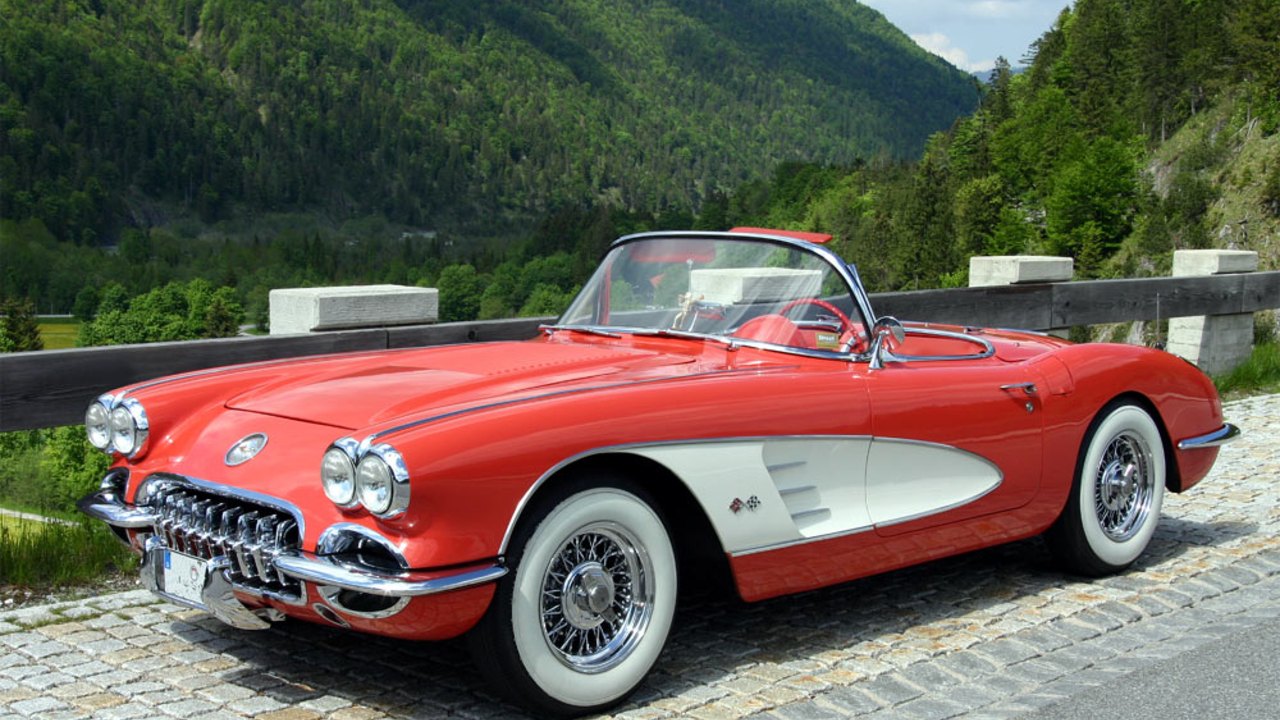
After four decades sealed away in a family garage, a 1958 Chevrolet Corvette is emerging into the light as both a time capsule and a financial lifeline. The car, long treated as an unfinished project and heirloom, is now headed to auction, where its story of dormancy, devotion, and difficult choices will be tested against a hot market for first-generation Corvettes.
What began as a cherished sports car and then a stalled restoration has become a case study in how nostalgia, rarity, and rising values intersect when a family finally decides to let go. The result is a Corvette that carries not only period-correct hardware but also the weight of 40 years of memories.
The family project that never quite got finished
The car at the center of this sale spent 40 years tucked away in a Connecticut garage, effectively frozen in time while life moved on around it. Family members grew up with the sight of the dormant Corvette, recalling an older brother driving the car before it was parked and left as a long-term project that never quite returned to the road. That extended hibernation, stretching to a full 40 years, turned what might have been a routine restoration into a deeply personal artifact that the family struggled to part with.
Only when circumstances shifted did the Corvette finally leave its garage cocoon and “find its way home” to the broader enthusiast world. The move from private storage in Connecticut to the public arena of an auction catalog marks a decisive break with the past, transforming a static memory into a tangible asset. The car’s long seclusion, documented as 40 years off the road, is now one of its most compelling selling points, signaling to bidders that they are looking at a genuine survivor rather than a car that has been repeatedly modified or flipped.
A period-correct powertrain with serious appeal
Under the hood, the family Corvette is anchored by a 327 cubic inch V8, a choice that aligns with the period even if it is not the original displacement for every 1958 example. The 327 features period-correct components, including Power Pack cylinder heads and a Winters high-performance intake manifold, details that matter greatly to collectors who scrutinize casting marks and part numbers as closely as paint and chrome. While some purists chase cars with their factory-installed engines, a carefully assembled, era-appropriate 327 can be just as attractive, especially when it reflects the way enthusiasts actually upgraded these cars in period.
That focus on “period-correct” hardware is increasingly common in the C1 market. Another 1958 Corvette recently offered after long-term storage was described with a 283 V8 that was correct for the era rather than definitively original, a nuance that still supported a strong asking price. In the case of the family car, the combination of a 327, Power Pack heads, and a Winters intake positions it as a driver-focused build that respects the model’s heritage. For bidders who intend to enjoy the car on the road rather than chase concours points, that blend of authenticity and usability can be more persuasive than a fragile numbers-matching drivetrain.
How a 1958 Corvette fits into today’s market
The timing of this auction is no accident, because values for 1958 Corvettes have climbed into territory that would have been unthinkable when this car was first parked. Typically, a 1958 Chevrolet Corvette in good condition with average specification is valued around $90,540, a benchmark that reflects steady demand for solid driver-quality examples. At the upper end of the spectrum, the highest sale for this model in recent years reached $660,000, a figure reserved for exceptionally rare, highly documented cars with top-tier provenance.
Recent auction catalogs underscore how wide the spread has become. A fuel-injected 1958 Corvette scheduled for Arizona 2026 is guided at $100,000 to $130,000 USD, cataloged as Lot 142, and is being Offered Without Reserve on a Friday sale day, with Bloomington Gol credentials signaling serious collector interest. At the same time, private sellers have tested ambitious prices for long-stored cars, including a 1958 Corvette that spent 30 years off the road and surfaced with a 283 described as period-correct rather than original. Against that backdrop, a family-owned, 40-year-garaged example with a carefully chosen 327 and documented history is entering a market that is both competitive and receptive to compelling stories.
Rarity, condition, and the lure of a time capsule
Condition and originality remain the twin pillars of Corvette valuation, and the 1958 model year offers both opportunities and pitfalls. Some cars have survived in what sellers describe as Mint Condition, with the iconic Grill the 58 models are known for, complete with nine vertical spokes, and a louvered Hood that still presents as it did in period. Others have fared far worse, such as a 1958 that sat 35 years in a yard and deteriorated to the point that its future was closer to a parts car than a restoration candidate. In that case, If the original color was indeed Panama Yellow, the car would have been one of only 455 finished in that hue, yet even that rarity struggled to overcome decades of neglect.
The family Corvette sits somewhere between those extremes, preserved indoors rather than in the elements, yet still a project rather than a turnkey showpiece. Long-term storage in a Connecticut garage has likely spared it the structural decay that plagues yard cars, while the presence of period-correct performance parts suggests a thoughtful, if incomplete, restoration path. For buyers, the appeal lies in acquiring a car that retains its time-capsule character without the terminal rust or missing components that can make similar finds financially untenable. In a market where even rough 1958s can command attention, a garage-kept example with a coherent story stands out.
When sentiment meets financial reality
Behind the glossy catalog photos and specification sheets, the decision to sell a long-held Corvette often reflects personal pressures as much as market opportunity. In one recent case, a family that had undertaken a 3,000-mile rescue mission to revive its 1958 Corvette ultimately viewed the car as a potential financial lifeline When medical expenses began to mount. The vehicle’s sentimental value did not disappear, but it had to be weighed against urgent, real-world needs, a calculus that many families with collectible cars quietly confront.
A similar tension is evident in the current family sale. The Corvette that once symbolized shared memories and future plans has become a means to address present-day obligations, whether those involve health costs, estate planning, or simply the recognition that the next generation is unlikely to complete a decades-old project. Other long-term owners have reached comparable crossroads, including a 62-Years-Owned 1958 Corvette recently listed through Hagerty, where the phrases Corvettes for Sale and Corvette Offered captured the bittersweet transition from Years of private enjoyment to public bidding. For the Connecticut family, sending their 40-year garage companion to Auction is less an act of surrender than a decision to let the car’s value, both emotional and monetary, move on to someone ready to drive it into its next chapter.
More from Fast Lane Only