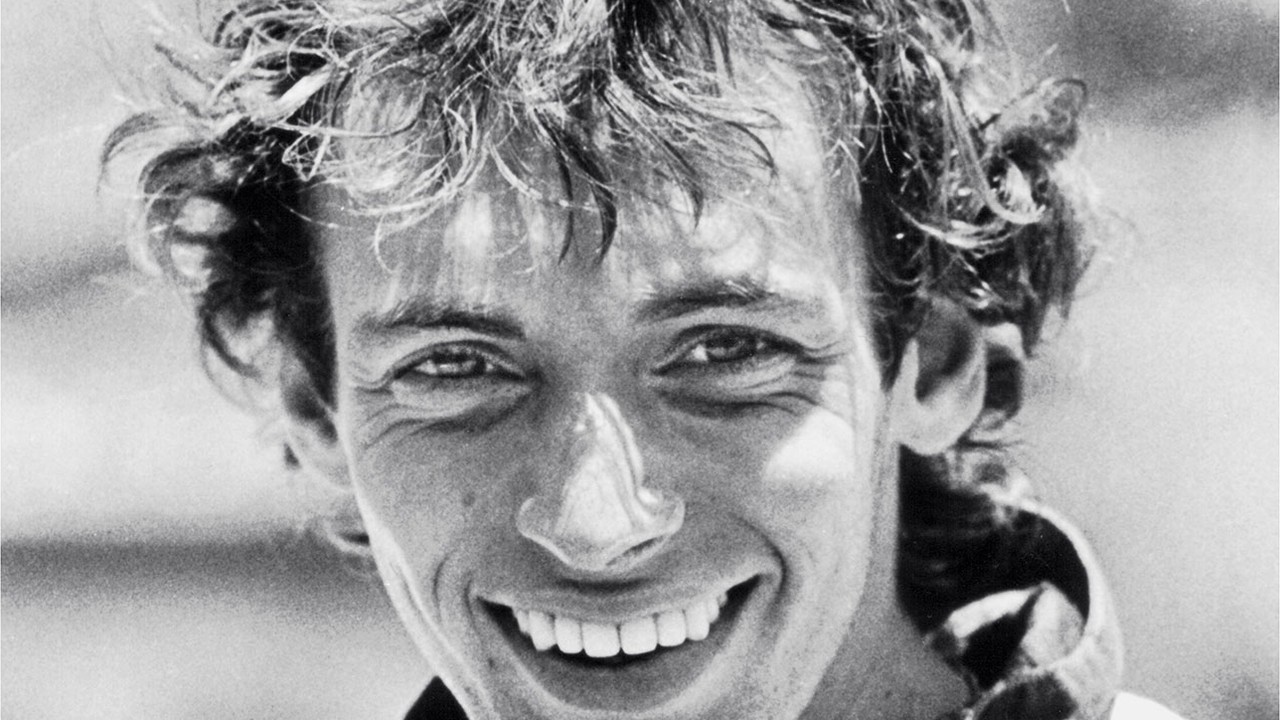
On May 28, 1983, Stefan Bellof drove a Porsche 956 around the Nürburgring Nordschleife in 6 minutes, 11.13 seconds. He did it in practice for a 1,000-kilometer race, in normal session traffic. Nobody went faster around the old circuit for 35 years.
That lap came from a driver in his first season with the Porsche works team. It also stands out because he set it in a car built to last a long-distance race, not one tuned for a single flying lap.
Here is how the lap happened, what the 956 was, and why the mark lasted until 2018.
Stefan Bellof’s lap, by the numbers
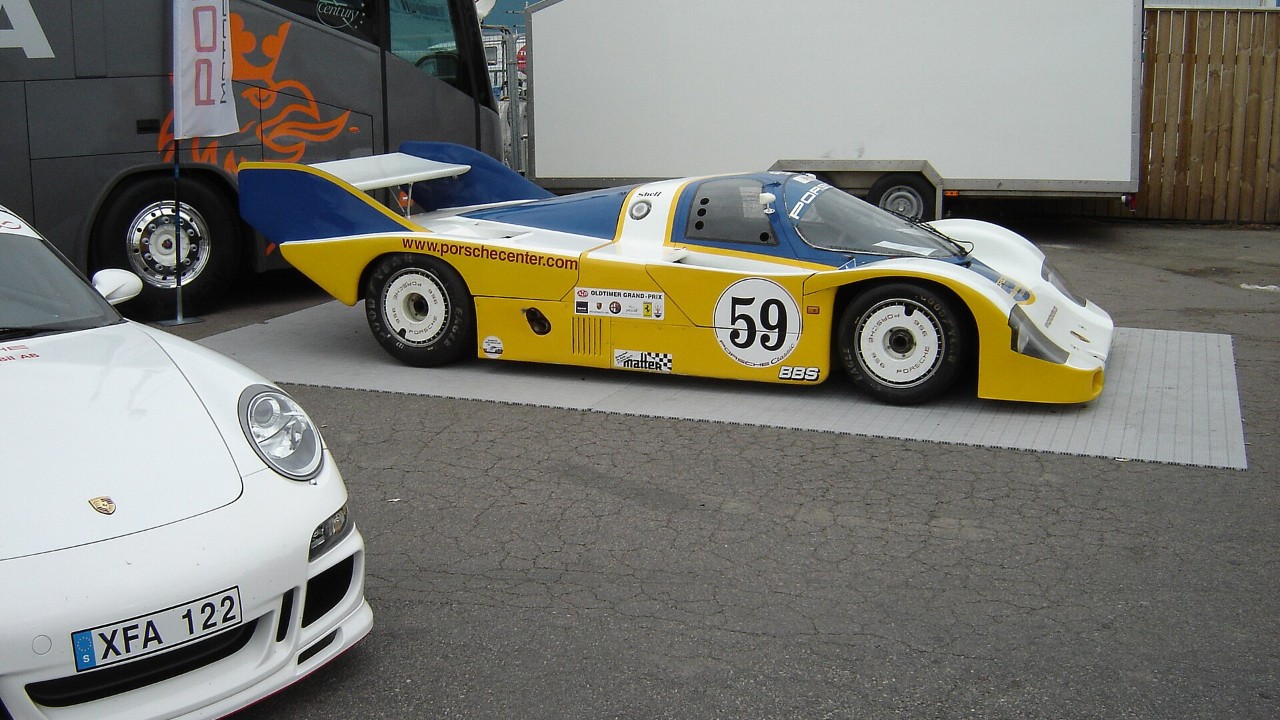
Bellof averaged 202.053 km/h, according to Porsche’s Group C media kit. He was a Porsche works driver at the time, and the session was practice for the Nürburgring 1,000 km.
The track was a little shorter than usual that year. Construction work had cut the Nordschleife to 20.835 km, the Swiss classic car site Zwischengas reports. Even so, Bellof became the first driver to average more than 124 mph for a lap there, Porsche’s Christophorus magazine says.
The margin over his rivals was large. Bellof was five seconds faster than former Formula 1 driver Jochen Mass, Christophorus recounts. He was also about half a minute faster than Keke Rosberg, the reigning Formula 1 world champion.
A driver who thought he left time out there
Bellof was 24 when he joined Porsche in the winter of 1982, according to Christophorus. He came from Giessen, in Germany, and he was still new to the works team in May 1983.
Even the people around him doubted the clock at first. Rainer Braun, then the course spokesman and Bellof’s manager, recalled the moment: “When the time appeared on the display, I thought, ‘That can’t be right—there must be something wrong with the clock.’”
Bellof, meanwhile, was not satisfied. “I could have gone even faster,” he said, according to the magazine. “But I made two mistakes. And a 911 briefly got in my way.”
What made the Porsche 956 so quick
The 956 was Porsche’s car for the new Group C rules, and 1982 was its first season, the Porsche media kit says. It used an aluminium monocoque. Its engine was a four-valve biturbo, and only the cylinder heads were water-cooled, while the cylinders were air-cooled.
Porsche’s May 2018 press release gives more detail on the 956 C. It lists a six-cylinder boxer engine of 2,649 cc with more than 620 PS. The same release says the car was known for huge downforce, reliable gearboxes and strong brakes.
The record car was chassis 007, according to that release. In addition, Christophorus says it ran 13-inch rims on the front axle for the first time that weekend.
A car that won almost everything
The 956 had already proved itself at Le Mans. In 1982, it finished first, second and third, with Jacky Ickx and Derek Bell winning after 359 laps, the media kit says. Then it won again in 1983, 1984 and 1985, so it went unbeaten at Le Mans for four straight years.
Porsche also won the World Sportscar Championship with the 956 at the end of 1982, and Ickx defended the title in 1983. Across 1982 to 1986, the 956 and 962 C together brought Porsche five drivers’ championships, the company says.
Bellof did not win the 1983 race after his record practice. Instead, Mass and Ickx won it in another 956, Zwischengas reports. A year later, however, Bellof won the 1984 Nürburgring 1,000 km with Derek Bell, according to Porsche. He also won the 1984 World Sportscar Championship, Christophorus says.
Why the record stood for 35 years
Part of the answer is simple. Sports prototypes stopped racing on the Nordschleife after 1983, Zwischengas notes. As a result, no comparable car had a racing reason to attack the old circuit again.
The mark finally fell on the morning of June 29, 2018. Timo Bernhard, another Porsche works driver, lapped in 5:19.55 in the Porsche 919 Hybrid Evo, according to Porsche. That was 51.58 seconds quicker than Bellof’s time, and Porsche puts the gap between the two runs at 35 years and 31 days.
The two laps were not like for like. Zwischengas points out that Bernhard ran on a closed track in a car modified outside any racing regulations, so it calls his lap unofficial. Bellof, by contrast, ran in practice traffic in a car that still had to start a 1,000 km race.
Seven weeks before Bernhard’s run, Porsche planned to put the two eras on track together. Its release scheduled Bernhard in the 919 Hybrid Evo and Hans-Joachim Stuck in 956 C chassis 005 for a demonstration lap of the Nordschleife on May 12, 2018. For Stefan Bellof, the number on the timing screen in 1983 remains the one Porsche quotes: 6:11.13.
More from Fast Lane Only
- Unboxing the WWII Jeep in a Crate
- 15 rare Chevys collectors are quietly buying
- 10 underrated V8s still worth hunting down
- Police notice this before you even roll window down
This article was created with the help of AI and was reviewed and edited by Fast Lane Only editors before publication.