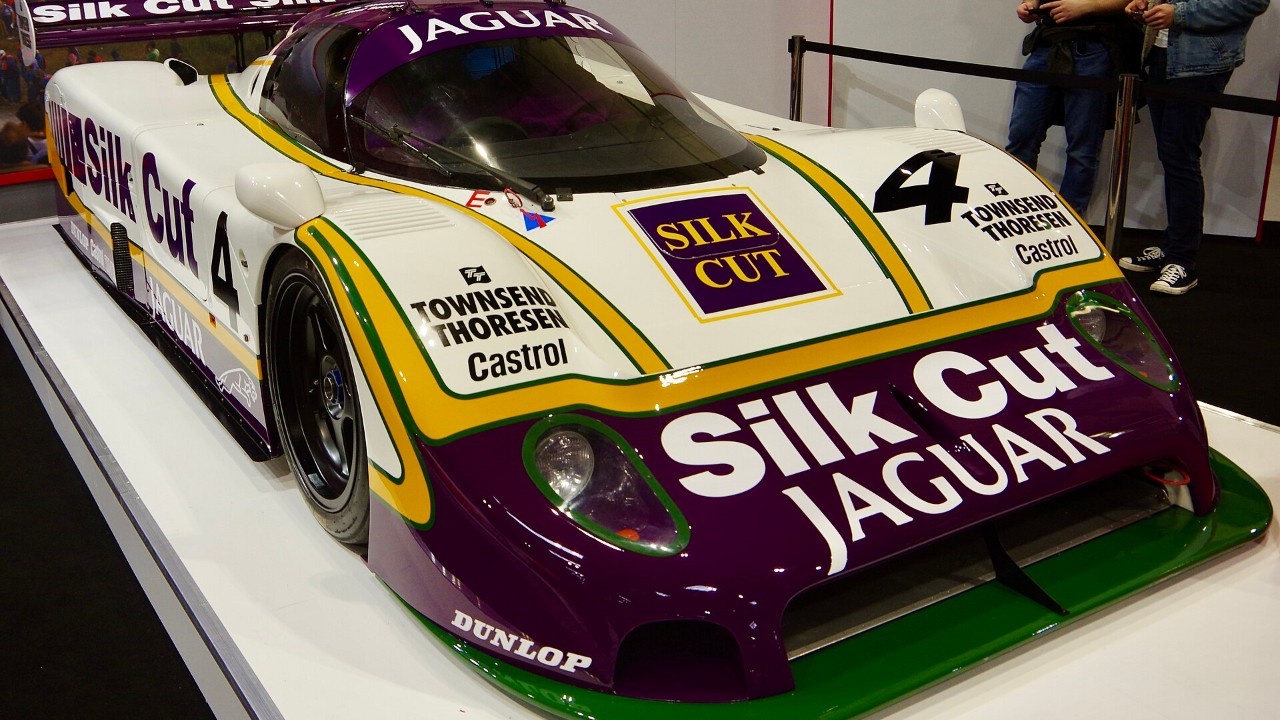
In June 1988, a Jaguar XJR-9 with a 7.0-liter V12 won the 24 Hours of Le Mans. Jan Lammers, Johnny Dumfries and Andy Wallace shared the winning car. It was Jaguar’s first Le Mans victory since a D-type won in 1957.
The win also ended a long run for Porsche, which had won every Le Mans since 1981. For Jaguar, it was a return to the top step at the race it had last won three decades earlier.
Here is how the car came together, what it did that weekend, and where the winning chassis lives today.
Built by TWR for one job
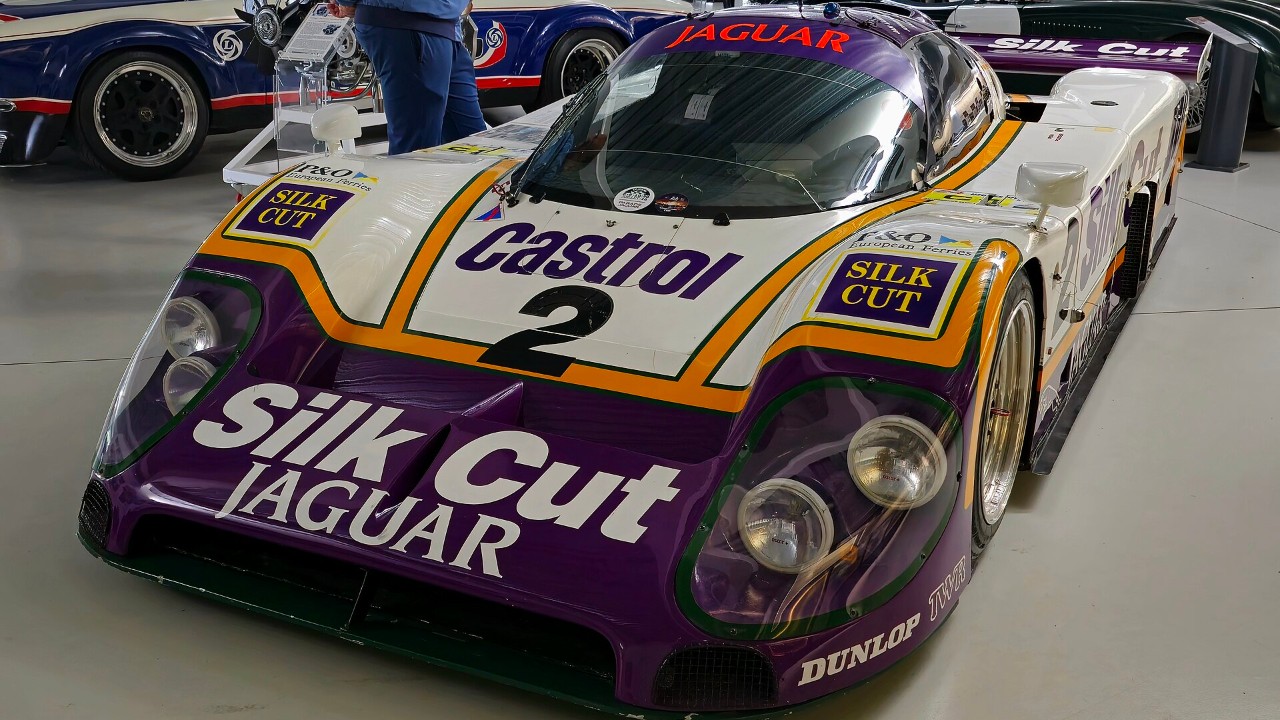
Jaguar handed the project to Tom Walkinshaw Racing. TWR had already dominated the European Touring Car Championship with the Jaguar XJS, and it took on the task of designing a sports racing car to win Le Mans, according to Jaguar Heritage’s record of the winning car.
Tony Southgate designed the XJR-9, and TWR built it as an evolution of the earlier XJR-8, Supercars.net’s profile explains. The team raced it in FIA Group C and in IMSA Camel GTP. For Le Mans, it also made a low-drag version called the XJR-9LM.
The road to 1988 took time. A Group 44 Jaguar finished 13th in 1985, which made it the first Jaguar classified at Le Mans in 22 years, Jaguar Heritage says. Then the TWR cars of 1986 and 1987 failed to finish because of incidental problems rather than basic flaws.
The Jaguar XJR-9 V12
Power came from Jaguar’s V12. In 1988, the cars ran either a 6.0-liter engine with 650 bhp or a 7.0-liter version with 750 bhp, according to Jaguar Heritage. The 750 bhp figure belongs to the bigger 7.0-liter engine.
That racing V12 grew out of the production 5.3-liter unit from the Jaguar XJS road car, Supercars.net says. In fact, Motor Sport magazine called it a “torquey seven-litre” engine in its account of the race.
Five cars, one winner
TWR brought five XJR-9 LMs to the race, which ran on June 11–12, 1988, according to the official 24 Hours of Le Mans site. Porsche answered with three factory 962Cs. Meanwhile, the organizers counted 280,000 spectators.
Porsche held pole position, though. Hans-Joachim Stuck lapped in 3:15.64 in the No. 17 car, the race organizer’s record shows. Even so, Lammers took the lead on the sixth lap, “predictably on the Mulsanne,” Motor Sport recounts.
The No. 2 Jaguar went on to cover 394 laps, or 3,313.15 miles, according to Jaguar Heritage. The official site puts its average speed at 221.665 km/h. Wallace, notably, won as a Le Mans rookie.
Fourth gear to the finish
The finish was not smooth. Lammers overheard teammate Raul Boesel describe how his own Jaguar’s gearbox had failed, Motor Sport says. When Lammers then heard similar noises from his car, he held it in fourth gear.
“I told myself that was it, I wasn’t going to touch that lever any more,” Lammers told the magazine. Jaguar Heritage’s record says the winner finished despite being stuck in fourth gear for the last 40 minutes.
Behind the Jaguar, the No. 17 Porsche 962C of Derek Bell, Stuck and Klaus Ludwig finished second, the official site says. That car lost about six minutes to a refueling error. Meanwhile, the Mario, Michael and John Andretti Porsche took third.
Of the five Jaguars, two retired, and the other three finished first, fourth and 16th, according to Jaguar Heritage. Derek Daly, Kevin Cogan and Larry Perkins drove the fourth-place car.
What the 1988 win meant
Porsche had won Le Mans seven straight times, from 1981 to 1987, the official site says. The XJR-9 ended that run. It also gave Jaguar its sixth Le Mans win.
The distance shows how far the sport had come. The 1957 D-type winner covered 2,732 miles, against 3,313.15 miles for the 1988 car, Jaguar Heritage notes. Later that year, Jaguar also won the world championship, with victories in six of ten Group C races.
Where the winning car is now
The winner carries the chassis number XJR-9 LM 488. Its season before June had gone badly. It retired at Jerez with gearbox trouble, spun off at Jarama and Monza, and did not start at Silverstone, Jaguar Heritage says.
In fact, Le Mans was its only finish. After that, Jaguar withdrew it from racing and passed it to the Jaguar Daimler Heritage Trust. It has since appeared at events such as Goodwood and Coventry Motofest, but it has never run again at full race pace.
Today, the Jaguar Daimler Heritage Trust still owns the Jaguar XJR-9 winner, under inventory number 094/J.49, and it is not road registered.
More from Fast Lane Only
- Unboxing the WWII Jeep in a Crate
- 15 rare Chevys collectors are quietly buying
- 10 underrated V8s still worth hunting down
- Police notice this before you even roll window down
This article was created with the help of AI and was reviewed and edited by Fast Lane Only editors before publication.