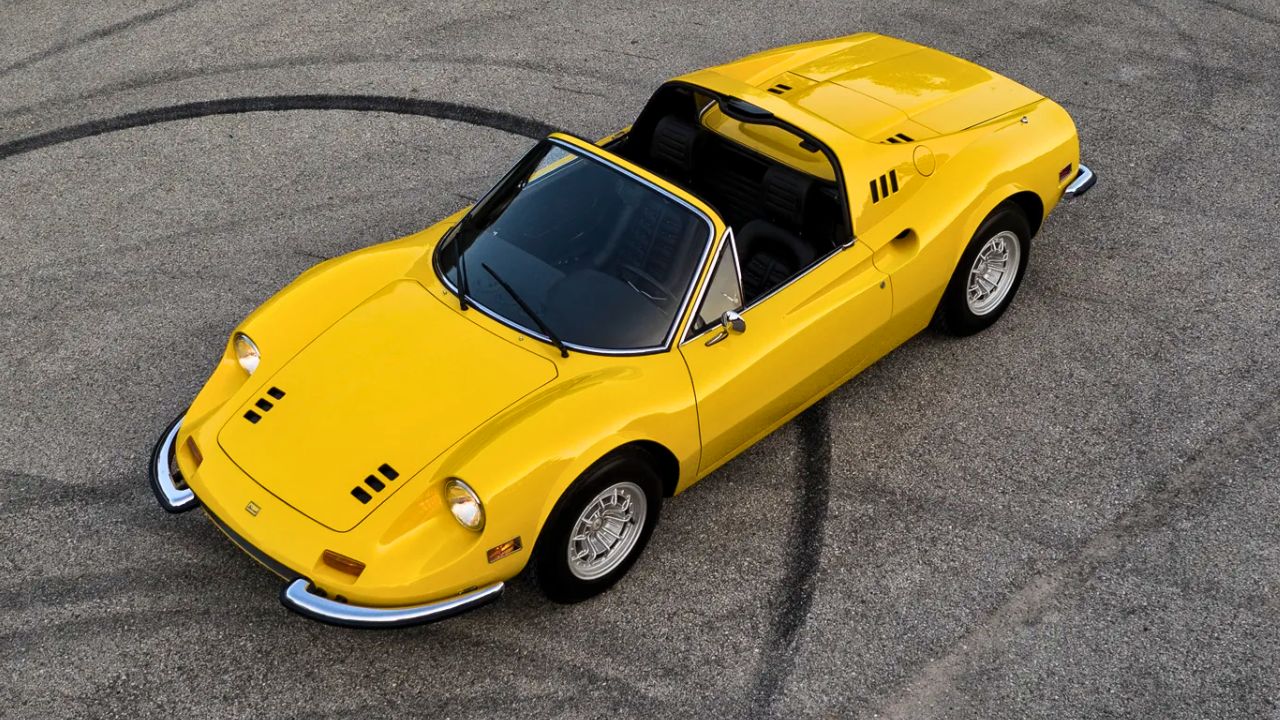
The 1974 Ferrari Dino 246 GTS wasn’t supposed to be the star of the show. It didn’t have twelve cylinders. It didn’t wear a Ferrari badge. And it wasn’t built to chase top speeds. But somehow, it ended up being one of the most balanced, best-driving cars to come out of Maranello in the early ’70s.
Today, the Dino’s story hits different. It’s no longer the odd one out—it’s the one that people can’t stop talking about. Let’s break down exactly why this so-called mistake turned into something unforgettable.
Built Without the Badge
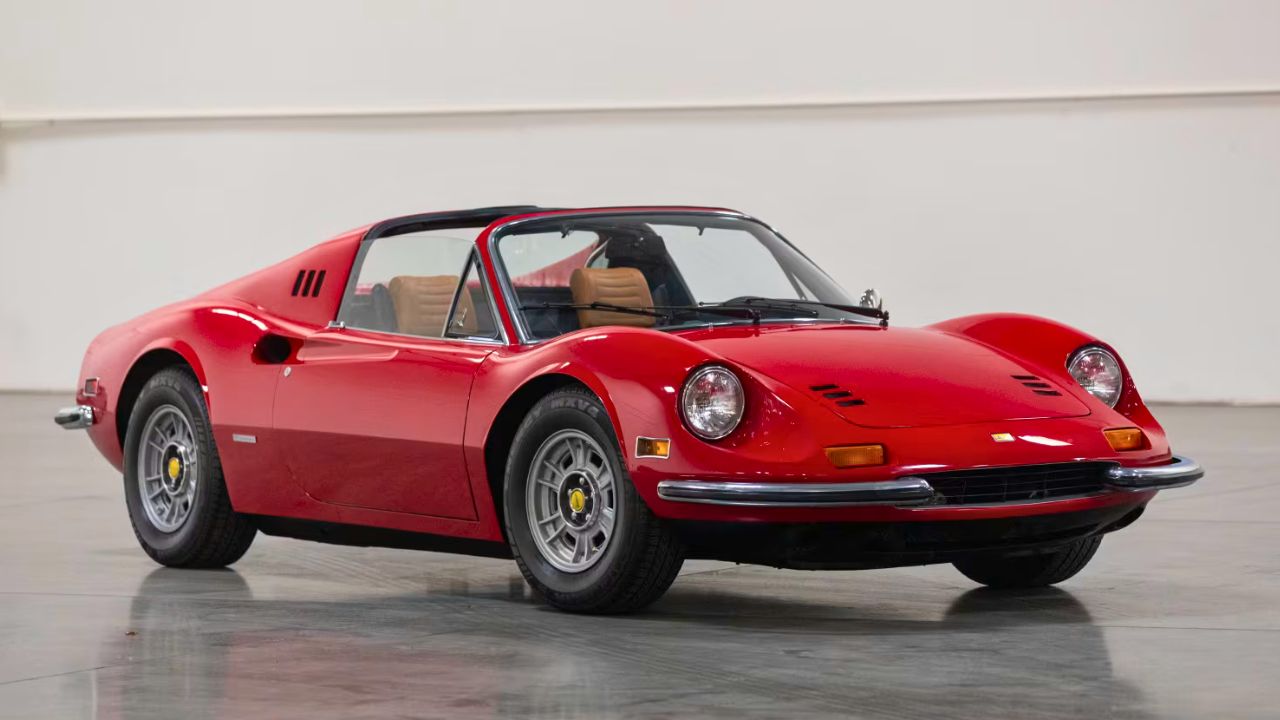
Ferrari didn’t even badge the Dino as a Ferrari. The 246 GTS carried “Dino” script in honor of Enzo’s late son, Alfredo, who championed small-displacement V6 engines. It was a calculated move to separate this V6-powered car from the V12s wearing the prancing horse.
Still, the 246 GTS was built by Ferrari and assembled in Maranello. It shared Ferrari chassis, suspension geometry, and even Pininfarina styling. To many, it didn’t matter what emblem sat on the nose—the car had the bones, feel, and proportions of a proper Ferrari.
That Mid-Engine V6 Hits Just Right
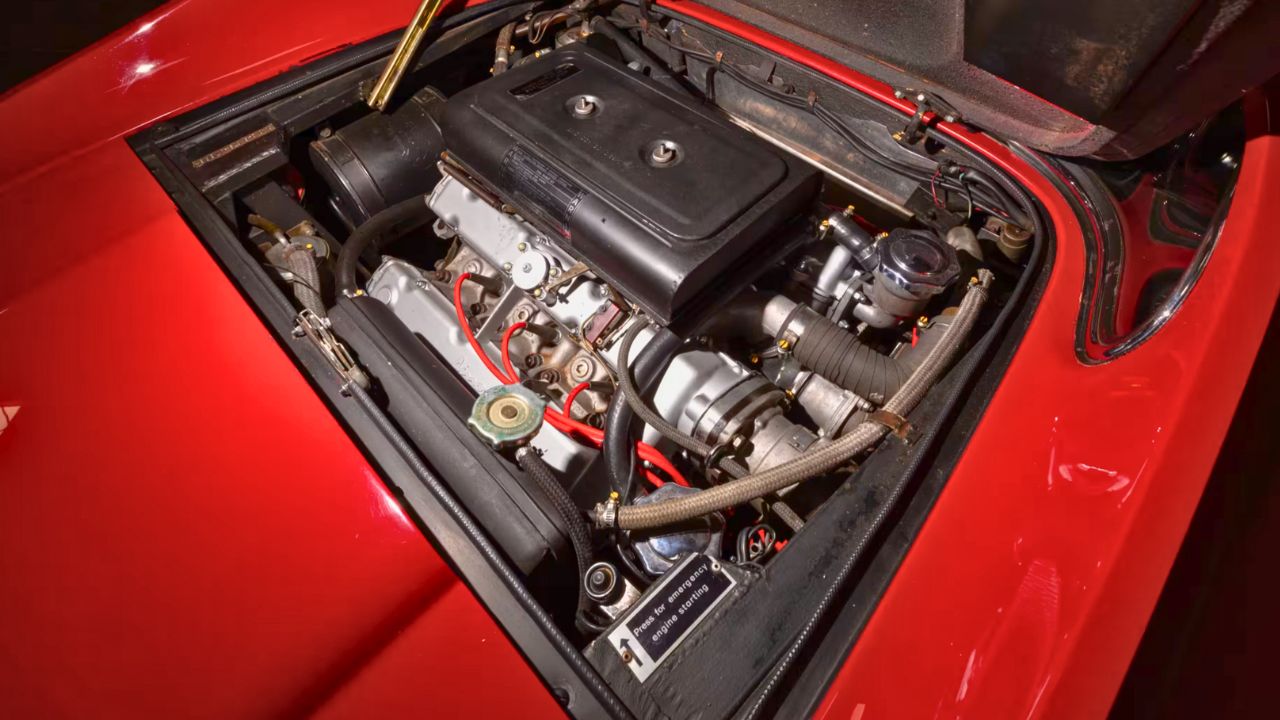
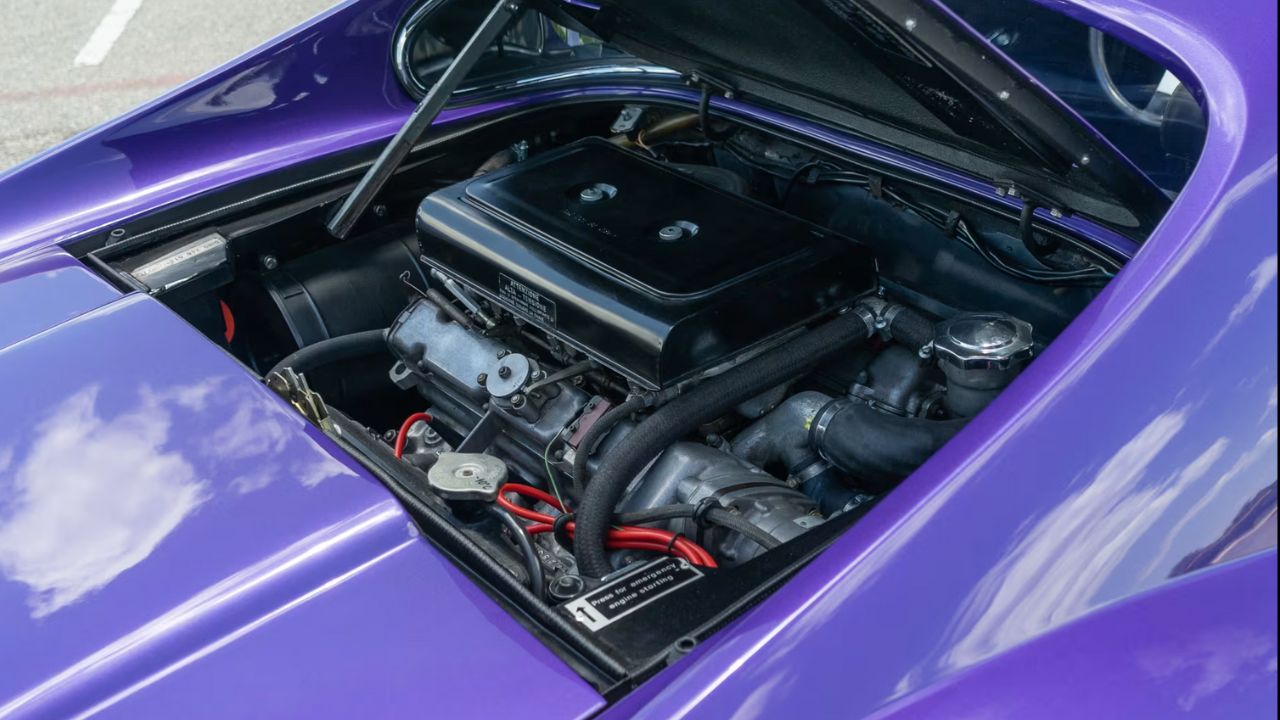
At the heart of the 246 GTS was a 2.4-liter DOHC V6 making 195 horsepower at 7,600 rpm. It wasn’t built for brute force—it was tuned for balance. The power came on smoothly, and the redline begged you to stay in the throttle.
That V6 sat midship, giving the Dino sharp reflexes and near-perfect weight distribution. Pair that with a 5-speed manual and a curb weight under 2,500 pounds, and the GTS wasn’t about straight-line numbers—it was about precision. It felt planted, nimble, and completely dialed in.
The “S” in GTS Opened the Sky
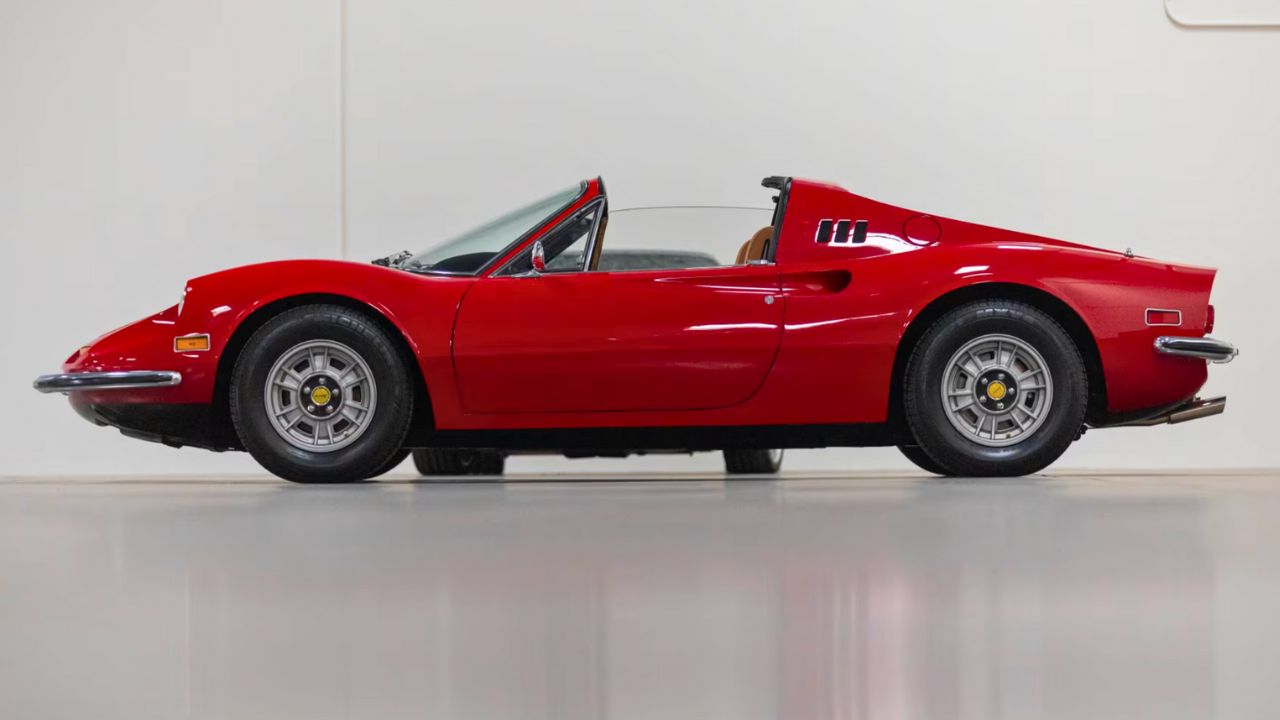
The 246 GTS added a removable targa top that tucked behind the seats, transforming the coupe into something more playful without ruining the car’s lines. Pininfarina kept the roofline clean—this wasn’t some hacked-up convertible.
Open-air driving only made the experience better. You could hear the V6 echo off canyon walls, feel the wind cut through the cabin, and soak in the mechanical clarity the Dino offered. It wasn’t showy—it was personal. For many, the GTS was the version to have.
Styling That Still Stops Traffic

The Dino 246 GTS had curves in all the right places. Designed by Leonardo Fioravanti at Pininfarina, the car was all flowing surfaces, tucked-in waistlines, and delicate details. The covered headlights, the tucked front bumper, the tapering tail—it all worked.
It wasn’t about excess—it was clean, almost restrained compared to its later successors. This car didn’t shout; it didn’t need to. The proportions did the talking. Even parked, it looked like it was moving. And despite lacking the Ferrari badge, the Dino arguably had one of the best designs to leave Maranello.
Independent Suspension All Around
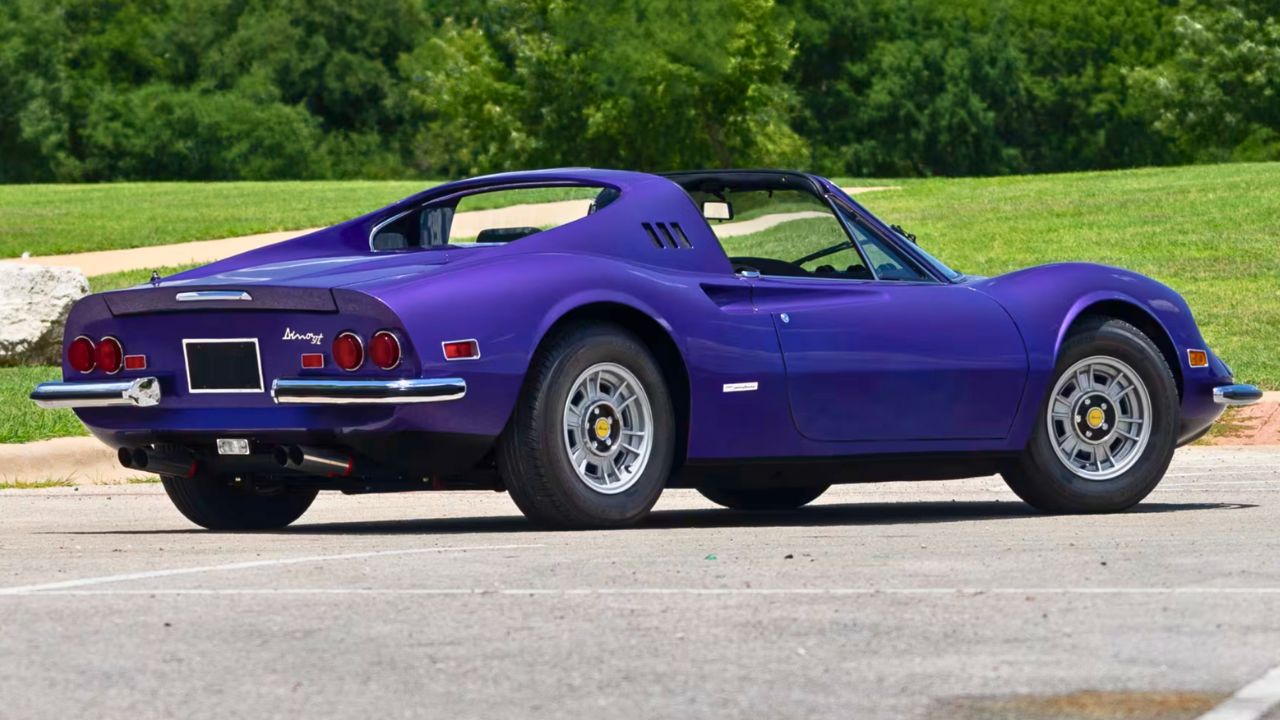
Ferrari didn’t cut corners under the skin. The 246 GTS came with unequal-length A-arms at all four corners, coil springs, and anti-roll bars. It was engineered to stay composed at the limit, and it showed.
The rack-and-pinion steering was quick and precise, feeding back every bump and camber change. Unlike some front-heavy V12s of the time, the Dino was easy to place. It rotated predictably and gave the driver constant feedback. You didn’t have to fight it—you just worked with it.
Inside, It’s All Business
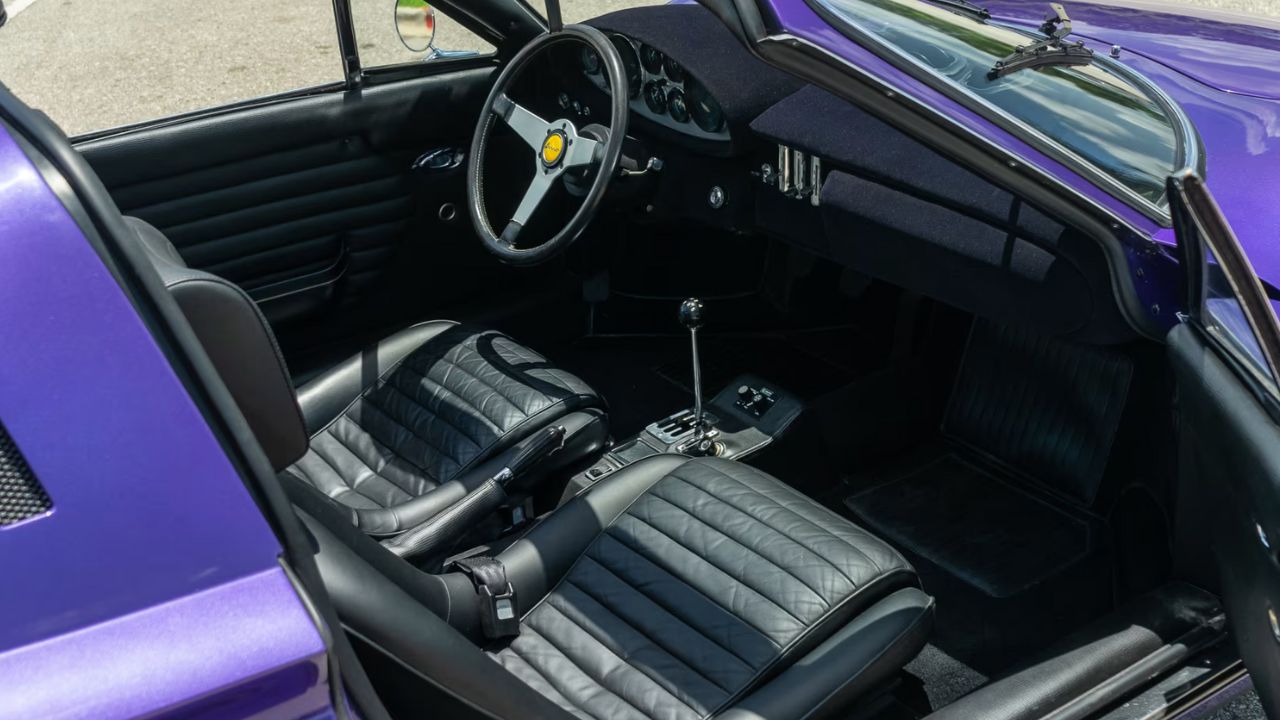
Step inside a Dino 246 GTS, and you’re met with a cockpit that skips the flash. The dash is simple—black vinyl, straightforward gauges, and toggle switches laid out like a pilot’s panel. It’s focused, not fancy.
The bucket seats were trimmed in leather and sat low in the chassis, giving you a real connection to the car. Visibility was great, thanks to slim pillars and wide glass. There was no tech, no distractions—just you, the car, and the road ahead. Everything inside had a purpose, and nothing was overdone.
A Gearbox That Talks Back
The Dino’s 5-speed gearbox wasn’t just there to move the car—it was part of the experience. The gated shifter, with its open metal gate, had short, mechanical throws and a satisfying click with every change. You felt every shift.
Matched to the free-revving V6, the gearbox kept you engaged. It demanded rhythm and precision, but once you found the flow, it was hard to stop driving. Downshifts felt like second nature. This wasn’t a car you shifted out of habit—it was one you shifted because it felt good.
It Was Never Supposed to Succeed
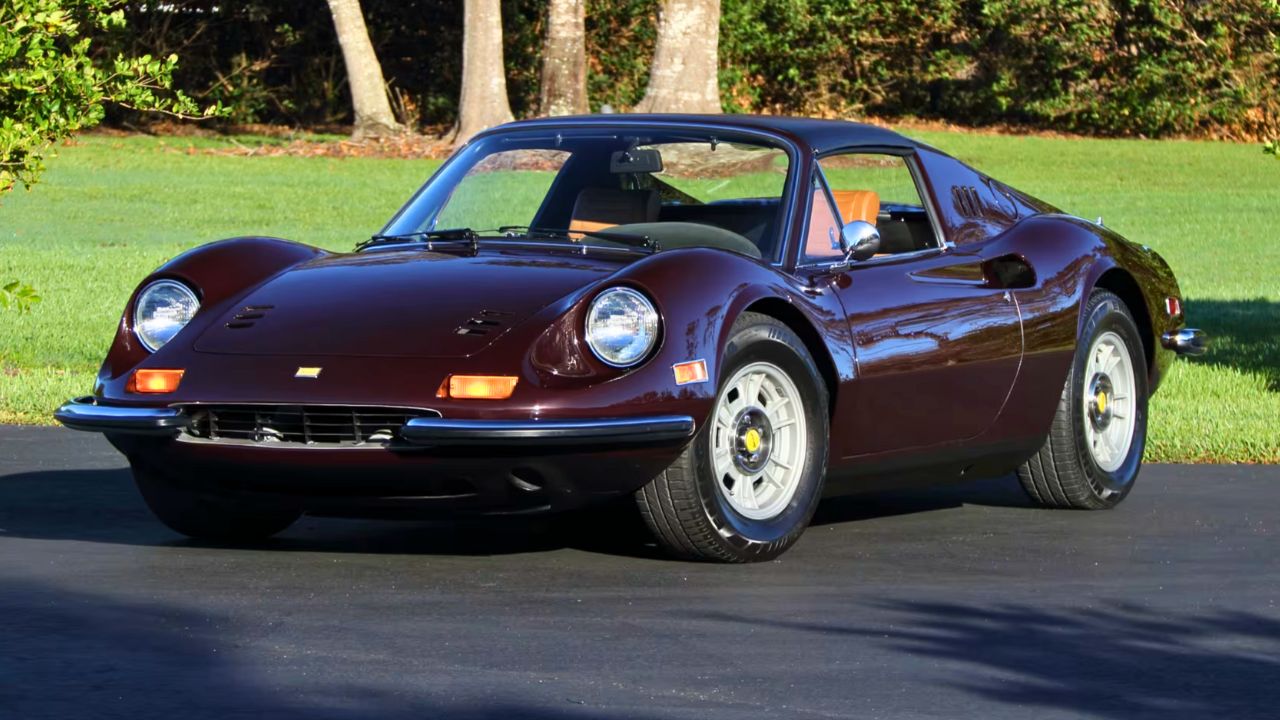
When the Dino launched, it faced skepticism. It didn’t have a V12. It wasn’t badged a Ferrari. And it cost less than half of a Daytona. Many shrugged it off. But the car proved them wrong—big time.
Sales outpaced expectations, especially in America. By the time the 246 GTS wrapped production in 1974, over 1,200 had been built. It gave Ferrari a new audience—drivers who cared more about balance and connection than bragging rights. Today, it’s clear: this so-called “lesser” Ferrari became a milestone.
The U.S. Versions Had Some Quirks
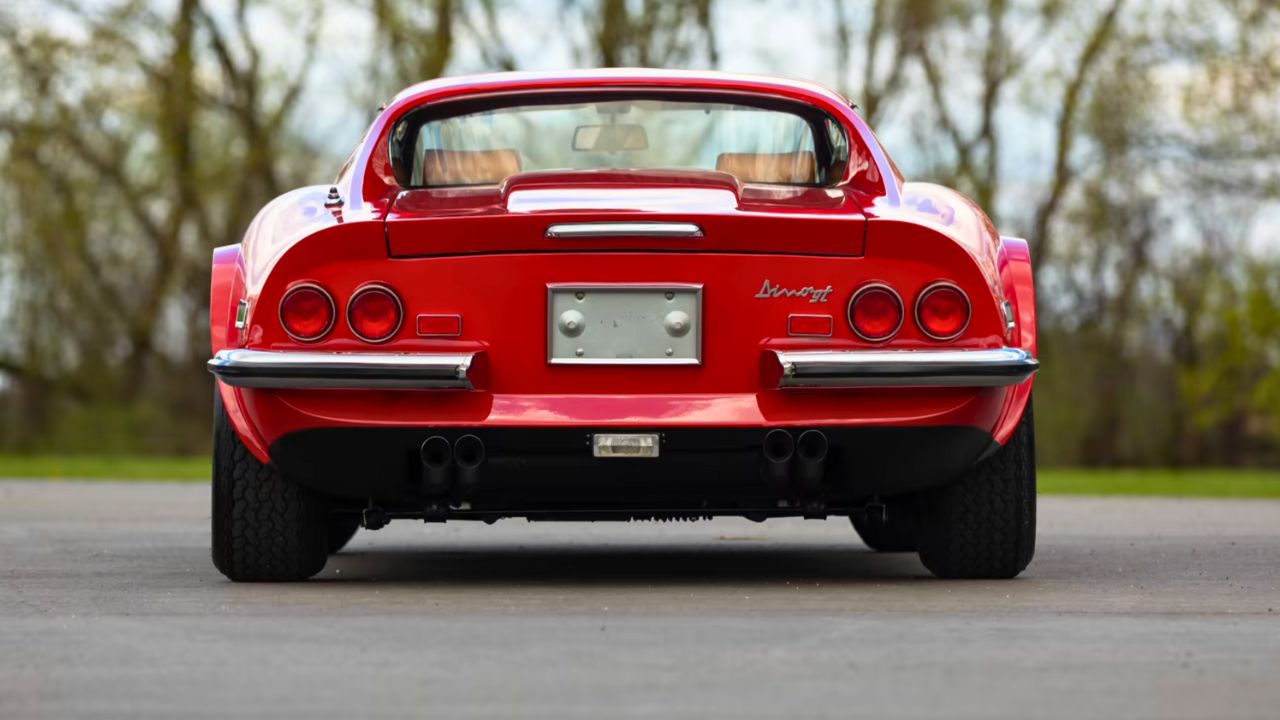
To meet American regulations, U.S.-spec 246 GTS models came with extra features—some functional, some not. Side marker lights were added, as were smog pumps and different gearing. Power dipped slightly due to emissions equipment.
Some models had chairs and flares—the optional wider wheels and fender flares paired with Daytona-style seats. These cars are now the most sought-after. Still, even in federalized form, the GTS didn’t lose its magic. It handled just as well, sounded just as eager, and still looked like nothing else.
Rising from the Underdog Slot
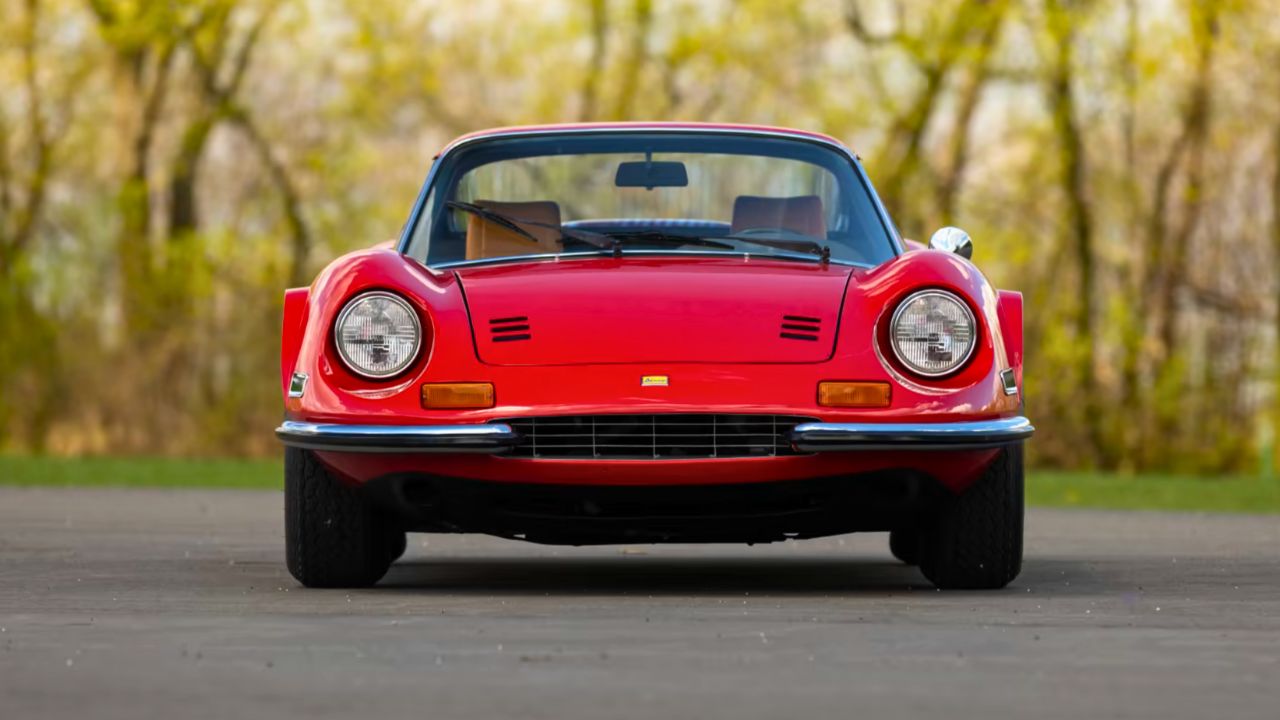
For years, the Dino 246 GTS flew under the radar. It wasn’t a V12. It wasn’t labeled a Ferrari. But times change—and now collectors finally see it for what it is: a pure driver’s car, with soul, balance, and presence.
Values have skyrocketed. It’s no longer the “cheap Ferrari” it once was. But more importantly, its legacy has grown. The GTS proved that great driving machines didn’t need big numbers or big engines—they just needed the right ingredients, put together the right way. And that’s exactly what this car delivered.