Ford has drawn a clear line between its global Bronco strategy and its ambitions in the world’s largest electric vehicle market. The company’s chief executive has signaled that the electrified Bronco New Energy, developed and built in China, will remain confined to that country rather than becoming a shortcut to electrify the American Bronco. The decision underscores how Ford is tailoring products to local conditions while trying to manage expectations for fans of the rugged SUV in the United States.
Instead of simply shipping the Chinese-built model abroad, Ford is using the Bronco New Energy as a test bed for technology, packaging, and pricing that are specific to Chinese buyers. At the same time, the company is promising that any future American Bronco with batteries will be engineered for its home market, not imported from a joint venture plant in China.
Bronco New Energy: A China-focused experiment
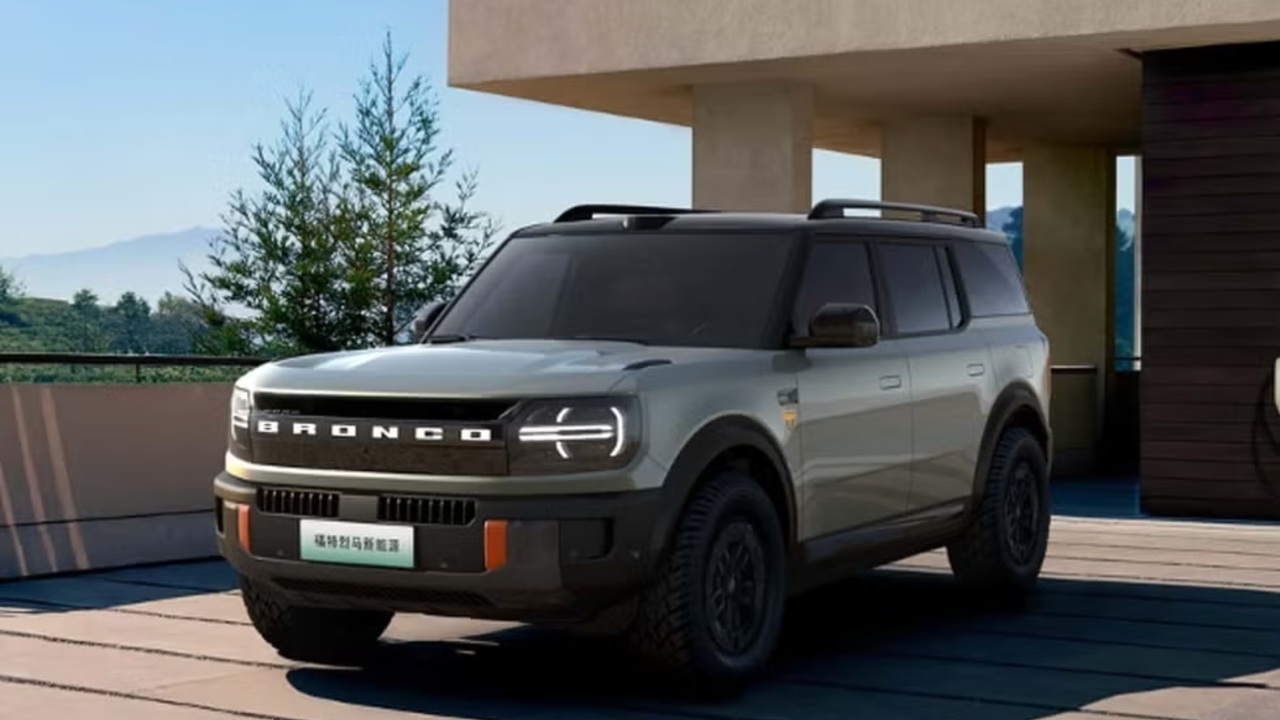
The Bronco New Energy is Ford’s most explicit statement yet that electrification in China will not be a copy of its North American playbook. The vehicle, developed within the JMC-Ford joint venture, combines off-road-inspired styling with battery power in a format aimed squarely at Chinese urban and suburban drivers who want adventure aesthetics without sacrificing daily comfort. Manufacturing takes place at JMC facilities, and the model is positioned as a halo product that shows Ford is taking the local new energy vehicle segment seriously.
Chinese coverage describes the Bronco New Energy as an off-road style SUV available as a fully electric model and as an extended-range version that pairs a battery pack with a combustion generator. The electric Ford Bronco off-road SUV from JMC-Ford entered China with a starting price equivalent to about 32,640 USD, rising to roughly 40,160 USD for higher trims, which places it in the heart of the country’s competitive mid-size new energy SUV segment. Pre-sales for the Ford Bronco AWD SUV began earlier, with pricing guidance around 32,300 USD, signaling Ford’s intent to compete directly with domestic brands on value as well as design.
Why Ford is keeping the electrified Bronco in China
Ford’s leadership has been explicit that the Bronco New Energy is not a backdoor way to electrify the American Bronco. In an interview about the future of the nameplate, Ford CEO Jim Farley indicated that the Bronco sold in the United States will receive “a lot of exciting powertrains,” but he framed those upgrades as part of a broader strategy to keep the model authentic to its off-road roots rather than as a simple import of Chinese hardware. Reporting on the company’s plans notes that the Chinese Ford Bronco EV and its extended-range counterpart are not heading to America, reinforcing that the electrified Bronco sold in China is a separate branch of the family.
That separation reflects both regulatory and brand considerations. The Bronco New Energy is engineered to meet Chinese standards and consumer expectations, including a focus on urban usability and range-extended flexibility, while the American Bronco must satisfy a different set of crash rules, off-road performance benchmarks, and customer demands. Farley has been careful to establish expectations, signaling that any electrified Bronco for the United States will be developed as a distinct product, not just a rebadged import, even as Ford leverages lessons from the Chinese program behind the scenes.
Design, packaging, and performance tailored to Chinese buyers
The Bronco New Energy’s design language borrows heavily from the rugged image that has made the Bronco name resonate globally, but its proportions and packaging are tuned for Chinese roads and parking spaces. Earlier reporting on Ford’s China-only Bronco Sport highlighted a super-sized SUV riding on a 116-inch wheelbase, created exclusively for that market, which illustrates how the company is willing to stretch or shrink the Bronco formula depending on local needs. The Bronco New Energy follows the same philosophy, blending a boxy, upright stance with a cabin and chassis optimized for comfort and technology rather than rock-crawling extremes.
Inside and under the skin, the Bronco New Energy is configured to appeal to buyers who may never leave the pavement yet still want the image of an off-road SUV. The China-specific SUV blends off-road-inspired styling with extended-range and fully electric powertrains, targeting buyers seeking a mix of environmental credentials and lifestyle branding. Early drives by Chinese media have described the electrified Bronco as refined and well suited to daily use, with the extended-range version in particular designed to ease range anxiety while still qualifying as a new energy vehicle under local rules.
Pricing, launch cadence, and Ford’s China EV push
Ford has treated the Bronco New Energy as a showcase for its broader electrification push in China, carefully staging its rollout to build momentum. The company began pre-sales of the electric Bronco in China on November 18, using the Ford Bronco AWD SUV as the centerpiece of a campaign that emphasized both battery-electric and extended-range options. That pre-sale phase set expectations for pricing and availability, and it was followed by a formal launch in China on December 19, when the electric Ford Bronco off-road SUV officially entered the market through the JMC-Ford joint venture.
The pricing strategy is as important as the product itself. With a starting figure around 32,300 USD at pre-sale and a launch range of roughly 32,640 to 40,160 USD, Ford positioned the Bronco New Energy to compete directly with domestic new energy SUVs that dominate the country’s sales charts. By anchoring the Bronco name in this price band, Ford signaled that it is not content to treat the model as a niche import, but rather as a volume contender that can help it gain share in a market where local brands have been quick to innovate on software, connectivity, and battery technology.
Implications for the American Bronco and Ford’s global strategy
For American Bronco enthusiasts, the existence of a fully electric and extended-range Bronco in China has raised an obvious question about when a similar product might arrive in their own showrooms. Ford has already demonstrated that it can build an all-electric Bronco, and coverage of the Chinese program has highlighted configurations capable of long-distance travel on battery power. Yet the company has been clear that the Chinese Bronco New Energy is “not for Americans,” and that any electrified Bronco in the United States will be developed with domestic expectations in mind rather than simply imported from JMC-Ford production lines.
That stance fits into a broader pattern in which Ford uses China as a laboratory for new energy vehicles while keeping its American icons on separate development tracks. When the Lincoln Nautilus received a full redesign for the 2024 model year, Ford shifted production of that model from Canada to China, but it still tailored the product differently for each region. The Bronco strategy follows a similar logic. The Bronco New Energy allows Ford to refine electric and extended-range technologies, supply chains, and pricing tactics in China, while Farley’s promise of “a lot of exciting powertrains” for the American Bronco suggests that lessons from that experiment will inform, but not dictate, what eventually arrives in the United States.
More from Fast Lane Only