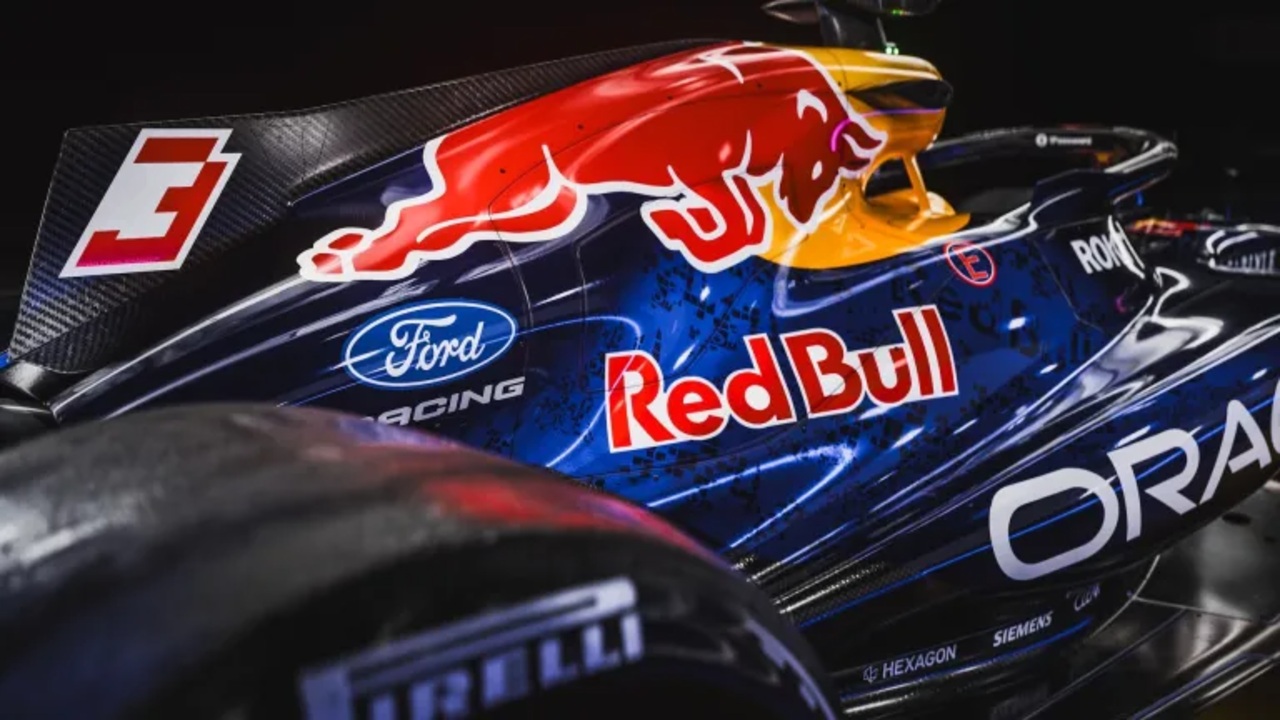
Ford and Cadillac have turned their looming Formula 1 entries into a very public corporate rivalry, and the latest salvo came from Ford chief executive Jim Farley. Confronted with criticism from the head of Cadillac’s F1 program, Farley dismissed the remarks as “laughable,” sharpening a Detroit feud that is now playing out on a global stage. The exchange is about more than bruised egos, it exposes two very different strategies for how American brands intend to show up in the sport.
Farley’s sharp retort and Ford’s F1 self-image
I see Jim Farley’s reaction as a deliberate choice to project confidence about Ford’s Formula 1 role rather than get dragged into a technical argument over who is “more real.” Asked about the Cadillac F1 boss’s criticism of Ford’s partnership with Red Bull, Farley replied that “all I will say is, it’s laughable. It’s not even worth discussing. It doesn’t merit a comment,” a line that signaled he views the attack as unserious and beneath detailed rebuttal. By brushing off the remarks in such blunt terms, he framed Ford as the established player being poked by a newcomer, not a company on the defensive about its approach to the 2026 rules.
Behind that one-word putdown sits a clear narrative Ford wants to advance about its F1 identity. The company has aligned itself with Red Bull to supply power unit technology and branding, positioning the program as a high-tech extension of its broader performance portfolio rather than a vanity project. Farley’s refusal to dignify the Cadillac critique with specifics reinforces the idea that Ford is already embedded with one of the grid’s benchmark operations, and that it does not need validation from a rival that has yet to turn a wheel in anger. When he characterizes the Cadillac comments as not even worth discussing, he is effectively saying that Ford’s partnership with Red Bull speaks for itself.
Cadillac’s claim to be the “real” American F1 team
On the other side of this rivalry, I read Cadillac’s rhetoric as an attempt to claim moral high ground by casting its own project as more authentic. Cadillac CEO Dan Towriss has argued that Ford’s involvement with Red Bull is essentially a marketing deal, implying that the real engineering and racing substance sits with the existing team while Ford benefits from the halo. Towriss’s implication is clear, Cadillac wants to be seen as the American brand that is building something from the ground up, with its own structure, its own staff, and its own car, rather than attaching its name to an already dominant operation.
That framing is not subtle. Towriss has contrasted Cadillac’s plan to field a full works effort with Ford’s role as a partner, suggesting that only a manufacturer that designs, builds, and races its own chassis and power unit should be considered a true F1 entrant. In his telling, Cadillac and Ford are not simply two American badges arriving in the same season, they represent two different philosophies about what it means to commit to the sport. By painting Ford’s program as a “supplied” effort and his own as a legacy-building venture, Towriss is trying to win the narrative before either project has turned into lap time.
Bill Ford enters the fray and broadens the stakes
When Bill Ford, the executive chairman of Ford Motor Company, weighed in, I saw the dispute shift from a spat between racing bosses to a broader corporate statement. Bill Ford pushed back on the idea that his company’s F1 role is a mere marketing exercise, arguing that if anyone is running a publicity play, it is Cadillac. By challenging the premise that Ford is just buying its way into relevance, he tried to flip Towriss’s critique on its head and cast Cadillac’s rhetoric as the real branding maneuver.
Bill Ford’s intervention also underscored how seriously the company takes its association with Red Bull. Rather than treat the program as a logo on a rear wing, he has framed it as a strategic investment in technology and global visibility for the American manufacturer. In that light, the suggestion that Ford is not a “real” participant becomes more than a jab, it becomes an attack on the value of the company’s long-term plan. His response, aligned with Farley’s dismissive tone, signals that Ford’s leadership views Cadillac’s comments as both inaccurate and opportunistic, and that they are prepared to defend the legitimacy of their approach in public.
Detroit rivalry goes global with Red Bull in the middle
What strikes me most about this exchange is how a classic Detroit rivalry has been exported into the rarefied world of Formula 1. Cadillac and Ford have spent decades competing for American buyers, but now their contest is unfolding around who can better leverage the sport’s global platform. With Ford tied to Red Bull, the reigning benchmark in F1 performance, and Cadillac positioning itself as a fresh entrant with its own team structure, the argument over authenticity doubles as a battle over whose strategy will resonate more with fans and sponsors.
Red Bull’s presence in the story is crucial. By partnering with the team that has set the competitive standard in recent seasons, Ford has chosen a path that maximizes its chances of immediate success, even if it leaves room for rivals to question how much of the on-track achievement belongs to the American brand. Cadillac, by contrast, is betting that building its own operation, with its own employees and its own car, will earn it credibility even if the early results are modest. The verbal jabs from Towriss and the curt dismissal from Farley show that both sides understand the symbolic stakes, each wants to be seen as the American name that truly belongs in F1, not the one that is just along for the ride.
What the feud reveals about F1’s new American era
As I look at the contours of this feud, it reads less like a petty squabble and more like a preview of how American manufacturers intend to use Formula 1 in the years ahead. Ford’s approach, anchored in a high-profile partnership with Red Bull, reflects a belief that aligning with proven winners is the fastest way to translate F1 success into showroom relevance for models that already carry performance cachet. Cadillac’s insistence on being recognized as a full-fledged team, with Towriss emphasizing its independent structure, suggests a longer-term play to reshape how the brand is perceived globally, from luxury badge to engineering powerhouse.
Farley’s choice to label the Cadillac criticism as laughable, Bill Ford’s decision to publicly rebut the “marketing deal” narrative, and Towriss’s effort to cast Cadillac as the more authentic entrant all point to a new intensity in how American companies view the sport. Formula 1 is no longer a distant European spectacle, it is a battleground where Detroit’s biggest names are fighting for technological prestige and cultural relevance. If this is how they talk before a single race in 2026, the on-track rivalry is likely to be even sharper, and the question of which vision of “real” participation wins out will be settled not in press quotes, but in lap times and championships.
More from Fast Lane Only