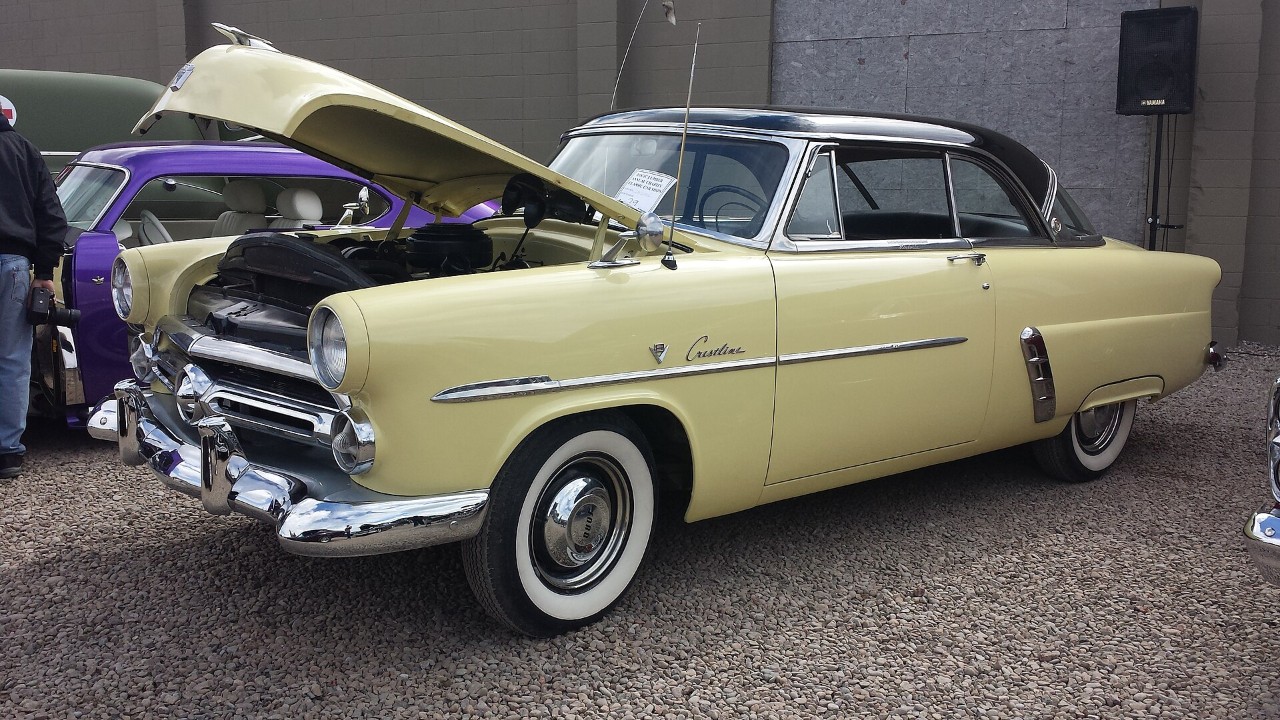
In 1952, the Ford Crestline sat at the top of the Ford range. Its Victoria hardtop gave buyers convertible style with a steel roof overhead. That was the start of a run of big, bright Fords that turn heads at any cruise night. Chrome bumpers, two-tone paint and wide grilles made even a family car look like an event.
Then the 1950s moved fast. Within a few years, Ford had tried a see-through roof and a stainless band across the top of a coupe. After that came a space-age name and a sweeping hardtop for the NASCAR crowd. Some of those ideas sold by the hundred thousand. Others lasted only a season or two.
So these are our picks for seven chrome-era Fords that still stop traffic. The choices and the verdicts are our opinion. Even so, the years, engines, prices and production figures are on the record. They come from museum files, auction results, sales data and model histories we read for this list.
1. 1952 Ford Crestline Victoria
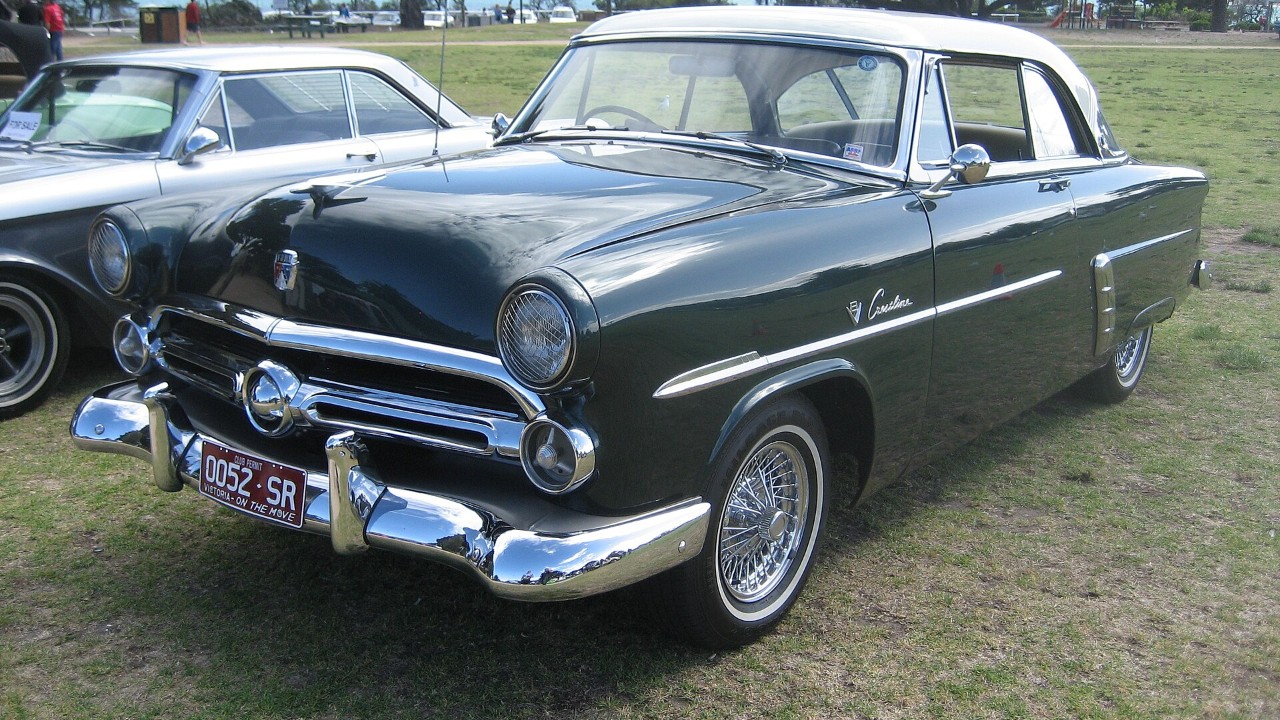
Ford had already tried the pillarless look in 1951 with the Custom Deluxe Victoria. For 1952, however, the hardtop moved into the new Crestline series, which sat above the Customline and the basic Mainline. Ford’s ad men called it “the car that gives you the smart styling of a convertible with the snugness of a sedan.”
Buyers agreed. According to Old Cars Weekly’s history of the American hardtop, the 1952 Crestline Victoria made roughly 110,000 sales. That is a big number for a body style that had barely existed a few years earlier.
The 1952 Fords also got a curved one-piece windshield, a small detail that changed the whole face of the car. Under the hood, the Crestline came only with the 239-cubic-inch flathead V8, rated at 110 hp. In our view, this is the Ford Crestline to start with, since it gives you the look without a hunt for a rare variant. Because Ford sold so many, parts and good examples are easier to find than you might expect. That counts for a lot on a car more than 70 years old.
2. 1953 Ford Crestline Sunliner
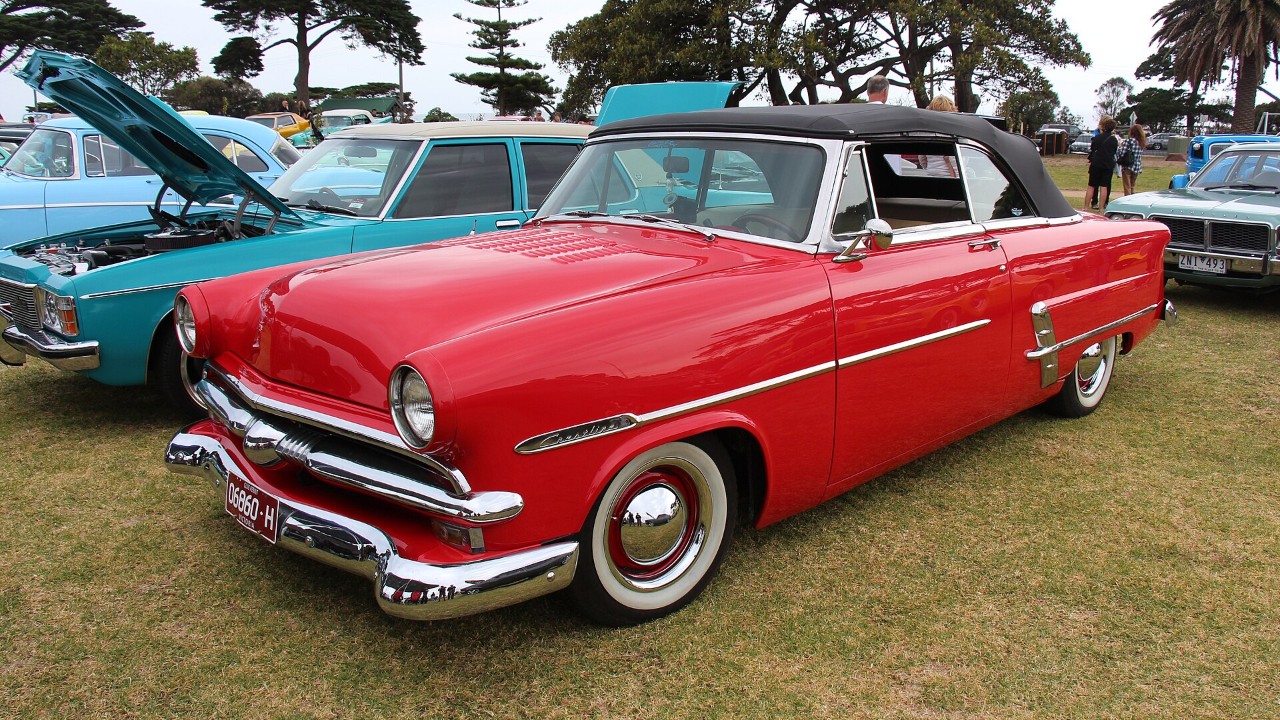
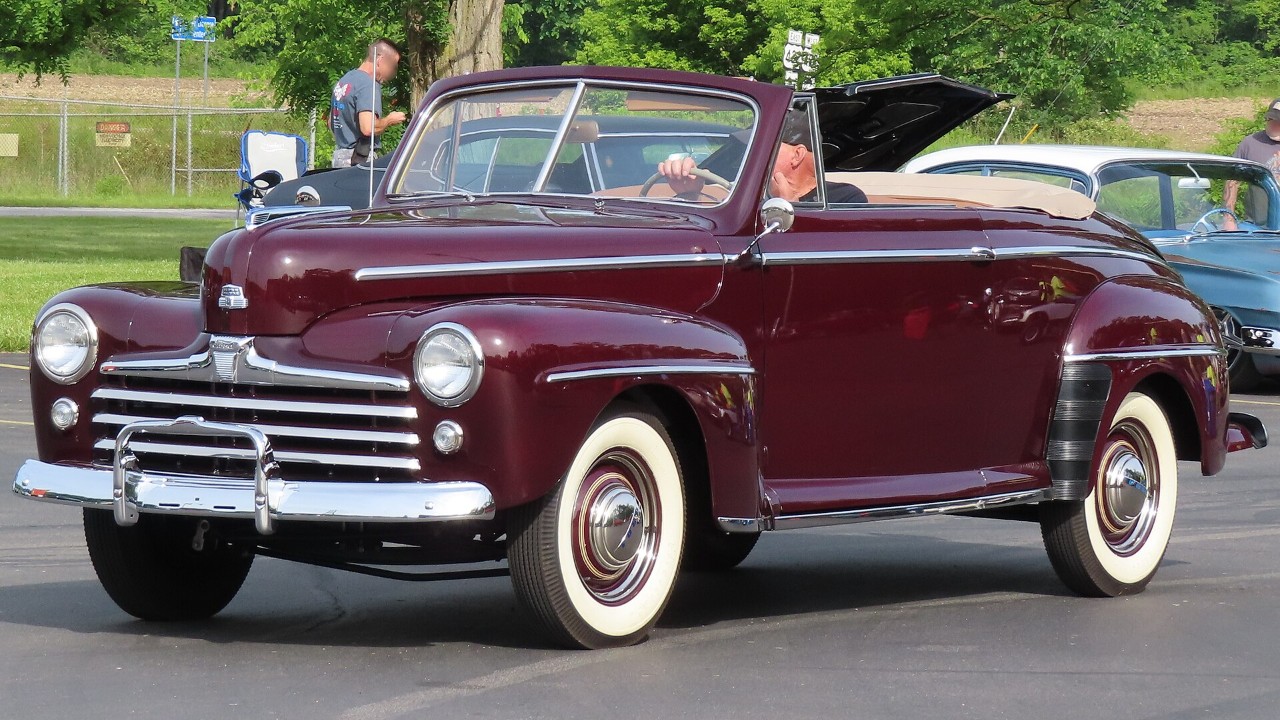
The 1953 Sunliner was the convertible in the Ford Crestline family, and it had a very public moment. That year, a Sunliner paced the Indianapolis 500, with William Clay Ford, Henry Ford’s youngest grandchild, at the wheel. It was also Ford’s 50th anniversary year, so every 1953 Ford carried a steering wheel badge reading “50th Anniversary 1903-1953.”
Ford then did something clever. According to The Henry Ford museum, the company built about 2,000 pace car replicas for public sale. Each one wore Sungate Ivory, just like the real thing. The museum says this was reportedly the first time a manufacturer sold pace car copies to the public.
The power came from the same 239-cubic-inch V8, rated at 110 hp. Meanwhile, 1953 also brought power brakes and power steering to Ford buyers for the first time. Before then, only Mercury and Lincoln offered them. Our take: an open Sunliner in a pale color is the friendliest-looking car on this list. Better yet, the original race-day pace car lives at The Henry Ford, which received it as a gift from Ford.
3. 1954 Ford Crestline Skyliner
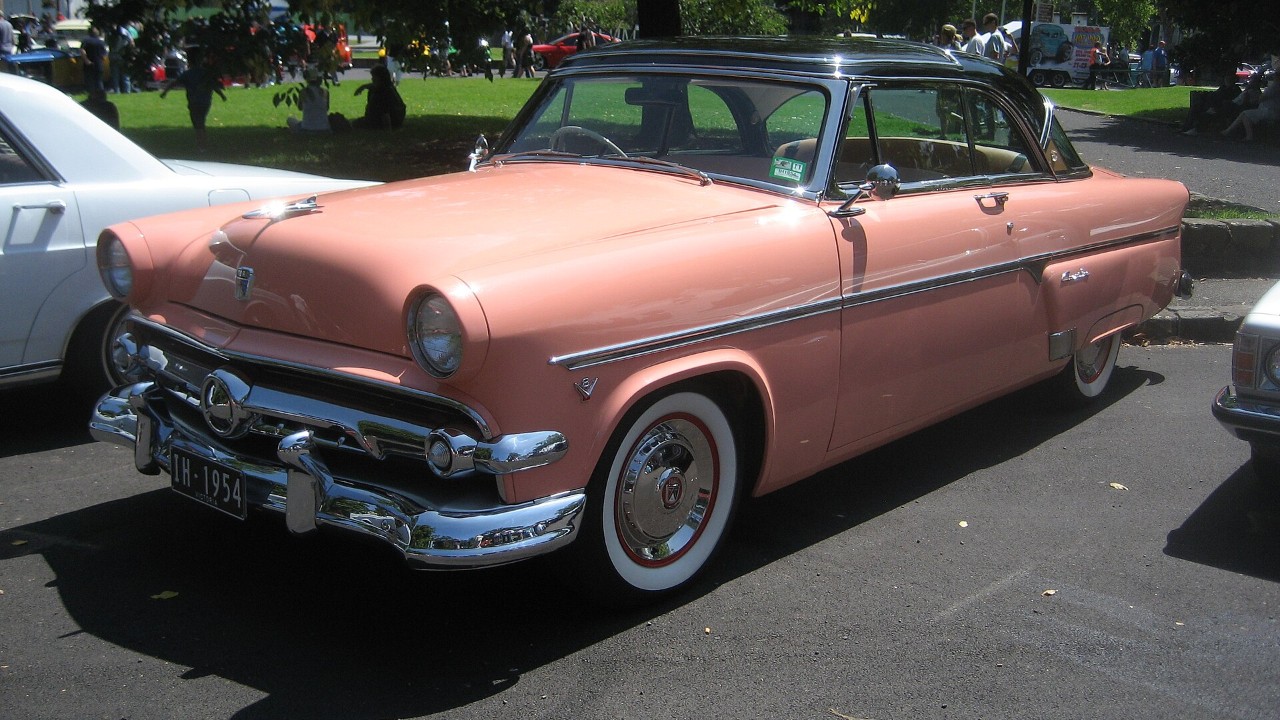
This is the one people walk across a parking lot to look at. The Skyliner was a Crestline hardtop with a tinted see-through panel over the front seats. According to Mac’s Motor City Garage, the insert was a quarter-inch sheet of green-tinted acrylic from Rohm & Haas of Philadelphia. A zip-in shade also helped with heat and glare. Mercury also sold the idea as the Monterey Sun Valley, which shared the Skyliner’s roof stamping.
It cost $2,241, just $110 more than the standard hardtop, and it sold more than 13,000 units in 1954. Some owners say the cabin heat was the roof’s weak point, while others disagree. Either way, the 1954 Fords also gained a new engine. In place of the old flathead came an overhead-valve Y-block V8 of 239 cubic inches, rated at 130 hp.
We think the 1954 Skyliner is the purest form of the glass-top idea. It has the chrome and the jewel-like roof without the extra trim that came later. Values have stayed sensible, too. For example, RM Sotheby’s sold a 1954 Ford Crestline Skyliner at its 2018 Hershey sale for $30,800.
4. 1955 Ford Fairlane Crown Victoria Transparent Top
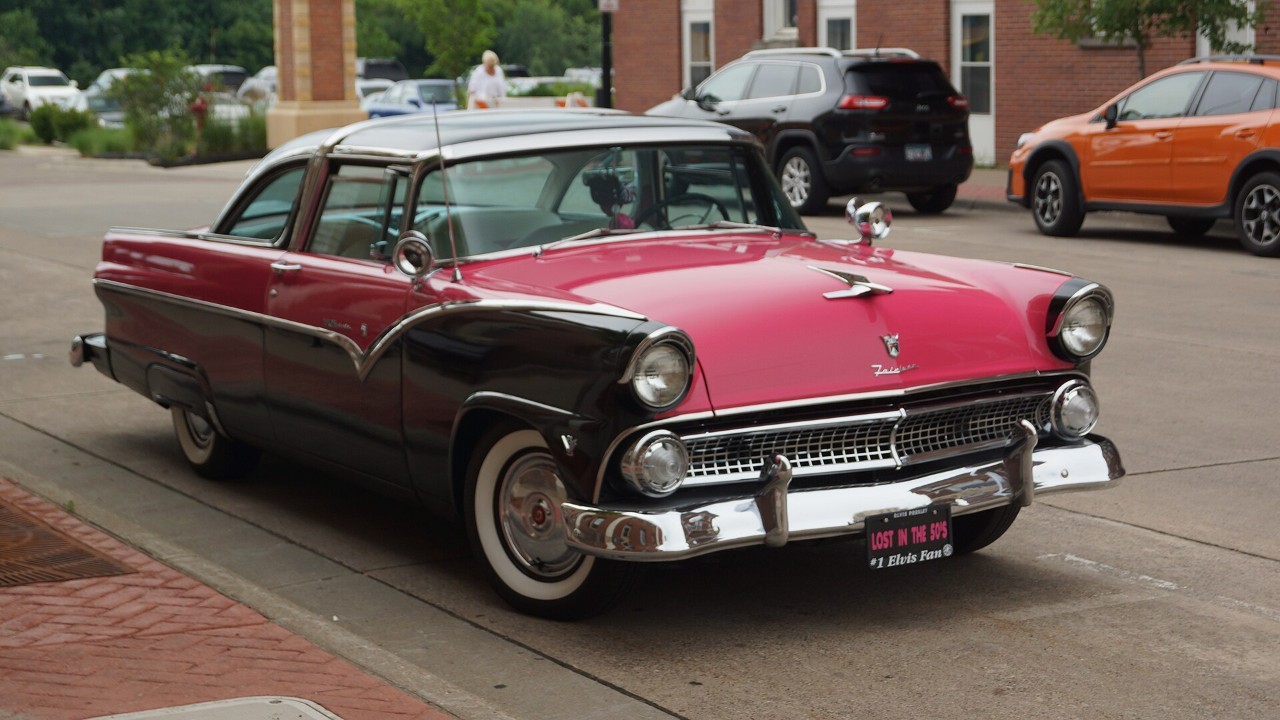
For 1955, the Fairlane replaced the Crestline at the top of the range. Its showpiece was the Crown Victoria, a two-door with a band of bright stainless steel running up the B-pillars and across the roof. Ford’s brochures called the version with the clear front roof panel the “Transparent Top.” Dealers, meanwhile, shortened that to “T/T” or “T/P.”
The see-through roof was a $69.49 option over the steel-top Crown Victoria. Power came from a 272-cubic-inch Y-block V8 rated at 162 hp. Not many buyers ticked the box, though. According to Hagerty’s Fairlane history, 1,999 buyers chose the 1955 glass-top car, and only 603 more followed in 1956.
In our view, this is the Ford here that earns the most double-takes. The crown band alone draws a crowd, and the tinted roof finishes the job. We have covered why the 1956 Crown Victoria set itself apart before. However, the 1955 car started the look. In this glass-top form, it made just 1,999 copies.
5. 1956 Ford Customline Victoria
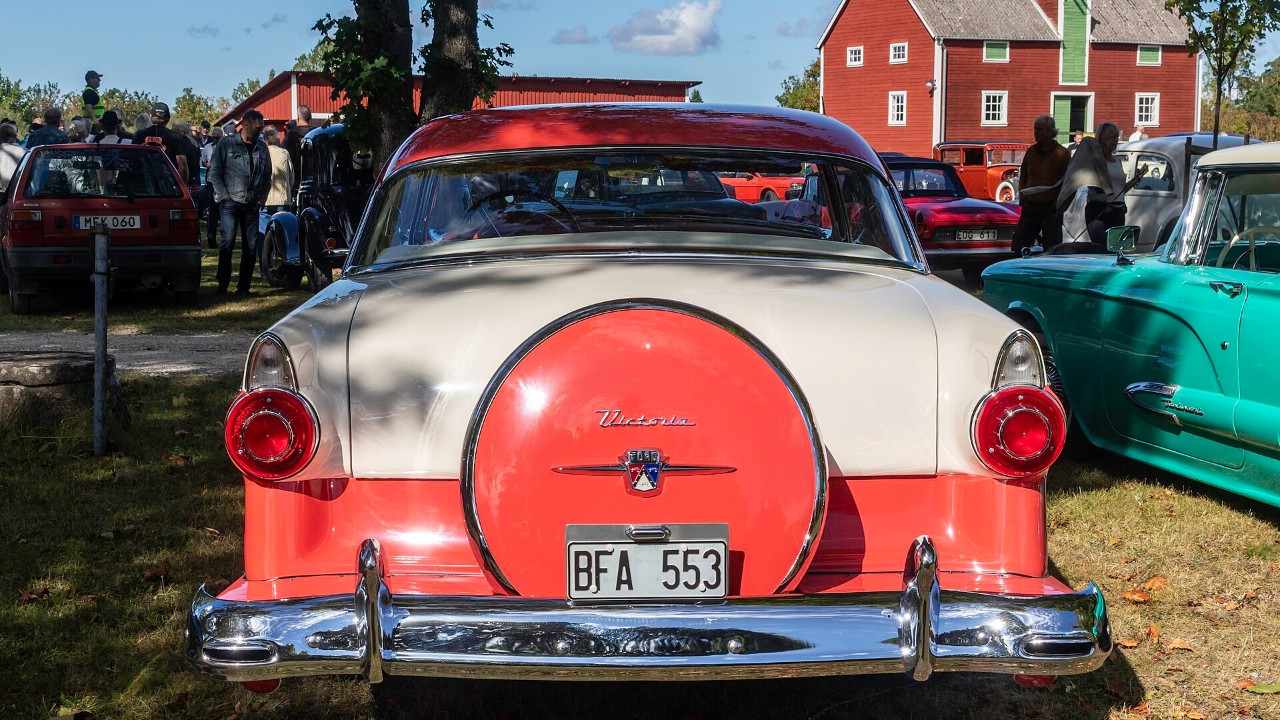
Not every chrome-era Ford was a top-trim car. In 1956, Ford added a Victoria hardtop to the mid-range Customline series. That series sat one step below the Fairlane and one step above the Mainline. It gave buyers the pillarless profile for less money.
How much less? According to an Old Cars Weekly profile of the 1956 Customline, the Customline Victoria cost $101 less than the Fairlane Victoria, or nearly five percent. Ford built 33,130 of them that year. The standard engine was a 137 hp, 223-cubic-inch six. In addition, 1956 was the year Ford switched from a six-volt to a 12-volt electrical system. Tubeless tires became standard on every model, too.
The 1956 Fords also launched the Lifeguard safety push. Ford developed it with Cornell Medical College, the American College of Surgeons and the National Safety Council. It included a recessed steering post, stronger door latches and optional seat belts and padded dash. In our view, the Customline Victoria is the value pick here. It wears the same 1956 face as the pricier cars, yet just 33,130 left the line.
6. 1959 Ford Galaxie Sunliner
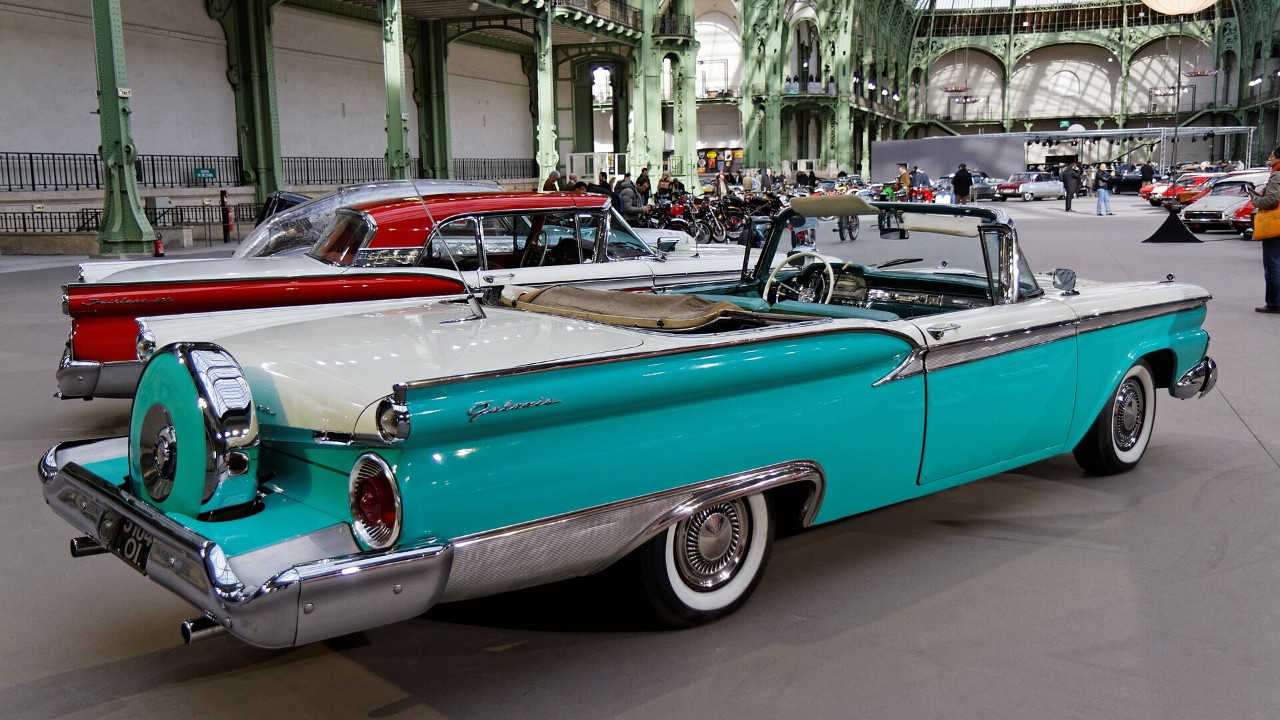
The Galaxie name arrived in 1959 as a marketing tie-in with the excitement of the Space Race. Ford placed it above the Fairlane 500 as the new top of the line. Most 1959 Galaxies wore a Thunderbird-style roof pillar, but the Sunliner convertible skipped the roof entirely.
The styling won praise abroad, too. According to RM Sotheby’s lot notes, the 1959 Ford design took a Gold Medal for Exceptional Styling at the Brussels World Fair. RM Sotheby’s sold that Indian Turquoise Galaxie Sunliner at its Auburn Fall 2016 auction for $52,800. Meanwhile, the 352 V8 carried over from 1958, making 300 hp.
Our take: the 1959 Sunliner is a fitting farewell to the flat, formal 1950s Fords. In fact, it wears that shape best with the top down. If you want to know where the name went later, we explained why the Ford Galaxie disappeared for decades. Ford built 464,100 Galaxies for 1959, so the car is far from rare. Even so, a clean Sunliner collects a crowd. If you shop for one, we would hold out for a V8 car with its power top working properly.
7. 1960 Ford Galaxie Starliner
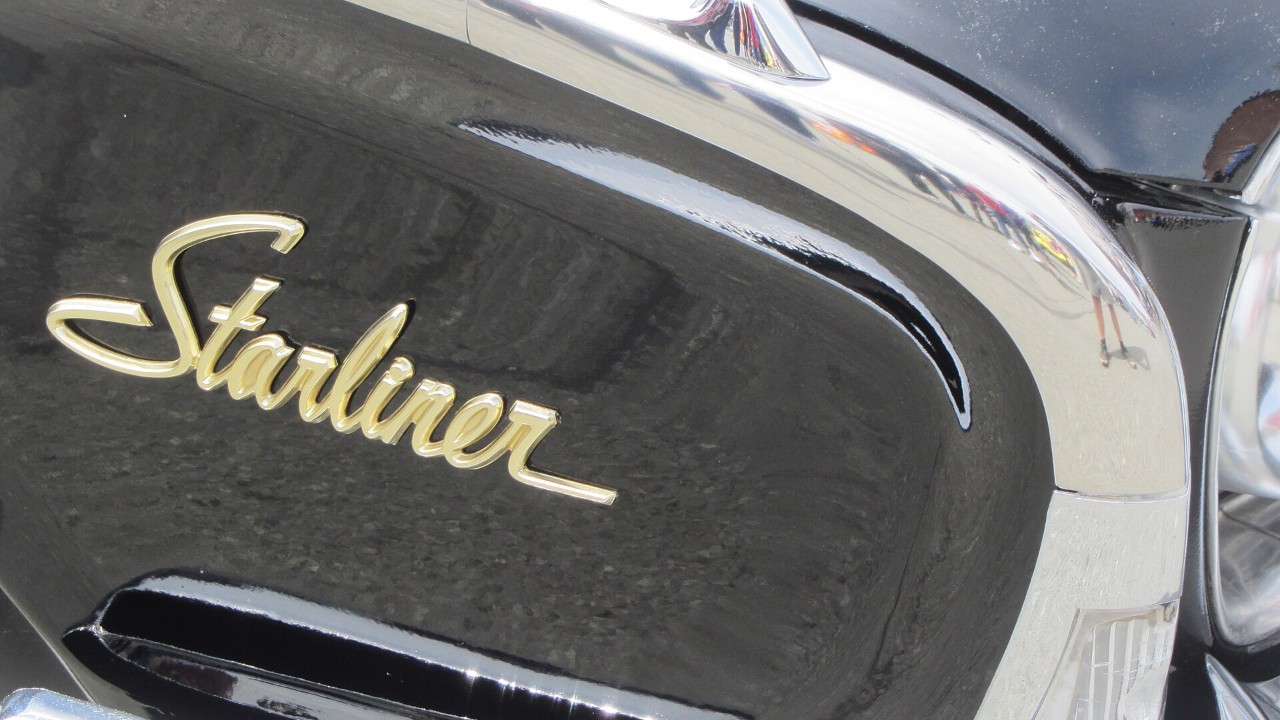
For 1960, Ford redesigned the Galaxie with less ornament and a lower, wider body. The Starliner was the hardtop of the bunch, with thin roof pillars and a huge, curving rear window. Ford’s racers took notice of that shape. The 1961 car kept the same roof, though it got new front and rear styling.
According to The Truth About Cars, the Starliner was Ford’s NASCAR contender in 1960 and 1961. It won 15 races in 1960 and seven more in 1961. At midyear, Ford added a 360 hp Thunderbird Super 352, its first engine with more than one horsepower per cubic inch. Motor Life ran a 360 hp car through the quarter-mile in 14.81 seconds at 94.71 mph.
We think the Starliner is the most underrated shape Ford built in the chrome era. It also had a short life, which adds to the appeal. We told the full story of the 1960 Starliner, Ford’s forgotten fastback, earlier. Ford built more than 68,000 Starliners for 1960 and then 29,669 for 1961. After that, the Galaxie 500 took over the top spot for 1962.
More from Fast Lane Only