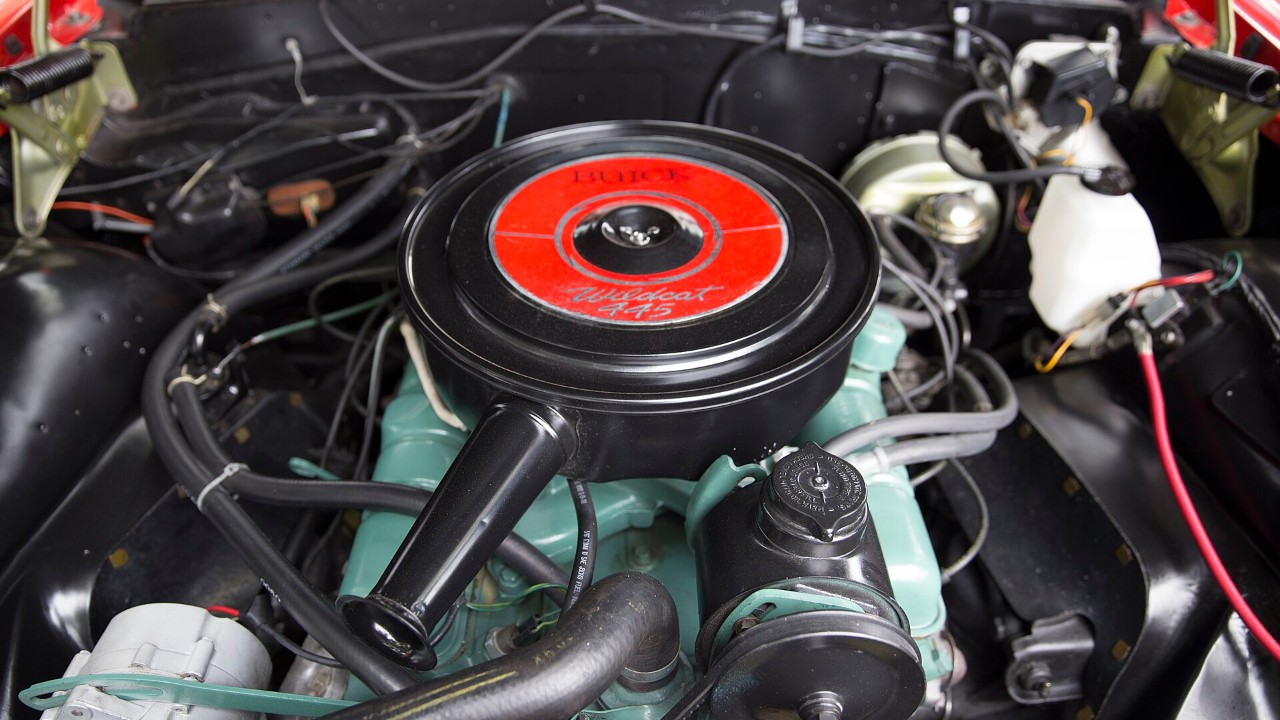
Buick engineers gave the Buick 401 Nailhead small, vertical valves set in a neat row. Then hot rodders gave it a nickname that stuck. Buick never used that name. Officially, its V8s were Fireballs and Wildcats, but everyone else called them Nailheads.
That gap between the brochure and the garage sums up Buick engines pretty well. Many people think of Buick as a comfort brand. Yet Buick built aluminum V8s, turbo sixes and torque-heavy big-blocks that ended up in race cars, British cars and drag strips.
This is our ranking of 12 Buick engines we would put ahead of everything else in the lineup. The order is our opinion, and you are welcome to argue with it. The displacements, ratings and dates come from engineering histories, period road tests and auction records.
1. Buick 401 Nailhead V8
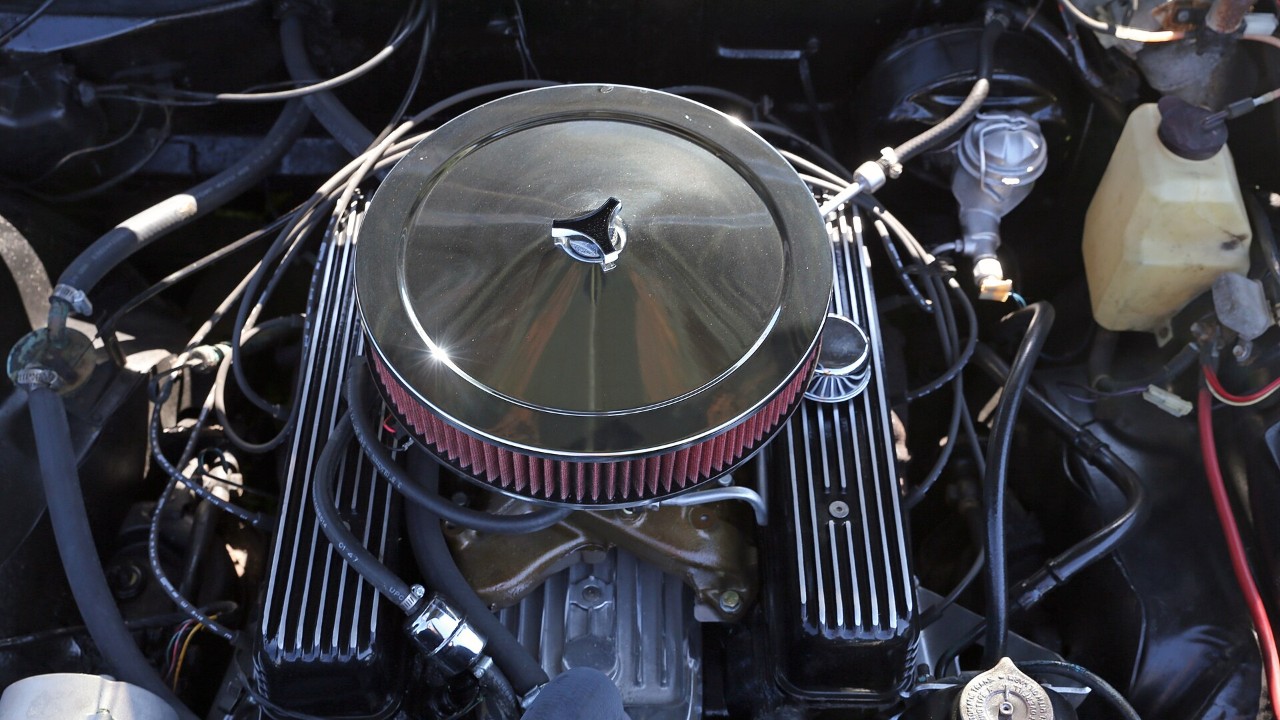
Buick’s 401 Nailhead ran from 1959 to 1966, and it might be the most versatile engine Buick ever built. It measured 4.1875 inches across the bore with a 3.64-inch stroke. Buick also named its versions for torque rather than horsepower, so the “Wildcat 445” label referred to 445 lb-ft.
The 401 powered everything from the Electra to the Invicta and the Wildcat. The single four-barrel Wildcat 445 was standard on every Electra from 1959 to 1966, while the two-barrel Wildcat 410 came in the 1962–1963 LeSabre. Then, for 1965, it went into the new Skylark Gran Sport. Mac’s Motor City Garage’s Nailhead history notes that Buick marketed it there as a “400.” That was because GM had a 400-cubic-inch limit for mid-size cars, so the label changed while the size did not.
Our take: that Gran Sport move made the Buick 401 Nailhead the brand’s first muscle car engine. It also had the clean looks that made hot rodders love the Nailhead family. We dug into its power ratings in our story on the Nailhead V8 that made more power than buyers realized.
2. Buick 425 Nailhead V8
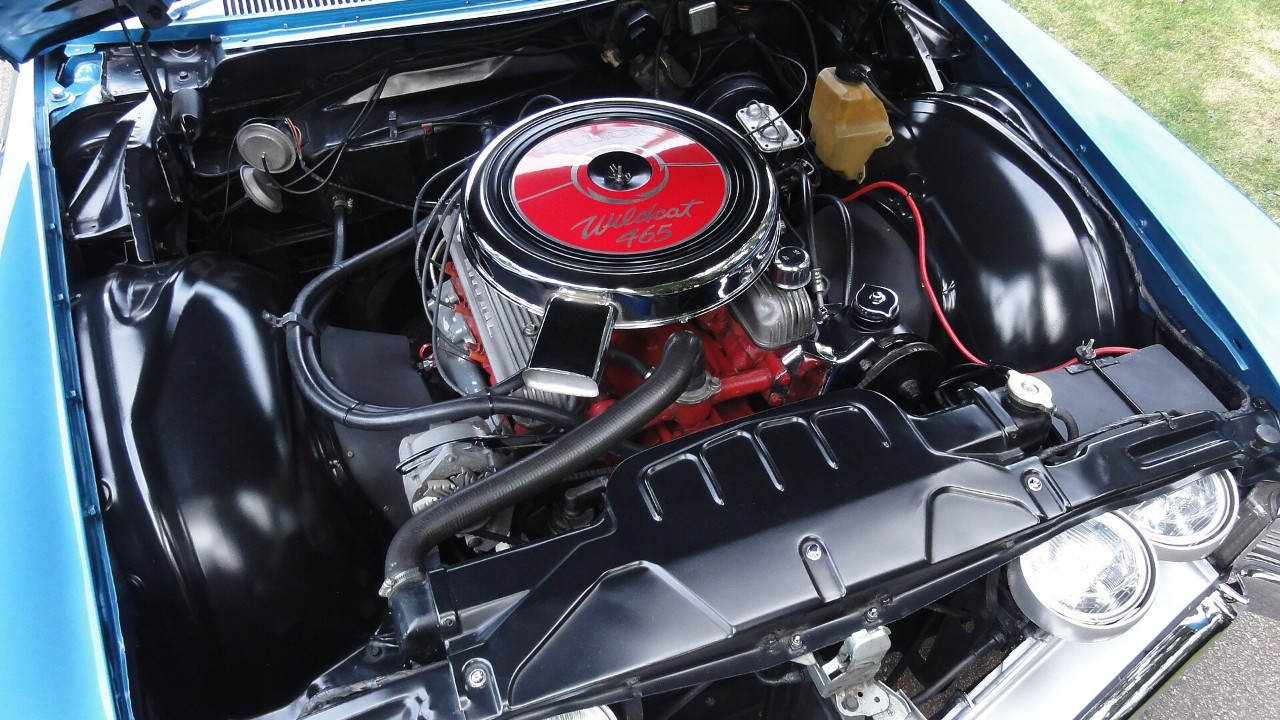
The 425 was the biggest Nailhead of all. It arrived for 1963 with a 4.3125-inch bore, and it lasted through 1966. Its basic version, the Wildcat 465, was again named for its torque. In its strongest form, with two Carter AFB four-barrel carburetors, it made 360 hp at 4,400 rpm. Buick offered it in the Riviera, its personal luxury coupe.
The 425 also had a life outside cars. Buick 425s served as starter motors for the SR-71 Blackbird spy plane. Meanwhile, Buick engineers tested a turbocharged 425 in the 1960s with three sidedraft carburetors feeding one turbo. It made more than 620 lb-ft of torque, which was more than the driveline could handle, so Buick shelved the project. That engine now sits in the GM Heritage Collection.
In our view, the 425 is the Nailhead at full stretch. It shows how much room Buick had built into the original design. Around May 1966, Buick even offered a factory dual Carter AFB option on just 179 Riviera GS cars. If you want one in a Riviera, find a car with the dual-quad setup documented, because it is the version people remember.
3. Buick 322 Nailhead V8
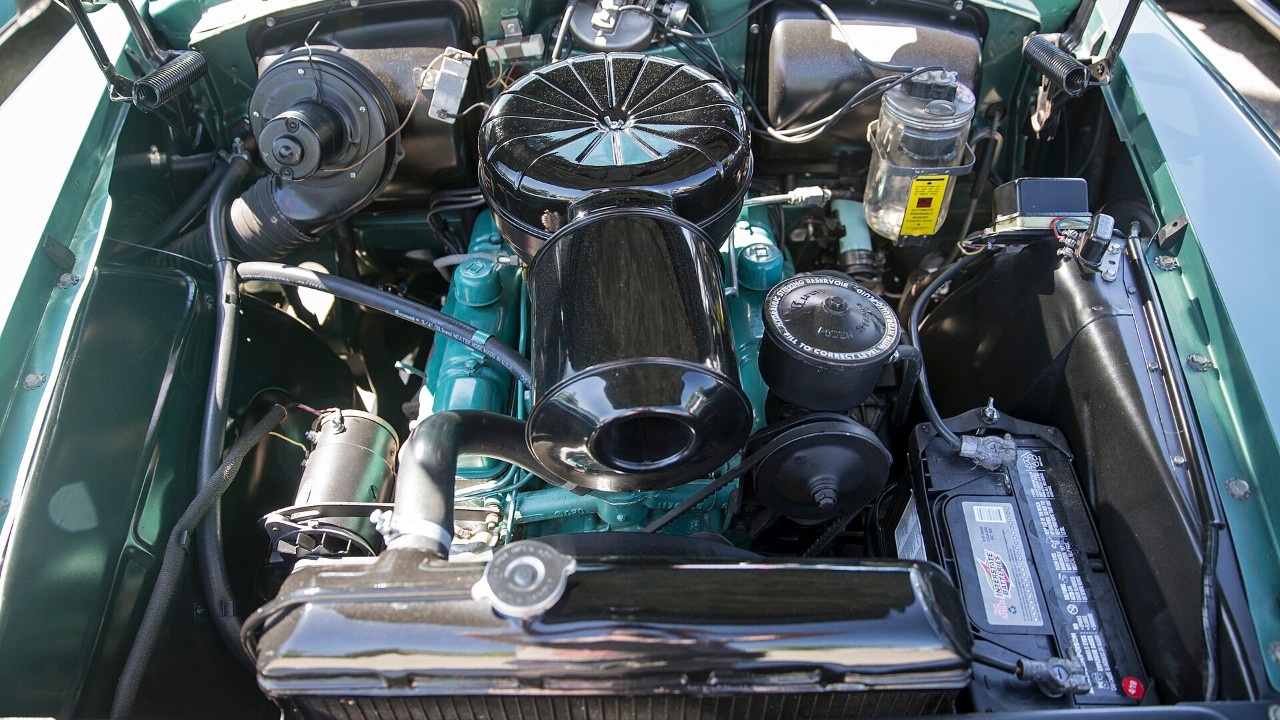
Buick’s first V8 arrived for 1953 with 322 cubic inches and 172 hp. It replaced the old straight-eight, which did not suit the new body Buick planned. Engineers Joe Turlay and Verner P. Matthews documented the design in an SAE paper that year. Before that, Buick tried prototype V8s with 22.5- and 35-degree banks and then settled on a conventional 90 degrees.
The 322 used a 4.00-inch bore and a 3.20-inch stroke. Its intake valves measured just 1.75 inches, with 1.25-inch exhausts. Buick chose small valves on purpose, trading high-rpm breathing for efficiency in a road car. Even so, the bore spacing of 4.75 inches left room to grow all the way to 425 cubic inches. Every Nailhead through 1966 also got a forged crankshaft and forged connecting rods. A smaller 264-cubic-inch version served the economy Special in 1954 and 1955.
Our take: the 322 started everything. Racers took notice, too. Max Balchowsky used Buick power in his Old Yeller specials, while Tommy Ivo ran a Nailhead in his Model T street roadster. The 1956 Century in our photo carries one of these early Fireball V8s.
4. Buick 455 Stage 1 V8
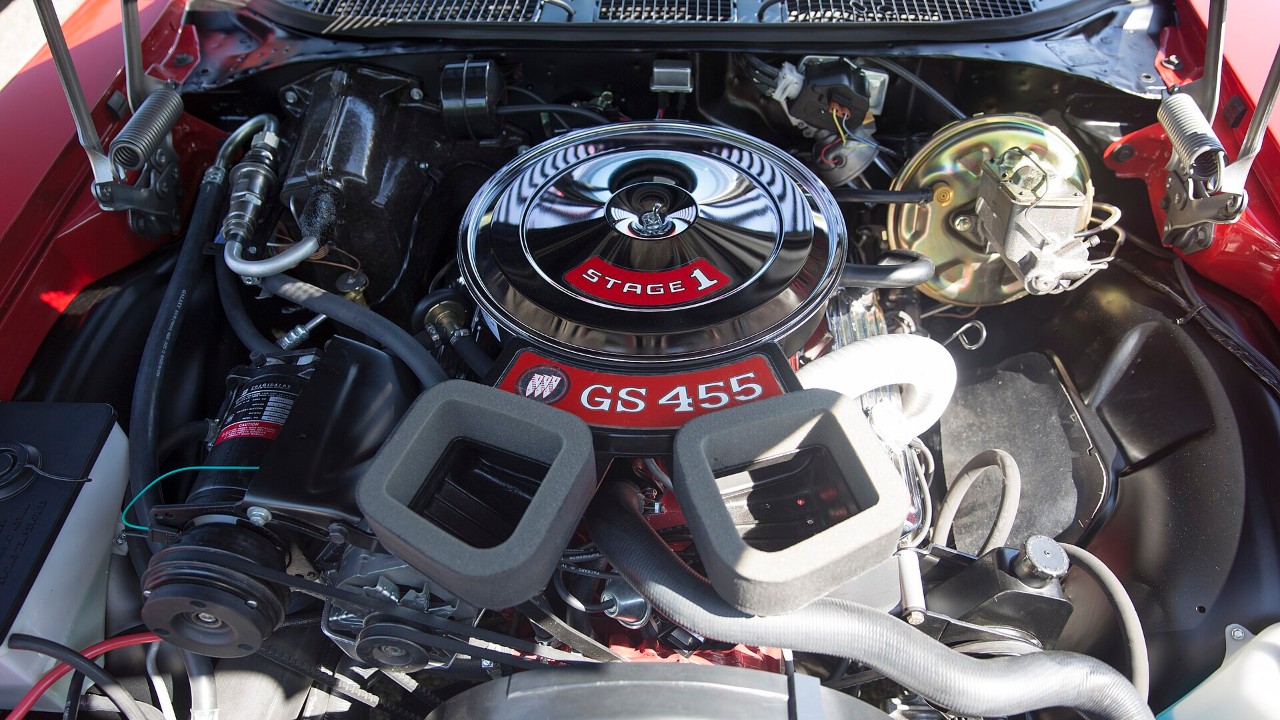
The 455 arrived for 1970 with a 4.31-inch bore and a 3.9-inch stroke. It was also one of GM’s first thin-wall block castings, about 150 pounds lighter than a Chevrolet 454. Then Buick built the Stage 1 version for the Gran Sport.
A Street Muscle profile of the 1970 GSX lists the Stage 1 at 360 hp and 510 lb-ft. It used 10.5:1 compression, larger 2.12-inch intake valves, a hotter cam and a 750-cfm Quadrajet with richer jets. The same profile cites a 1970 Motor Trend test with 0 to 60 mph in 5.8 seconds and a 13.38-second quarter mile at 105.5 mph. Buick built 678 GSXs that year, and 400 of them had the Stage 1. Most, 491 cars, wore Saturn Yellow, while the rest were Apollo White.
In our view, the Stage 1 is the best case for Buick as a muscle brand. That 510 lb-ft rating is enormous for a 1970 street car. We told the backstory in why Buick’s Stage 1 455 nearly didn’t make production.
5. Buick 400 big-block V8
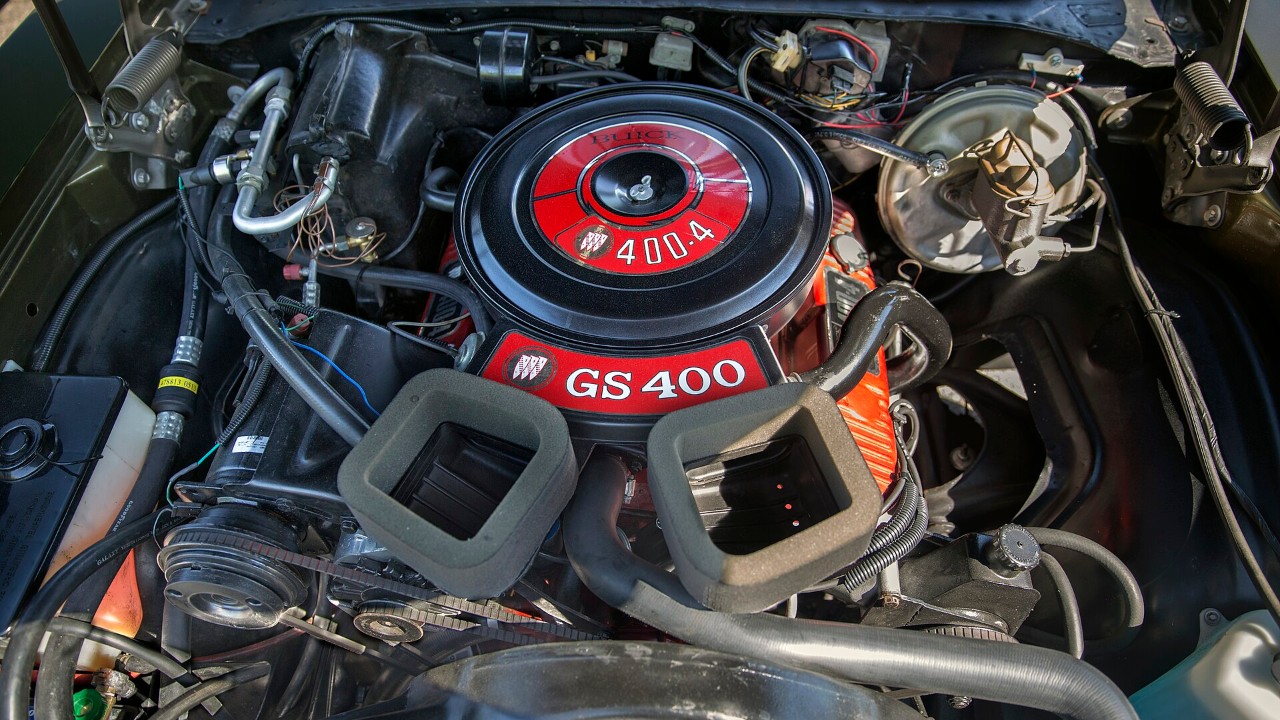
For 1967, Buick replaced the Nailhead with a new big-block family. Engineers Dennis Manner and Cliff Studaker developed it, according to Ate Up With Motor’s Gran Sport history. Full-size Buicks got a 430, while the mid-size A-body cars got the 400.
The new engine also got bigger valves. Its intake valves grew to 2.00 inches and its exhausts to 1.63 inches. By comparison, the 401 and 425 used 1.875 and 1.5 inches. In the GS400, Buick rated it at 340 gross hp, and it built about 17,500 GS400s for 1967. For 1969, the Stage 1 package added just 5 hp on paper, yet Car Life estimated the real gain was closer to 50 hp. A Stage 1 GS400 could run high 14-second quarter miles at more than 100 mph.
Our take: the 400 is the bridge between the Nailhead era and the 455. It gave the GS400 a modern engine, and it set up the bigger engine that came next. The 1969 GS400 in our photo is a good example of the package that made the GS a serious contender.
6. Buick 350 small-block V8
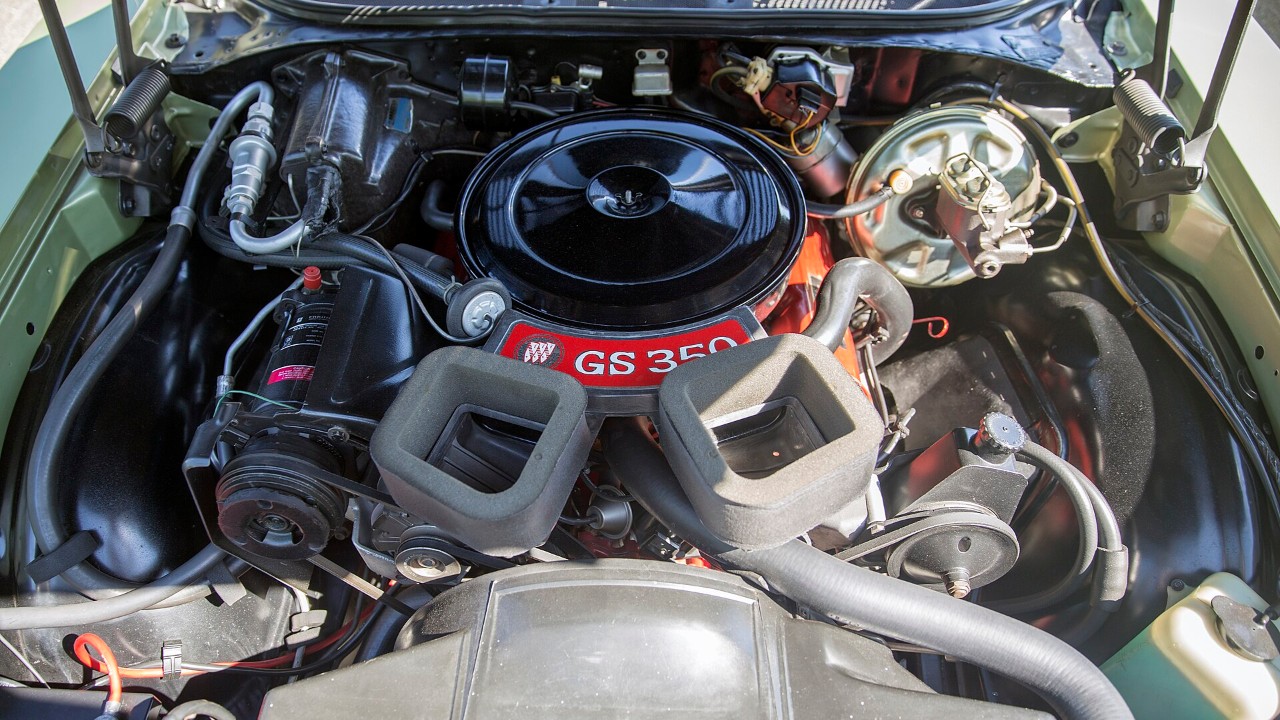
Buick built its own 350 from 1968, and it was not a Chevrolet engine. It had a 3.8-inch bore and a 3.85-inch stroke. Buick’s 350 replaced the 340, which Buick had built for just the 1966 and 1967 model years. It also became Buick’s final V8 family, remaining a factory option through 1980. Jeep even used it in the Wagoneer and Gladiator, under the name Dauntless V8.
In the 1968 GS 350, Buick rated the four-barrel version at 280 gross hp. A Curbside Classic review of the 1968 GS 350 adds 375 lb-ft of torque on premium fuel. Dual exhausts were standard, too. Because GM measured gross ratings without the stock exhaust, those pipes added about 25 net hp that the brochure never showed. Buick built 8,317 GS 350 hardtops that year.
In our view, the Buick 350 is one of the most underrated small-blocks of the era. It made big torque for its size. If you find a GS 350, check the engine codes before you buy, so you know it is the original Buick unit.
7. Buick 300 small-block V8
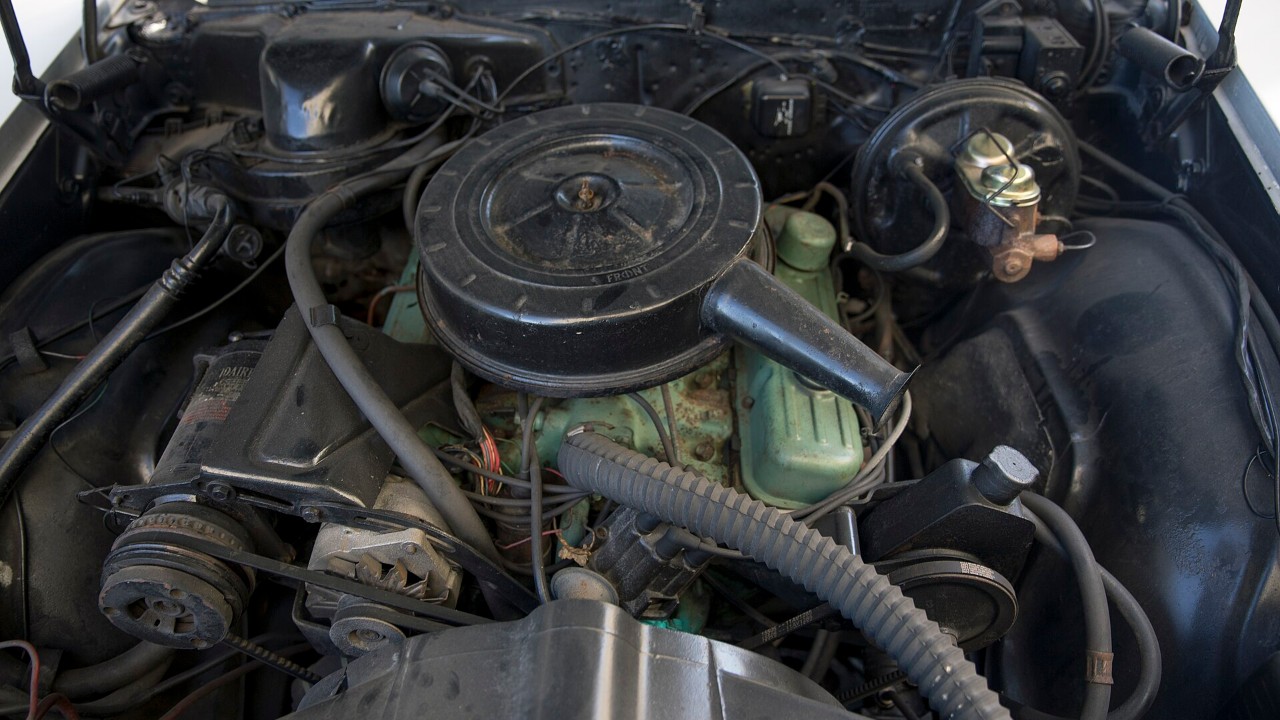
When Buick dropped its aluminum 215 after 1963, it didn’t throw the design away. Instead, the 1964 Buick 300 combined an iron block with the 215’s aluminum heads, intake and accessories. It displaced 300 cubic inches from a 3.75-inch bore and 3.4-inch stroke.
The two-barrel version made 210 hp, while the four-barrel made 250 hp at 4,800 rpm and 355 lb-ft at 3,000 rpm. Dry weight was 405 pounds. For 1964, Buick painted it silver. Later, it switched to cast-iron heads for 1966, and that pushed dry weight up to 467 pounds. Buick also dropped the four-barrel that year. Before then, the 300 even powered the Apollo 5000 GT. The 300 also grew into the 340 and then the 350, so the small-block above traces directly back to it.
Our take: the 300 is the missing link in Buick’s V8 family tree. It deserves credit for keeping the lightweight 215’s best ideas alive. The Skylark engine in our photo is one of these 300s.
8. Buick 215 aluminum V8
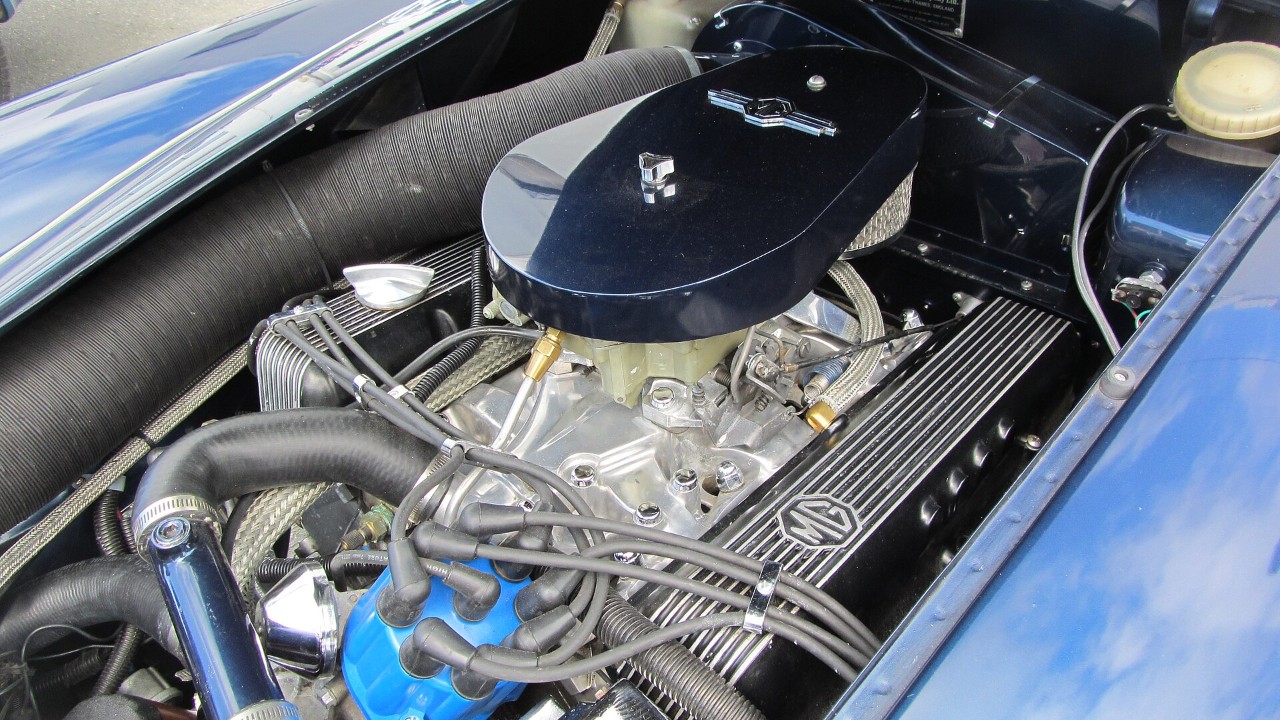
Buick launched the all-aluminum 215 for 1961, and it weighed just 318 pounds. Mac’s Motor City Garage’s 215 history says that was about half the weight of a big Chrysler or Cadillac V8. Buick cast cylinder liners of centrifugally cast iron right into the block. By mid-1961, a four-barrel version with 185 hp had joined the lineup. Meanwhile, Pontiac used the Buick engine in its Tempest.
However, the engine had a short life at GM. Owners struggled with corrosion, partly because many would not use permanent antifreeze. Then GM grew its compacts into intermediates for 1964 and had no use for a small V8. So in January 1965, Rover bought the design outright. Joe Turlay, who led its development at GM, joined Rover as a consultant.
Our take: the 215 had the greatest second career of any Buick engine. A Repco-Brabham V8 based on the Oldsmobile version won the 1966 Formula One title. Rover’s version lasted in the Land Rover Discovery until 2004. The engine in our photo sits in an MGA, a British sports car.
9. Buick 3800 Series II V6
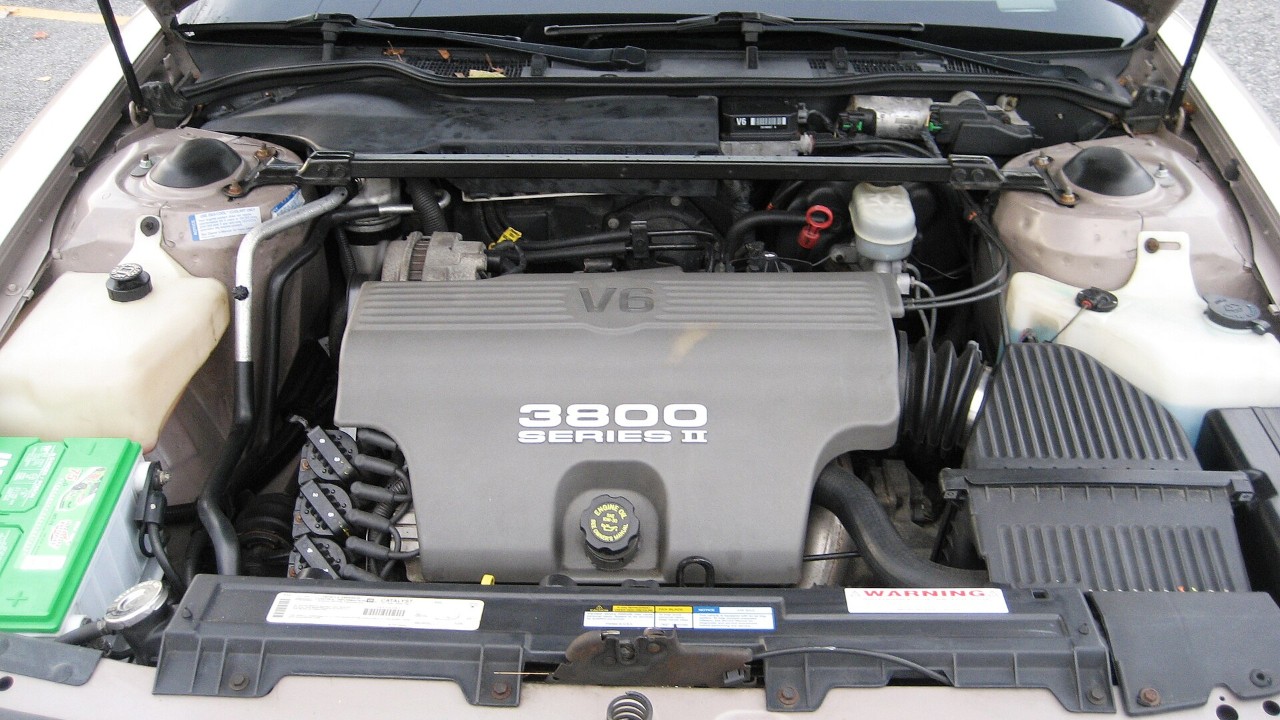
The 3800 got its name from 231 cubic inches, or 3.8 liters. For 1995, the Series II redesign brought a shorter deck height, shorter connecting rods and a new crankshaft. It made 205 hp and 230 lb-ft, and it weighed 392 pounds dry. That year, it also made Ward’s 10 Best Engines list, and it stayed there through 1997.
In total, GM built about 25 million 3800-family engines, with roots going back to 1962, according to Consumer Guide’s history of the Buick 3800. It built them in Flint with a cast-iron block and pushrods. GM had planned to drop the engine in 1999. Instead, production ran until August 2008.
In our view, the Series II kept millions of ordinary GM sedans on the road, such as the Oldsmobile Regency in our photo. Consumer Guide notes its “bulletproof” reputation, and Ward’s later named the 3800 one of the 10 Best Engines of the 20th century. Even so, GM recalled 1.4 million cars with the 3.8-liter V6 in 2015 because oil could leak onto the exhaust manifold. Make sure any recall work was done.
10. Buick 3800 supercharged L67 V6
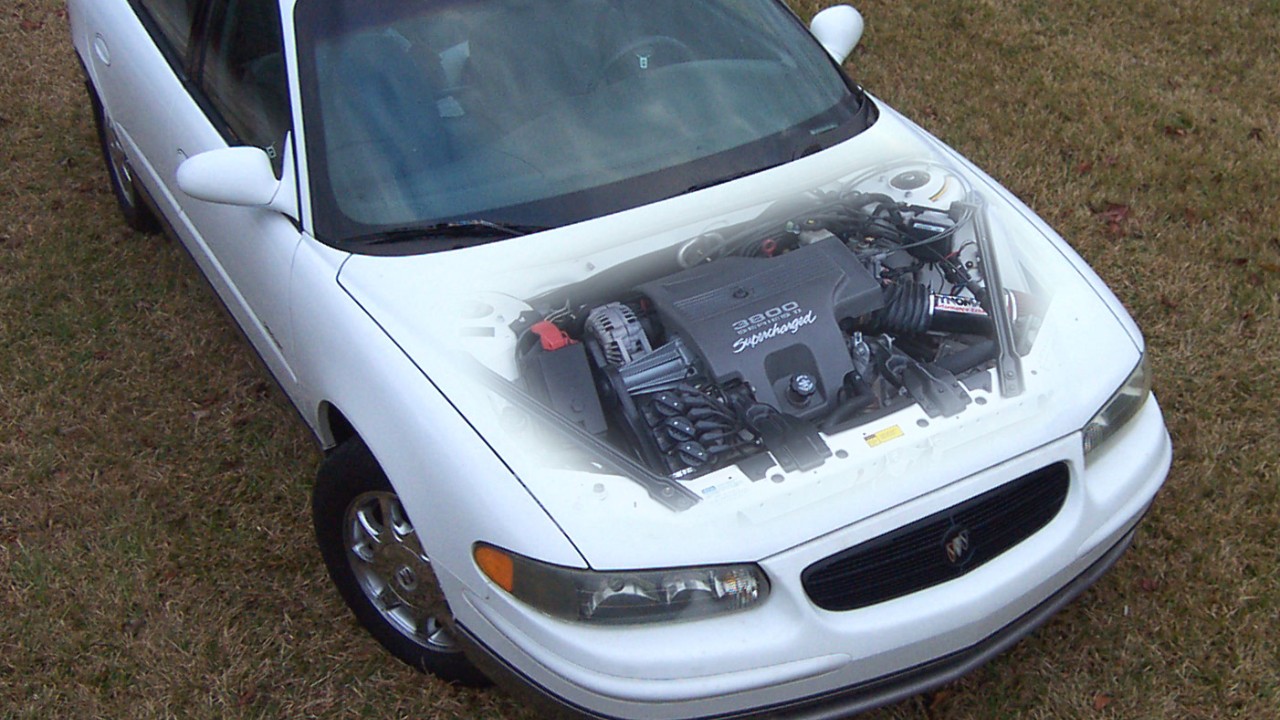
GM started supercharging the 3800 in 1991. Then, for 1996, it introduced the L67, a supercharged version of the Series II. With an Eaton M90 blower, it made 240 hp and 280 lb-ft of torque. By comparison, the earlier supercharged Series I engines had made 205 hp and then 225 hp.
The L67 went into a long list of cars. Buick used it in the Park Avenue Ultra from 1996 to 2005. It also went into the Regal GS from the 1997.5 model year through 2004. Pontiac fitted it to the Bonneville SSEi and Grand Prix GTP, while Chevrolet offered it in the 2004–2005 Impala SS and Monte Carlo SS. As a result, it reached buyers of four GM brands.
Our take: the L67 gave front-drive family cars real punch for very little money. A Regal GS like the one in our photo is a sleeper in plain clothes. If you shop for one, listen for supercharger noise and ask for full service records.
11. Buick 3.8 turbo V6 LC2
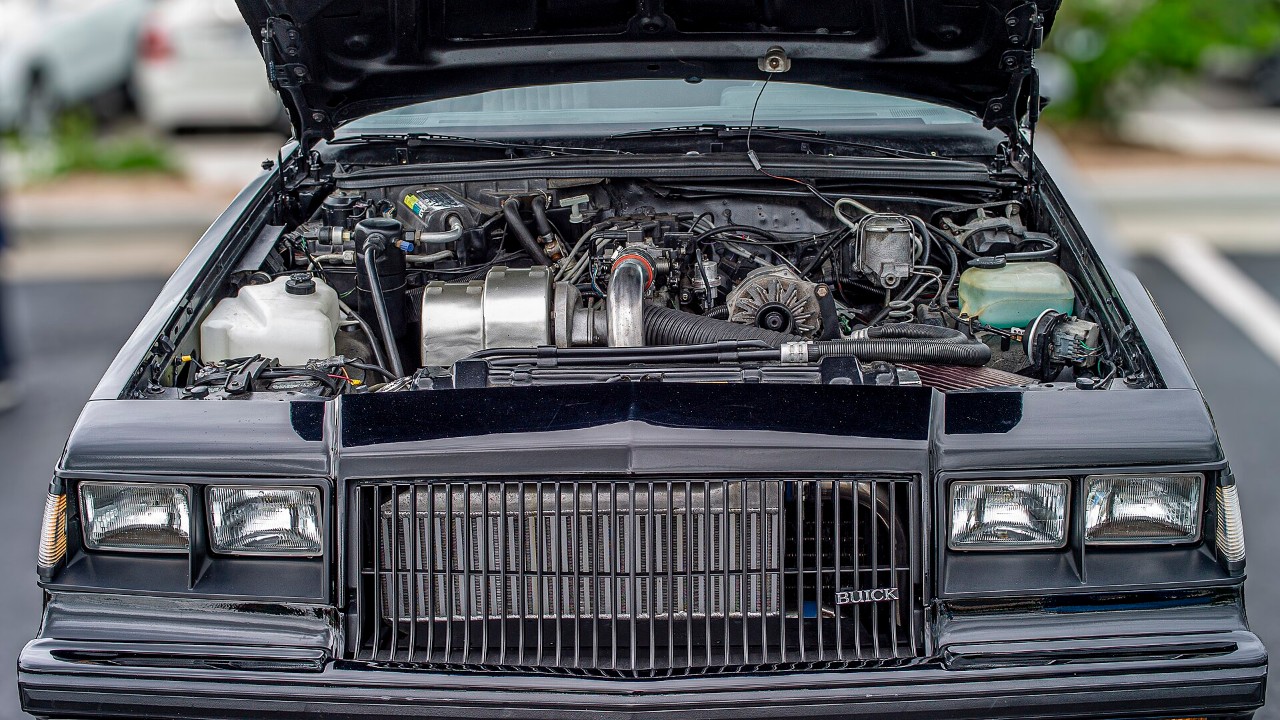
Buick first turbocharged its V6 in 1978, with a 165-hp version in the Regal and LeSabre Sport Coupes. By 1986, it had added multiport fuel injection, roller lifters and a Garrett intercooler. The intercooled engine carried the RPO code LC2, and it powered the Grand National. It used a 3.8-inch bore and a 3.4-inch stroke.
Buick rated the LC2 at 235 hp for 1986 and 245 hp for 1987. By then, the V6 family was nothing exotic, since GM had been building more than a million a year as early as 1981. Later in 1987, the GNX pushed further. Consumer Guide calls its rating of 276 hp and 360 lb-ft conservative. We covered the car side of this story in the secret behind Buick’s Grand National performance revolution.
In our view, the LC2 is the engine that made people take Buick seriously again. A Regal with a turbo V6 was not what anyone expected in 1986. If you buy one, check for boost leaks and a healthy turbo. Also ask the seller what has changed.
12. Buick Dynaflash straight-eight
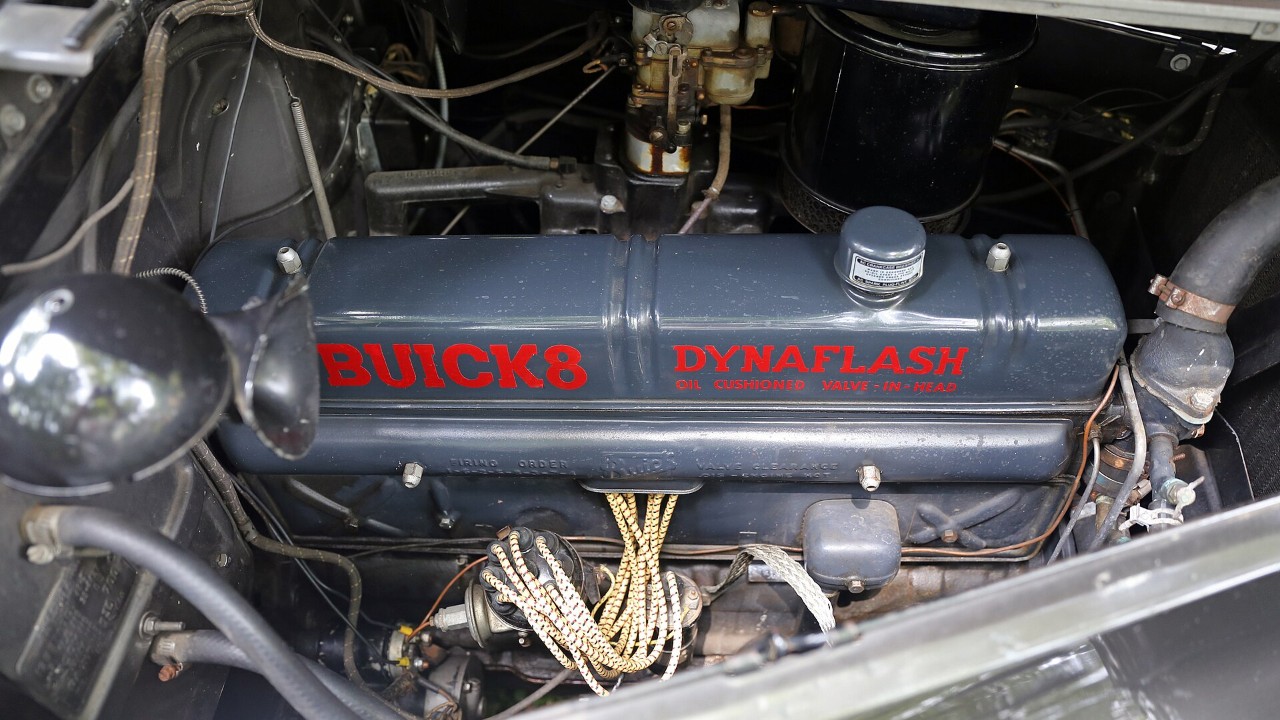
Buick built overhead-valve straight-eight engines from 1931 to 1953, and the line replaced its six across every model. Buick sold it under the Dynaflash and Fireball Eight names. After 1937, it also switched to drop-in bearings, which made rebuilds far cheaper than the older cast-in-place type.
Internally, the small-block eight resembled Chevrolet’s 216 and 235 sixes. Meanwhile, the larger 320-cubic-inch eight went into big cars such as the Roadmaster, starting at 120 hp and later reaching 170 hp. The 1939 Special used the 248-cubic-inch version with a three-speed manual. In fact, an RM Sotheby’s listing for a 1939 Buick Special calls the Dynaflash “very advanced” compared with the flathead engines of rival makers. Buick built more than 200,000 Specials that year.
Our take: Buick had overhead valves when most rivals were still building flatheads, and that is why it belongs here. The eight lasted until 1953, and the Special switched to V8 power for 1954. RM Sotheby’s sold one of just 830 1939 Special Sport Phaetons with this engine for $36,300 at Auburn in 2016.
More from Fast Lane Only