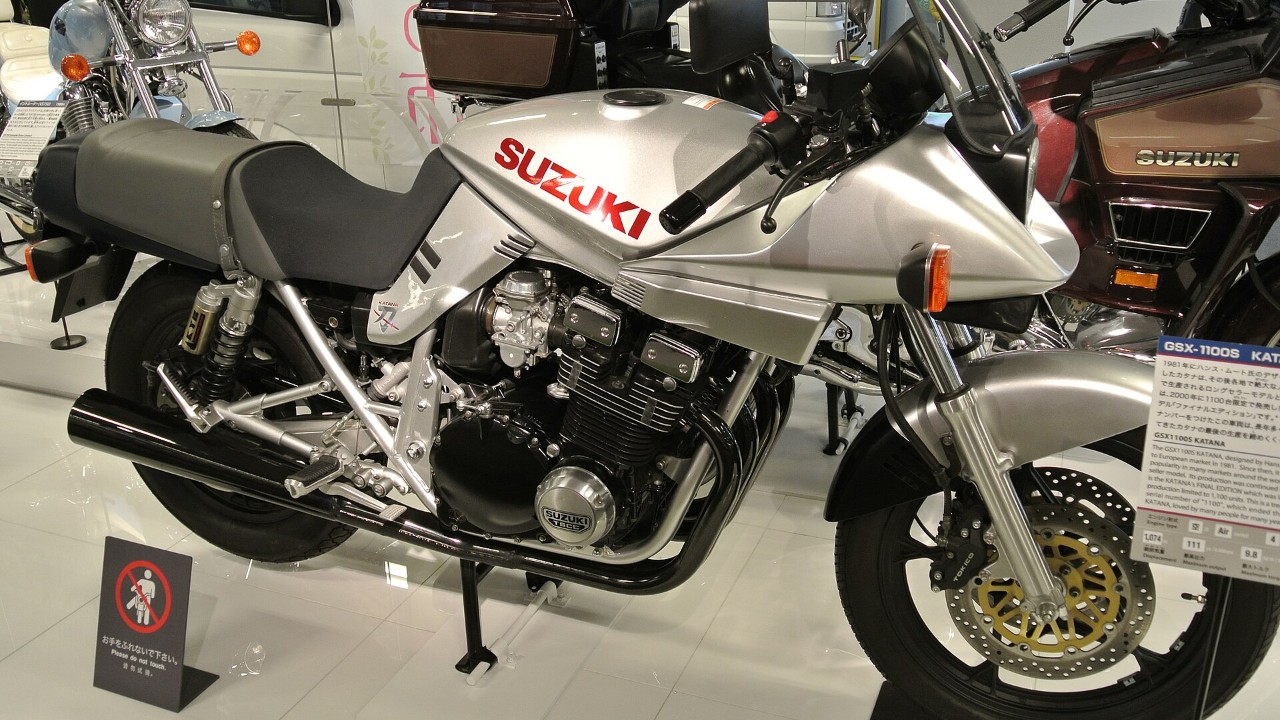
In 1980, a mock-up of the Suzuki Katana appeared at a motorcycle show in Cologne. A year later, it was on sale. That pattern runs through Suzuki’s history, because the company has often built its most memorable bikes with little fanfare and let riders discover them.
Honda had the CB750, and Kawasaki had the Z1. Suzuki, by comparison, earned its name one model at a time. Some of those models changed how a sport bike looked. Others changed how fast a road bike could go, and a few simply refused to wear out.
So these are our picks, seven Suzukis that earned their place over time rather than on launch day. Our facts come from period tests and model histories. The choice of which bikes count as legends, however, is our own opinion.
1. 1981 Suzuki Katana GSX1100S
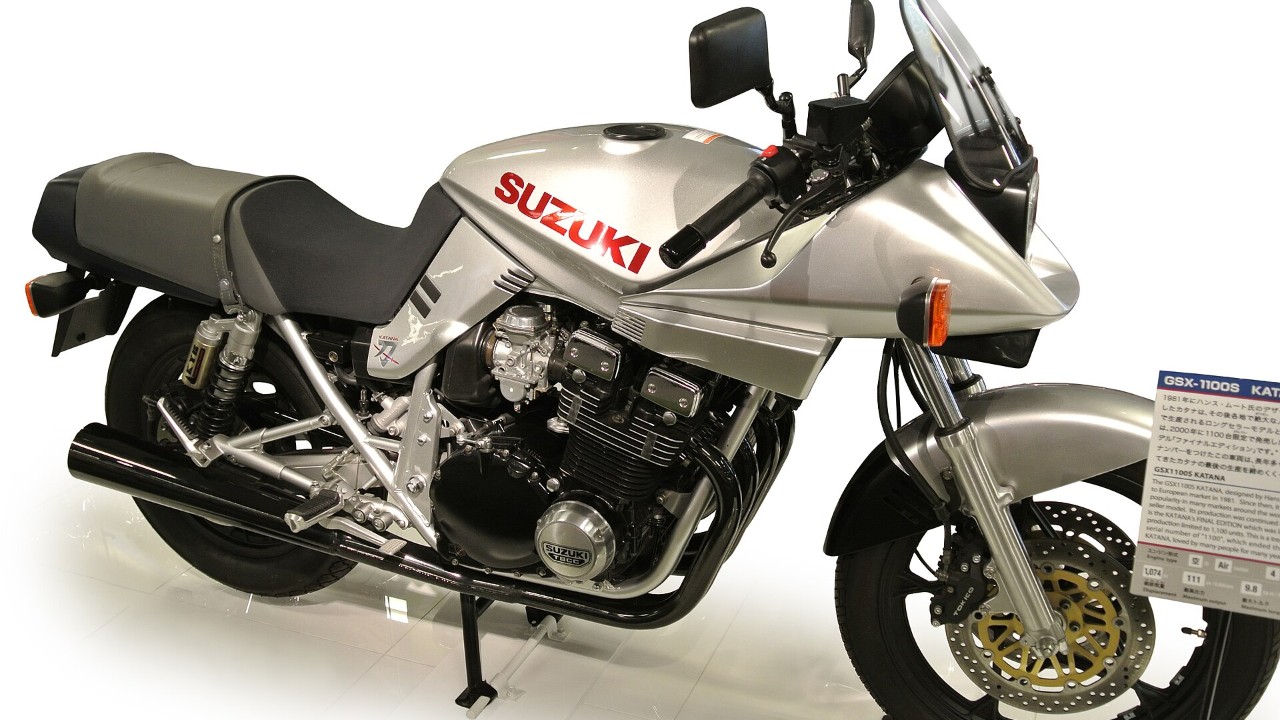
The Katana began with a problem. After the poorly received 1979 GSX1100, Suzuki hired Target Design, a German firm founded by former BMW designers Hans Muth, Hans-Georg Kasten and Jan Fellstrom. Their mock-up appeared at the Cologne show in September 1980. Then Suzuki rushed the design into production for 1981.
Surprisingly, Suzuki asked for no technical changes, only new bodywork. So the Katana kept its 1,100cc, 16-valve four. Meanwhile, the styling did the talking. The tank kept the rider’s knees narrow while adding volume above them, and a small cowl fixed the headlight to the frame instead of the bars. Those details come from Australian Motorcycle News’ look back at the GSX1100S.
The bike was fast, too. In Cycle Canada’s track testing, the Katana reached 147 mph, against 141 mph for the standard GSX1100E. Suzuki ended the original Katanas in 1985, yet the name returned on a new model for 2020. In our view, the Suzuki Katana is the reason so many later sport bikes look the way they do. If you want one, look for unmodified bodywork, because original panels are what collectors pay for.
2. 2008 Suzuki Hayabusa GSX1300R
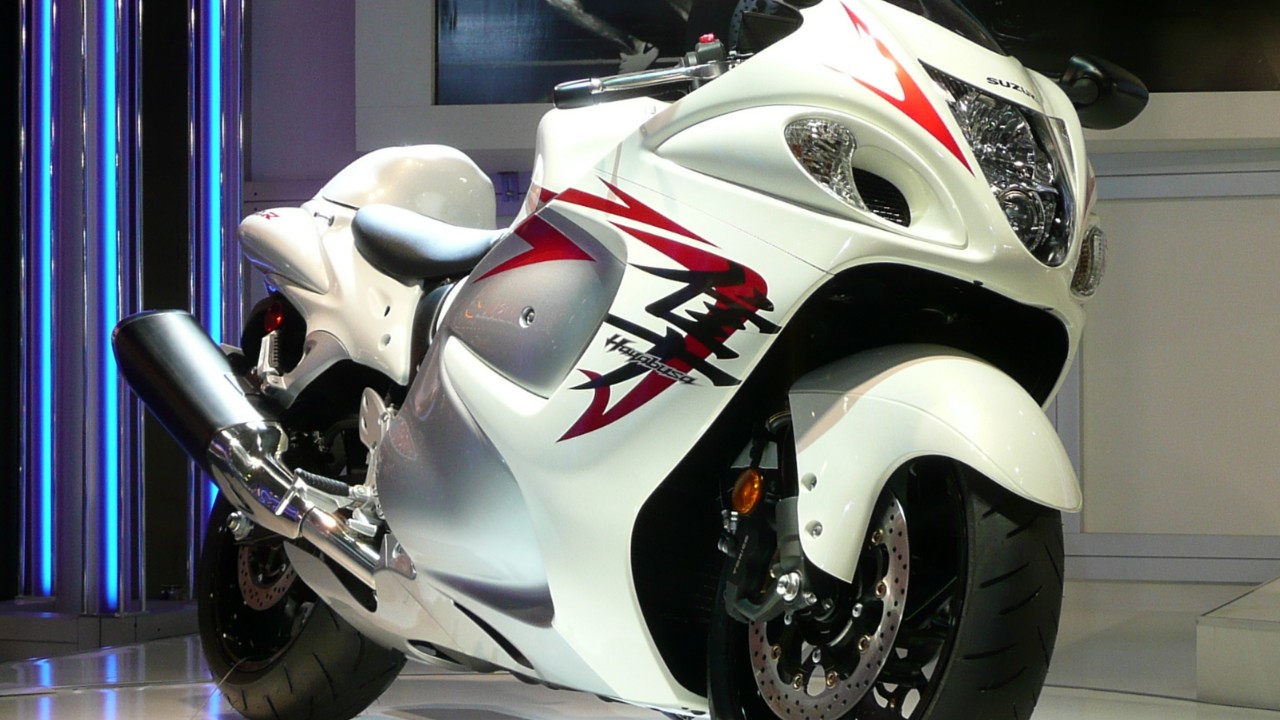
Hayabusa is Japanese for peregrine falcon, a bird known for its fast hunting dive. When Suzuki launched the GSX1300R in 1999, it claimed the bike was the world’s fastest production motorcycle. Top speed claims for the 1999 and 2000 models ranged from 188 to 194 mph, depending on the source. After that, makers agreed informally to limit their bikes to 186 mph, and the limit took full effect for 2001.
So for 2008, Suzuki couldn’t sell more top speed. Instead, it sold more of everything else. Displacement grew from 1,299cc to 1,340cc, and Suzuki claimed 194 horsepower at the crank. The second-generation bike also got titanium valves, a heavier-duty slipper clutch, a 43mm Kayaba inverted fork and Tokico radial brake calipers. In addition, a dual throttle valve system offered three selectable power modes.
Suzuki then left the bike almost alone, apart from new colors, through 2011. Our take: next to the Suzuki Katana, the 2008 Hayabusa is the version that turned a speed record into a long-distance machine. Its engine has even found its way into cars, as in this Smart car with a supercharged Hayabusa engine. If you’re buying, ask whether the speed limiter has been touched.
3. 1976 Suzuki GT750
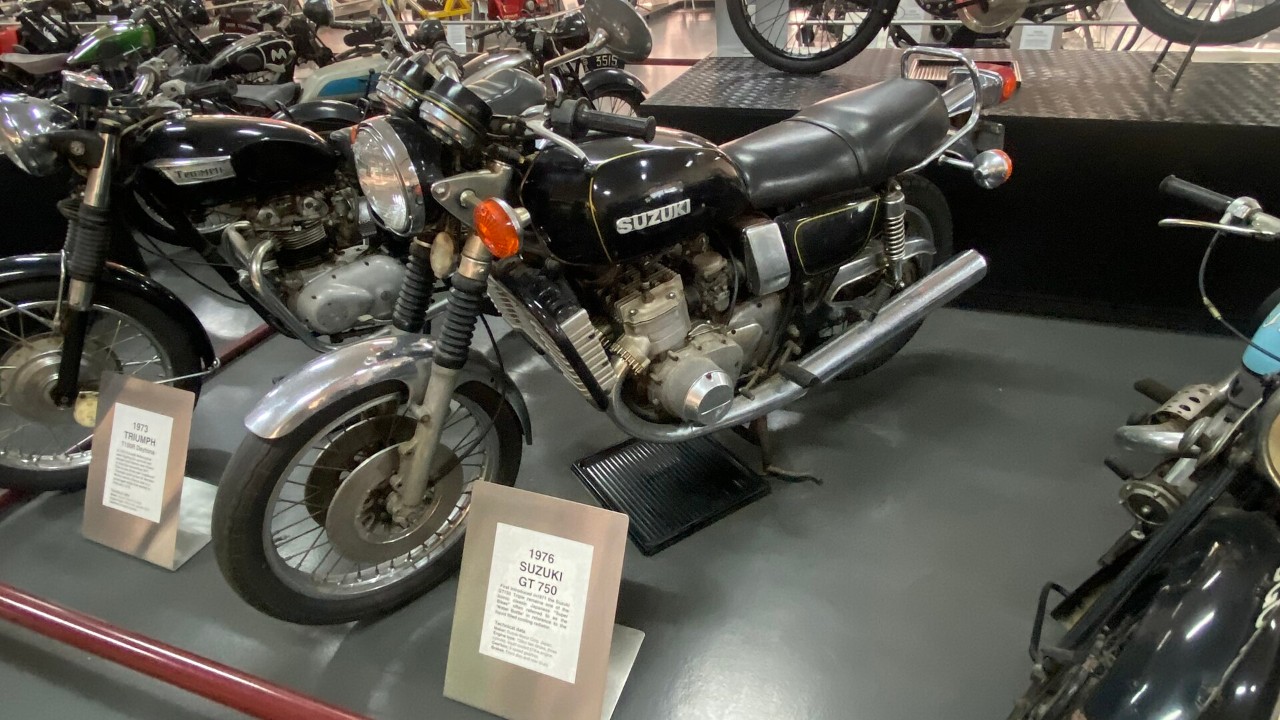
Suzuki showed the GT750 prototype at the 1970 Tokyo Motor Show. Sales began in Japan in September 1971, and the bike stayed in production through 1977. Its engine was a 739cc two-stroke triple with water cooling. In fact, it was the first Japanese motorcycle to use liquid engine cooling.
That radiator gave the GT750 its nicknames. British riders called it the Kettle, while Americans called it the Water Buffalo, and Australians called it the Water Bottle. In the US and Canada, Suzuki also marketed it as the Le Mans. Output was 67 horsepower at 6,500 rpm, and the bike weighed 482 pounds dry. Dual front disc brakes arrived with the 1973 GT750K.
By 1976, the GT750A had only minor trim and paint changes. Even so, in our view, it’s the one to own, because it’s the mature version of a bold idea. The triple’s smooth pull explains why it keeps showing up on lists like our 20 vintage motorcycles that were faster than anyone admitted. If you shop for one, budget for cooling-system work, since radiators and hoses on a 50-year-old bike need checking.
4. Suzuki GSX-R1100
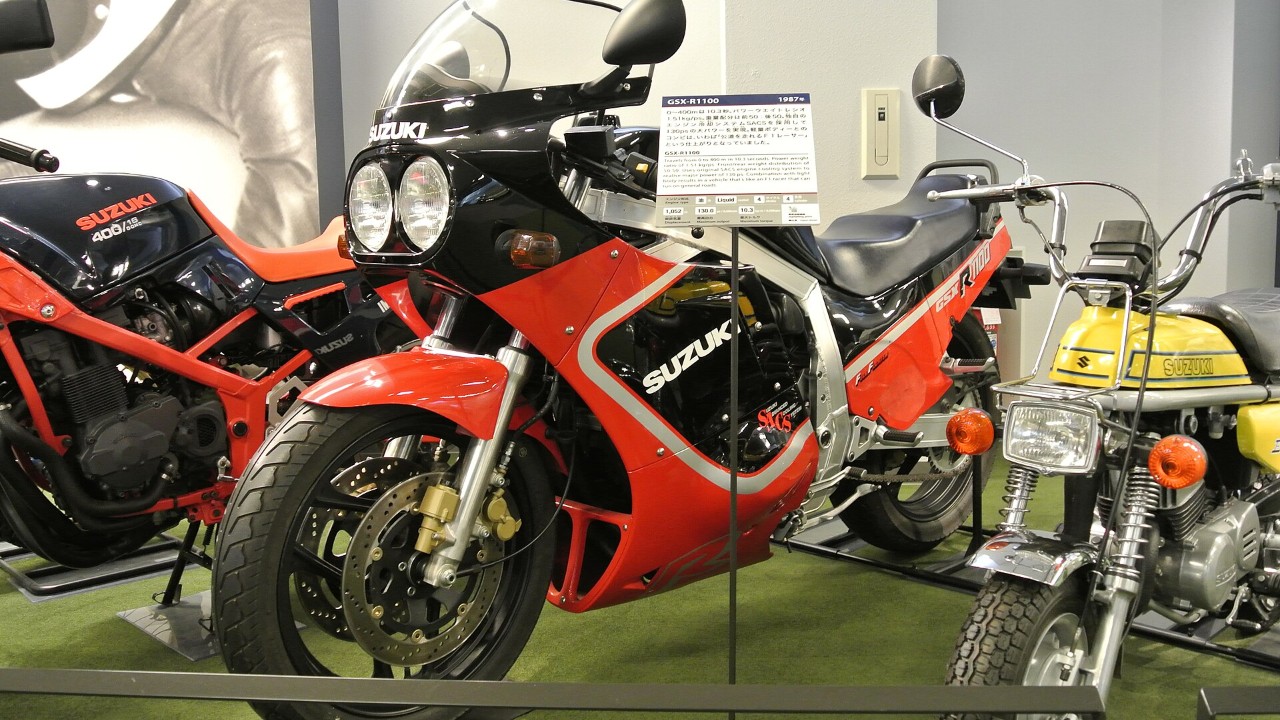
The GSX-R1100 arrived for 1986 with about 1,052cc and 137 horsepower. It weighed 434 pounds. Instead of a radiator, it used the Suzuki Advanced Cooling System, which sprayed oil onto engine parts that air couldn’t reach. A double-chamber pump supplied both the lubrication and the cooling oil.
Later, the engine grew to 1,127cc for 1989. Then, for 1993, Suzuki switched to water cooling, and the crank rating rose to 155 horsepower. The bike also gained weight, passing 500 pounds. Still, Superbike magazine measured a 1995 WS model at 177 mph.
That weight gain changed the bike’s role. By the mid-1990s, the GSX-R1100 had become more of a sports-tourer than a racer. In our view, that’s why it earns a spot here, since it carried the GSX-R name for 13 years and two very different missions. Production ended in 1998, and Suzuki didn’t have a big-bore sport bike again until the GSX-R1000. If you’re buying, the early oil-cooled bikes are lighter, but the later water-cooled models are easier to live with.
5. Suzuki GSF1200 Bandit
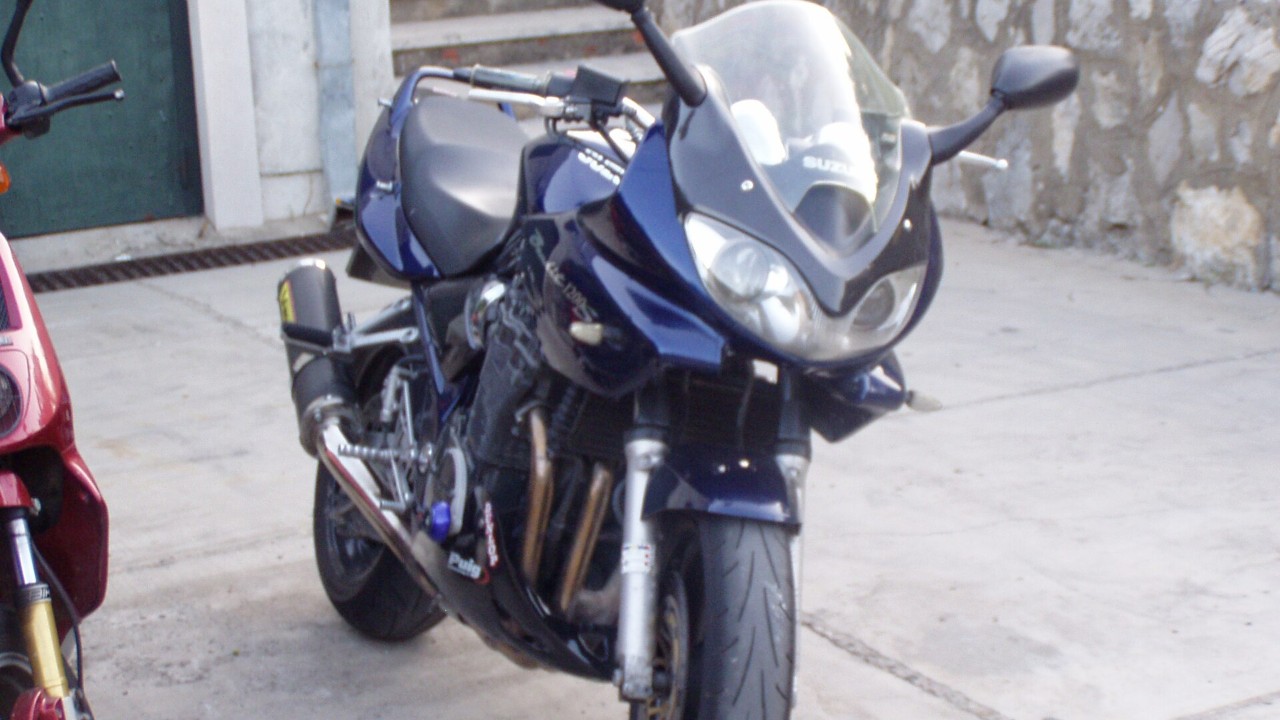
Suzuki started its Bandit series in 1989. The GSF1200 Bandit generally went on sale in January 1996, although a few were registered in 1995. Under the tank sat a 1,157cc DOHC inline-four with 16 valves.
That engine had a famous source. Suzuki bored out the GSX-R1100 engine and retuned it for more mid-range torque. As a result, the Bandit took a sport bike’s motor and built it for the roads most riders actually use. It also gave riders a simpler, cheaper way into big-bore power than a full sport bike.
Our take: the Bandit 1200 became a legend in garages rather than on racetracks. It’s the bike riders bought to commute, tour, carry a passenger and then ride hard on Sunday. Because the engine started life in a sport bike, it rarely felt stressed in that role. Suzuki kept the GSF1200 in production until 2007, when the GSF1250 Bandit range took over. If you’re shopping, look for a stock example, because many Bandits picked up aftermarket exhausts and bars over the years.
6. 2001 Suzuki GSX-R1000
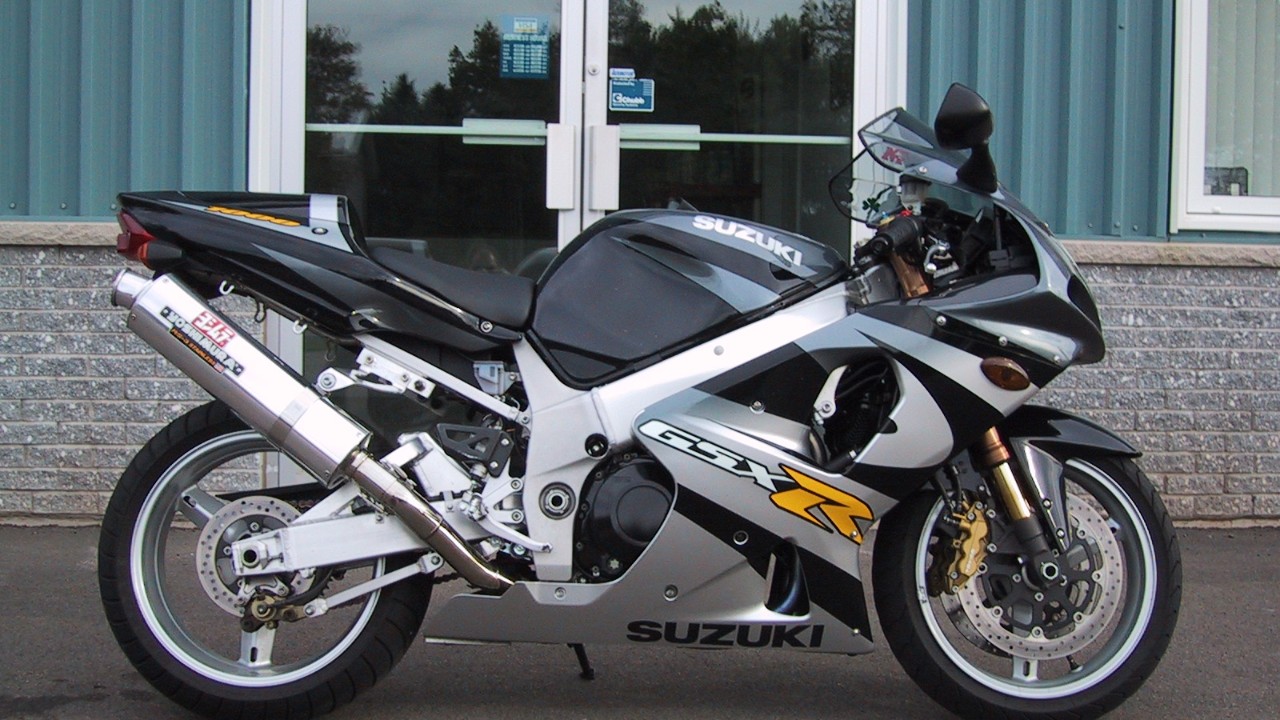
The GSX-R1000 replaced the GSX-R1100 in 2001. From 2001 to 2004, it displaced 988cc, with a 73.0mm bore and a 59.0mm stroke. However, it was not simply an enlarged GSX-R750, even though the two shared a lot.
The 1000 used the same mainframe as the 750, but with material 0.5mm thicker. Its engine was a redesigned 750 unit, with a bore 1mm larger and a stroke 13mm longer. Altogether, the bike weighed 374 pounds dry. That combination gave riders liter-bike power in a package close to a 750’s size.
Racing proved the formula. Troy Corser won the 2005 Superbike World Championship on a GSX-R1000, and the bike also won the Suzuka 8 Hours in 2007 and 2009. Later versions kept the reputation going, as an 18-year-old on a 2008 GSX-R showed. In our view, the 2001 model is where the modern liter bike started. If you buy one, check for crash damage, since many led hard lives.
7. Suzuki DR800 Big
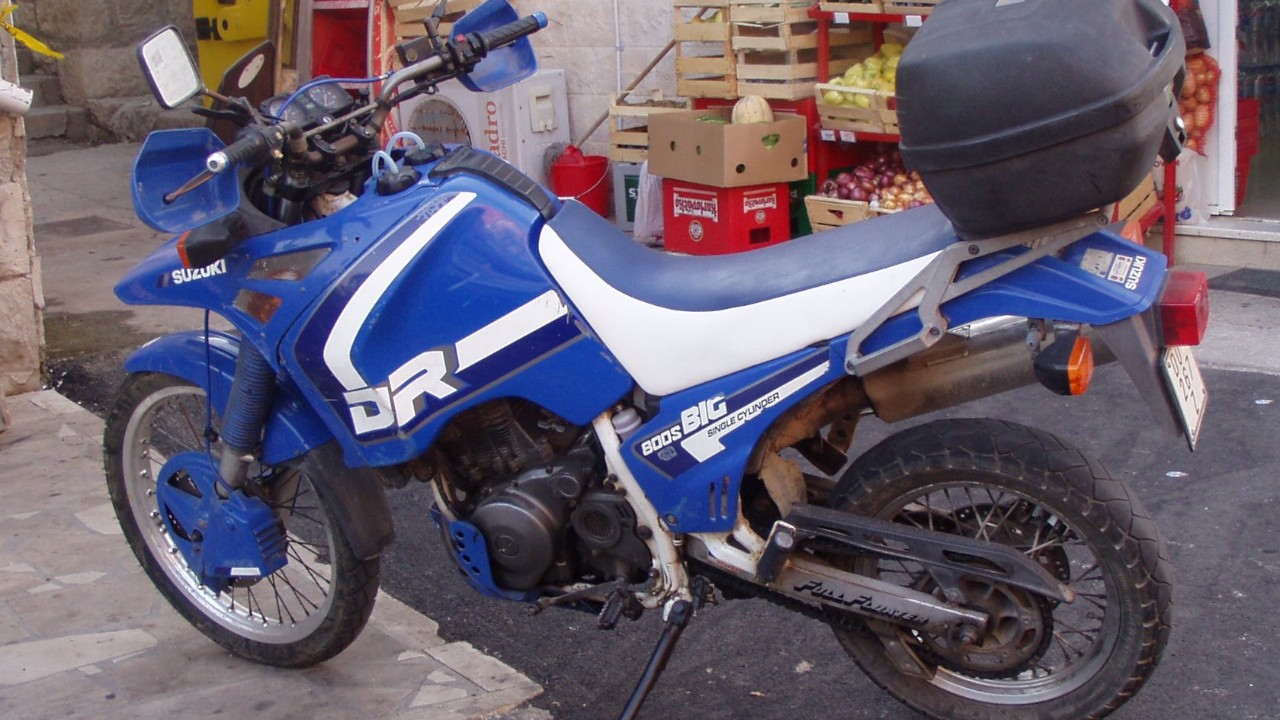
The DR Big arrived in 1988 as the DR750S, with 727cc and 52 horsepower. For 1990, Suzuki lengthened the stroke by 6mm and kept the 105mm bore. The result was 779cc and 54 horsepower, according to RideApart’s retrospective. Also, the fan-run Suzuki archive at suzukicycles.org notes that no standard bike has had a larger single cylinder.
The DR had a desert pedigree. Gaston Rahier rode Suzuki’s DR-Z at the Paris-Dakar rally in the late 1980s. Early tanks held 7.7 gallons, and in 1991 Suzuki cut that to 6.3 gallons. RideApart also calls the DR Big the first known example of the beak-style front fender that adventure bikes now wear.
Our take: Suzuki never officially imported the DR800 to the US. Even so, its look shows up on adventure bikes everywhere, and a Suzuki Katana fan would recognize the same habit of setting trends early. If you find one, expect a 34.5-inch seat height and budget for suspension upgrades. In Suzuki’s lineup, the V-Strom eventually took the DR Big’s place.
More from Fast Lane Only