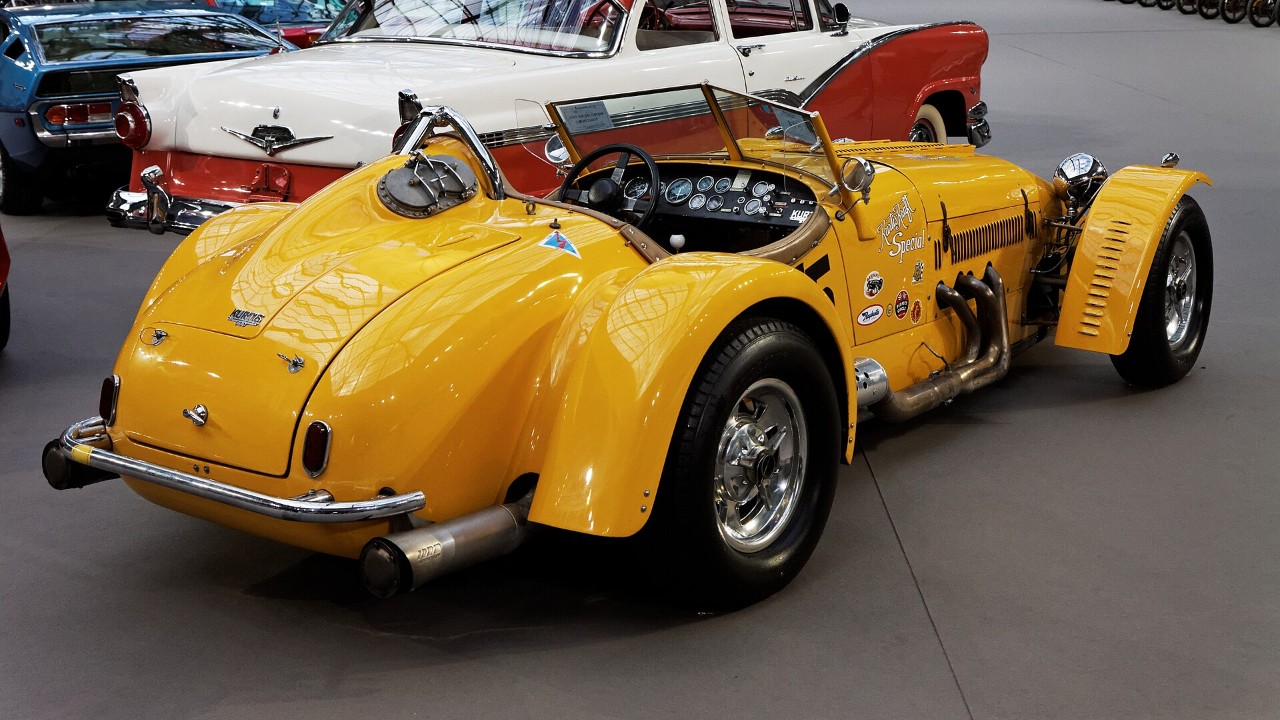
Most people can name an MG, a Triumph or a Corvette from across a parking lot. However, far fewer can pick out a Kurtis-Kraft 500S, a Woodill Wildfire or a Swallow Doretti. Yet each of those open two-seaters has a story as good as any famous badge.
The 1950s and early 1960s produced a burst of small roadster makers. Some were car dealers with a dream. Others, by contrast, were giant companies testing the water with fiberglass, or tiny British firms bolting motorcycle engines into featherweight bodies.
These are our picks, ten roadsters that only true enthusiasts tend to recognize on sight. Each one comes with the facts that make it worth knowing, plus our take on what it is like to own or chase one now. If you spot one at a show, you will know exactly what you are looking at.
1. 1953 Kurtis-Kraft 500S
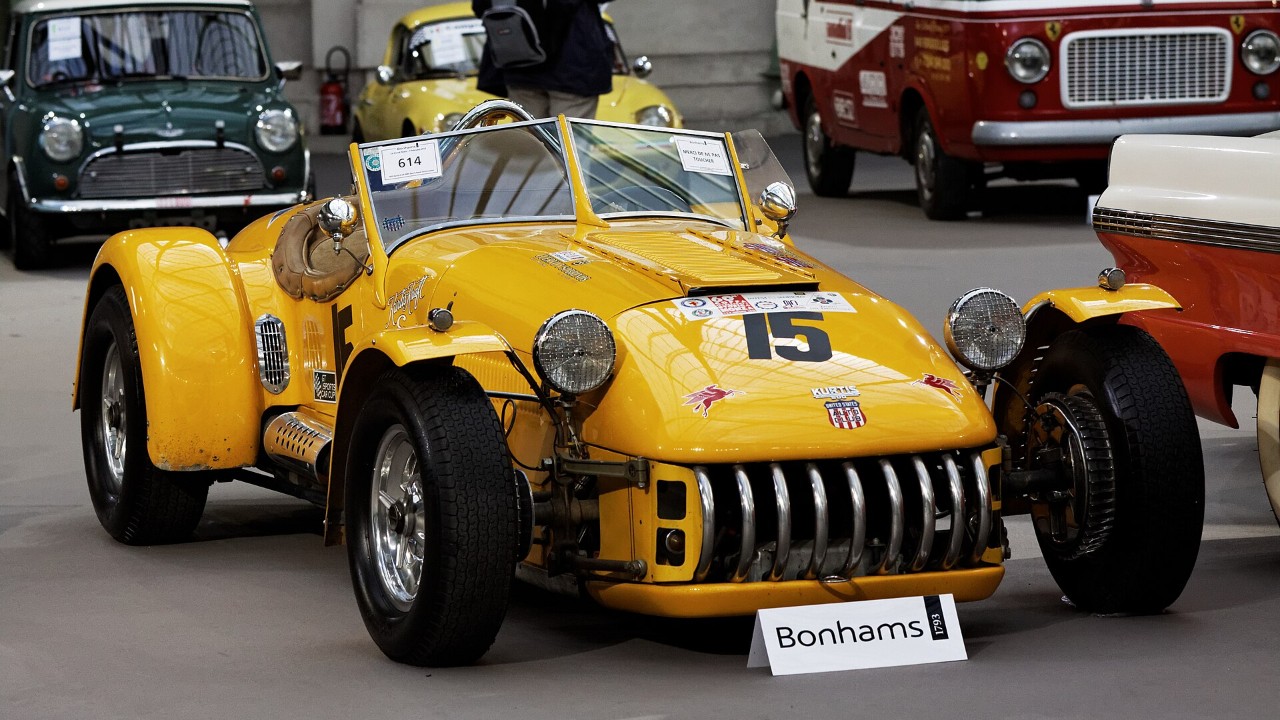
Frank Kurtis built race cars first, and it shows. In fact, his Wynn’s Oil Special won the 1949 Indianapolis 500. The Kurtis-Kraft 500S that followed in 1953 was, as one history puts it, essentially a Kurtis Indy roadster with seating for two. It used a steel-tube frame, torsion bars up front and plenty of Ford driveline parts.
Customers chose their own engines, so the cars carried everything from Chrysler Hemis to Buick nailheads and Cadillac V8s. New, a 500S cost just under $5,000. Then the racing started. Jack Ensley won the 1954 SCCA B-Modified national championship in one, and names like Briggs Cunningham and Bill Stroppe also drove them.
Today, the cars hold their value, and a well-documented Kurtis-Kraft 500S draws serious bids. Gooding & Company sold a 1953 Kurtis-Kraft 500S with a 365-cubic-inch Hemi at Pebble Beach in 2011 for $203,500. Our take: this is a hot rod with a racing pedigree, not a touring car. If you want one, insist on a documented chassis history, because provenance matters enormously with these cars.
2. 1955 Woodill Wildfire
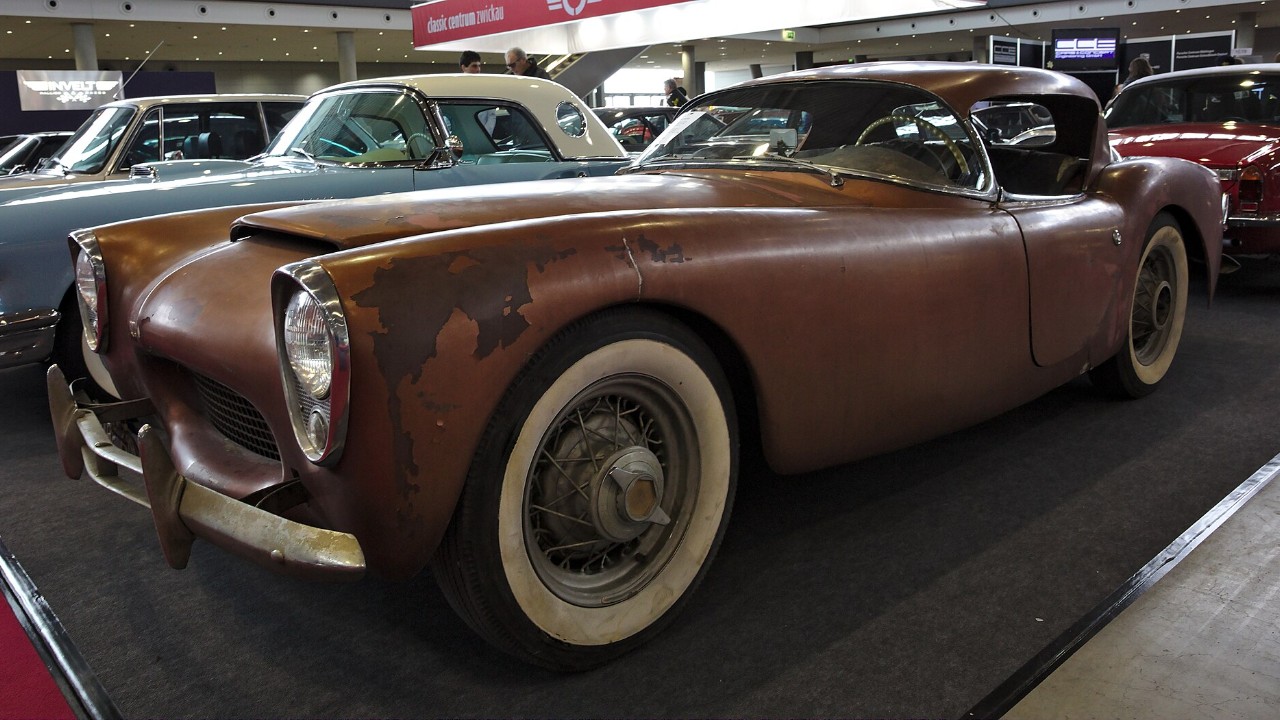
Blanchard “Woody” Woodill sold Dodges in Downey, California, and he wanted a sports car with his own name on it. According to Hagerty, the project began with a chat over the fence with his neighbor, Howard Miller. The result paired a Glasspar fiberglass body with a chassis by hot rodder Shorty Post.
The early cars ran a Willys Hurricane 161-cubic-inch six with three carburetors. Post also used Willys Jeepster suspension parts underneath. Then Kaiser bought Willys and had its own sports car plans, so the project stalled. Woodill later fitted the body to Ford running gear instead.
Hagerty counts about 300 Wildfires in all, but only 15 left the factory complete. Most of the other 285 went out as kits, and Hagerty counts nine survivors. The Wildfire also had a brief film career, since one of three cars appeared in the 1950s movie “Johnny Dark” with Tony Curtis.
In our view, the Wildfire is the purest kind of 1950s American dream car. Expect every kit-built example to differ, so judge each one on its own build quality.
3. 1961 Datsun Fairlady SPL213
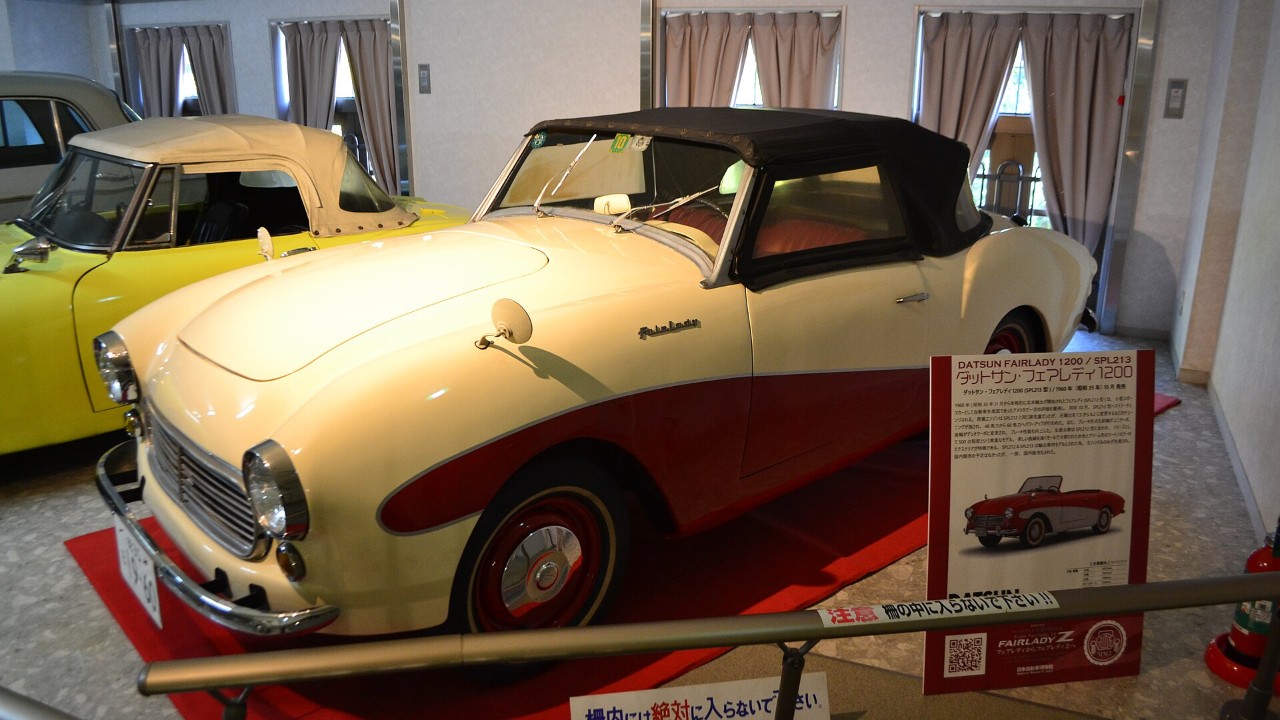
Before the Z, there was this little roadster. Datsun began full-scale exports of its sports car to North America in January 1960. The SPL213 took over from the SPL212 that October, and the “L” in the code marked a left-hand-drive export car.
According to Nissan’s heritage collection, the SPL213 used the E1 engine, a 1,186 cc overhead-valve four. It made 55 PS at 4,800 rpm, up from 48 PS on the earlier car, and the whole car weighed 890 kg. Nissan says the SPL212 and SPL213 together reached only about 500 units.
The name, meanwhile, has a fun origin. Former Nissan President Katsuji Kawamata picked it after a Broadway musical moved him during a trip to the United States. Our take: the SPL213 is the seed of every Datsun sports car that followed, and it looks charming in two-tone paint. Of course, it is slow by any modern measure. Even so, that hardly matters on a sunny back road. With so few built, expect a long hunt and buy the most complete car you find.
4. 1962 Fiat 1200 Spider
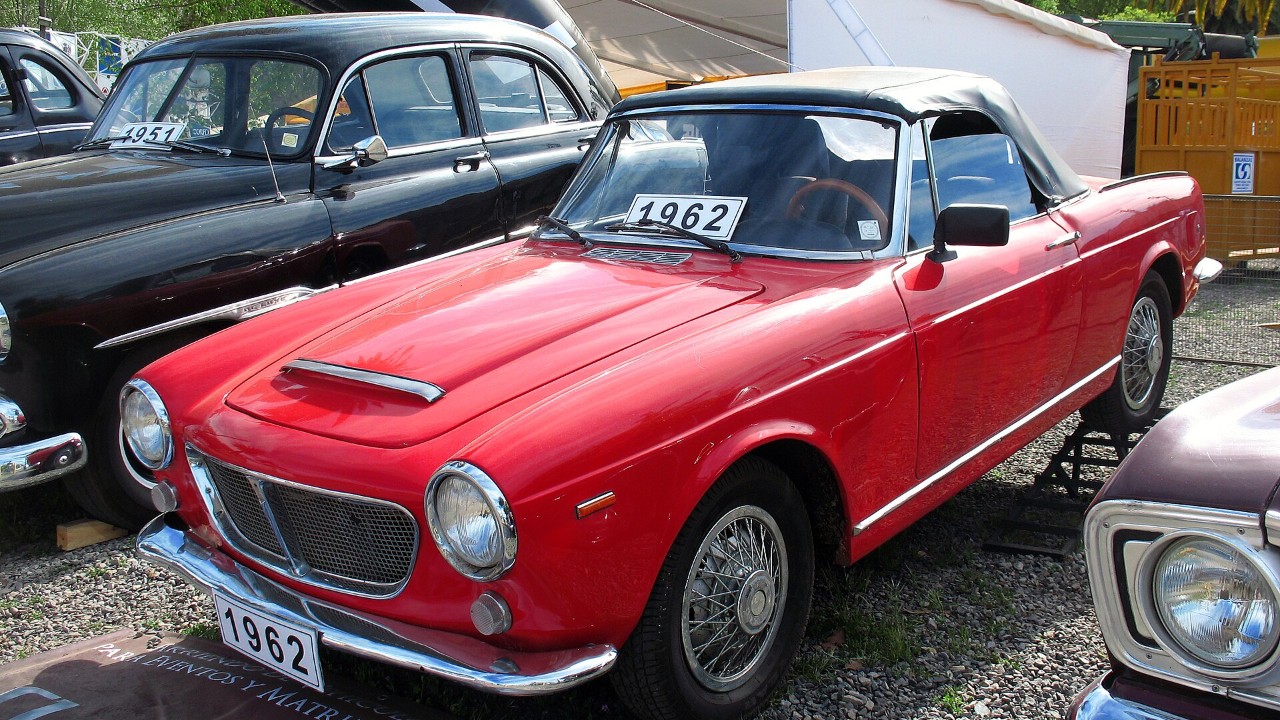
Pinin Farina styled this open Fiat, and the shape aged well. The 1200 version ran from 1959 to 1963. It kept the chassis of the earlier 1200 TV Trasformabile, under a crisp new body with clean flanks and a low nose.
Power came from a 1,221 cc pushrod four with 59 CV. That gave the car pleasant manners rather than real speed. In fact, Fiat soon added the OSCA-engined 1500 model, with a 1,491 cc twin-cam and 80 CV, for buyers who wanted more. Then, in September 1963, a 1500 replaced the 1200 altogether.
The whole family of these cabriolets reached 34,211 cars by the end of 1966. That makes the 1200 far from rare by production standards. Its real appeal is the design.
In our view, the 1200 is the relaxed, affordable way into a Pininfarina design. It is easy to maintain, and the body is the part that matters. When you shop, put rust checks ahead of engine health. In our view, the simple pushrod four is the easier part to sort. If you want more urge, look for the twin-cam OSCA car instead.
5. 1958 Berkeley SE492
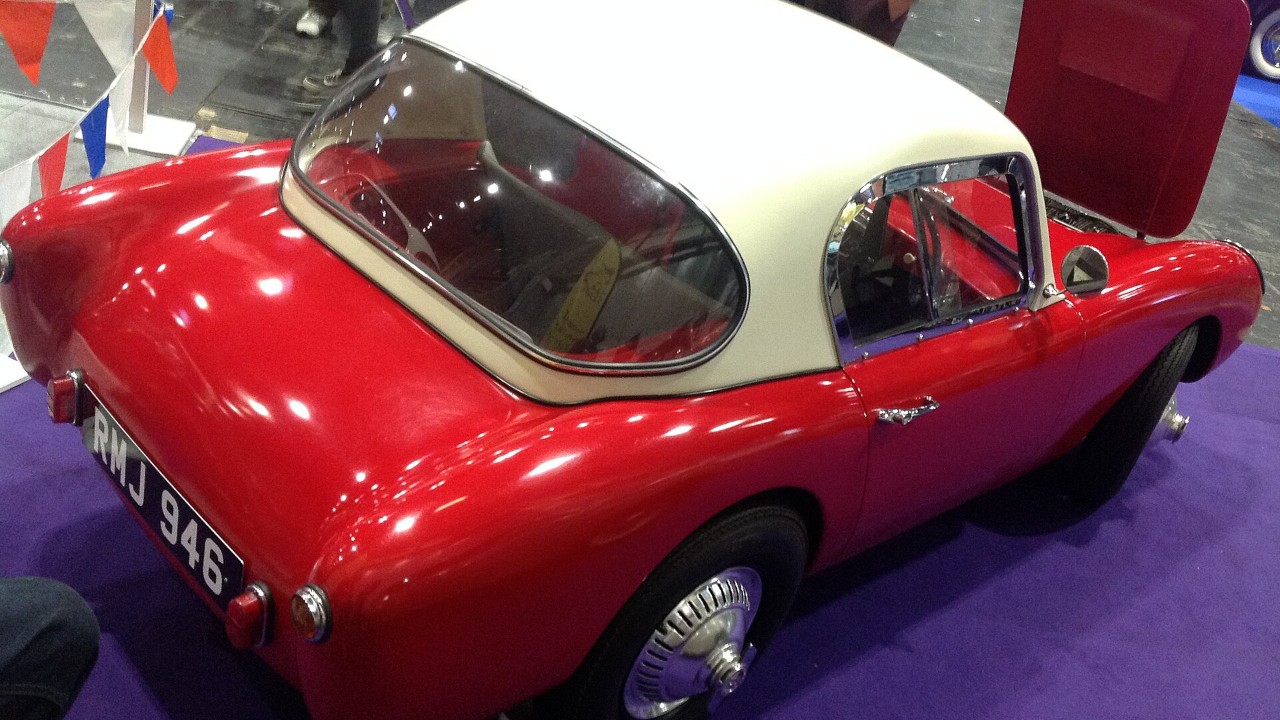
Berkeley built its sports cars in Biggleswade, England. Designer Lawrie Bond worked with owner Charles Panter to create a range of tiny sports cars from large fiberglass mouldings, without a conventional chassis.
The SE492 arrived in October 1957 and ran until March 1959. Its engine was a 492 cc air-cooled, three-cylinder two-stroke from Excelsior, with triple carburetors and 30 bhp. That sounds tiny, of course. However, the featherweight body helped it reach 80 mph, and a four-speed gearbox came standard. Berkeley built about 666 of them.
The racing story is the best part. Italian enthusiast Giovanni Lurani bought three SE492s, added his own hardtops and raced them in the 750 cc GT class. Lorenzo Bandini then won the 1958 Monza 12 Hours in one.
Our take: the SE492 is a microcar with a real competition record, and it is great fun at low speed. Two-stroke engines need careful setup, so find a specialist before you buy. A healthy one, on the other hand, will make you grin every mile.
6. 1965 Datsun 1600 Sports SPL311
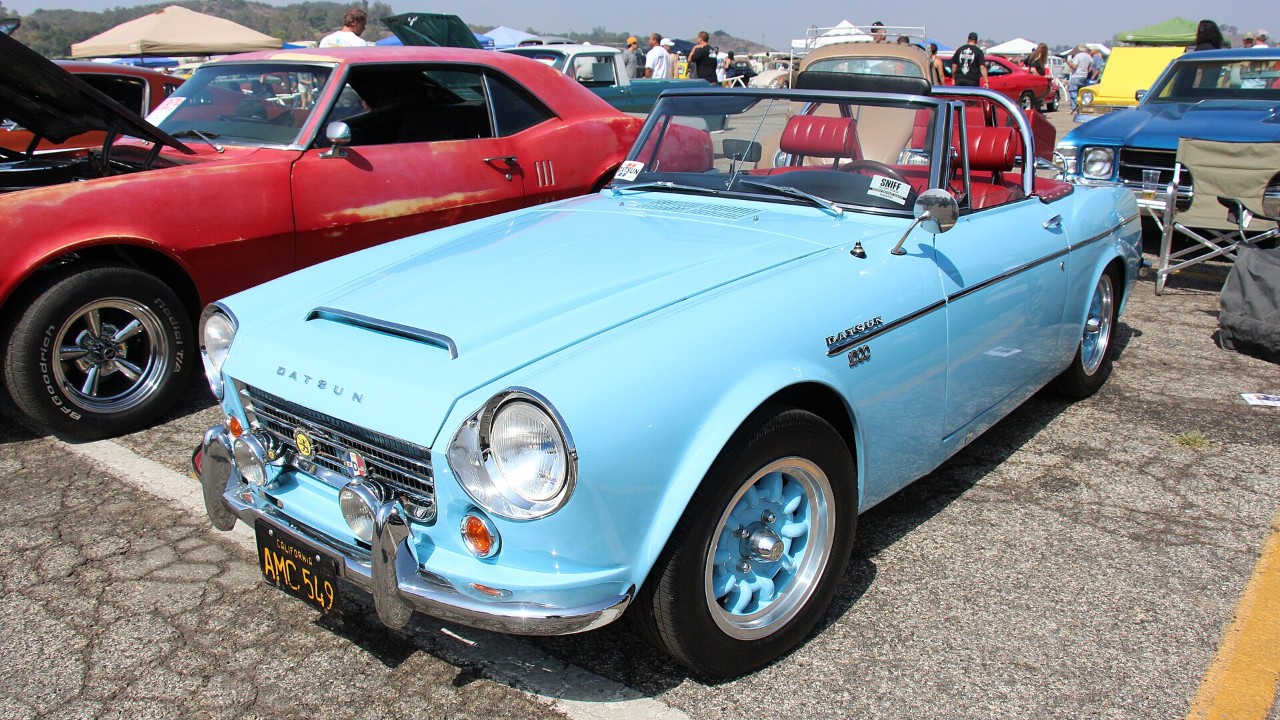
Datsun’s roadster grew up fast. The Fairlady 1600 launched in May 1965, and the left-hand-drive SPL311 carried it to North America. According to Nissan’s own record of the car, the 1,595 cc overhead-valve four made 90 PS at 6,000 rpm.
That engine came from the R family first used in the Silvia. Nissan also fitted a four-speed floor shift with Porsche-type full synchromesh, plus front disc brakes and double-wishbone front suspension. Those were serious specifications for an affordable roadster in 1965.
The car’s roots ran through racing, too. Its predecessor, the Fairlady S310, beat foreign sports cars in its class at the first Japan Grand Prix in May 1963, Nissan says.
In our view, the 1600 is the Datsun roadster to drive rather than display. It offers real performance for its size, and the full-synchro gearbox makes it easy to drive well. For the buyer, the advice is simple: check the floors and sills, and favor a car with its original engine. For more open-top cars from this era, see our list of roadsters from the 1950s that feel special.
7. Arnolt-Bristol
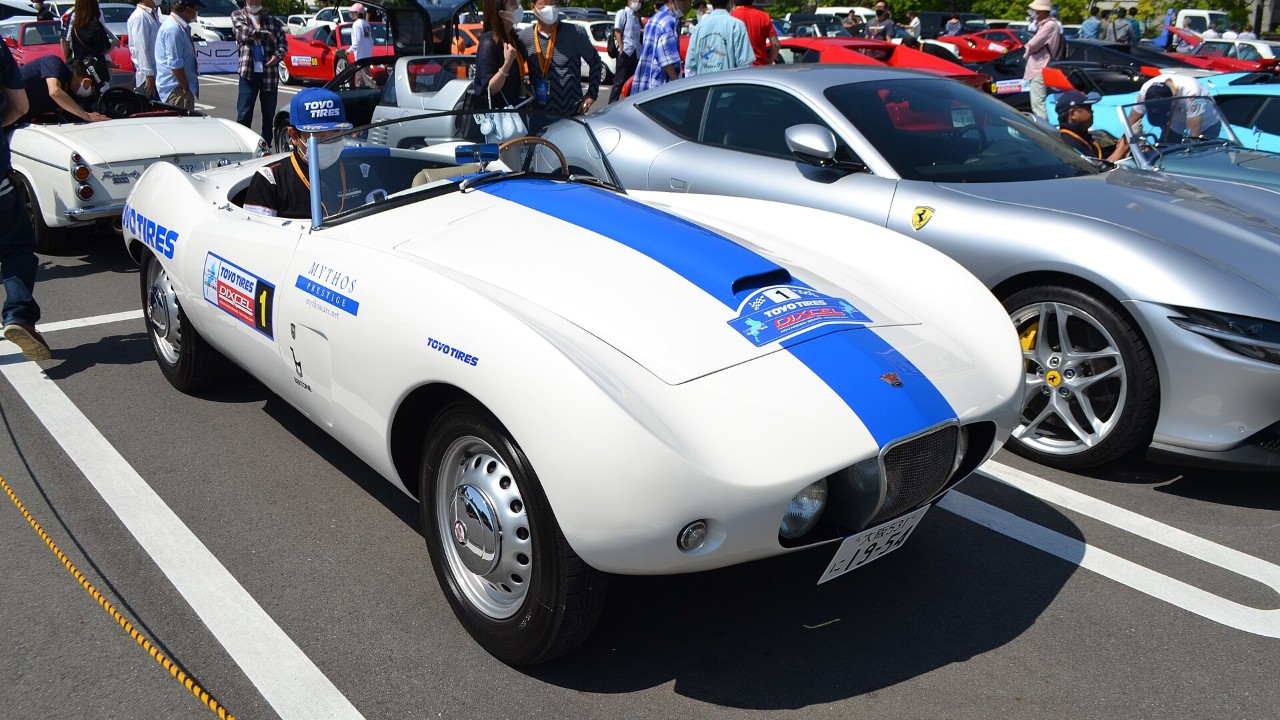
Stanley “Wacky” Arnolt was a Chicago industrialist with a taste for Italian style. His Arnolt-Bristol combined an English chassis and engine from Bristol with a body that Bertone built in Italy. Meanwhile, Franco Scaglione drew the shape.
Under the hood sat Bristol’s 1,971 cc six, rated at 130 hp. Arnolt’s firm built all 142 cars between January 1953 and December 1959, although a factory fire destroyed 12 of them. In 1956 the price list ran from $3,995 for the Competition model to $5,995 for the Coupé.
The racing record is the reason enthusiasts know the name. At Sebring in 1955, Arnolt-Bristols finished first, second and fourth in the Sports 2000 class, and they took the Team Trophy at the first attempt. The team repeated that trophy in 1956 and 1960.
Our take: the Arnolt-Bristol is a three-nation sports car that actually won races, and it looks like nothing else on the road. With so few built, every car’s history matters. Before you buy, ask for its build records and race history. For more open cars from this period, our list of forgotten roadsters that were pure blasts to drive is a good next stop.
8. 1954 Nash-Healey
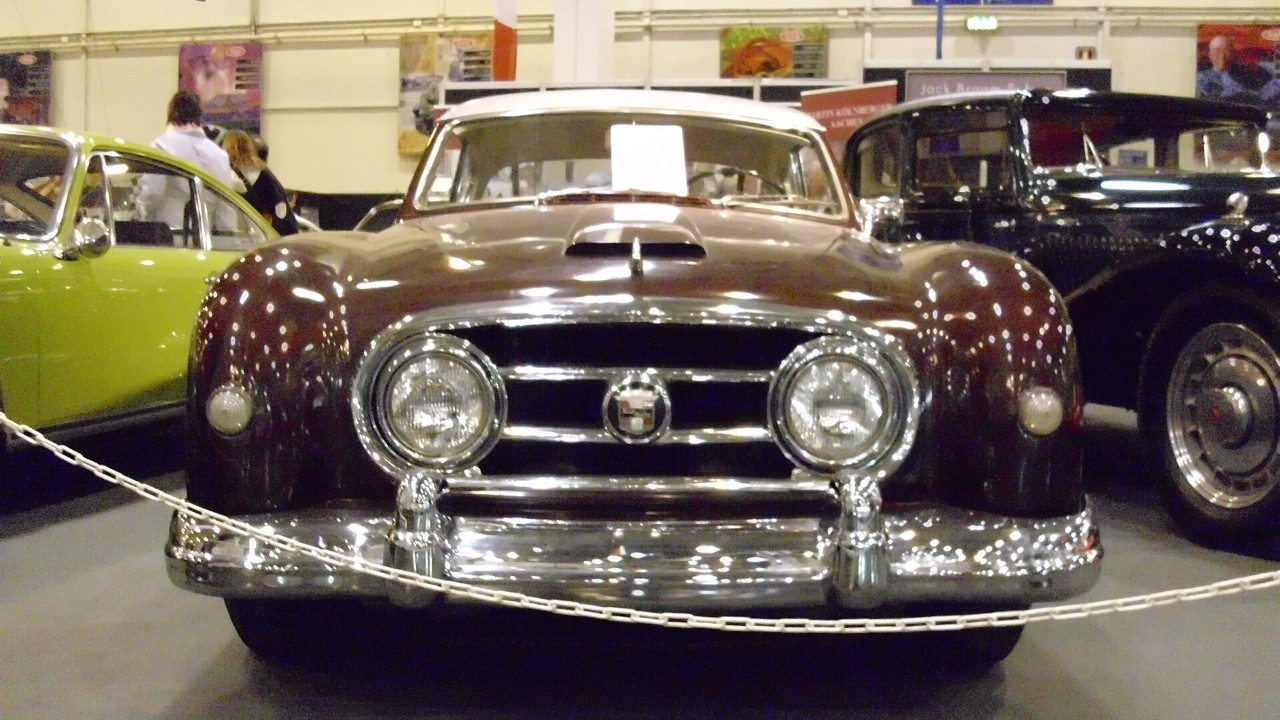
An American family car company teamed up with a British racer to build this one. Nash supplied the drivetrain, Donald Healey built the chassis in England, and from 1952 Pinin Farina in Turin styled and built the steel bodies. Production ran from December 1950 until August 1954, so 1954 was the final model year.
The racing peak came in 1952. That year a Nash-Healey finished third overall at Le Mans, behind two factory Mercedes-Benz 300SLs, and won its class. For 1954, the Nash engine displaced 252 cubic inches and made 140 hp.
Price was the big hurdle. In 1953, a Nash-Healey cost $5,908, while a Corvette cost $3,513. Nash then trimmed the 1954 range, dropping the convertible and keeping the Le Mans coupe, so the car’s open-top story ends here. All told, the production records count just over 500 cars.
In our view, the Nash-Healey deserves far more recognition than it gets. It mixed Italian style with American torque. If you shop for one, confirm the body style and year against the car’s records, since the final-season cars differ in detail.
9. 1956 Volvo P1900
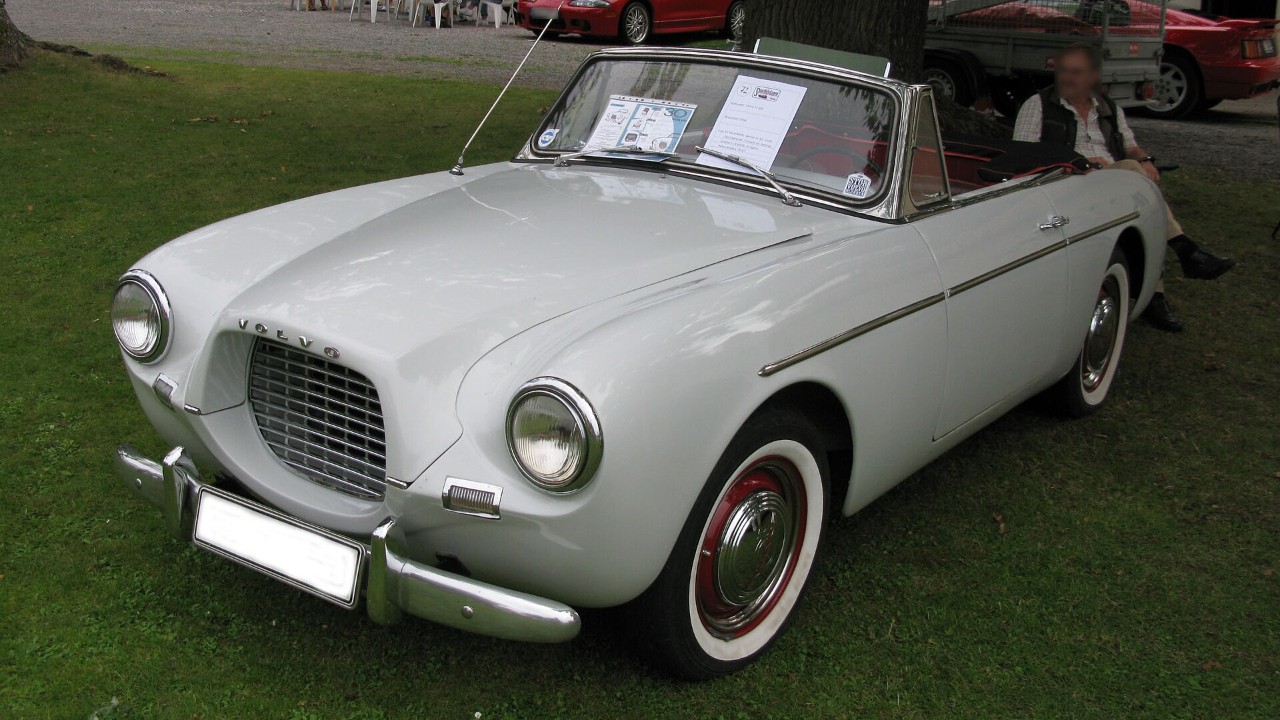
Volvo built a fiberglass roadster before it built the P1800. The Sport P1900 appeared in 1954, and production ran only from 1956 to 1957. According to Volvo’s own legacy-model page, the company built 67 of them, possibly 68.
The body was fiberglass-reinforced polyester over a separate tubular frame. Underneath, most components came from the PV444 sedan as well. Volvo tuned the PV444’s 1,414 cc four with twin carburetors, a different camshaft, larger intake valves and higher compression. As a result, it made 70 bhp at 5,500 rpm, and a three-speed manual sent power to the rear wheels.
Volvo planned the car for export, because a convertible seemed unsuited to Swedish winters. Yet most of the cars ended up sold in Sweden anyway. The tuned engine later went into the American-market PV444 for 1957, which Volvo marketed as “The family sports car.”
Our take: the P1900 is the open Volvo most fans have never heard of, and a sighting is a real event. With so few made, you buy this car for its history, not for the drive.
10. 1955 Swallow Doretti
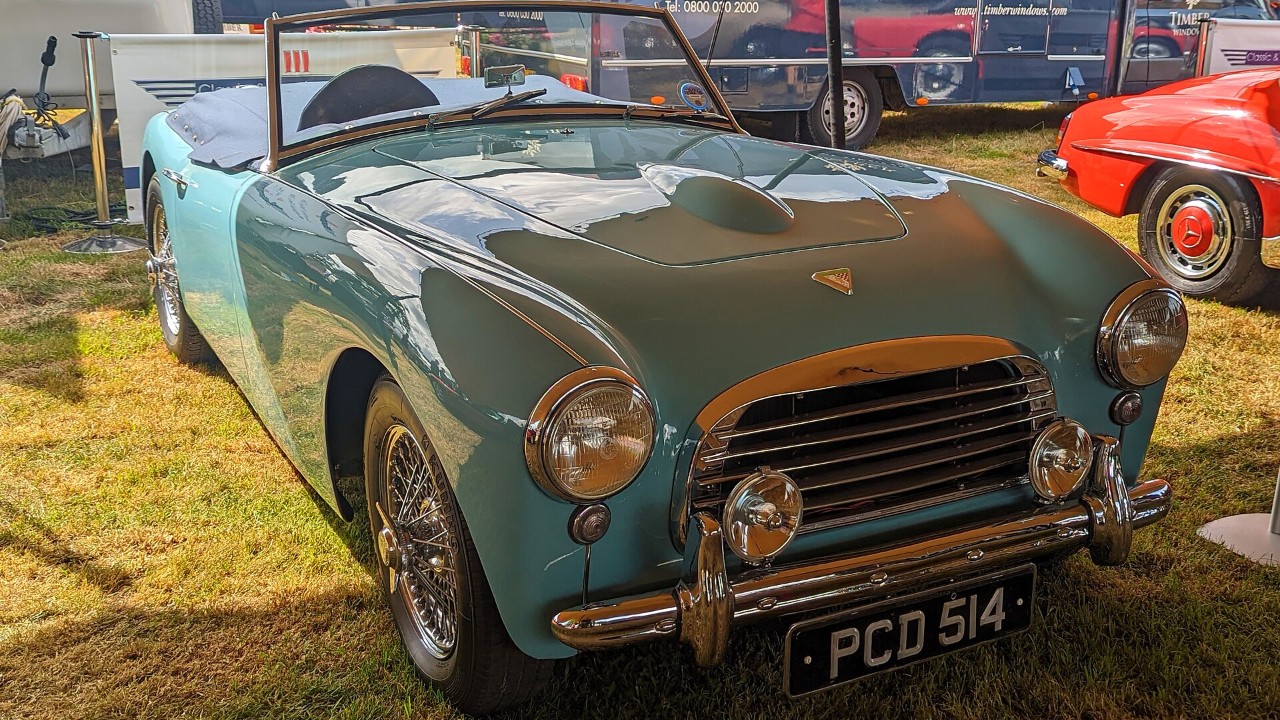
The Swallow Doretti came from an unusual parent. Swallow Coachbuilding belonged to Tube Investments, the British industrial group. Engineer Frank Rainbow designed the car in-house, using a chassis of Reynolds 531 manganese-molybdenum tubing.
The body used a double skin, with steel inside for strength and aluminum outside. Power came from a 1,991 cc Standard wet-liner four, and the car shared its mechanical parts with the Triumph TR2. Even the name had an American link. It came from Dorothy Deen, who managed Cal Sales, the Western U.S. distributor.
Production lasted only from 1954 to 1955. After that, the TI Group changed its policy in 1955, and the Doretti ended there. Three Mk II prototypes, called Sabres, also never reached production.
In our view, the Doretti is the better-dressed cousin of the TR2, with a more elegant body and a fine chassis. In our view, the Triumph-based running gear makes it a practical rare car. The body is the hard part, so buy the most complete car you can. Swallow built 276 Mk I cars, including a single fixed-head coupé.
More from Fast Lane Only