Ford’s back catalog is full of engines that quietly did the work while flashier V8s and halo cars soaked up the attention. Some of these powerplants were durable workhorses, others were cutting edge for their time, and a few turned ordinary family cars into genuine sleepers, yet they never quite earned the recognition their engineering and real‑world performance deserved.
Looking at how these engines were built, where they were used, and how enthusiasts still talk about them today, I see a pattern: the most overlooked Ford powertrains often lived in trucks, economy cars, or anonymous sedans rather than in headline performance models. That mismatch between image and substance is exactly what makes them worth revisiting.
The Ford 300 Inline-Six that quietly built the brand’s truck reputation
Long before turbocharged V6s and aluminum V8s defined Ford’s truck marketing, the company relied on a straight six that owners still talk about in almost mythic terms. The Ford 300 Inline-Six arrived in the mid‑1960s and stayed in production for more than three decades, powering generations of pickups and work vehicles with a focus on torque, simplicity, and longevity rather than spec sheet bragging rights. Reporting on the engine’s history notes that its Introduction To The Ford 300 Inline Six and its Year Of First Manufacture in 1964 set the stage for a run that lasted until 1996, an unusually long life for a single engine family in modern automotive history.
Despite that longevity and the affection it still commands among truck owners, the 300 never became a pop‑culture icon in the way Ford’s small‑block V8s did. Part of the reason is baked into its mission: this was an engine built to haul, tow, and idle on job sites, not to star in muscle cars or performance specials. Coverage that calls it the most underrated Ford engine points out that the 300’s role in building the company’s truck reputation “over three decades, until 1996” is easy to overlook because it worked in the background while more glamorous powertrains grabbed the spotlight. Yet the combination of low‑end torque, simple construction, and a reputation for running almost indefinitely on basic maintenance is exactly what made Ford trucks a default choice for fleets and small businesses, even if the engine itself rarely made the brochure cover.
The 2.7 EcoBoost V6, a modern “dark horse” in the F‑150 lineup
In the current F‑150 range, the 2.7 EcoBoost V6 is a textbook example of how perception can lag behind engineering reality. Many buyers still gravitate toward larger displacement options or the familiar sound of a V8, but owners and tuners who live with the smaller turbocharged engine often describe it as the sweet spot of the lineup. One enthusiast discussion from Jan 14, 2025 highlights that the 2.7 is “really underrated in rwhp and rwtq,” pointing to dyno results that show how much real‑world power it delivers at the wheels rather than just on paper. That kind of feedback reflects a growing recognition that the smaller EcoBoost can punch well above its displacement when tuned correctly and paired with modern transmissions.
Aftermarket specialists echo that sentiment, describing the 2.7L EcoBoost as an “underrated, dark horse” Engine in the 2021 to 2023 F‑150, with a mix of torque, fuel economy, and reliability that makes it a favorite for daily drivers and tow rigs that do not need maximum payload. Parts catalogs for the 2021‑2023 F150 2.7L EcoBoost list extensive Performance Parts and Accessories The engine’s reputation as a “dark horse” underscores how it has been overshadowed in marketing by larger EcoBoosts and V8s, even as real‑world users quietly build fast, efficient trucks around it. In that sense, the 2.7 follows the same pattern as earlier underrated Ford engines: it delivers where it counts, but its low‑key image keeps it from getting the broader acclaim its performance might justify.
The Ford 460 V8, big-block torque in a low‑revving package
At the other end of the displacement spectrum sits the Ford 460 V8, a big‑block that often gets dismissed because its specific output looks modest by modern standards. Contemporary analysis of large engines with relatively low horsepower per liter notes that the Ford 460 V8 is rated at 26.7 horsepower per liter, a figure that seems underwhelming when compared with high‑revving modern turbo engines. The 460 was Launched in the pre‑malaise era of 1968 in the Lincoln Continental Mark, then spread into Ford trucks and vans, where it served as a workhorse rather than a headline performance engine.
Judged purely by horsepower per liter, the 460 looks like a relic, but that metric misses what made it valuable to the people who actually used it. The engine’s large displacement and long stroke delivered abundant low‑rpm torque, exactly what heavy luxury sedans and full‑size trucks needed in the late 1960s and 1970s. The same reporting that highlights its 26.7 horsepower per liter also underscores that it was designed for smoothness and pulling power rather than high‑rev thrills. In practice, that meant the 460 could move a Lincoln Continental Mark or a loaded truck with ease, even if it never produced the kind of peak numbers that excite spec sheet comparisons. In an era when efficiency and specific output dominate the conversation, the 460’s strengths are easy to overlook, yet its real‑world capability and long service in commercial applications show why it deserves more respect than its raw figures suggest.

The Escort Cosworth’s turbo four, a tuner legend hiding in plain sight
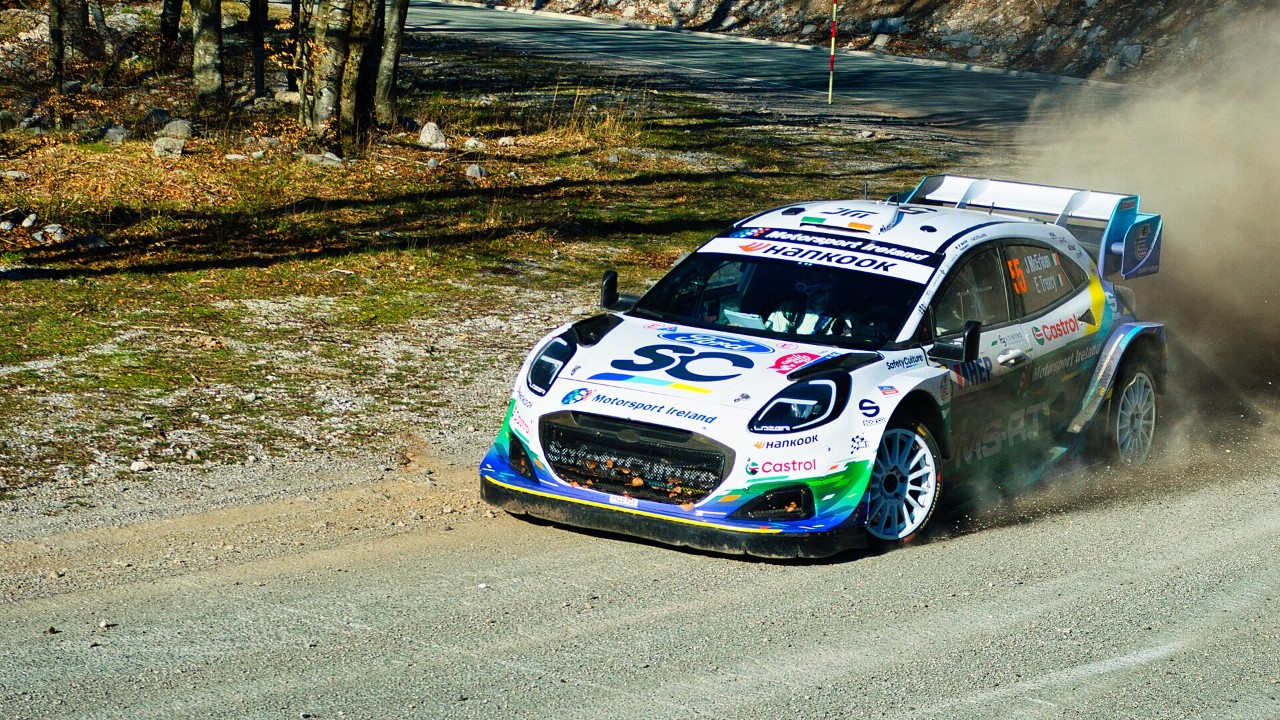
While many of Ford’s underrated engines lived under truck hoods, some of the most interesting examples powered compact performance cars that never fully broke into the mainstream. The turbocharged four‑cylinder in the Ford Escort Cosworth is a case in point, a powerplant that became a cult favorite among tuners but never achieved the broad recognition of larger performance engines. Coverage of underrated Fords from Aug 11, 2020 notes that the Escort Cosworth’s appeal is not just the car itself “per se, rather the engine,” describing it as “one of the most tunable” units in Ford’s history and highlighting builds that reach as much as 1000 horsepower.
That kind of headroom speaks to how conservatively the engine was tuned from the factory and how robust its basic architecture is. In stock form, it powered a rally‑inspired hatchback that already punched above its weight, but in the hands of specialists it became a platform for extreme power levels that few mainstream buyers ever heard about. The same reporting that lists the Escort Cosworth alongside other underrated Fords also points to models like the Ford Falcon XR8 Ute, reinforcing the idea that some of Ford’s most interesting engines were buried in regional or niche products. In the Escort’s case, the combination of rally pedigree, extreme tuning potential, and relative anonymity outside enthusiast circles makes its turbo four one of the clearest examples of a Ford engine that deserved a much bigger spotlight.
The Taurus SHO’s Yamaha V6, a sleeper heart in a family sedan
Few engines illustrate the gap between image and capability as clearly as the V6 that powered the first‑generation Ford Taurus SHO. On the surface, the Taurus was a sensible family sedan, but the SHO variant hid a high‑revving V6 designed in partnership with Yamaha that turned it into a genuine performance sleeper. Recent coverage of the model from Jun 27, 2025 describes the first gen One of the greatest sleepers of all time, noting that the Ford MOTOR Taurus SHO packed a V6 designed by Yamaha that produced 220 horsepower, a serious figure for a front‑drive sedan of its era.
That engine’s character, with its willingness to rev and its relatively high specific output for the time, made the Taurus SHO far more than a trim package, yet the car’s conservative styling and family‑car badge kept it from being widely recognized as a performance icon. The same reporting that calls it one of the greatest sleepers emphasizes how unassuming the package was, which is precisely why the engine inside never got the attention it might have if it had been installed in a dedicated sports coupe. Instead, the Yamaha‑designed V6 became a cult favorite among enthusiasts who appreciated its engineering and the surprise factor of a fast Taurus, while the broader market largely filed it away as just another variant of a common sedan. That disconnect between the engine’s sophistication and the car’s everyday image is a recurring theme in Ford history, and it is a big part of why the Taurus SHO’s powerplant belongs on any list of Ford engines that deserved far more fame than they ever received.