Ford is no longer content to be a logo on the rear wing in Formula 1. As Red Bull Racing prepares its first in-house power unit for the 2026 rules reset, the American manufacturer is steadily moving from supporting act to central player in the project. The shift reflects both the scale of the technical challenge and Ford’s desire to turn its F1 return into a development lab for its next generation of electrified road cars.
What began as a focused hybrid and battery collaboration is evolving into a far broader technical alliance that touches almost every performance-critical system on the car. The result is that Red Bull’s 2026 challenger is starting to look less like a traditional customer chassis with a badged engine and more like a joint Ford–Red Bull technology statement aimed squarely at the new era of Formula 1.
From branding play to deep technical partnership
When Ford first announced its comeback to grand prix racing, the plan sounded relatively contained: Red Bull Powertrains would lead the design of the new 2026 hybrid power unit, with Ford providing expertise in areas like battery cells, electric motors, and control software. The official “Ford Returns” messaging framed it as a partnership where Red Bull Powertrains and Ford would co-develop the next generation hybrid unit that will power both Red Bull Racing and its sister team, rather than Ford simply rebadging an existing engine. That alone was a significant step for a company that had been absent from the grid for two decades.
As the technical regulations for 2026 crystallized, however, the scope of the project grew. The new rules demand a radically different powertrain architecture, with a much larger share of total output coming from the electric side of the system and strict limits on fuel flow and energy deployment. Reporting on why Ford is contributing more than initially planned makes clear that the company saw an opportunity to plug in its own research on electric drive units, battery chemistry, and software control, and that Red Bull welcomed the extra depth. What started as a targeted contribution around hybrid components has therefore expanded into a more integrated engine program that leans heavily on Ford’s broader electrification roadmap.
Why the 2026 power unit demands more Ford muscle
The 2026 Formula 1 power unit is not just an evolution of the current turbo hybrid, it is a structural reset that places the electric motor and energy recovery system on equal footing with the internal combustion engine. Technical briefings describe a layout where the e-motor and generator are directly tied to the combustion unit, with a roughly 50–50 split in power between electric and fuel-burning elements. That shift makes software, battery management, and thermal control as decisive as piston design or turbo sizing, which plays directly into Ford’s strengths in high volume electrified road cars.
In that context, it is easier to understand why Ford has chosen to deepen its involvement. Executives have pointed to the overlap between the F1 hybrid system and the company’s road car cycle, arguing that the race program can accelerate development of high efficiency electric drive units and control algorithms that will later appear in production vehicles. The detailed look at the partnership notes that Ford’s contribution now spans battery cell technology, power electronics, and advanced control software, all of which are critical to making the 2026 power unit competitive under the new rules. For Red Bull, tapping into that knowledge base reduces the risk of building a complex hybrid system from scratch on an aggressive timeline.
Red Bull’s break from Honda and the push toward “almost the entire car”
The strategic stakes rose further once Red Bull confirmed it would part ways with Honda after the 2025 season. That decision left the team fully responsible for its own power unit for the first time, just as the sport’s technical framework was being rewritten. Reporting on the split underscores that Red Bull is developing its own 2026 power unit at the same time it is losing the safety net of an established manufacturer. In that environment, Ford’s role naturally expanded from a specialist supplier into something closer to a co-architect of the entire performance package.
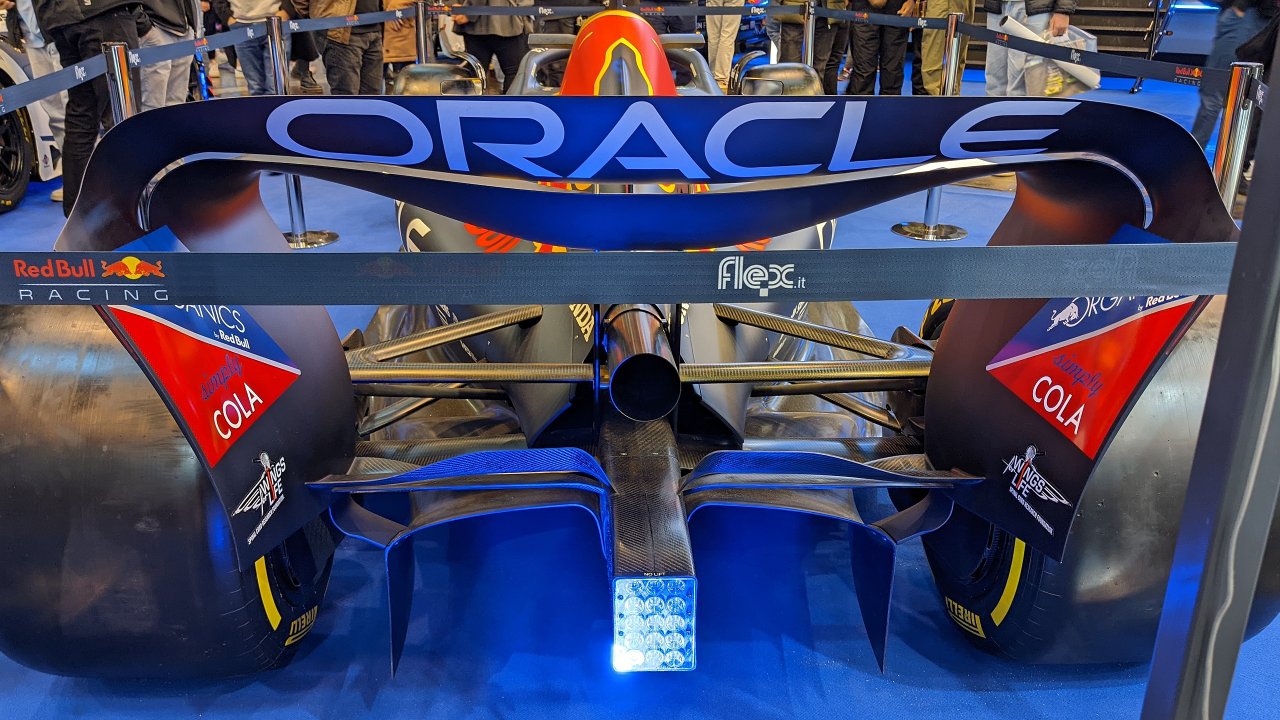
One detailed account of the evolving project describes Ford’s involvement growing to touch “almost the entire car,” from the power unit itself to key aerodynamic structures such as the front and rear wings. While Red Bull remains the lead on chassis and aero, Ford engineers are now embedded across multiple workstreams, contributing to cooling layouts, packaging decisions, and the integration of the hybrid system with the rest of the car. The same reporting notes that durability remains a central concern, and Ford’s experience in long life powertrains is being applied to ensure that the new engine can survive full race distances without sacrificing performance. The result is a car that is being conceived as a unified Ford–Red Bull project rather than a chassis wrapped around a third party engine.
A race against time on a single campus
Even with expanded resources, the calendar is unforgiving. The 2026 regulations will arrive whether the new power unit is ready or not, and the partnership is effectively racing the clock to validate a completely new architecture. A detailed technical feature on the program emphasizes that the entire effort is being concentrated on a single campus, with Red Bull Powertrains and Ford engineers working side by side to shorten feedback loops between design, simulation, and testing. That co-location is intended to avoid the delays that can plague traditional manufacturer–team relationships where engine and chassis are developed in different countries.
The same reporting highlights the complexity of the task. The e-motor, generator, and combustion engine must operate as a tightly integrated system, with energy flows managed in real time to meet both performance and regulatory targets. Software updates can unlock significant lap time, but only if they are validated against hardware that is robust enough to handle aggressive deployment strategies. By embedding its own specialists in areas like control systems and battery management, Ford is trying to ensure that the power unit is not just powerful on the dyno but also reliable across a full season of racing. For Red Bull, the shared campus model reduces the risk of misalignment between engine and chassis development as the 2026 car takes shape.
Road car payoffs and the broader Ford strategy
For Ford, the deeper dive into Red Bull’s F1 project is not just about chasing trophies, it is a calculated bet that the technology will feed directly into its mainstream products. Company leaders have linked the program to the broader “Ford Returns” narrative, in which Red Bull Powertrains and Ford collaborate on hybrid systems that mirror the challenges of high performance road cars. Insights from the F1 battery pack, inverter design, and energy recovery strategies can inform future generations of electrified Mustangs, F-series trucks, and crossovers, particularly in areas like fast charging, thermal management, and software defined performance modes.
Coverage of why Ford is contributing more than first planned notes that the company sees the F1 engine as part of its normal road car development cycle rather than a separate, purely marketing driven exercise. By aligning the race program with its electrification roadmap, Ford can justify the investment internally while also positioning itself as a technology leader in a sport that is increasingly focused on sustainability and efficiency. The expanded role with Red Bull’s 2026 car, stretching from the hybrid power unit to aerodynamic and structural input, signals that Ford intends to use Formula 1 as a long term engineering platform, not a short term branding splash.
More from Fast Lane Only: