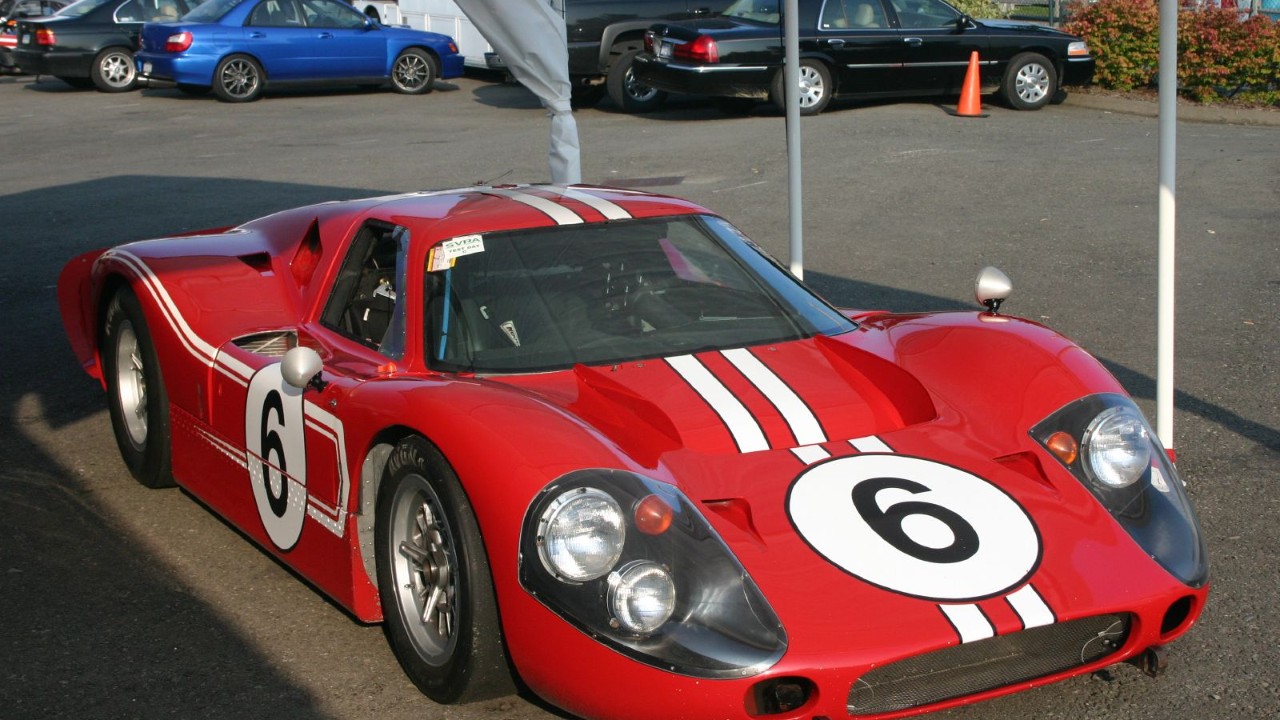
The Ford Mark IV won the 24 Hours of Le Mans in June 1967 with Dan Gurney and A.J. Foyt driving. It beat the second-place Ferrari by 32 miles and set a race average speed record of 135.48 mph. Underneath its streamlined body sat a chassis built like an aircraft, from bonded aluminum honeycomb.
Ford had already won Le Mans in 1966. However, its Mark II had grown heavy. So Ford started again with a new design for 1967, and it set out to build the whole car in the United States.
The winning car survives today. Later, Ford Motor Company gave it to The Henry Ford museum in Dearborn, Michigan. There it sits in the collection as object 71.83.1.
Why the Ford Mark IV was called a J-car
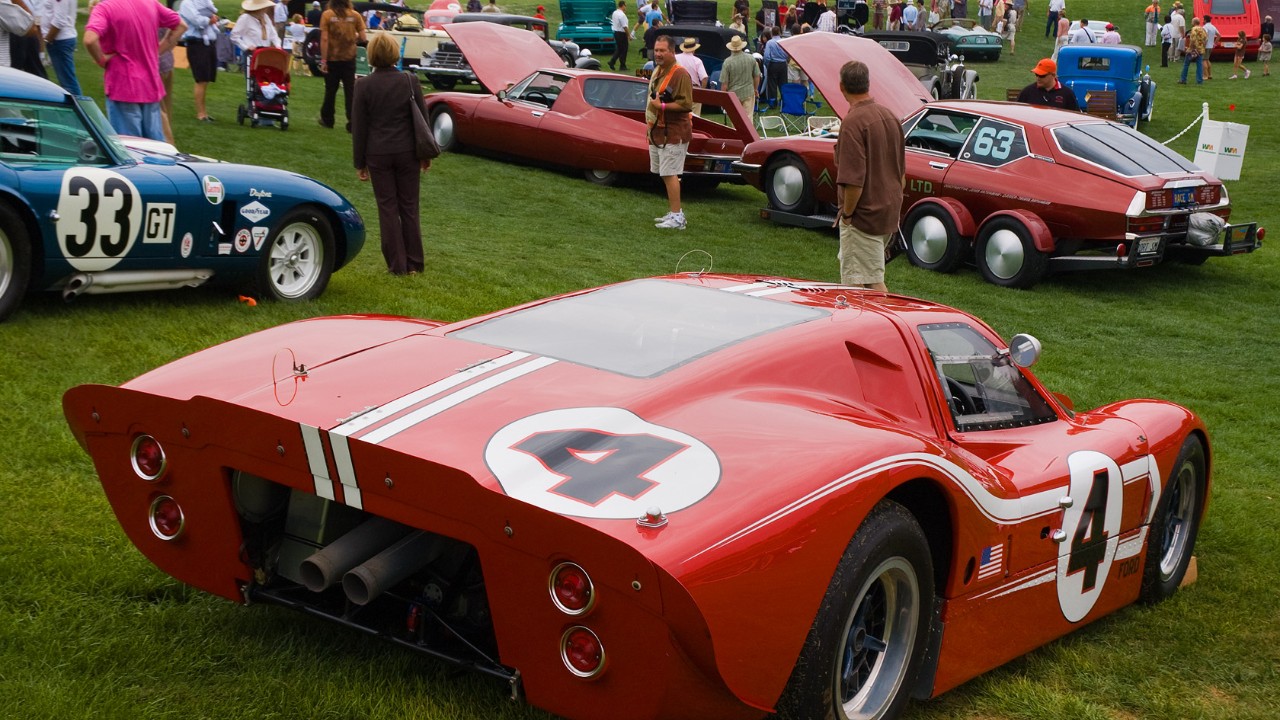
The Mark IV began life as the J-car. In fact, Ford designed it to comply with Appendix J of the FIA’s rules, according to the Shelby American Collection in Boulder, Colorado. By then, its history page says, the Mark II had become heavy and aerodynamically compromised.
Ford also wanted the car to be all-American. For that reason, it gave its racing satellite, Kar Kraft, wide latitude to develop it, the Simeone Foundation Automotive Museum notes. Meanwhile, Ford itself built the winner in Dearborn with design help from Shelby-American, according to The Henry Ford.
A chassis borrowed from aviation
The honeycomb was the big idea. The main structure used aluminum honeycomb, riveted aluminum L-sections and an aluminum skin that was both bonded and riveted. Then Ford cured the whole chassis in a high-temperature autoclave, the Shelby American Collection explains. As a result, the car was reportedly nearly 300 pounds lighter than its predecessor.
The Henry Ford keeps a photo that shows the method plainly. In it, holes cut in a Mark IV chassis reveal its “aircraft-style construction of aluminum honeycomb.” The Simeone Museum adds that the honeycomb tub was nearly as strong as the steel version, yet far lighter.
The numbers behind the Ford Mark IV
Meanwhile, power came from Ford’s 427-cubic-inch overhead-valve V8. Ford had adapted it from its stock car engine. The Henry Ford rates the winning car at 500 hp at 5,000 rpm, or about 4.4 pounds per horsepower. By comparison, the Simeone Museum lists 530 hp for its own Mark IV, chassis J-8. That car’s 427 had been upgraded for more output.
Speed was the payoff. At Le Mans in 1967, J-8 set a top speed record of over 224 mph, with Lloyd Ruby and Denny Hulme sharing the car, the Simeone Museum says. Also, Gurney told Motor Sport that the winner ran “about 212-213mph down the Mulsanne straight” at its race pace.
None of this came cheap. In fact, the four Le Mans cars cost “$1 million each, in 1966 dollars,” according to the Shelby American Collection.
Sebring first, then Le Mans
The Mark IV won the first time it raced. First, Mario Andretti and Bruce McLaren took the Sebring 12 Hours in 1967. They drove the fourth prototype, which Ford had converted to Mark IV specification, the Shelby American Collection records.
For Le Mans, Ford prepared four Mark IVs. Gurney and Foyt’s No. 1 car led after the first 90 minutes, according to a race photo record at The Henry Ford. By half-distance, the pair held a five-lap cushion over the leading Ferrari, Motor Sport reported.
In the end, the car covered 3,249.6 miles on the 8.34-mile circuit. Its average lap took 3 minutes 42.7 seconds, the museum’s record shows. Behind it, the Ferrari P4 of Mike Parkes and Ludovico Scarfiotti took second. Another factory P4, for Willy Mairesse and Jean “Beurlys” Blaton, finished third.
Champagne, a rule change and a museum
On the podium, Gurney sprayed the champagne “like a fire hose” at the photographers. He told Motor Sport he regards that as the start of the tradition. The Henry Ford calls the Mark IV the first all-American car to win Le Mans.
The car’s career was short, though. Late in 1967, the FIA limited engine size to 305 cubic inches, and Ford ended its GT racing program, the Shelby American Collection notes. The winning car itself raced only once, at Le Mans. Later, The Henry Ford displayed it at the 2017 SEMA Show and at the Goodwood Revival, where it honored Dan Gurney.
More from Fast Lane Only